
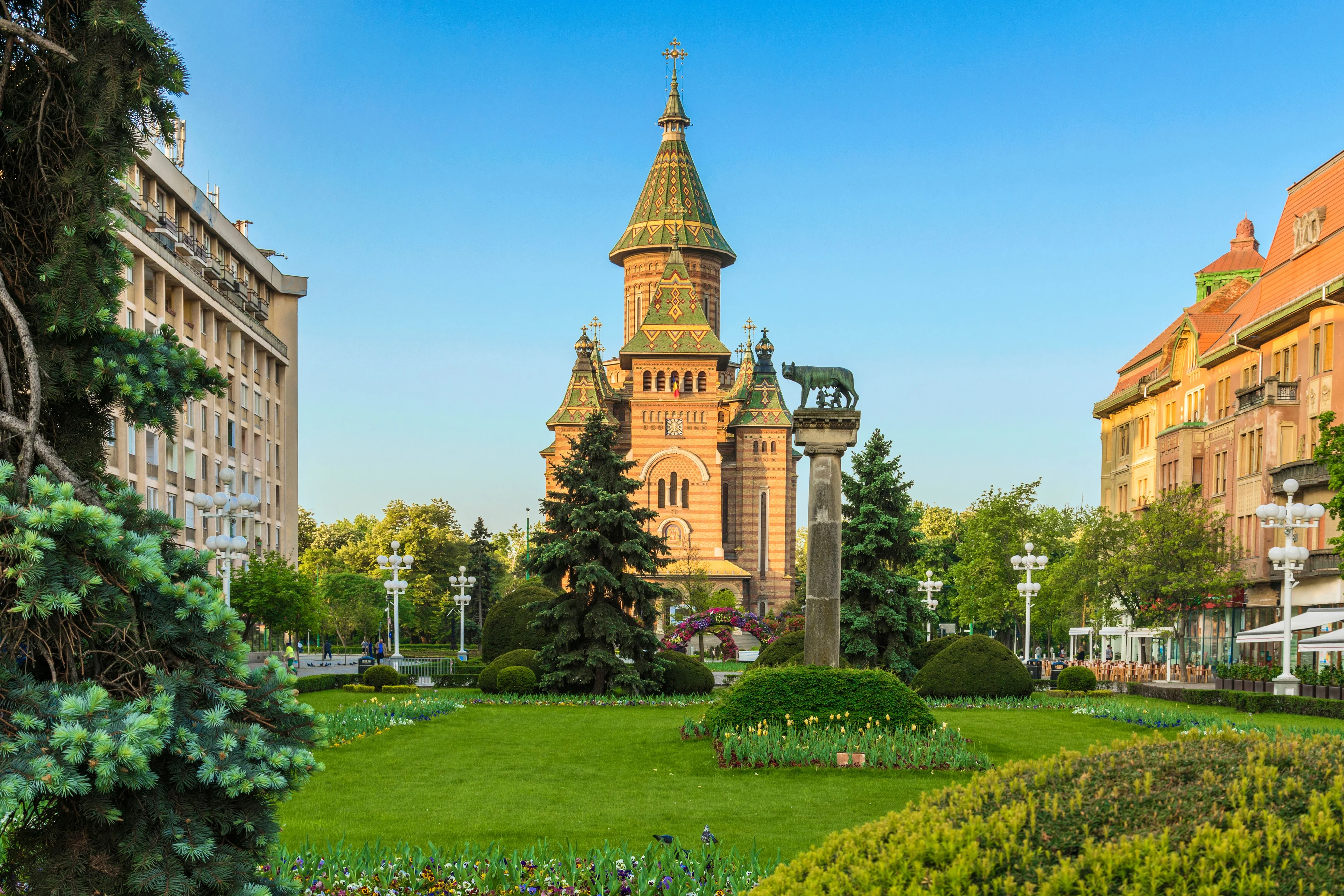
Visiting Timișoara
Located in western Romania, within the historical Banat region, Timișoara stands as the country's fourth-largest city. Its deep, multicultural roots have left a legacy of diverse architecture and houses of worship from various faiths. The Banat region has a complex history, having been part of the Kingdom of Hungary and later the Ottoman Empire before coming under Habsburg rule and finally becoming part of Romania in 1918. By the 19th century, it was a major trading hub connected to the world via the Bega canal. Today, the city retains a blend of Romanian, Serbian, Hungarian, and German influences. It is also the site where the first protests against the communist dictatorship of Ceausescu erupted in 1989.
A cultural destination in Romania
Often called Little Vienna, Timișoara preserves a rich history shaped by the Austro-Hungarian Empire. The best place to start is the main square, Piața Unirii. This pedestrian-only area is defined by its baroque architecture, including the Art Museum. While there, you will also see the Plague Column and the brick-built Saint George's Cathedral.
Just a few hundred meters from Piața Unirii lies Victoria's Square, a tree-lined boulevard that serves as the city's social hub. Anchoring the two ends of the avenue are the city's most prominent landmarks: the Opera House, where the revolution that ended the communist regime is said to have begun, and the Orthodox Cathedral, which features an impressive 83-meter-tall bell tower.
Museums and green spaces in Timișoara
As the first free city in Romania, the destination is packed with history. Beyond the Art Museum, which displays works from local classic to contemporary artists, don't miss the Museum of the Revolution for a look at the causes and aftermath of the 1989 uprising. To dig deeper into regional culture, head to the Banat Museum, housed in the city's oldest building, the Huniade Castle. Some collections are also displayed at the Maria Theresia Bastion, a massive structure built into the old city walls that now houses shops and cultural venues. For something more unconventional, visit the Museum of Communist Consumers. It sits a bit outside the center, but it is worth the trip for its collection of everyday items from the communist era, and there is a bar on the ground floor to keep things lively.
The city center is also dotted with parks and gardens, most notably the Rosary. Founded in 1928 along the Bega river, it is home to more than 1,200 varieties of roses.
When to go
The ideal time to visit Timișoara is between May and September, when the weather is warm and the roses are in full bloom.
How to get there
By air, several flights serve Traian Vuia International Airport, located just about 10 kilometers (6 miles) from the city center. Timișoara is connected to major Romanian cities by train. There are also bus connections that link Timișoara to Budapest in Hungary, a trip that takes about five hours.
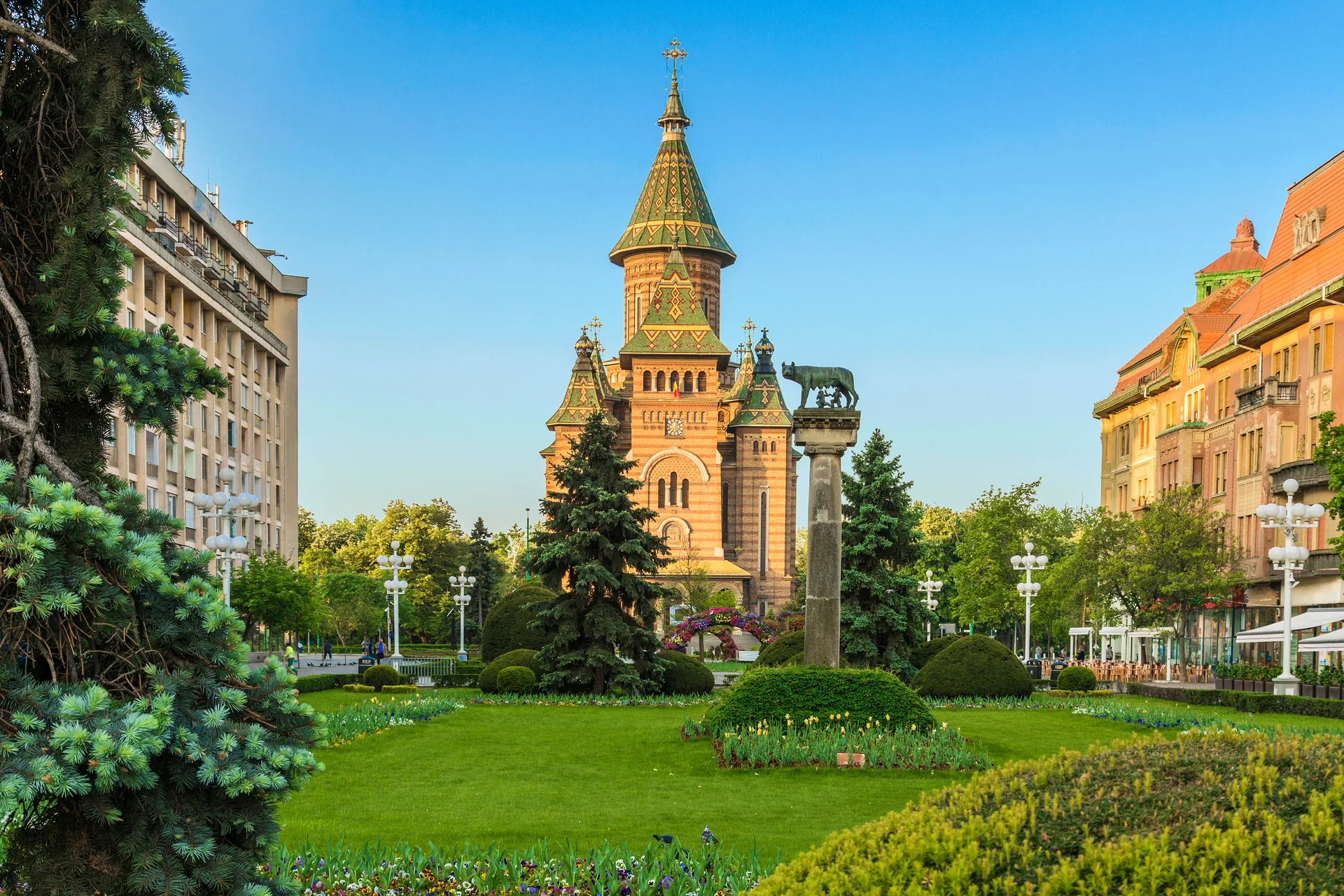
Recognized as a hub for Romanian art and culture, Timisoara has a lot of charm. There is so much going on in the art scene, and it is worth the trip if you want to get a different perspective of the country.