
Where to stay in Oslo: the 6 neighborhoods to know in 2026
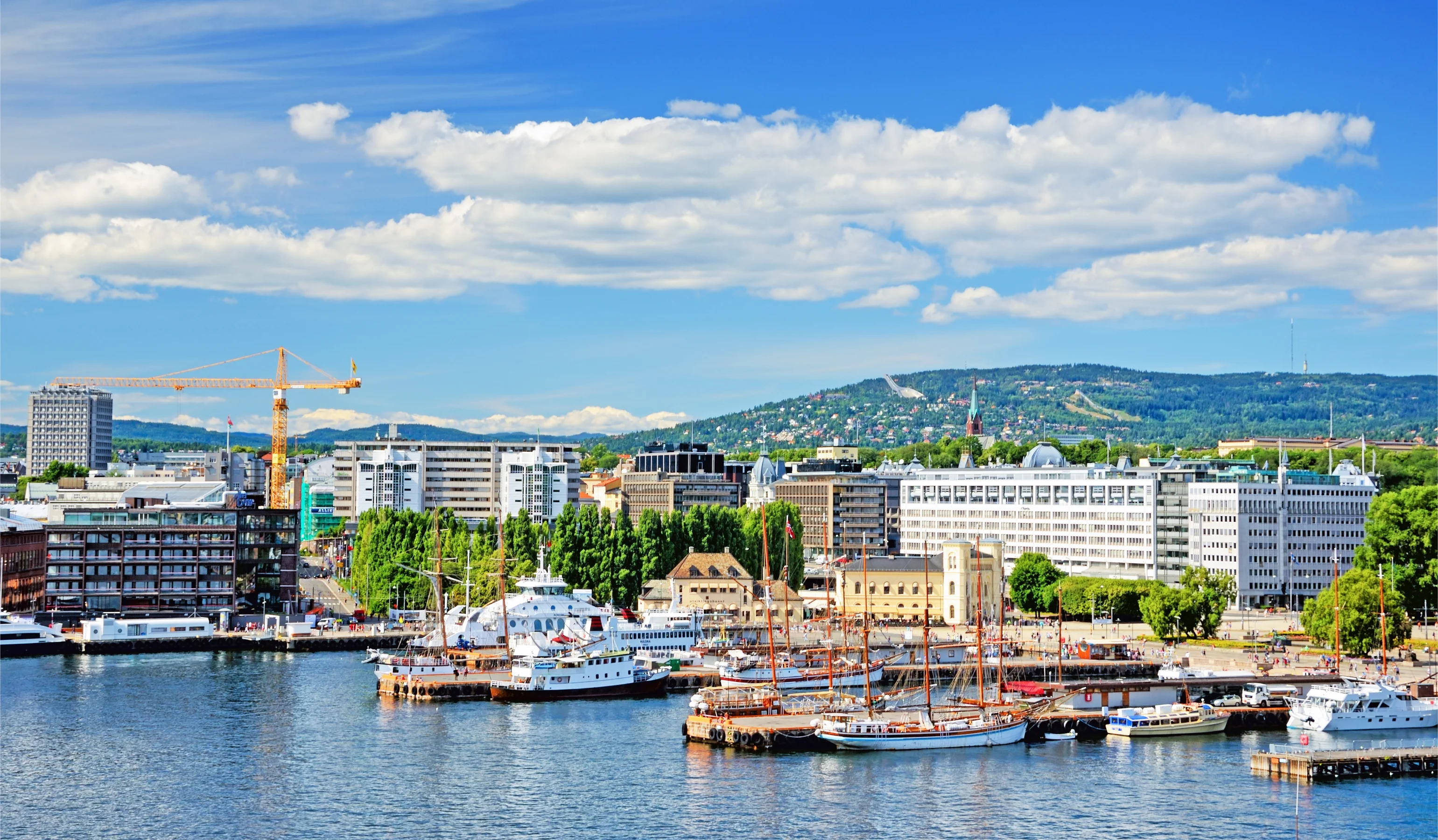
What our members have left on Oslo amounts to one review, five sentences long, and it says the essential thing: a lively capital, plenty of museums, modern architecture, and yet a city that "still stays close to nature", with one piece of advice, see the fjord by boat. That is indeed the trade-off in this city, and it is a rare one: the same transport ticket carries the boats that serve the fjord islands and the metro that climbs to four hundred and sixty-nine metres into the forest, above the ski jumps. Choosing your neighborhood in Oslo therefore comes down to deciding what will be waiting five minutes from the hotel: the water, or the trees.
The rest is decided by price, and it is worth saying plainly: of all the cities in this series, none costs as much as this one. The cheapest room in the city is $85*; a three-star runs around $181*; a four-star around $260*; and the dearest night in this guide costs $460*. What you pay for here is distance: the centre and the station put the museums, the Opera and the boats within walking reach, while the western and the upland neighborhoods trade that ease for quiet, for trees and sometimes for a pool. This guide therefore falls into six parts, from Karl Johans gate to the last metro stop, by way of the peninsula where the polar ships sleep and the traveller does not.
The Norwegian capital is very lively and has a rich cultural life. There are plenty of museums to visit.
Compare hotel prices in Oslo
In a hurry? Find the best accommodation deals in 3 clicks.
Compare live deals from Booking, Expedia, Agoda and other partners.
At a glance: our picks by traveller type
Pick the profile that suits you to head straight to the recommended neighborhood.
The neighborhood map in Oslo
Get your bearings on the neighborhoods and must-see sights before choosing where to drop your bags. Click a name to jump to its description.
The centre: Karl Johans gate, the City Hall and Aker Brygge Karl Johans gate between the station and the Royal Palace, the City Hall and its murals, Akershus fortress and the Resistance museum, the Nobel Peace Center, the National Theatre, Oslo cathedral and the bazaar halls, the quays of Aker Brygge and the Astrup Fearnley museum on Tjuvholmen, the National Library, the Palace park
for a first visit, for the museums, for doing everything on foot
This is the neighborhood you walk, and it fits between two doors: the station at one end, the Royal Palace at the other, a thousand metres of Karl Johans gate in between. Along that stretch sit the Parliament, the National Theatre, the cathedral and, a hundred metres below, the City Hall with its two brick towers, where the Nobel Peace Prize is awarded every year and whose exhibition centre stands next door. Behind it, Akershus fortress has guarded the mouth of the fjord since the thirteenth century, and its lawns are crossed freely. And to the west, the quays of Aker Brygge and the tip of Tjuvholmen line up the terraces, the summer sea baths and a contemporary art museum with its feet in the water. One thing to know: the collection of the old national gallery has moved to the National Museum, opened in 2022 a step away from the City Hall.
Where to stay in this neighborhood
Hotel Continental Luxury
The best score in this guide and its dearest night, facing the National Theatre: 9.0 on more than eight hundred reviews, with 9.7 for location, 9.4 for comfort and 9.3 for cleanliness and the same for the staff. The reviews all cite the same three things, the location, the breakfast and the beds. From $460*, and it is also the one value-for-money score that drops, to 8.2: you pay for what you see.
Grand Hotel Oslo Luxury
The historic hotel of Karl Johans gate, the one where the Nobel Peace laureate sleeps: 8.2 on more than two thousand four hundred reviews, with 9.7 for location, the best in the neighborhood, and 8.8 for comfort and the same for the staff. The reviews are divided and you should know it: the architecture and the breakfast are praised, but several find the rooms and corridors tired for the price asked, and the value-for-money score falls to 7.6.
Citybox Oslo Budget
The biggest volume of reviews in this whole series, more than twenty-seven thousand, for 8.1 with 9.5 for location, 8.4 for cleanliness and the same for comfort. The principle is owned up to: automatic check-in, no reception at night, no breakfast, plain rooms ten minutes on foot from the station and a tram at the door. It is the cheapest way to sleep in central Oslo, and the reviews say so without hedging, their only complaint being a price that is still high for what it is.
Pros
- Everything on foot: museums, Opera, quays, station and island boats
- The terraces of Aker Brygge and the lawns of Akershus in the same place
Cons
- The highest rates in the city, and often small rooms
- Karl Johans gate on a Friday night: loud until two in the morning
Bjørvika, the station and Grønland Snøhetta's Opera house whose roof you climb on foot, the row of Barcode towers, Jernbanetorget square and the central station, the shopping centres by the station, the Oslo Spektrum arena and the Rockefeller, the streets of Grønland and their restaurants, the old town of Gamlebyen and its medieval park, the Ekebergparken sculpture park and its viewpoint over the fjord
for the Opera and the Munch, for arriving by train, for eating variously and for less
East of the station the city has rebuilt itself on the water in twenty years, and this is the most photographed part of Oslo. The Opera is a sloping roof of white marble that you walk up, free of charge, as far as the view over the fjord; behind it stand the Barcode towers, the library and the museum devoted to Munch, which left Tøyen to settle here in 2021. Just to the north, Grønland is the other Oslo: Turkish and Pakistani grocers, kebabs, Eritrean restaurants, and the only meals in the city that do not hurt your wallet. And on the hill of Ekeberg, a sculpture park gives the viewpoint that served for The Scream. You sleep here to step off the train and walk five minutes.
Where to stay in this neighborhood
Amerikalinjen city.oudormir_tier_haut
In the former head office of the shipping line that carried Norwegians to America, facing the station: 8.9 on more than six hundred reviews, with 9.7 for location, 9.5 for the staff and 9.3 for comfort and the same for cleanliness. Designed rooms, a cocktail bar, a sauna and a gym. It is the best score in the neighborhood and the finest address for anyone arriving by train.
Clarion Hotel The Hub city.oudormir_tier_haut
The biggest hotel in the centre and the biggest volume of reviews in the neighborhood, more than five thousand eight hundred, for 8.5 with 9.5 for location, 9.1 for the staff and 9.0 for comfort. Three minutes from the station, a rooftop with a pool and a breakfast the reviews describe as the vastest they have seen. Two reservations come back: small rooms, which is the norm here, and stingy lighting in the bathrooms.
Thon Hotel Opera Mid-range
Attached to the station and to the Opera, which sums up the point of it: 8.5 on more than two thousand four hundred reviews, with 9.6 for location, 9.0 for comfort and the same for cleanliness and for the staff. The breakfast comes back in almost every review. The rooms are compact, and that is the compromise you accept in order to step out of the hotel and be at the Opera in three minutes.
Pros
- The station, the Opera, the Munch and the boats within ten minutes
- The restaurants of Grønland, by far the cheapest in the centre
Cons
- The approaches to the station are busy and sometimes rough in the evening
- Plenty of building sites: Bjørvika has not finished going up
Bygdøy and the fjord islands The Fram museum and the polar ship kept whole, the Kon-Tiki and its rafts, the maritime museum, the museum of cultural history and its reassembled timber houses, Oscarshall castle, the beaches of Paradisbukta, the Holocaust study centre in Quisling's former villa, the islands of Hovedøya and Langøyene, the Dyna lighthouse
for a day of museums and swimming, by boat from the City Hall
This is the peninsula where you do not sleep, and it belongs in the plan from the first day. In summer a boat leaves the City Hall quays and drops you at Bygdøy in ten minutes; the rest of the year bus 30 makes the trip. There you find one after another the Fram, a polar ship kept whole inside its hangar, the rafts of the Kon-Tiki, the maritime museum and a village of timber houses reassembled beam by beam. The Viking Ship Museum, however, has been closed since 2021 to be rebuilt, and its reopening has already been pushed back: check before you cross. From the same quays leave the boats to the islands, where the people of Oslo swim between monastery ruins.
Pros
- Four big museums and two beaches in the same day
- The City Hall and island boats included in the transport ticket
Cons
- No hotel at all: you come here and go back to sleep elsewhere
- The Viking Ship Museum is closed for works
Frogner, Majorstuen and Vigeland park Frogner park and its two hundred Vigeland sculptures, the Vigeland museum in the former studio, the Oslo city museum in the park's manor house, the open-air pool of Frognerbadet, the skating museum, the streets of Majorstuen and their shops, Bislett stadium, the Blindern university campus, the transport museum
for the parks, for a long stay, for bigger rooms
West of the Royal Palace, Oslo turns residential: streets of pale apartment buildings, gardens, and in the middle Frogner park, which holds the sculpted ensemble by Gustav Vigeland, more than two hundred bronzes and granites open day and night and free of charge, from the gate of children to the totem of entwined bodies. The park's manor house holds the city museum, and the sculptor's studio, across the street, has become his museum. Just to the north, Majorstuen and Bogstadveien form the shopping quarter of the people of Oslo, with its cafes and its second-hand shops. You sleep here for the quiet and for the size of the rooms, ten minutes by metro from the centre.
Where to stay in this neighborhood
Saga Hotel Oslo, WorldHotels Crafted Mid-range
In two town houses joined together, halfway between the Palace and Frogner park: 8.6 on more than two thousand three hundred reviews, with 9.3 for the staff, 9.2 for cleanliness and the same for comfort, and 9.1 for location. The reviews cite two things above all, the welcome and the breakfast, and the value-for-money score, 8.6, is the best of the central addresses in this guide.
Thon Hotel Gyldenløve Mid-range
On Bogstadveien, the shopping street of Majorstuen, with the metro a hundred metres away: 8.0 on nearly seven hundred reviews, with 9.0 for location and 9.0 for the staff. The reviews sum it up well: clean, comfortable, and within walking distance of almost everything you come to see. The counterpart is in the facilities score, 7.9: this is a hotel without extras.
Pros
- Vigeland park and its sculptures at the door, free and open at night
- Bigger rooms and silent nights, ten minutes from the centre
Cons
- You have to take the metro or the tram for the Opera and the boats
- Few restaurants open late: this neighborhood dines early
Grünerløkka, Tøyen and the Akerselva The Mathallen food hall and the former factories of Vulkan, the Akerselva river and its waterfalls, Birkelunden square and its market, the parks of Sofienberg and Tøyen, the botanical garden and the natural history museums, the timber-house streets of Damstredet and Telthusbakken, Old Aker church, the Ringnes brewery, the DogA design centre
for the cafes and the bars, for eating well, for a long stay
On the other side of the river, Oslo changes generation. Grünerløkka is the old working-class quarter turned into the one with the cafes, the second-hand shops and the craft beer bars, and its culinary heart is the Mathallen hall, installed in a factory at the water's edge. Because there is a river: the Akerselva comes down from the north in a series of falls, and a path follows it for several kilometres between converted brick buildings. Further east, Tøyen keeps the botanical garden, the natural history museums and a park where the whole city picnics in June. And a step from the centre, the lanes of Damstredet line up painted nineteenth-century timber houses that the fires spared.
The architecture is quite modern, but the city still stays close to nature.
Where to stay in this neighborhood
Scandic Vulkan Mid-range
Right against the Mathallen hall, in the converted Vulkan quarter: 8.0 on more than two thousand five hundred reviews, with 8.7 for location, 8.6 for the staff and 8.4 for cleanliness and the same for comfort. The reviews cite exactly what counts here: the hall and its restaurants at the door, and the breakfast. The rooms are small, as everywhere in this city.
Anker Hostel Budget
The cheapest hostel in Oslo, on the boundary between Grünerløkka and the centre: 7.4 on more than eight thousand reviews, with 8.5 for location and 8.4 for the team, but 7.6 for cleanliness. The reviews say both things at once: it is the best price in the city and the place where the beds and the bathrooms show their age. Book it knowing that, to keep money for the museums.
Pros
- The best cafes and the food hall on foot, and gentler prices
- The Akerselva path, to walk by the water without leaving the city
Cons
- Bar noise at weekends in the streets of Grünerløkka
- Fifteen to twenty minutes on foot, or a tram, to the Opera
Holmenkollen, the forest and the outer neighborhoods The Holmenkollen ski jump and its view over the fjord, the ski museum, the Korketrekkeren toboggan run, the Tryvann tower and the winter park, Bogstad manor, Ullevaal stadium, the museum of science and technology, the Østensjøvannet nature reserve, the beach of Hvervenbukta to the south
for the skiing and the forest, for a view, for a car
Metro line 1 climbs, literally: in half an hour from the centre it goes from sea level to four hundred and sixty-nine metres, in the middle of the trees. At the top, the Holmenkollen jump raises its steel curve above the city and lets you go up to the summit, where the view takes in the whole fjord; at its foot, the ski museum tells four thousand years of planks and is one of the oldest ski museums in the world. In winter the cross-country trails are floodlit until ten at night and the Korketrekkeren toboggan run drops two kilometres back to the metro. In summer it is a forest of lakes where the city comes to swim. You sleep here for the view and the silence, and you accept half an hour of travel for every dinner in town.
Where to stay in this neighborhood
Scandic Holmenkollen Park city.oudormir_tier_haut
The great timber chalet of Holmenkollen, set above the city beside the ski jump: 8.6 on more than four thousand five hundred reviews, with 9.2 for location, 8.9 for comfort and 8.8 for cleanliness and the same for the staff. What the reviews cite first is the view, then the panoramic pool and the buffets. Two things to know: the spa is paid for separately, and without a car everything goes through the metro, which the reviews call being far from town.
Pros
- The forest, the trails and the fjord view from the room
- The metro to the centre, with a pool and a sauna on the way back
Cons
- Half an hour to the centre, and evenings far from everything
- A single address, and you have to like big hotels
Our tips for booking the right place
- One ticket for the boats and for the forest: This is Oslo's good surprise, and it changes a stay: the city's transport ticket covers the metro, the tram, the buses and the public boats that serve the fjord islands. In other words, the crossing to Hovedøya or Langøyene costs the price of a metro ride, and you can spend the afternoon swimming in front of the city without paying for an excursion. The same logic the other way: line 1 of the metro climbs to Frognerseteren, at four hundred and sixty-nine metres, and drops you where the trails start. Buy a day ticket as soon as you arrive, and keep it on your phone.
- Alcohol, opening hours, and why dinner costs so much: Two rules explain half the budget of a stay here. First, alcohol is not freely sold: beer leaves the supermarket shelves at eight in the evening on weekdays and at six on Saturdays, and never on Sundays; wine and spirits are only bought at the state shop, closed on Sundays too. Second, a drink on a terrace often costs more than the dish. The two workarounds the people of Oslo use themselves: the Mathallen hall and the restaurants of Grønland for eating properly without leaving the price of a night there, and the hotel breakfast, which here is a real meal and is included almost everywhere.
- The Opera roof, Vigeland park: what is free: Oslo is expensive, but three of its finest things cost nothing. The roof of the Opera is a ramp of white marble open day and night, and you walk up it without a ticket, as far as the view over the fjord. Vigeland park, with its two hundred sculptures, is open permanently and has no admission. The lawns of Akershus fortress are crossed freely, and the sculpture park of Ekebergparken, on the eastern hill, is free as well. Add the Akerselva path and the islands: enough to fill two days without paying an entrance fee.
- When to come, and what it changes: Oslo is lived as two cities. From June to August it is light until eleven at night, the islands fill up, the terraces come out and the museums open for longer: it is the best season, and the most expensive. From December to March night falls at four, but the snow turns the forest into a floodlit cross-country domain reachable by metro, and hotel prices drop markedly outside the school holidays. The two moments to avoid if you want a cheap room: the week of 17 May, the national day, and the Holmenkollen marathon, which fills the city.
- Booking on Bygdøy thinking you will sleep near the museums: there is no hotel on the peninsula, and the few rentals there force you to take a boat or a bus for every meal. You visit Bygdøy; you sleep in town.
- Crossing for the Viking Ship Museum without having checked: it has been closed since 2021 for rebuilding and its reopening has already been pushed back. The other three museums on the peninsula are open.
- Counting on a car in the centre: the city toll, the scarce and expensive parking and the pedestrian streets make it the worst choice. The hotels with car parks are up on the heights and to the west, and the metro does the job better.
- Choosing a room on price alone without reading the cleanliness score: in Oslo the cheapest addresses are large hostels, and the reviews there draw a very clear line between the location, often excellent, and the state of the beds and bathrooms.
FAQ: where to stay in Oslo
Which neighborhood should you stay in in Oslo for a first visit?
How much does a night in Oslo cost?
Should you sleep near the Opera or near Karl Johans gate?
How many days do you need in Oslo?
Is Oslo a city where you walk?
What is there to do in Oslo when it rains?
 Keep exploring
Things to do in Oslo
Keep exploring
Things to do in Oslo
Comments (0)
No comments yet. Be the first!