

Montélimar, Provence's Sticky Sweet Gateway
The smell hits you before you even step out of the car. Caramelized honey and toasted almonds drift through the air of this town that generations of French families first discovered bumper to bumper on the legendary Nationale 7, the old road south to the Riviera. The world capital of nougat since the 17th century, this town of 40,000 has never stopped playing its role as the gateway to Provence, wedged between the Rhône Valley and the first lavender fields. Here, time moves at the pace of white-nougat batches and café terraces shaded by century-old plane trees.
Montélimar: A Delicious Stopover More Than a Destination
Let's be honest: Montélimar doesn't make any list of France's prettiest towns. Its modest center, the shopping zones on its outskirts and its sometimes patchwork urban layout won't win over travelers hunting for the perfect postcard. The town speaks instead to curious food lovers, families with kids, and anyone looking for a base to explore the Provence side of the Drôme without the crowds of the Côte d'Azur.
One day is enough to cover the historic center and its nougat makers. Two days lets you add the hilltop villages nearby. You'll want a car to see the surrounding countryside, though downtown is easy to walk.
An Easy-on-the-Wallet Budget
Montélimar is an affordable stop. Expect $66 to $99* a night for a decent hotel and $17 to $28* for a full meal, and most nougat factory visits are free. Parking downtown runs about $1.10* an hour.
Nougat in All Its Forms
You can't pass through Montélimar without understanding why this candy made the town famous. Montélimar nougat, protected by a PGI (Protected Geographical Indication) label, is made from lavender honey, egg white, sugar, almonds and pistachios from Provence. Forget the mass-produced versions you find elsewhere: here the texture stays tender, the flavor subtle and the aftertaste floral.
The Arnaud Soubeyran factory, founded in 1837, offers a free tour of its museum and workshops. Go in the morning to watch the master nougat makers at work, from cooking in copper cauldrons to cutting the bars. The tasting at the end lets you compare white nougat, dark nougat and fruit versions. On the other side of town, the Diane de Poytiers house offers a similar experience in a cozier setting, with workshops for kids.
Friendly tip: skip the Montélimar highway rest area when buying nougat. Prices are inflated and quality is lower. Go for the factories in town or the producers at the Saturday market.
Medieval Heritage and Old-Town Lanes
The Château des Adhémar has watched over the town since the 12th century. This Romanesque fortress, built by the family that gave the town its name, offers a striking panorama over the Rhône plain and the surrounding hills. Now a contemporary art center, it hosts temporary exhibitions that create a surprising contrast between medieval walls and modern works. The guided tour traces the building's history from lordly palace to prison, a role it kept until 1926.
The historic center takes about an hour to wander. The Place du Marché keeps its old arcades and café terraces. The Maison de Diane de Poitiers, a fine 16th-century Renaissance mansion, is worth a stop for its carved facade. The porte Saint-Martin, the last survivor of the old ramparts, marks the entrance to the old town. Nearby, the Sainte-Croix collegiate church has kept its 16th-century bell tower despite successive rebuilds.
The Allées Provençales and the Jardin Public
The Allées Provençales are the beating heart of local life. This kilometer of boulevards lined with century-old plane trees links the old town to the public garden. Café terraces line the route, an old-fashioned carousel spins for the kids, and the trees' deep shade cuts the summer heat. This is where locals meet for an aperitif or a Sunday stroll.
The Jardin Public, created in 1856, offers a welcome green break. Shaded paths, lawns and a mini-farm with goats and peacocks make it a perfect family pause. The century-old trees bring real coolness in midsummer.
Offbeat Museums
The Palais des Bonbons et du Nougat (Candy and Nougat Palace) will delight families with its spaces devoted to childhood. Antique toys, Provencal santons (hand-painted clay nativity figurines), Lego and Playmobil dioramas, the Badaboum play area: the place bets on interactive fun. A working artisan nougat workshop rounds out the visit, so you can leave with sweet souvenirs.
More surprising is the Musée Européen de l'Aviation de Chasse (European Fighter Aviation Museum), with more than 60 military aircraft on the former airfield. Mirages, Jaguars, Soviet MiGs and even a flight-ready Rockwell OV-10 Bronco make up an impressive collection. Aviation buffs can easily spend half a day here. The Musée de la Miniature shows microscopic works invisible to the naked eye, including a chessboard for mosquitoes and camels passing through the eye of a needle.
Where to Eat and Drink in Montélimar
Local cooking draws on the Drôme countryside. Picodon, a small AOC goat cheese with a assertive flavor, pairs perfectly with a glass of Côtes-du-Rhône wine. The markets overflow with lavender honey, olives, fresh almonds and sun-ripened fruit. On Saturday mornings, the market on Place du Marché and place des Clercs turns downtown into a festival of Provencal flavors.
For a sit-down meal, Le Citron Pressé serves market-driven cooking in a contemporary setting. The bistros along the Allées Provençales serve simple dishes at gentle prices. And for dessert, it's hard to resist frozen nougat or the local almond sweets that keep the sugar rush going.
Getting To and Around Montélimar
Montélimar's train station is served by regional TER trains from Lyon and Avignon, but few high-speed TGVs stop here. From Paris, figure about 3.5 hours with a change at Lyon Part-Dieu or Valence TGV. By car, exit 17 or 18 off the A7 autoroute drops you right in town. Lyon is 1.5 hours away, Marseille 2 hours, and Paris 5.5 hours by road.
In town, the historic center is a one-hour walk. A little tourist train runs a narrated loop from the tourist office. For the surrounding area you'll need a car, unless you ride the ViaRhôna, the bike route that follows the Rhône from Lake Geneva to the Mediterranean. The Jabron greenway, 15 km long, makes an easy family bike ride to Montboucher-sur-Jabron.
When to go
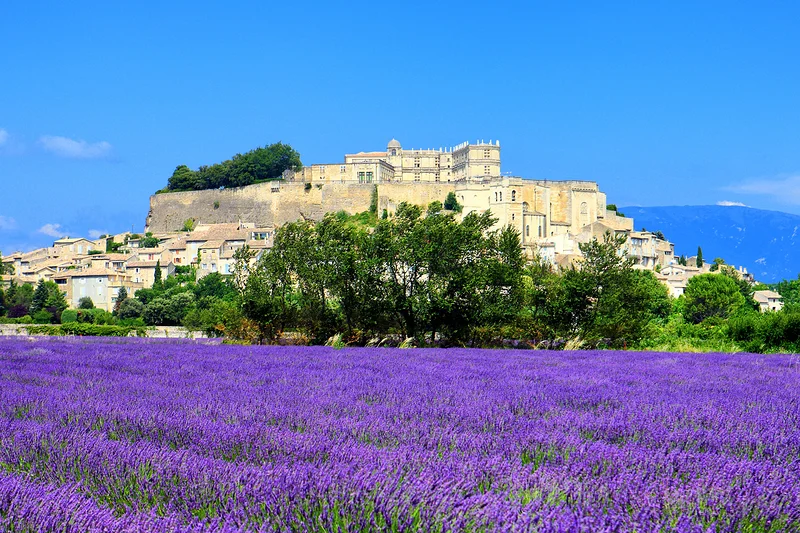
The Fête du Nougat, in late July, turns the town into a candy capital with demonstrations, tastings and entertainment. Spring and fall bring pleasant temperatures for sightseeing. From mid-June to late July, the surrounding lavender fields turn purple and perfume the air. Skip the August heat wave if you don't handle heat well: 35°C (95°F) is common.




I enjoyed my visit! I was curious to see the nougat museum and I was not disappointed. The vibe was sweet, with plenty of views that make for great photos. I recommend spending a day or an afternoon there, as that is enough to soak up its typical atmosphere. On Saturday, the square comes alive with a very lively market!