
Where to stay in Helsinki: the 5 neighborhoods to know in 2026
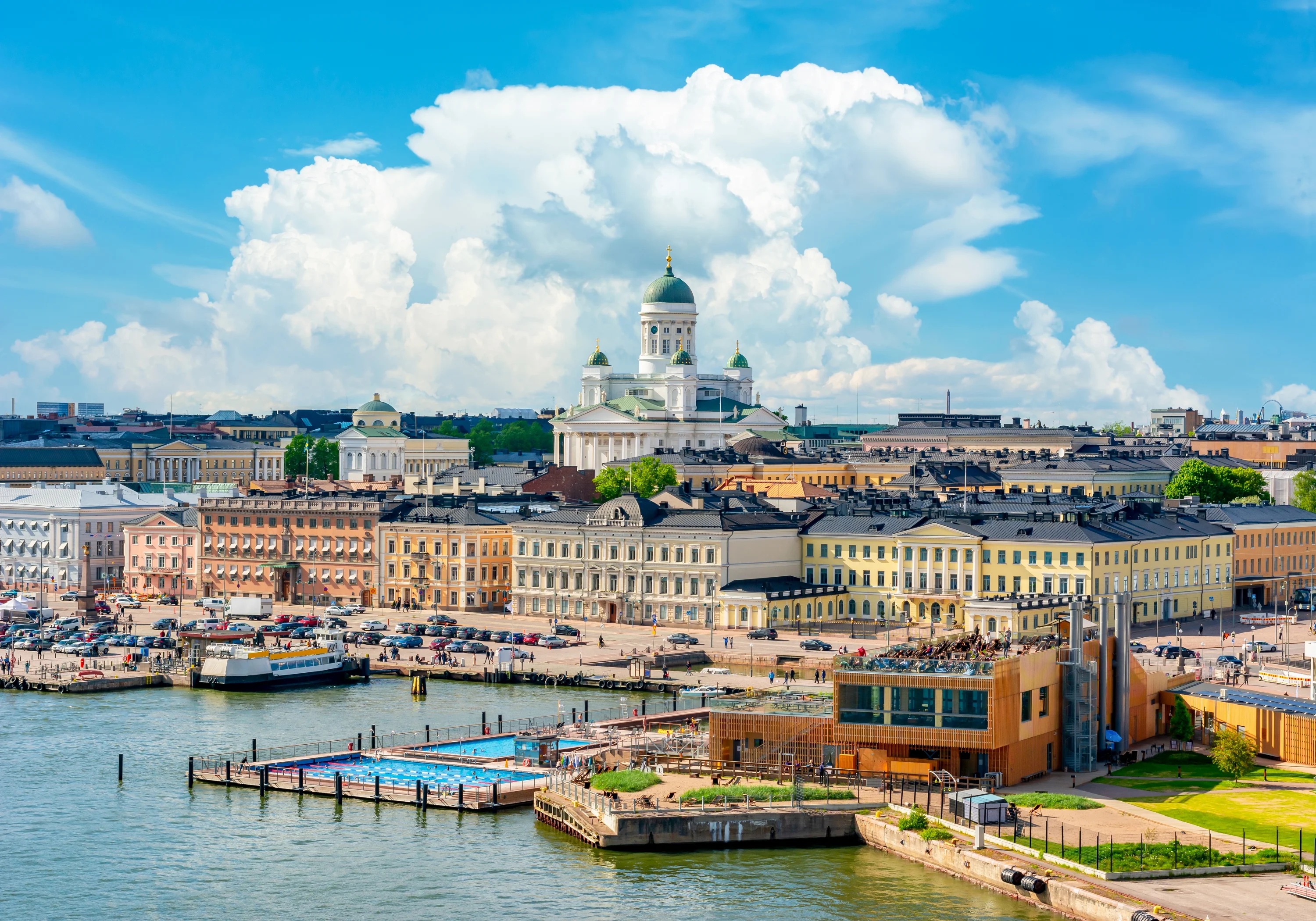
Helsinki occupies a peninsula and three hundred islands, and the sea shows up at the end of almost every street running south. Six hundred and fifty-eight thousand residents, a capital set at sixty degrees north, a centre of pale stone built around two cathedrals facing opposite ways, and trams that tie the whole thing together.
Rates are the highest in our Nordic guides: $79* for the first tier, $124* for a three-star that holds its scores, $181* for a four-star. The five neighbourhoods described below all sit within three kilometres of the station, so you compare them on price and on noise, never on travel time.
Compare hotel prices in Helsinki
In a hurry? Find the best accommodation deals in 3 clicks.
Compare live deals from Booking, Expedia, Agoda and other partners.
At a glance: our picks by traveller type
Pick the profile that suits you to head straight to the recommended neighborhood.
The neighborhood map in Helsinki
Get your bearings on the neighborhoods and must-see sights before choosing where to drop your bags. Click a name to jump to its description.
Kluuvi, Kruununhaka and the Esplanadi The white cathedral and Senate Square, the Esplanadi and its two rows of trees, the covered market and the market square by the water, the presidential palace and the city hall, the Ateneum art museum and the Kiasma contemporary art museum, the Design Museum and the Museum of Finnish Architecture, the city museum and the Sederholm House, the parliament and the music centre, the national theatre and the Swedish theatre, the university, the Stockmann department store
to do everything on foot, for a first visit, for the museums
The heart of the city is a square of pale stone, and you cross it in twenty minutes. Senate Square lines up the white cathedral, the university and the government building in a single neoclassical design; a hundred metres below, the Esplanadi runs down to the water between two rows of trees and ends at the market square, where the covered market serves smoked fish all year round. The museums are all here, five minutes from one another, and so is the station. This is the neighbourhood where you pay the most and walk the least.
Where to stay in this neighborhood
NH Collection Helsinki Grand Hansa Luxury
The best score in this guide: 9.3 from more than one thousand six hundred reviews, with 9.8 for location, 9.7 for comfort, 9.6 for cleanliness, 9.4 for staff as for facilities, and 8.9 for value, its only mark under 9. Two old buildings joined behind the station, spa included, and a breakfast charged at $29*. Budget $260*.
Pros
- The museums, both cathedrals and the station on foot
- Boats for the islands leave from the market square
Cons
- The highest rates in the city
- Very quiet on Sundays, when the shops close
Töölö, the opera and the Olympic stadium The Temppeliaukio church cut into the rock, the Sibelius monument and its park by the water, the national opera, Finlandia Hall, the national museum, the natural history museum, the Sibelius Academy, the 1952 Olympic stadium and its tower, the open-air Olympic swimming pool, the winter garden, Hietaniemi beach and cemetery, the Seurasaari open-air museum, the Meilahti arboretum
for the opera and concerts, for the parks, for the quiet
To the north-west the city stretches between a bay and a run of parks, and changes trade. Temppeliaukio is a church cut into the granite, of which the street shows only a copper dome; a kilometre further on, the Sibelius monument raises its steel tubes facing the sea. Between the two stand the national opera, Finlandia Hall and the national museum, then the 1952 Olympic stadium and its open-air pool. Hietaniemi beach closes the neighbourhood to the west, and the cemetery next door holds the presidents' graves.
Where to stay in this neighborhood
Hotel Helka Mid-range
8.8 from more than four thousand four hundred reviews, with 9.3 for staff as for location, 9.1 for the wifi, 8.9 for cleanliness, 8.8 for comfort, 8.6 for facilities and 8.5 for value. An independent hotel ten minutes' walk from Temppeliaukio and as far from Kamppi, whose reviews single out the breakfast and the quiet. Around $136*.
Pros
- The opera, Finlandia Hall and the stadium on foot
- Parks and a city beach ten minutes away
Cons
- Fifteen to twenty minutes by tram to Senate Square
- Few restaurants open late
Katajanokka, Suomenlinna and the south The Uspenski cathedral and its red domes, the Suomenlinna fortress on the World Heritage list, the Suomenlinna museum and the submarine Vesikko, the zoo on the island of Korkeasaari, Kaivopuisto park and its villas, the Mannerheim house museum, St John's church, the South Harbour ferry terminal
for the islands, for the villas and parks, to sleep in a prison
The Katajanokka peninsula begins behind the market square, under the red domes of the Uspenski cathedral, and ends in converted brick warehouses. From there, or from the quay next door, the boat leaves for Suomenlinna, the eighteenth-century fortress spread over six islands, lived in all year by eight hundred people and listed as World Heritage. To the south, Kaivopuisto is the district of villas and embassies, with a park that runs down to the rocks at the water's edge.
Where to stay in this neighborhood
Hotel Katajanokka Mid-range
9.0 from more than two thousand reviews, with 9.3 for staff, 9.2 for cleanliness, comfort and location alike, and 8.9 for facilities as for value. This is an 1837 prison turned into a hotel: the walls and corridors are the originals, the rooms join two or three cells together, and the tram stops outside. Allow $169*.
Pros
- The Suomenlinna boat and the ferries at the end of the street
- Quiet in the evening, ten minutes by tram from the centre
Cons
- Few shops, and nothing open late
- The sea wind, which changes everything in winter
Kallio, Alppiharju and Pasila The Kallio church and its granite tower, the Hakaniemi hall and market square, the Linnanmäki amusement park and its tower, the main city library, the exhibition and convention centre, the two ice rinks at Pasila and Laakso, the Arabia ceramics factory shop
for the prices, for the local bars, for a trade fair
Across the bay, Kallio was the working-class district and remains the cheapest part of the centre: brick buildings, bars where a pint costs half what it does elsewhere, and the Hakaniemi hall for the shopping. The Kallio church closes the view with its granite tower, and just to the north Linnanmäki has been turning its rides on a hilltop since 1950. Further out, Pasila lines up office towers, the convention centre and the main library: you sleep there for a trade fair, not for the view.
Where to stay in this neighborhood
Citybox Helsinki Budget
9.1 from more than ten thousand reviews, and a profile that says exactly what it is: 9.4 for cleanliness as for comfort, 9.3 for location, 9.2 for value, but 8.9 for staff and the same for facilities, because there is no reception desk and you open your room with your phone. Metro and tram outside the door, around $91*.
Pros
- The gentlest rates in the centre, metro included
- Local bars and the Hakaniemi market hall
Cons
- A quarter of an hour by metro or tram to the museums
- Loud around the bars, and an amusement park in summer
Our tips for booking the right place
- The Suomenlinna boat is public transport, not an excursion: This is the piece of information that saves the most in Helsinki: the Suomenlinna ferry belongs to the city transport network, and an ordinary ticket or a day pass covers it both ways, exactly like the tram. It leaves the market square quay every twenty minutes during the day and takes a quarter of an hour. The practical consequence: the fortress and its two museums fill half a day with no excursion ticket, and the last evening crossing is worth checking before lingering on the ramparts.
- Everything fits in three kilometres, and the tram does the rest: The centre of Helsinki is a peninsula: the five neighbourhoods in this guide sit within three kilometres of the station, and the furthest are a quarter of an hour by tram. Two consequences. First, choosing a neighbourhood is a matter of price and atmosphere, not of distance. Second, a day pass for the central zone is enough: the airport sits in a wider zone, and the train out there needs a different ticket.
- The sauna is in the building, not an extra: In Finland a hotel without a sauna is the exception, and it is almost always included in the night: three of the five addresses in this guide have one, and their reviews mention it before the rooms. The hours are often split, a slot in the morning and one in the evening, sometimes alternating between men and women: ask on arrival. For the full experience, the big public saunas on the waterfront south of the centre open onto a terrace and a ladder down into the Baltic, January included.
- In June night never falls, in December daylight lasts six hours: Helsinki sits at sixty degrees north, and this is the fact that changes a stay the most. Around the June solstice the sun sets around eleven at night and is back up by four, with no real darkness in between: the terraces hold out to the end and the parks never empty. On 21 December, by contrast, it rises around twenty past nine and sets around quarter past three. Six hours of daylight need planning: museums in the morning, saunas and market halls in the afternoon.
- Booking "near the university" without checking: the big technology campus is in Espoo, the neighbouring municipality, twenty minutes by metro from the centre.
- Aiming for a shopping centre spotted on a map: the largest ones, to the north, are in Vantaa, near the airport and not in town.
- Choosing Suomenlinna as a base: it is an island, the ferry stops at night, and everything there closes early.
- Counting on Linnanmäki in midwinter: the park opens from spring to autumn, plus a few weeks around Christmas.
FAQ: where to stay in Helsinki
Which neighbourhood should you stay in in Helsinki?
How much does a night in Helsinki cost?
How many days do you need in Helsinki?
Do you need a transport pass in Helsinki?
When is the best time to come?
What can you see in Helsinki in one day?
 Keep exploring
Things to do in Helsinki
Keep exploring
Things to do in Helsinki
Comments (0)
No comments yet. Be the first!