
Salamanca, the city where the stone changes color
Find the frog. These three words sum up the obsession that takes hold of every visitor facing the university facade. Dozens of people crane their necks, scanning the medallions carved into the ocher stone, hoping to spot the little amphibian said to bring good luck.
This slightly absurd quest says a lot about Salamanca, a city that does not reveal itself at first glance, where every detail hides a story, and where students brush shoulders with the ghosts of Christopher Columbus and Unamuno.
The ideal destination for history buffs and lively nights
The oldest university in Spain attracts 30,000 students every year, giving the city its specific energy. Architecture enthusiasts will be satisfied by the concentration of Plateresque and Baroque masterpieces. Night owls will find an intense nightlife scene fueled by this student population that packs the bars on Calle Van Dyck as soon as the sun goes down.
On the other hand, those looking for the sea or mountains will be disappointed. The Castilian plains offer little landscape diversity, and the 160,000 residents make Salamanca a human-scale city that can be explored in two days. The continental climate brings scorching summers and harsh winters. Pack comfortable shoes, as the cobblestone streets are strictly for walking.
A remarkably gentle budget
Expect to spend between 50€ and 80€ (about $55-$85) per day, all-inclusive. Accommodations range from 40€ to 100€ (about $45-$110) per night for a decent room in the city center. Entrance fees for monuments rarely cost more than 10€ (about $11), and the daily menu in student bars often drops below 10€ (about $11) with a drink included.
The Plaza Mayor and the historic heart
Let's start with the obvious. The Plaza Mayor in Salamanca is considered one of the most beautiful squares in Spain, and it is well-deserved. Built in the 18th century by Alberto Churriguera, it forms an irregular but surprisingly harmonious quadrilateral, lined with 88 arches and topped with medallions representing illustrious figures. Unlike other Spanish squares that have become parking lots for tourists, this one pulses day and night.
The Café Novelty, the oldest in the region, has occupied the southwest corner since 1905. Miguel de Unamuno was a regular here. Ordering a coffee feels as much like a cultural pause as a culinary stop. In the evening, tunas (student musical groups) sometimes show up to perform an improvised concert, black capes and colorful ribbons blowing in the wind.
Pro tip: come back at nightfall. The nighttime lighting turns the sandstone facades into golden paintings. Salamanca is considered one of the best-illuminated cities in Europe, and it holds up.
The university and its sculpted secrets
Founded in 1218 by Alfonso IX of Leon, the University of Salamanca is the oldest in Spain and the third oldest in Europe. Its Plateresque facade, chiseled like a goldsmith's work, concentrates a forest of medallions, coats of arms, and mythological figures. Somewhere in this clutter hides a frog perched on a skull. Finding it without help is supposed to bring good luck for exams. In reality, everyone cheats by searching on their phone.
The interior is well worth the 10€ (about $11) entry fee. The Aula Fray Luis de León preserves its original 16th-century benches, and the old library gives off a moving atmosphere of dusty knowledge. Do not miss the Cielo de Salamanca, a 15th-century fresco representing the zodiac, which was hidden under a false ceiling for a long time.
The Casa de las Conchas
A stone's throw from the university, this 15th-century residence intrigues visitors with its 365 scallop shells embedded in the facade. Their number supposedly corresponds to the days of the year. Legend has it that a treasure is hidden under one of them. Admission is free, and the patio is worth a look.
The two cathedrals and the Ieronimus view
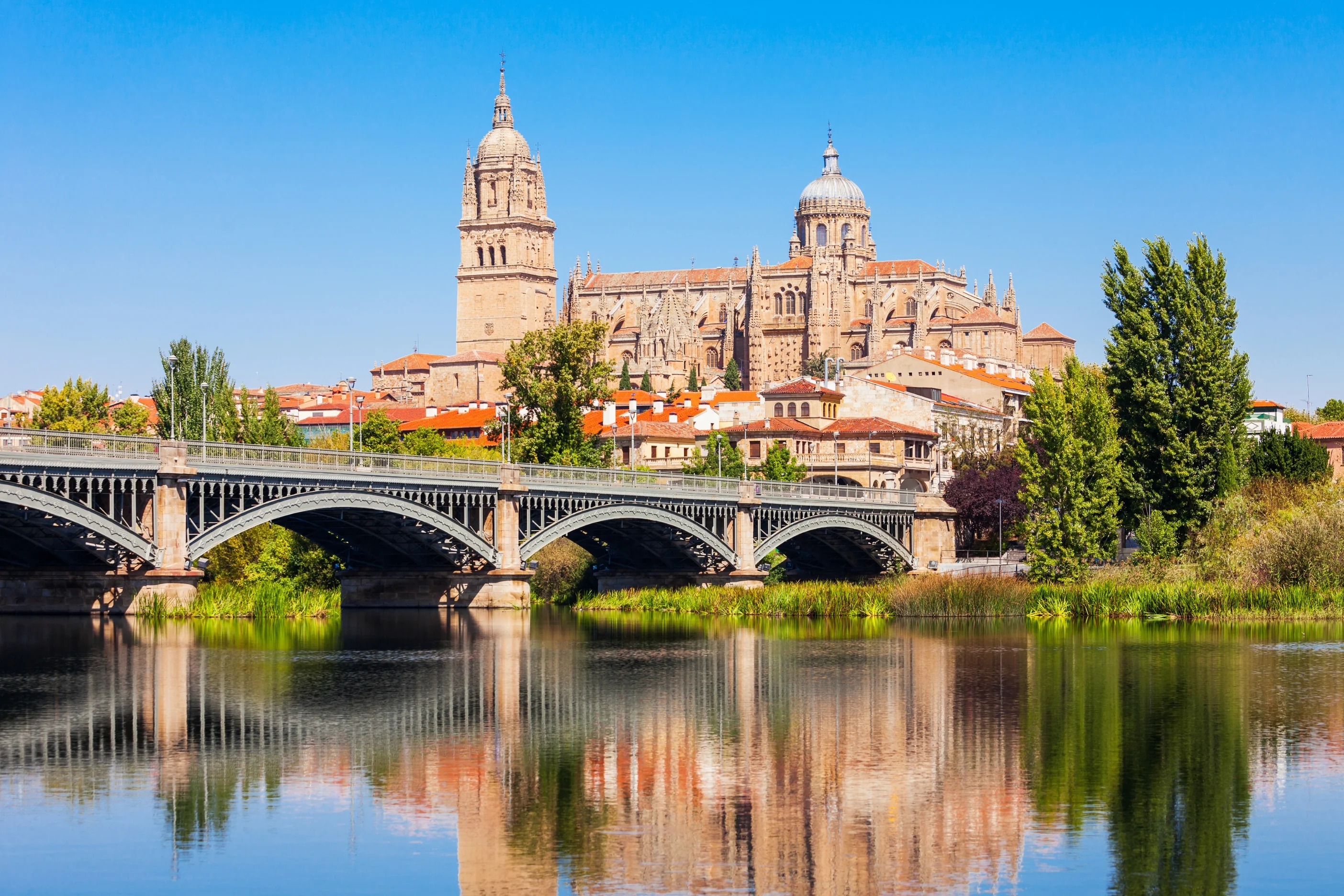
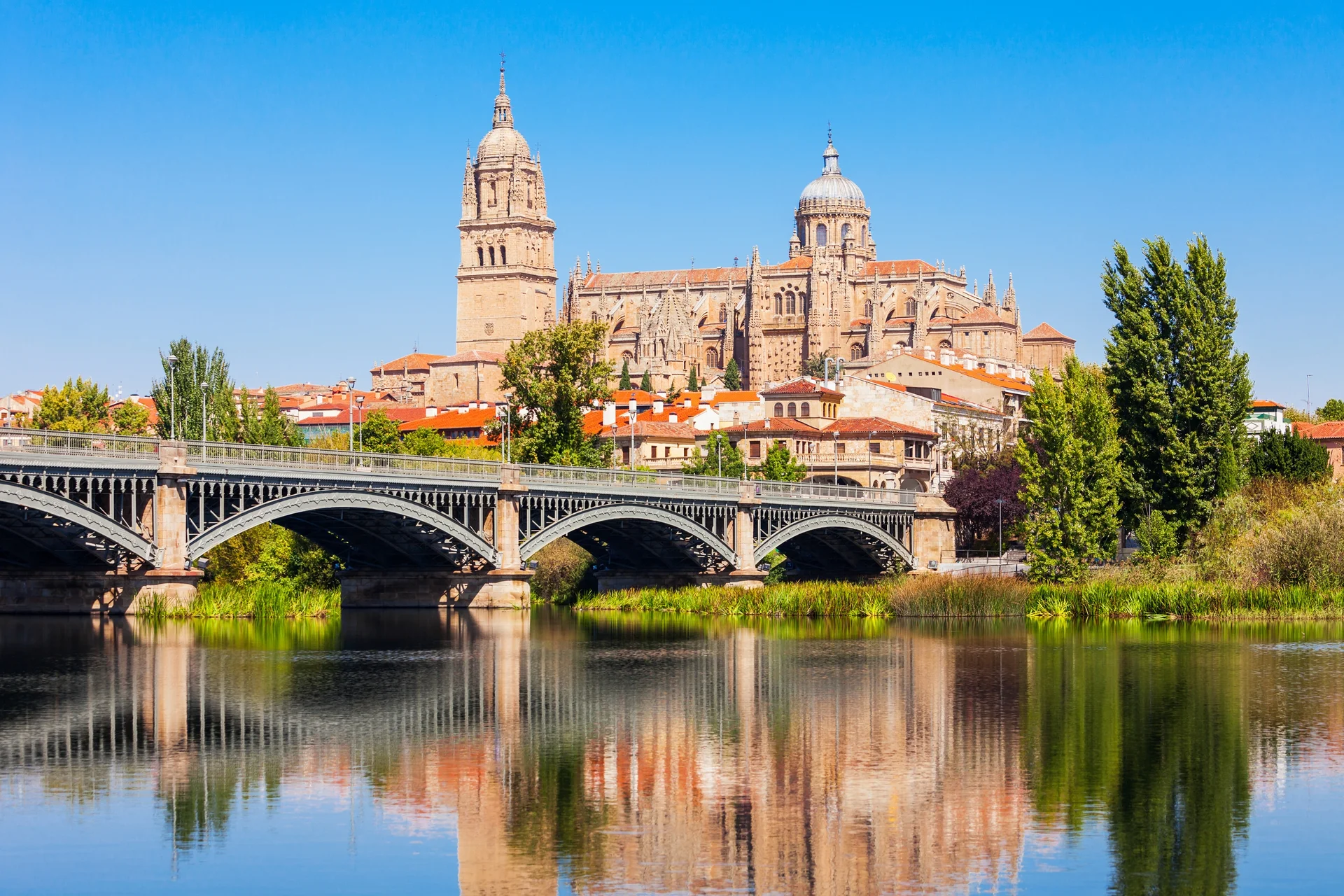
Salamanca has two cathedrals glued to each other, a very rare case in Europe. The Catedral Vieja, Romanesque, dates from the 12th century. The Catedral Nueva, Gothic, was built between the 16th and 18th centuries without destroying its neighbor. You enter the old one from inside the new one, which creates a rather striking time-travel effect.
On the facade of the new cathedral, look for the astronaut. Yes, an astronaut carved into the medieval stone. It was added during restorations in 1992 by mischievous craftsmen, alongside a monkey eating an ice cream cone and a stork. The Church let it stay.
Pro tip: the Ieronimus exhibition allows you to climb into the towers for only 4€ (about $4.50). You walk on the terraces between the gargoyles and gain panoramic views over the entire city. It is the best value in Salamanca.
The less-frequented neighborhoods
The Barrio del Oeste, north of the center, is a major surprise. This working-class neighborhood has transformed into an open-air street art gallery. Every garage door and every blank wall features a colorful fresco. Few tourists venture here, which strengthens the sense of discovery.
The Huerto de Calixto y Melibea, a small garden perched on the old walls, offers an unobstructed view of the cathedrals and the Roman bridge below. The entrance, through a discreet door in a dead-end street, looks like that of a private property. Keep going. The place evokes the tragic love story of La Celestina, a major work of Spanish literature.
Another unknown curiosity: the Cueva de Salamanca, a crypt where the devil supposedly taught black magic to students. Today, you can see the remains of the city's medieval walls there. Admission is free, and the atmosphere is deliciously gloomy.
Where to eat and drink in Salamanca?
Castilian gastronomy is not light. Hornazo, a pie filled with hard-boiled egg, chorizo, and pork loin, is the signature dish. Guijuelo ham, produced 30 miles (50 km) away, rivals the best Iberian hams. La Armuña lentils and roast suckling pig complete the menu.
For budget-friendly eating, head to Calle Van Dyck north of the center. Bars line the street and serve generous tapas for a few euros. Bambú, listed in the Michelin guide, offers inventive pinchos (small snacks) in a high-energy atmosphere. Vinodiario attracts locals and visitors alike for its shareable tapas and well-stocked cellar. Reservations are recommended.
For a more elevated gastronomic experience, En la Parra earned a Michelin star in 2021. Chef Rocío Parra works with regional products creatively in an intimate space of twenty seats.
Where to sleep in and around Salamanca?
The historic center remains the best choice for a first visit. The streets around Plaza Mayor have a high concentration of boutique hotels and rental apartments. The 5-star Hotel Rector occupies a 16th-century palace for those with a comfortable budget. The NH Collection Palacio de Castellanos offers a compromise between luxury and reasonable prices.
Budget travelers should look toward the university district, where pensions and youth hostels offer rooms between 25€ and 50€ (about $27-$55) per night. In the summer, some student residences open their doors to travelers. Airbnb rentals are plentiful in the center for more independent stays.
How to get to and around Salamanca?
Salamanca does not have an international airport. The simplest solution is to land at Madrid-Barajas and then take the AVE train from Madrid-Chamartín. The trip takes 1.5 hours and costs between 20€ and 40€ (about $22-$44) depending on the booking. The Avanza Bus company also offers direct connections from the airport in about 2.5 hours.
By car from France, count on about 8 hours from Bordeaux via the A63 and A62 highways. From Paris, the trip is around 10 hours. Once there, a car is useless. The historic center can be covered entirely on foot in less than 30 minutes. Underground parking lots allow you to park near the Plaza Mayor.
When to go?
Spring and autumn offer the best conditions with mild temperatures and moderate crowds. Holy Week attracts considerable crowds but offers an impressive liturgical spectacle. Summer can be stifling with temperatures regularly exceeding 95°F (35°C). In winter, expect the dry cold of the Meseta and freezing nights, but also a quieter city and rock-bottom accommodation prices.
Salamanca is simply my favorite city in Spain!
Located off the beaten path, but not far from Madrid, this city is magical.
Here history is everywhere, in the streets, the monuments, the churches, the university that is so ancient...
I have been back several times and the magic still works. I find this city so endearing.
Have a drink on the venerable Plaza Mayor, and you will understand...