
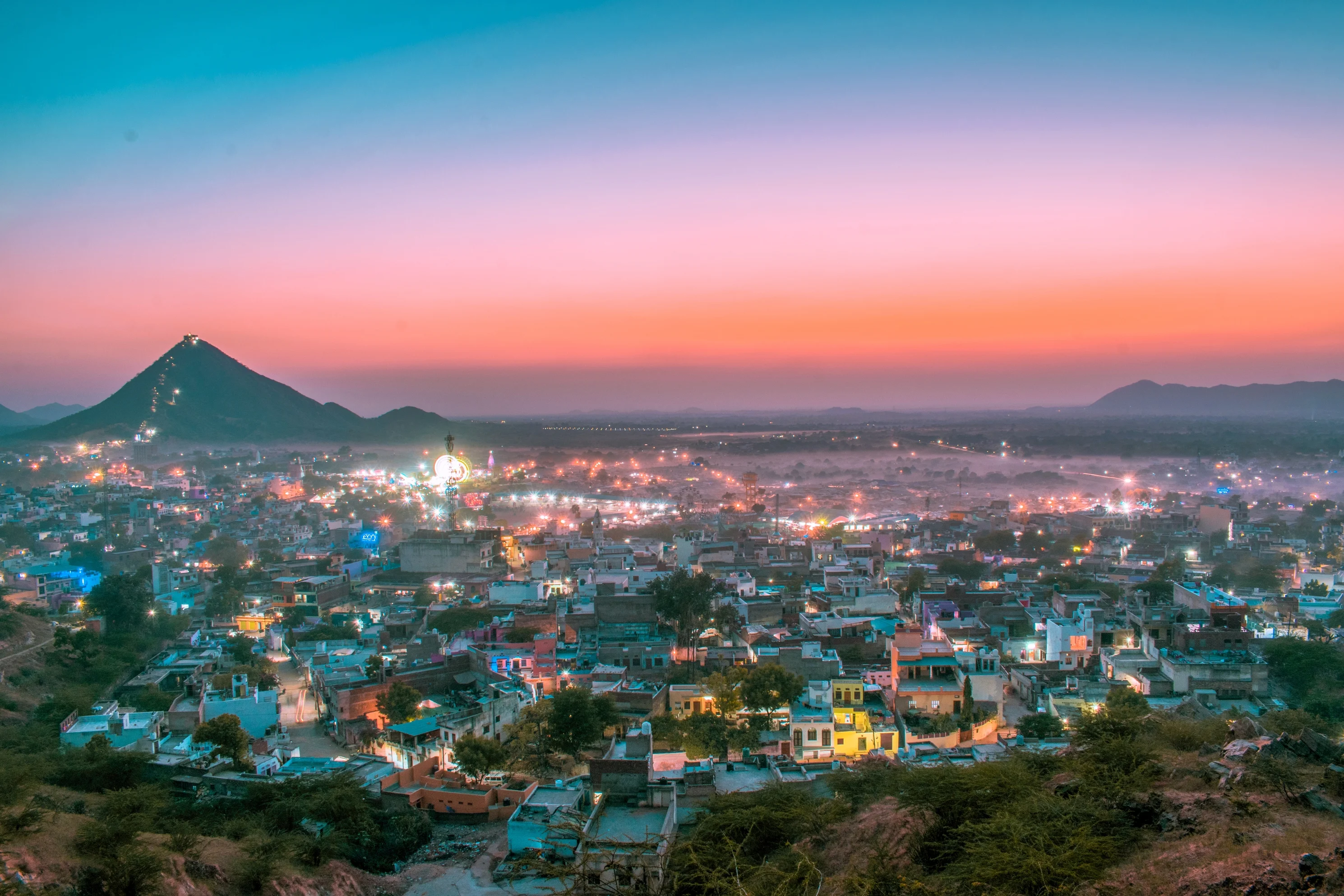
Visiting Pushkar, a spiritual and cultural stop in Rajasthan
The sacred lake of Pushkar
At the center of Pushkar lies its sacred lake, a body of water revered by Hindus. This spiritual site draws pilgrims who come to bathe and purify themselves. Surrounded by 52 ghats (stone steps leading down to the water) and hundreds of temples, it is a place defined by its serenity. The best time to visit is at sunrise or sunset, when the light reflects off the calm waters.
Iconic temples
Pushkar is home to one of the few temples dedicated to Brahma, the creator god of Hinduism. The Brahma temple, with its marble structure and traditional architecture, is a major pilgrimage site. Among other notable temples, the Savitri temple, located on a hill overlooking the city, offers an impressive panoramic view. You can reach it via a hiking trail or a cable car.
The market of Pushkar
For a look at local life, the Pushkar market is essential. You will find colorful clothing, artisanal jewelry, and traditional souvenirs. It is also an ideal place to sample local flavors or watch the daily routines of the residents. Take your time to browse and bargain, as haggling is a common practice in India.
The Pushkar Camel Fair
If you visit in November, do not miss the famous Pushkar Camel Fair. This annual event attracts thousands of visitors and features camel competitions, dance performances, and craft exhibitions. It is a unique opportunity to see Rajasthani culture in all its forms.
Local gastronomy
The vegetarian cuisine of Pushkar, shaped by its religious traditions, is worth exploring. Be sure to try malpua, a sweet pancake often served with syrup, or dal baati churma, a staple Rajasthan dish made of lentils, wheat balls, and sugar. Many small local restaurants serve authentic meals for 150-300 INR (about $2-4).
When to go
The best time to visit Pushkar is from October to March, when the weather is cooler and more pleasant. The camel fair in November is a major event that draws tourists from around the world. Avoid May and June, when temperatures often exceed 104°F (40°C), making outdoor sightseeing uncomfortable.
How to get there
Pushkar is accessible from Jaipur, the capital of Rajasthan, by train or bus. The train ride to Ajmer, the closest city, takes about 2 hours from Jaipur. From there, a taxi or rickshaw will take you to Pushkar in 30 minutes. One-way train fares start at 200 INR (about $2.50). For more comfort, private taxis are also available from Jaipur for about 2500 INR (about $30).
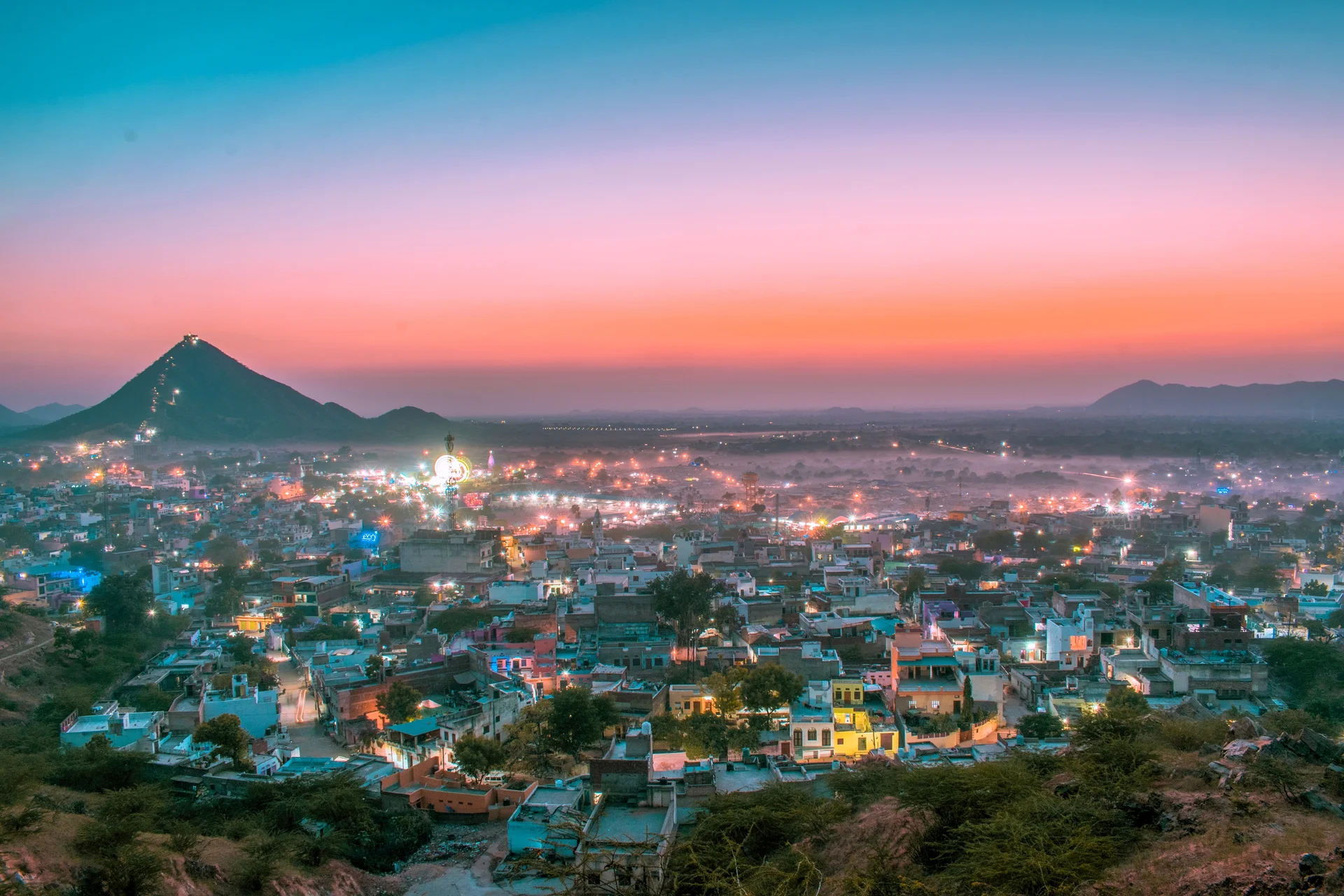
This holy city really left an impression on us with its calmness, which is so rare in all the other Indian cities we visited.
You run into tourists and pilgrims here in a laid-back, hippie atmosphere.
We enjoyed visiting its temples, wandering through its little shopping streets, which are admittedly a bit touristy, as well as walking around its lake and sacred waters.
It is fascinating to observe the pilgrimages along the lake, and it prepared us for our future visit to Varanasi (Benares), where the pilgrims are much more numerous and their practices are more intense.
We really liked our hotel, the Inn Seventh Heaven, right in the heart of the city. The rooms are beautiful, and the place is incredibly peaceful.