
Visit Narita, so much more than just an airport layover
The smoky scent of charcoal-grilled unagi (freshwater eel) drifts through the cobblestone alleys while a Boeing takes off in the distance, framed by traditional rooftops. This contrast defines the city: anchored in a thousand years of Buddhist history while moving to the rhythm of international flight schedules. Most travelers rush toward Tokyo without a second thought, missing out on a genuine Edo-period treasure tucked right next door.
Who should make the detour?
If you are hunting for the neon intensity of Tokyo, keep moving. This city of 130,000 residents is best enjoyed slowly, serving as a zen palate cleanser between flights. It is a win for history buffs, foodies seeking culinary authenticity, and travelers who prefer paths less trodden. With just a 10-minute train ride from the international airport, it is also the perfect move for those with a long layover or travelers looking to dodge the premium hotel rates found in Tokyo.
The budget is reasonable: a solid eel meal runs 2,500 to 4,000 JPY, hotel rates are softer than in the city, and the downtown area is entirely walkable. Conversely, if you have zero tolerance for aircraft noise or are looking for a high-octane nightlife scene, this stop might not be for you.
Naritasan Shinshoji Temple and its historical reach
Founded in 940, Naritasan Shinshoji draws over 10 million visitors annually and acts as the city's spiritual anchor. This massive Shingon Buddhist complex is striking for its monumental structures and a 58-meter-tall Peace Pagoda. The Great Main Hall, rebuilt in 1968, houses the statue of Fudo Myoo, a wrathful deity believed to protect the faithful.
Several times a day, monks perform the sacred fire ritual, a hypnotic ceremony where the prayers of devotees are consumed in purifying flames.
Around the temple
To reach the temple, you follow Naritasan Omotesando, an 800-meter winding street that snakes up from the station. This commercial artery smells like old-world Japan with its wooden facades, red lanterns, and stalls selling local specialties. You will pass vendors selling senbei (rice crackers) grilled on the spot, traditional craft shops, and bakeries offering red bean yokan or peanut cookies, another regional point of pride.
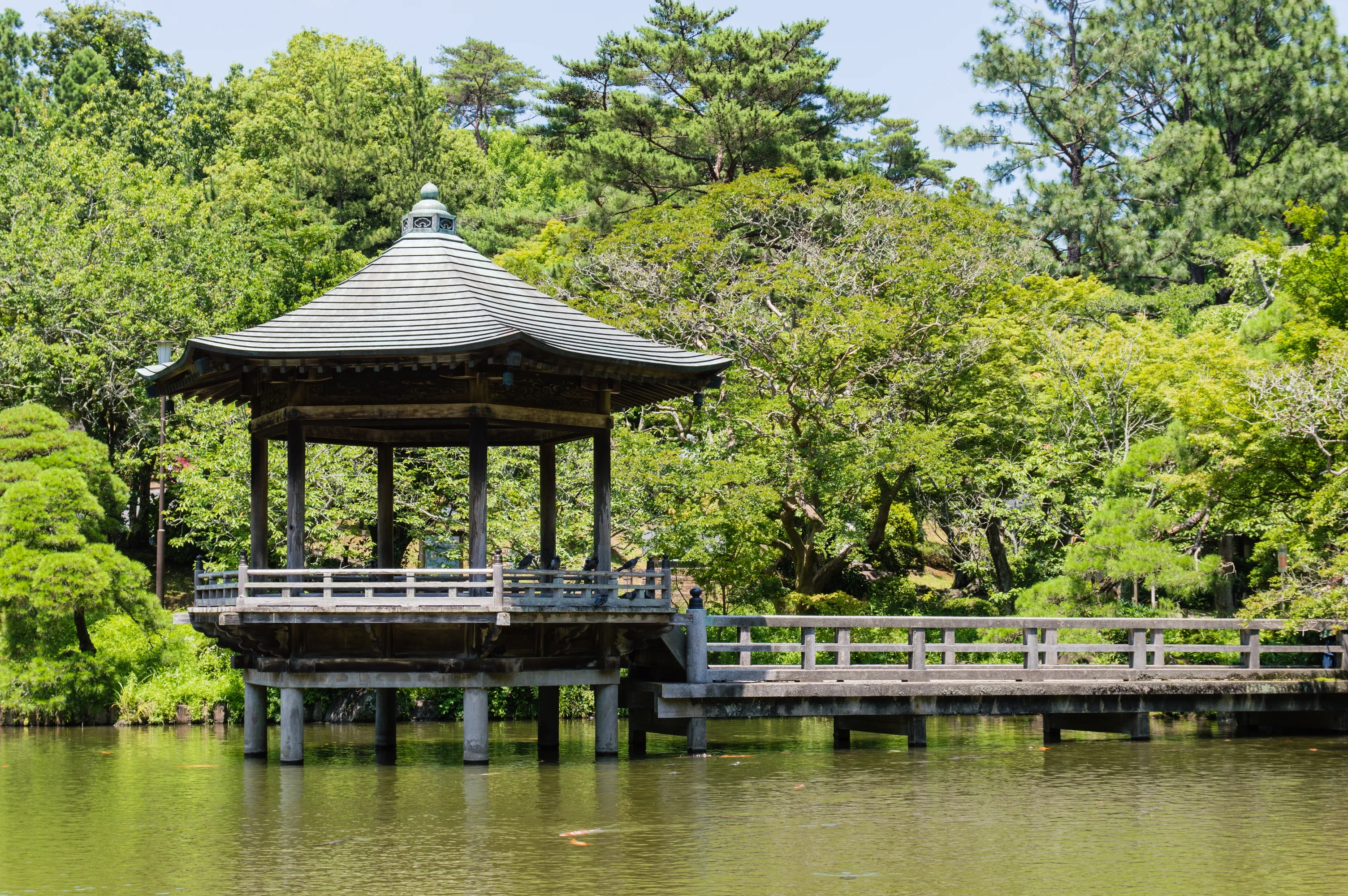
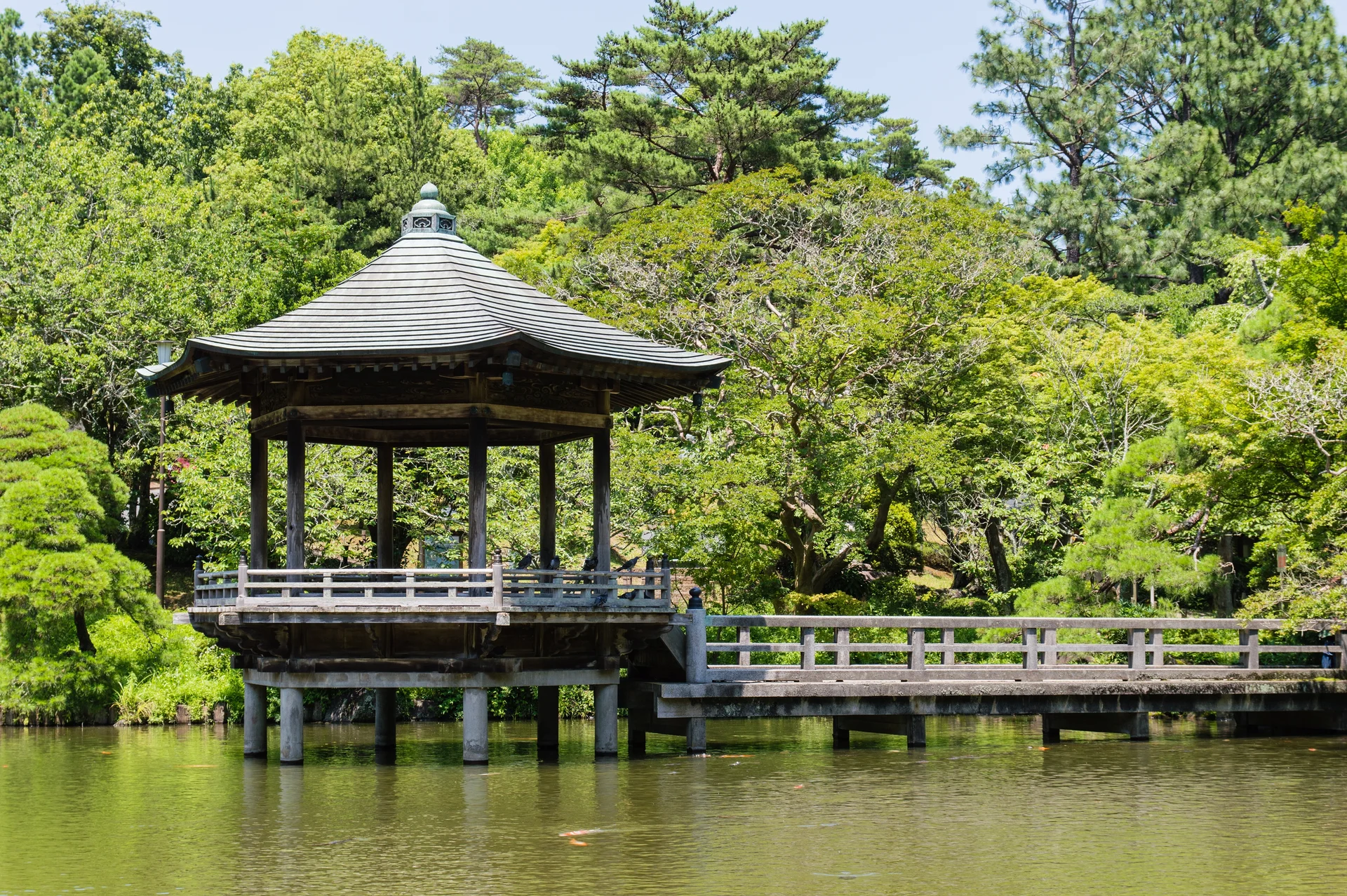
Behind the temple lies Naritasan Park, 165,000 square meters of traditional Japanese gardens punctuated by three ponds and red wooden bridges. In spring, cherry and plum blossoms explode in shades of pink and white. In autumn, the fiery maples offer a display of color that feels like a New England fall, but with a distinctly Japanese architectural backdrop. It is the perfect spot for a meditative walk far from the airport terminal chaos.
Friendly tip: Catch the fire ritual early in the morning, around 6 a.m. The solemn atmosphere in the morning mist, with only a few local regulars present, is well worth the early wake-up call. Tourists rarely show up before 10 a.m.
Grilled eel: The local culinary obsession
Why unagi reigns here
Since the Edo period, Lake Inbanuma and the Tone River provided freshwater fish in abundance. Eel naturally became a staple before evolving into the specialty served to pilgrims flocking to the temple. Today, no fewer than 60 unagi restaurants line the approach to the shrine, releasing that irresistible sweet and smoky scent of kabayaki, eel grilled and glazed in a sweetened soy sauce.
The unagi temples you cannot miss
Kawatoyo Honten, founded in 1910, remains the most iconic address. Their secret is a sauce passed down for over a century, constantly replenished and infused with the essence of thousands of eels. Chefs with 50 years of experience personally select live eels kept in well water. The building, designated a historical monument in 2020, is worth the visit alone for its three floors of aged wood and a massive ginkgo wood counter where the eels are prepped in plain view.
Kikuya, established 270 years ago, carries on a different tradition with a sauce that is saltier and less sweet than the Tokyo standard. Their extended charcoal grilling creates a spectacular crispy skin. A tasty rumor suggests director Steven Spielberg once ordered a special transport of their unaju to his hotel so he could eat it on his flight. The shop stays open until 9 p.m., unlike most others that close around 5 p.m.
Expect to pay between 2,500 JPY for a basic unaju (eel over rice) and 4,600 JPY for the premium version featuring Japanese-sourced eel. Kimosui, a clear liver soup, traditionally accompanies the dish for 100 JPY. A dusting of sansho, a Japanese pepper with a lemony, slightly numbing kick, elevates the flavors.
Friendly tip: Make a reservation or arrive right at noon if you are eyeing Kawatoyo or Surugaya on weekends and holidays. Lines can hit an hour wait during peak times, and some restaurants hand out numbered tickets during the busy season.
The unexpected joys of aviation
Ironically, the airport proximity is an attraction in itself for aviation geeks. Sakura-no-Yama park, located at the end of the runways, offers a view of takeoffs and landings from just a few dozen yards away. In spring, the 100 cherry trees add a poetic dimension to the roar of the jet engines. The park features a three-level observation deck with various viewing angles.
The Museum of Aeronautical Sciences, Japan's first aviation museum, displays full-scale aircraft, interactive cockpits, and flight simulators. Kids love it, but adult aviation enthusiasts can easily burn three hours here. The top-floor observatory allows you to scan the flight paths with a panoramic view.
Terminals 1 and 2 at the airport have their own observation decks on the 5th floor, which are free and accessible even without a boarding pass. On a clear day, you can spot Mount Fuji in the distance between Boeing sightings.
Shopping and local discoveries
Shisui Premium Outlets, a 15-minute express bus ride from the airport, gathers 120 international (Nike, Adidas, Coach) and Japanese brand stores at a discount. Services are designed for tourists, including luggage lockers, duty-free, free Wi-Fi, and multilingual assistance. It is perfect for last-minute shopping before you fly out.
Aeon Mall Narita, a massive shopping center 10 minutes by bus from the airport, houses 180 shops across several floors. You can find everything here, from a supermarket to restaurants and souvenir shops. It is less touristy than the outlets and is where the locals actually do their shopping.
About 20 kilometers away, the historical town of Sawara is worth a half-day trip. Its preserved canal district evokes the Edo era with merchant warehouses, weeping willows, and traditional homes turned into museums. Boat tours allow you to admire the architecture from the water.
Where to eat and drink in Narita?
Beyond the omnipresent eel, the Omotesando is packed with authentic small spots. Hayashida no Osenbei, the oldest rice cracker shop in town, still prepares them by hand in front of customers. Their negi miso specialty pairs fermented soybean paste and green onions on a crunchy senbei.
Miyoshiya, a cafe hidden in an adjacent alley, serves traditional Japanese desserts in a calm setting. Their spring cherry blossom parfait combines chiffon cake, sakura-flavored warabi mochi, ice cream, and whipped cream, served with a roasted hojicha tea that has a smoky finish. It is an ideal sweet break after an eel meal.
To try other local specialties, look for namazu (catfish) or carp, other freshwater fish historically caught in the region. Several traditional restaurants serve them fried or as sashimi.
Where to stay in Narita and the surrounding area?
Modern business hotels concentrated near JR Narita and Keisei-Narita stations offer the best value, with functional rooms between 6,000 and 10,000 JPY per night. Richmond Hotel Narita and Comfort Hotel Narita are in an excellent location 10 minutes on foot from the temple, with free shuttles to the airport.
For a traditional experience, Wakamatsu Honten offers an authentic ryokan right in front of the temple. Think tatami rooms, futons, public baths, and the option to have a kaiseki (refined Japanese multi-course dinner) in your room. Expect to pay 10,000 to 20,000 JPY per person including meals.
Large international hotels near the airport (Hilton Tokyo Narita, Hotel Nikko Narita, ANA Crowne Plaza) work well for travelers on short transit. All feature 24-hour free shuttles, pools, restaurants with runway views, and spacious family rooms. Rates range from 12,000 to 25,000 JPY depending on the season.
Getting there and getting around
From Narita International Airport, two trains connect to the city center in 10 minutes: the JR Narita line and the Keisei line. Both stations are located side by side. The Keisei fare is 280 JPY, or 272 JPY with an IC card. Free shuttles also serve the main hotels from the terminals.
From Tokyo, the JR Narita Express takes about 1 hour from the central station for 3,000 JPY. The Keisei Skyliner connects to Ueno in 75 minutes for 2,500 JPY. Express buses from Tokyo Station take 50 minutes for 1,300 JPY and go directly to the Omotesando.
The historic center is entirely walkable. From the station to the temple is a pleasant 10-minute walk. From the temple to the surrounding parks is 15 minutes max. To reach the outlets or Sawara, rely on local buses (schedules are limited) or take a taxi.
When to go?
Spring, especially late March to early April, offers the spectacle of sakura in full bloom in the temple gardens and at Sakura-no-Yama park. Temperatures hover between 10 and 20°C (50-68°F), which is comfortable for walking. The trade-off is that this is peak tourist season in Japan, with inflated accommodation prices and heavy crowds.
Autumn, particularly November, is the ideal period. Maples turn a deep red, the climate remains mild (15-25°C or 59-77°F), and crowds thin out after the Japanese school year is underway. The autumn foliage festival animates Naritasan Park with cultural events. July and August bring stifling heat, high humidity, and typhoon risks, though the summer is also when traditional matsuri festivals take place.
Like me, you might discover this city through the international airport, the point of arrival or departure in Japan. The area around the airport is not very attractive, as it is mostly hotels and a few shops.
But there are also some tourist attractions, like the pretty traditional shopping street and the temple! Also, if you want to relax, think about this lesser known destination that is easily accessible from Tokyo!