Israel, where three thousand years of history play out in the present
The scent of toasted zaatar drifts from the stalls of the Old City in Jerusalem while a call to prayer echoes from the Dome of the Rock. A few hours later, you are sipping a cocktail on a Tel Aviv rooftop facing the Mediterranean as DJs prep for the night ahead.
That constant whiplash between the sacred and the secular, between ancient desert and high-tech startups, is the daily rhythm of a country barely smaller than New Jersey.
A trip that demands your full attention
This country suits the curious, history nerds, and food lovers chasing Mediterranean and Levantine flavors. Hikers will find landscapes of staggering variety, from the lunar craters of the Negev to the green oases of the Galilee and cliffs plunging into the Dead Sea. Night owls can lean into Tel Aviv's party scene, widely known as one of the most energetic on earth.
On the flip side, this destination is not built for frictionless beach lounging. The beaches are there, but regional tensions, a heavy geopolitical backdrop, and frequent security checks call for a good deal of adaptability.
Is it safe to travel in Israel?
The question deserves a straight answer. Under normal conditions, the main tourist hubs are secure. Tel Aviv, Haifa, the Mediterranean coastline, and most historic sites carry a safety level comparable to Western Europe. That said, conditions can shift fast.
Border areas near Gaza, Lebanon, and Syria are strictly off-limits. In the West Bank, access can be restricted without warning, and driving after dark is discouraged. Always check State Department travel advisories before and during your trip. The Home Front Command app, Pikud HaOref, sends real-time emergency alerts.
Getting your head around Shabbat
Every Friday starting around 2:30 pm, the country taps the brakes. Public transit stops, shops close, and restaurants empty out in religious neighborhoods. Shabbat runs until Saturday night. In Jerusalem and ultra-orthodox areas, hold off on taking photos, driving, or wearing revealing clothes. Tel Aviv stays much more open, though you will still want to plan your transit ahead. This weekly shift can catch you off guard, but it also brings a rare experience, watching an entire city settle into an unearthly quiet is genuinely striking.
A steeper budget than its neighbors
Plan on $68 to $113* a day if you are backpacking, staying in hostels, and eating street food. A mid-range budget sits around $169 to $290* daily for three-star hotels and sit-down dinners. Lodging takes a big bite out of your funds: a mid-tier hotel runs $113 to $169* a night, while hostels kick off around $29*. The bright spot? Street food is filling and cheap, running between $4.50 and $9* for a full meal. Public transit is reasonable too, a bus from Tel Aviv to Jerusalem costs about $5.70*.
Jerusalem, holy three times over
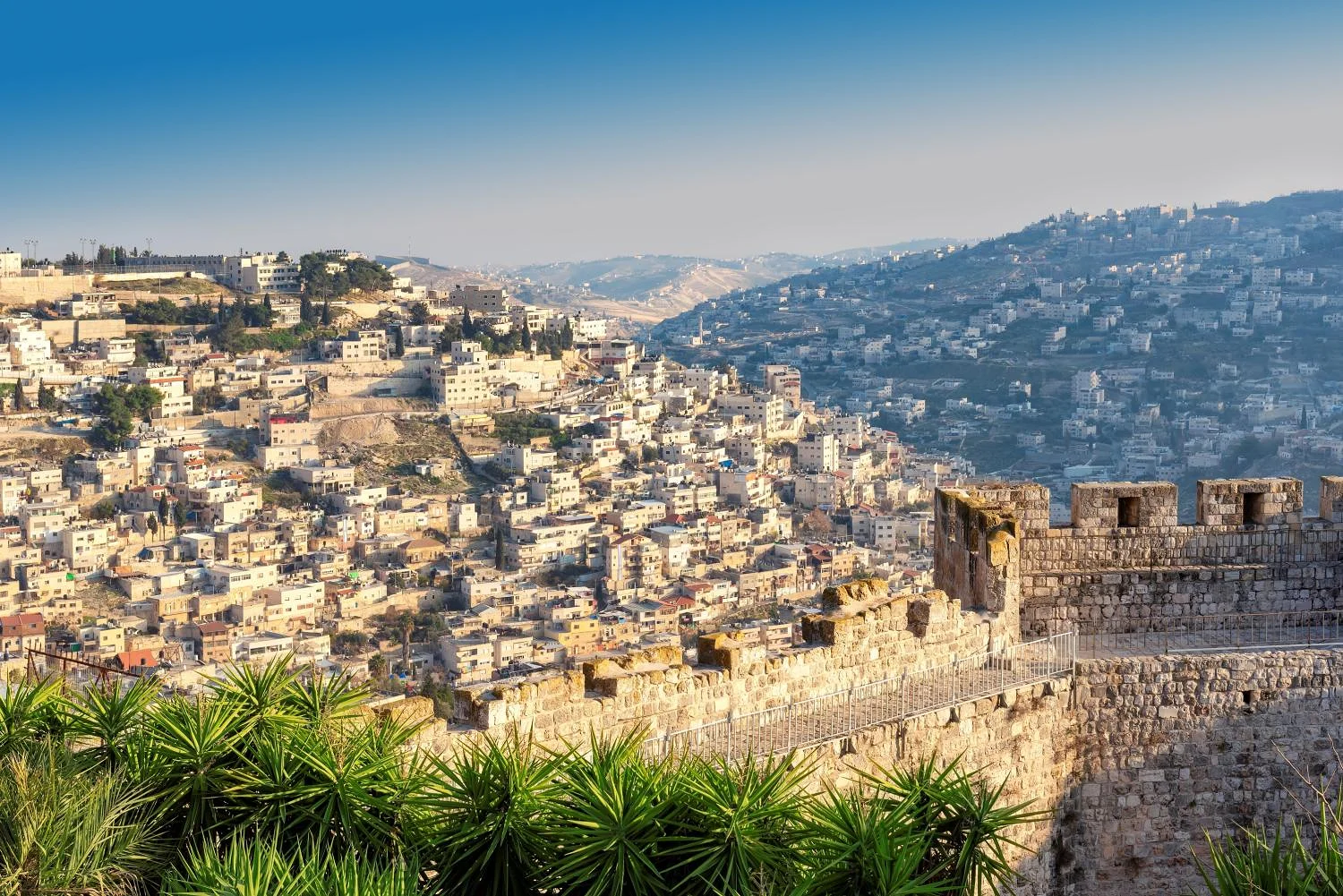
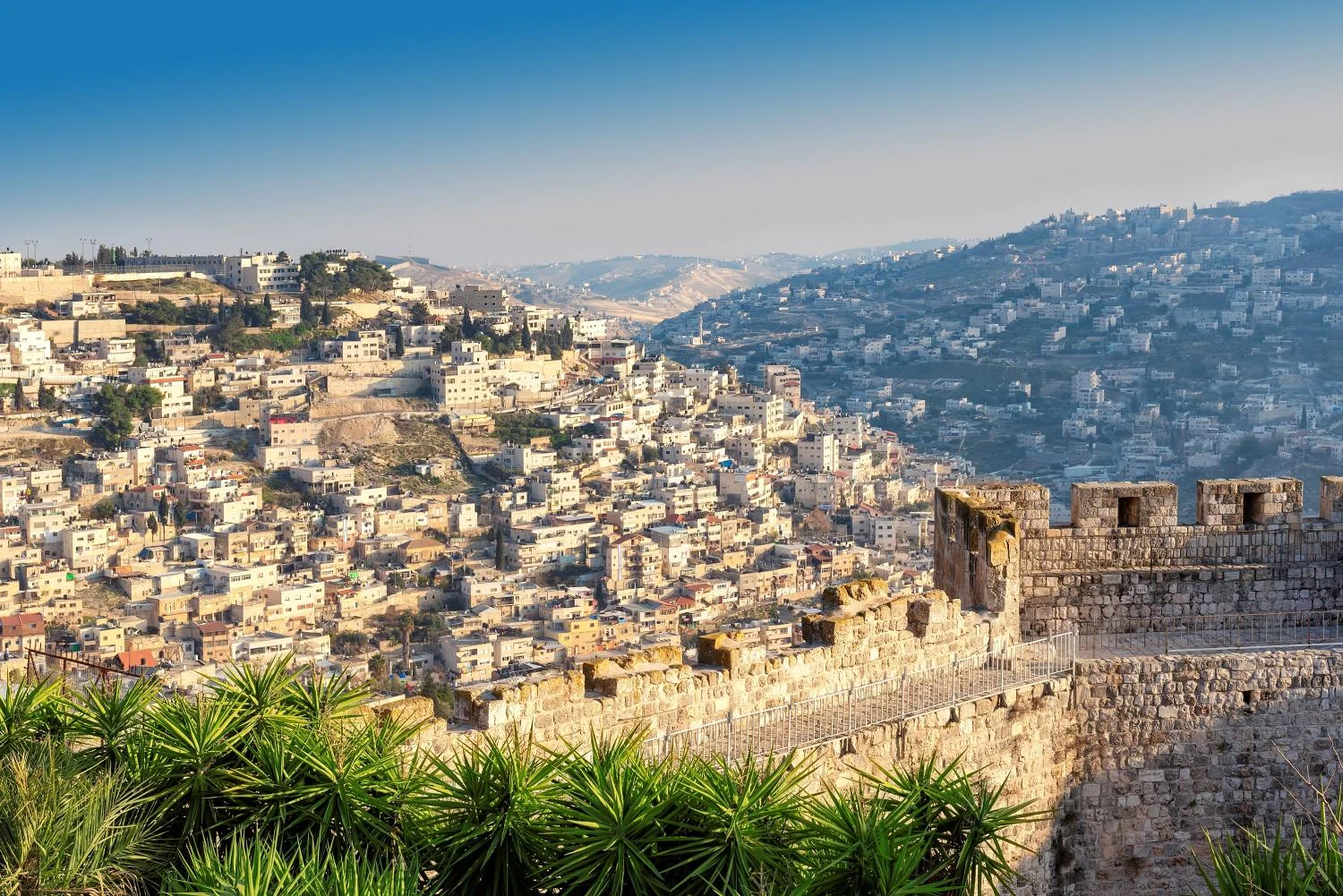
No city on earth packs this much sheer devotion into a few square miles. The Western Wall echoes with Jewish prayers while just a short walk away, the Church of the Holy Sepulchre welcomes Christian pilgrims touching the stone where Christ was laid. Above it all, the Dome of the Rock glints in the sun as Islam's third holiest site. That layered stack of history, at times explosive and always intense, is unlike anywhere else.
The Old City splits into four quarters: Jewish, Muslim, Christian, and Armenian. Lose yourself in the alleyways of the souk, where spice sacks sit right next to religious souvenirs of every faith. Outside the walls, the Mahane Yehuda Market offers a more modern vibe. By day it is a loud food market, by night the stalls swap produce for bar stools.
Friendly tip: visit the Temple Mount early in the morning to beat the lines and the tension. Non-Muslim entry is restricted to specific hours and can close without notice.
Tel Aviv, the city that never sleeps
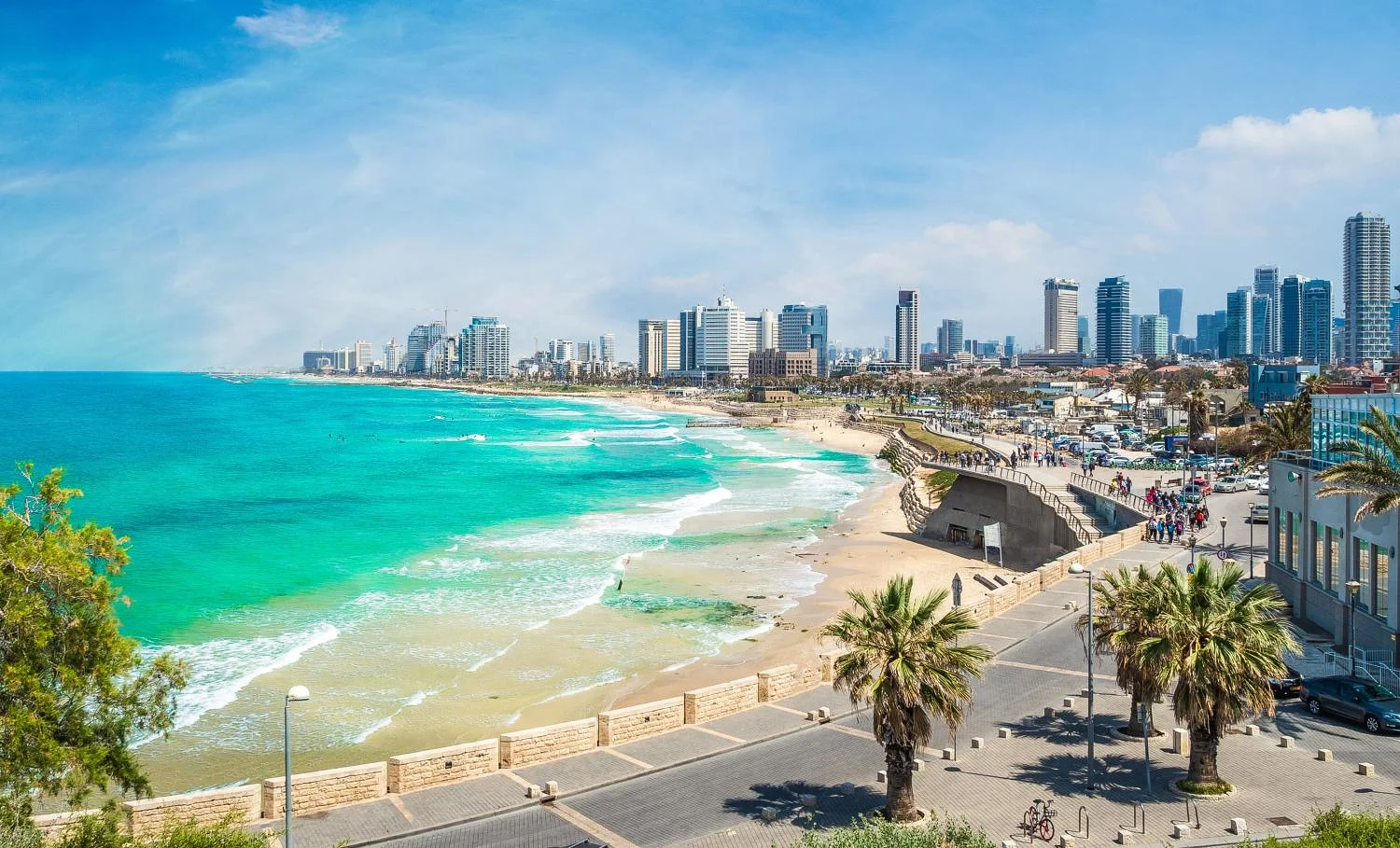
Founded in 1909 on sand dunes, Tel Aviv plays the country's other card: secular, hedonistic, and pointed firmly at the future. The UNESCO-listed White City packs over 4,000 Bauhaus buildings with clean lines. The Neve Tzedek neighborhood, the first Jewish suburb outside the walls of Jaffa, now lines its streets with art galleries and busy cafés.
Fine sand beaches stretch for 14 kilometres. Gordon Beach draws families, Hilton Beach the LGBTQ community, and Banana Beach the surfers. As the sun dips, the bars along Rothschild Boulevard and the renovated port come alive. Nightlife gets going late, very late, with clubs rarely opening before midnight and running until dawn.
Old Jaffa and its secrets
Tucked right against Tel Aviv, Jaffa ranks as one of the oldest ports in the world. Its cobblestone alleys, artist studios, and flea market contrast sharply with the modern sprawl next door. The Levinsky Market, less toury than the Carmel market, overflows with spices and Middle Eastern pastries. The Yemeni bakery Asaluf, hidden in the working-class HaTikva neighborhood, serves up hot malawachs fresh from the oven.
The Negev Desert and the Dead Sea
Southern Israel takes up more than half the country. The Ramon Crater in Mitzpe Ramon cuts 40 km long and 500 metres deep into the earth. It is not an impact crater but a makhtesh, a geological formation found nowhere else on the planet. Hikes here show off multicolored rock layers and quiet wildlife like ibex, desert foxes, and raptors.
Further north, the Dead Sea drops to 430 metres below sea level. Floating without effort in water thick with salt remains a surreal experience. The fortress of Masada, perched high on a rock plateau, tells the story of the zealots holding out against the Roman legions. Walking up at sunrise while the desert turns blazing red makes the pre-dawn wakeup entirely worth it.
Friendly tip: the Dead Sea area can hit 45°C in the summer. Aim for October through April and carry at least 3 litres of water per person on any hike.
The Galilee and the lesser-known north
The green north comes as a shock after the dry south. The Sea of Galilee feeds a fertile basin where Christian pilgrims trace the footsteps of Christ. Capernaum, Tabgha, and the Mount of Beatitudes line the water one after another.
Safed, sitting at 900 metres of altitude, counts as one of Judaism's four holy cities. Its blue alleyways, ancient synagogues, and artists' quarter make for a quiet stop. Further north, the Golan Heights rolls out green hills, vineyards, and Druze villages where hospitality usually means a massive meal.
Off-the-beaten-path escapes
Keep these in mind to ditch the crowds:
- Ein Hod: an artist village tucked into Mount Carmel with workshops open to visitors
- Zichron Yaakov: vineyards and 19th-century pioneer architecture
- Rosh Hanikra: wave-carved sea caves reached by cable car
- Caesarea: Roman ruins facing the Mediterranean with an ancient theater still used for concerts
Israeli plates: a crossroads of flavors
Israeli cuisine is not a single tradition so much as the sum of every returning diaspora. Yemen gave us malawach, the flaky flatbread served at breakfast. Morocco brought dafina, the slow-cooked stew for Shabbat. Poland contributed gefilte fish. Iraq sent kubbeh soup. What ties it together? Hummus, falafel, tahini, and an obsessive demand for fresh ingredients.
The Israeli breakfast is an institution: scrambled eggs, chopped salads, cheeses, labneh, olives, and warm pita. Shakshuka, eggs poached in a spiced tomato sauce, works at any hour. For dessert, Palestinian knafeh with its crunchy cheese pastry soaked in syrup competes with Turkish baklava for pure sugar intensity.
Friendly tip: for the best hummus in Jerusalem, locals will point you to Abu Shukri in the Old City or Lina in the Christian Quarter. Get there before noon because the pots are usually empty by 2 pm.
When to go to Israel
Spring, from April to May, brings the sweet spot: mild temperatures, wildflowers blooming in the Negev, and water warm enough for swimming. Fall, from September to November, matches those perks with fewer pilgrims. Summer, from June to August, turns brutal in the south and near the Dead Sea, where the thermometer regularly clears 40°C. Winter stays mild on the coast but can catch you off guard in Jerusalem with night temps hovering near 5°C and regular rain.
Skip the major Jewish holidays unless you are ready for nationwide shutdowns: Passover in the spring, Rosh Hashanah and Yom Kippur in September or October. On the flip side, catching Hanukkah in Jerusalem in December or Purim in Tel Aviv in March makes for memorable party moments.
How to get to Israel
Ben Gurion Airport, sitting between Tel Aviv and Jerusalem, handles practically all international flights. From New York or other major US east coast hubs, figure on about an 11-hour flight. El Al and major European carriers run regular connections. Prices swing between $230 and $680* round-trip depending on the season, with lower rates dropping in February and November.
Visitors must obtain an ETA-IL electronic travel authorization before departure, even for nationalities normally exempt from visas. Make sure your passport stays valid for at least 6 months past your planned return date. Airport security checks are thorough, so plan to show up three hours before takeoff when flying out of Israel.
Getting around Israel
The Egged bus network spans the whole country with modern, air-conditioned coaches equipped with Wi-Fi. A Tel Aviv-Jerusalem trip runs about $5.70*, and Tel Aviv to Haifa costs around ten euros. Trains link Tel Aviv efficiently to the airport, Haifa, and Jerusalem via a recently opened high-speed line. Heads up: public transit shuts down during Shabbat.
Renting a car gives you the most freedom to explore the Negev or the Galilee. The roads are top-notch, and signs come in Hebrew, Arabic, and English. Budget $34 to $57* a day depending on the ride. Sheruts, shared minivans, take over for buses on Saturdays at similar rates. For city hops, the apps Gett and Yango operate like Uber with clear pricing.