

Visiting Aguas Calientes, the Gateway to Machu Picchu
You can't drive to the foot of Machu Picchu. The road ends, the train stops, and the last town before the ruins is Aguas Calientes, also called Machu Picchu Pueblo. It sits in a green river valley along the Urubamba, and every traveler heading to Machu Picchu passes through it. Most people treat it as a simple transit stop, but it has a few things worth your time before or after the archaeological site.
The Hot Springs of Aguas Calientes
The town is named for its natural hot springs, and the baths on the edge of town are set up as pools of different temperatures. Their quality is sometimes criticized because of the tourist crowds, but they're a good way to loosen up sore legs after a day of hiking.
The Manuel Chávez Ballón Museum
This small museum, about a 30-minute walk from the center, covers the history of Machu Picchu and the archaeological digs carried out there. It explains Inca engineering and the theories about what the citadel was actually for. It sees few visitors, which makes it a quieter way to get deeper context on the site before or after you walk the ruins.
The Botanical Garden and Mandor Falls
A few kilometers outside town, following the railroad tracks, you'll reach the Mandor Falls, a pleasant jungle walk. The trail runs through a botanical garden where you can spot local plants and birds. You don't need a guide, and it's an easy way to get away from the crowds in the village for a couple of hours.
The Artisan Market
Right next to the train station, the Aguas Calientes artisan market packs in stalls selling textiles, jewelry, and souvenirs tied to Andean culture. Prices tend to run higher than in Cusco, but it's still a decent place to pick up a last souvenir before you leave the region.
A Cuisine Shaped by the Sacred Valley
Food in Aguas Calientes mixes Andean tradition with international flavors. The local specialty is trucha a la parrilla, grilled trout caught in the surrounding rivers. You'll also find lomo saltado, a stir-fry of beef with vegetables and french fries.
For drinks, mate de coca (coca leaf tea) is everywhere, and it's the standard help for adjusting to the altitude.
Where to eat
- Indio Feliz (Center): a fusion restaurant serving good French-Peruvian cooking.
- Tree House (Center): known for dishes that blend local and international influences.
- El Mapi (Center): refined cooking in an elegant setting.
- La Boulangerie de Paris (Center): a stop for fresh bread and pastries.
Where to stay
- Inkaterra Machu Picchu Pueblo Hotel (Center): a high-end hotel in a lush, peaceful setting.
- Tierra Viva Machu Picchu (Center): a comfortable option with good value for the price.
- Gringo Bill's (Center): a friendly place to stay for travelers on a moderate budget.
- Supertramp Hostel (Center): a young, lively hostel for backpackers.
When to go
The best window for Aguas Calientes is May to September, during the dry season. From November to March, rain is frequent and can complicate getting up to Machu Picchu. June brings Inti Raymi, an Andean festival celebrated in Cusco that can affect crowd levels across the region.
How to get there
From Cusco, most travelers take the train to Aguas Calientes with either PeruRail or Inca Rail, a trip of 3.5 to 4 hours depending on the service. A cheaper alternative is to take a bus to Hidroeléctrica and then walk about 2.5 hours to town.
How to get around
Aguas Calientes is a small town where everything is done on foot. To reach Machu Picchu, shuttle buses leave regularly from the center, but you can also climb up on foot in about 1.5 hours.


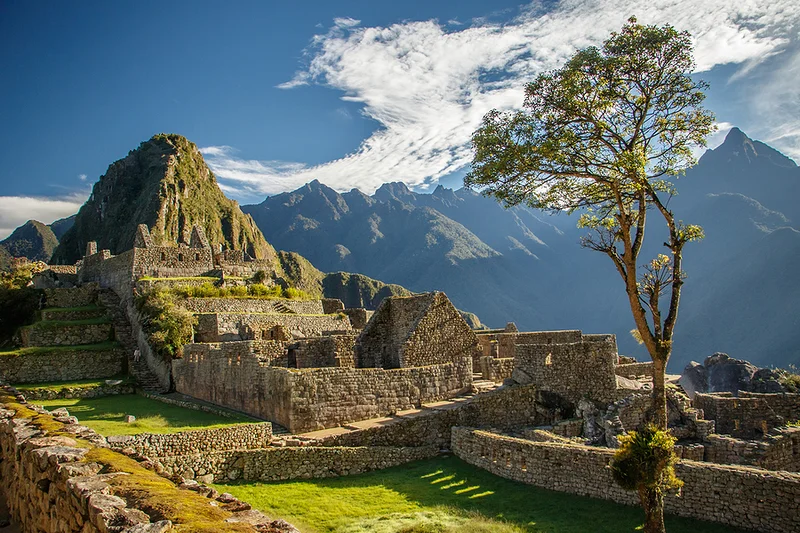
Aguas Calientes is a small thermal town at the foot of Machu Picchu, the famous Peruvian wonder of the world. Naturally, it is a very touristy town, with its huge market near the train station, and a large number of accommodations and restaurants for visitors from all over the world. I do not necessarily recommend the baths, they are not super clean.
Despite everything, I find the atmosphere of Aguas Calientes quite magical, and I met some nice people and had a good evening during both of my visits.