Madagascar: The Island That Evolved on Its Own Terms
An indri calls out from the forest canopy. The sound carries for miles, something between a whale song and a foghorn, and it stops you cold. You're standing somewhere in the Andasibe forest, three hours by road from the capital, and you're looking at an animal that exists nowhere else on the planet.
Madagascar broke away from the African continent 160 million years ago, and life here has been doing its own thing ever since. The lemurs, the giant baobabs, the chameleons in colors that seem physically impossible: everything you encounter on this island is found on no other continent on Earth.
An Honest Warning: This Trip Takes Work
Let's be straight about this upfront. Madagascar is not an easy destination. The roads rank among the worst in Africa. Journeys routinely take two to three times longer than any map app will tell you. Outside the main tourist circuits, infrastructure is thin. If you're expecting smooth transfers, reliable air conditioning, and international hotel standards, this is the wrong place.
But if the idea of spending 30 hours on bone-rattling dirt tracks to reach a forest of razor-sharp limestone spires sounds like a good time, if you can eat rice three times a day and roll with power outages without losing your mind, then Madagascar will get under your skin in the best possible way. This island is built for patient travelers, hardcore wildlife enthusiasts, and anyone who genuinely wants to go somewhere that hasn't been smoothed out for tourists.
Families with young kids or travelers with limited mobility should think carefully before committing.
Budget Reality Check
Day-to-day costs are low: figure 75,000 to 125,000 MGA per day (roughly $17-$28) for meals and small expenses. A decent guesthouse room runs 100,000 to 200,000 MGA per night (about $22-$45). The budget climbs fast once you factor in a 4x4 with driver, which is essentially mandatory for exploring the country: around 300,000 to 400,000 MGA per day (about $67-$90), fuel not included. National park entrance fees and mandatory guides add another 50,000 to 100,000 MGA (about $11-$22) per visit.
The Landscapes You Won't Forget
The Avenue of the Baobabs, near Morondava, is on every Madagascar postcard for good reason. These 800-year-old giants line a dusty dirt road, and at sunset their silhouettes go a shade of orange that looks almost artificial. The show lasts about twenty minutes, but it sticks with you. Arrive an hour before dusk to get ahead of the tour groups and actually have room to move around.
Isalo National Park in the south spreads out like a Malagasy version of Utah's canyon country, ochre sandstone formations cut through by gorges lined with palms. Hidden at the bottom of one of those gorges is the Natural Pool, a clear swimming hole that takes about three hours round-trip to reach on foot. After hiking across the plateau in the heat, that swim is absolutely worth the effort.
Tsingy de Bemaraha: A Cathedral Made of Stone
The Tsingy de Bemaraha, a UNESCO World Heritage Site, is the most intense experience Madagascar has to offer. Millions of years of erosion have carved the limestone into a vertical maze of needle-sharp spires, and you navigate it harnessed in, moving across via ferrata cables and suspension bridges. The Grand Tsingy requires solid physical fitness and an early start to beat the brutal midday heat. Budget a minimum of four days from Morondava just to get there and back, over roads that will test your patience thoroughly. It's worth every minute.
Insider tip: Book two nights at Tsingy instead of one. The drive in will wipe you out, and you'll be glad to have the next morning to explore the Petit Tsingy, which is more accessible but just as impressive.
Lemur Country
Madagascar is home to more than 100 species of lemurs, and these wide-eyed primates exist nowhere else on Earth. Andasibe-Mantadia National Park, just 87 miles from the capital, is the easiest place to find indris, the largest living lemurs. Their morning calls echo through the rainforest, and the local guides know exactly where to look.
Further south, the community-managed Anja Reserve, run by the village itself, lets you get within a few feet of ring-tailed lemurs. They wander across the rocks with a casual confidence that's genuinely disarming. Admission is a few dollars and goes directly to the local community.
Watch Without Interfering
Some sites encourage lemurs to jump on visitors' shoulders for photos. Skip those places entirely. It disrupts the animals' natural behavior and does real harm. The best wildlife encounters happen in national parks with guides who are trained in conservation ethics. Ranomafana National Park, on the southern route, offers rainforest hikes where you'll also spot tiny chameleons and neon-colored frogs alongside the lemurs.
Beaches and Islands at the Edge of the Map
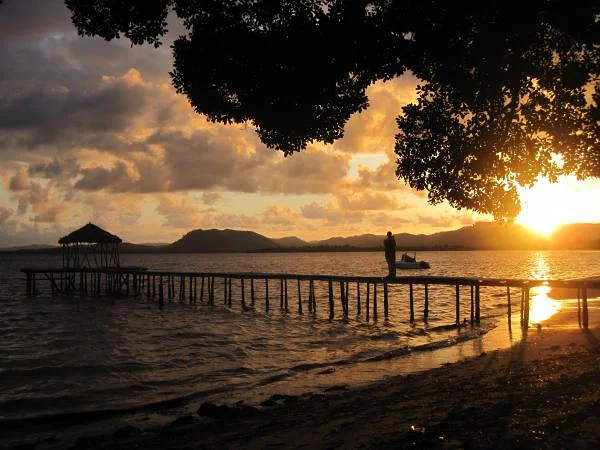
Nosy Be, off the northwest coast, handles the bulk of Madagascar's beach tourism. The beaches are genuinely nice and the hotel options are plentiful, but it can feel overcrowded. For something quieter, push on to Nosy Komba or Nosy Sakatia, smaller neighboring islands where the pace drops considerably.
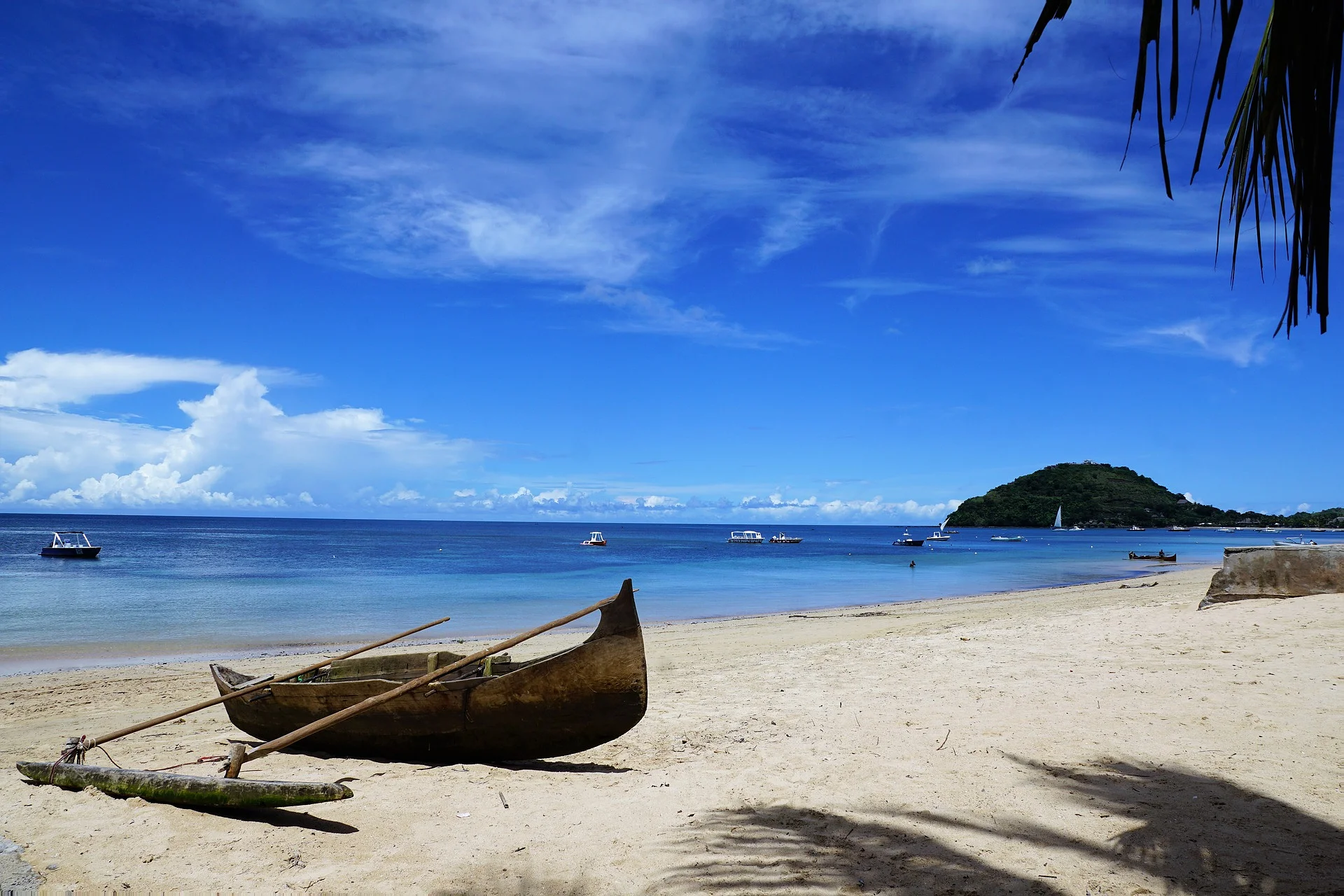
On the east coast, Île Sainte-Marie has a completely different character. It was a pirate stronghold in the 17th century and still has a corsair cemetery and a pleasantly faded, time-warped feel. From July through September, humpback whales come to calve in its waters. Watching them from a traditional dugout canoe with the engine cut is one of those moments that's hard to describe afterward.
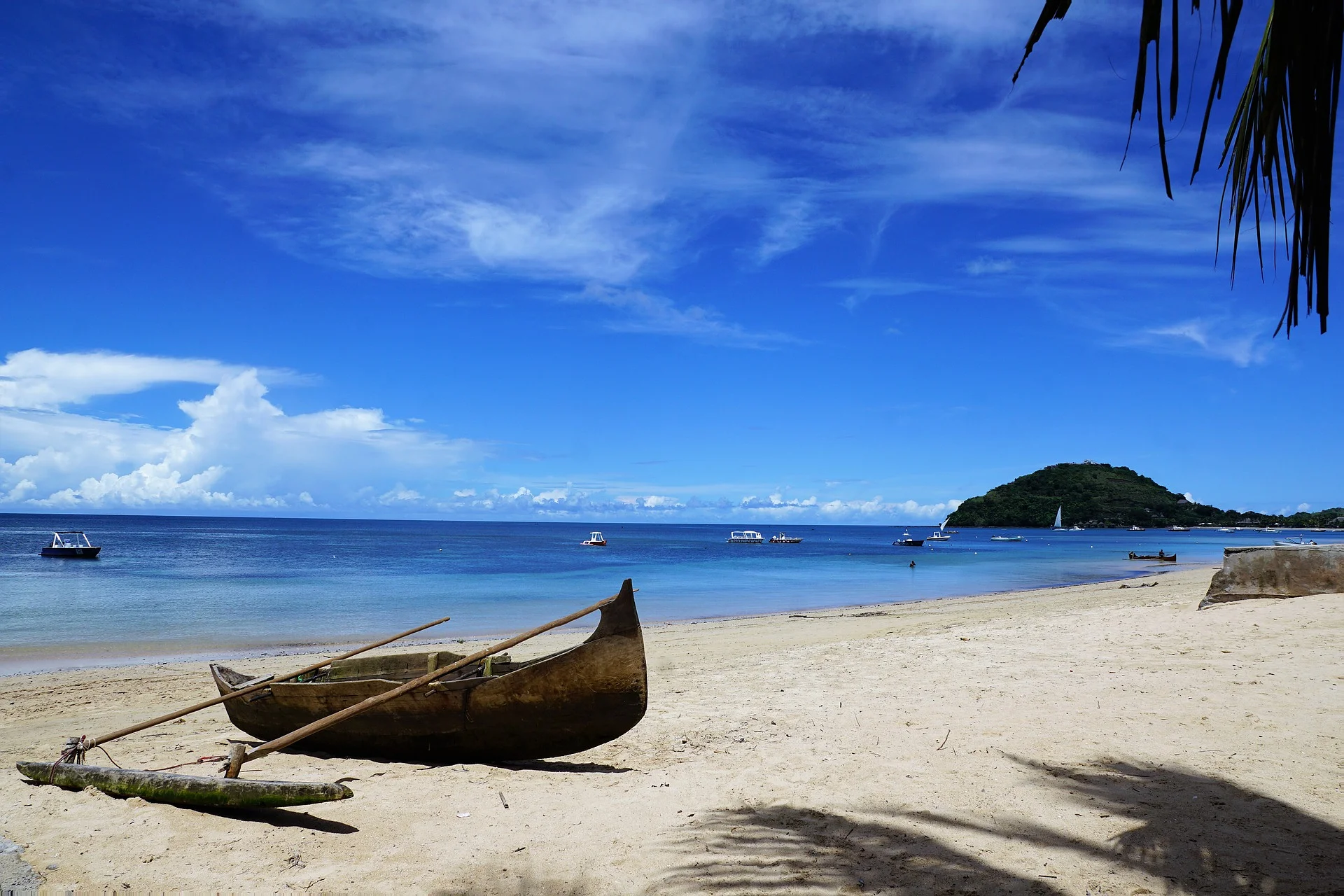
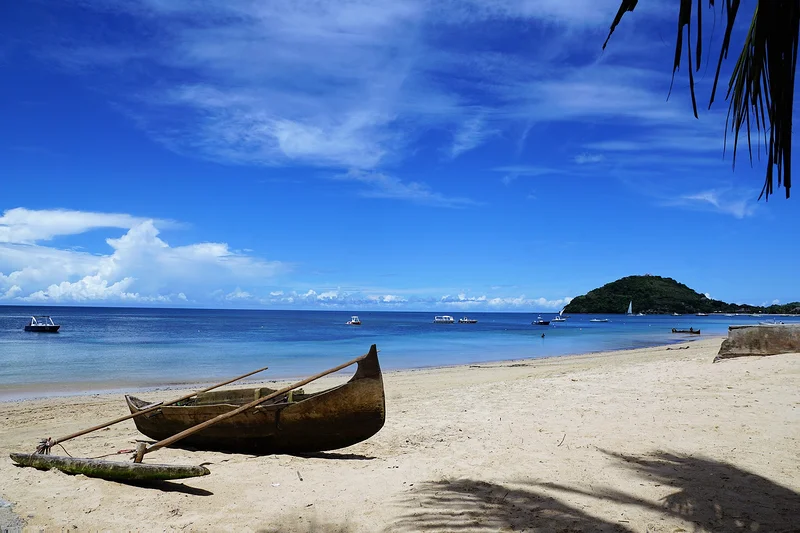
Off the beaten path entirely, the fishing village of Anakao in the southwest offers empty beaches and total immersion in Vezo fishing culture. The outrigger canoes go out every morning, and whatever's grilled for dinner that night came out of the water that day.
The Interior and the Highlands
The RN7, the main highway connecting Antananarivo to Toliara, cuts across the highlands and is the country's most traveled overland route. Over 620 miles, the scenery shifts constantly: terraced rice paddies, red-brick villages, lively markets, eucalyptus forests. Antsirabe, a former colonial spa town, is worth a stop for its artisan workshops and the brightly painted cycle-rickshaws (called pousse-pousse) that fill the streets.
Further south, Fianarantsoa sits above Madagascar's wine country. Yes, wine country. The local Lazan'i Betsileo is a genuine surprise for anyone curious enough to try it. The old upper town, with its cobblestone lanes and rammed-earth houses, has a quiet, unhurried charm that most travelers drive straight through without stopping.
Insider tip: Never underestimate travel times. What Google Maps calls a 4-hour drive regularly turns into 6 or 7 hours on Malagasy roads. Leave early, build in buffer time, and do not drive after dark under any circumstances.
What to Eat in Madagascar: Rice Rules Everything
Rice shows up at every meal, breakfast included. The national dish, romazava, pairs slow-cooked zebu beef with brèdes, leafy greens with a mild medicinal quality. Ravitoto, a stew of pounded cassava leaves with pork and sometimes coconut milk, is deeply savory and satisfying. At the local diners called hotely, a full meal costs under 10,000 MGA (less than $2).
On the coasts, seafood is abundant and cheap by any standard: lobster, tiger shrimp, crab, all at prices that would be unthinkable back home. Try koba, a traditional cake made from rice, peanuts, and cane sugar wrapped in a banana leaf. To wash it all down, THB beer is everywhere, and homemade spiced rum comes in dozens of regional variations.
When to Go to Madagascar
The dry season, April through October, gives you the best travel conditions. Roads stay passable, temperatures on the highlands are comfortable, and rain is rare. April-May and September-October hit the sweet spot: pleasant weather with lighter tourist crowds.
November through March is rainy season. Some dirt roads become impassable, and cyclones threaten the east and north coasts between January and March. The southwest stays accessible year-round thanks to its semi-arid climate. For humpback whales at Sainte-Marie, aim for July through September. Highland nights in July and August can get cold, sometimes dropping to around 41°F (5°C), so pack a real layer or two.
Getting to Madagascar
From the US, there are no nonstop flights to Madagascar. You'll connect through European or African hubs. Routing through Paris, Addis Ababa, Nairobi, or Dubai are the most common options, with total travel times running 20 to 30 hours depending on layovers. Air France, Corsair, and Madagascar Airlines cover the main connections. Round-trip fares typically run between $650 and $1,300 depending on the season, with lower prices in February-March and peak pricing in July-August.
Ivato Airport sits about 11 miles from central Antananarivo. US citizens need a tourist visa, which you can get online before departure or on arrival for a 30-day stay. Check current fees and requirements through the Madagascar embassy or a reliable visa service before you travel.
Getting Around Madagascar
Forget about renting a car and driving yourself. Self-drive rental is nearly impossible to find, and road conditions genuinely require local expertise. The standard approach is to hire a 4x4 with a driver-guide, which runs around 300,000 to 400,000 MGA per day (about $67-$90) before fuel. Your driver knows the tracks, handles the tricky crossings, and often becomes one of the best parts of the trip.
Taxi-brousse, the packed minibuses that connect towns across the country, cost almost nothing but demand patience and a tolerance for discomfort. Journeys stretch for hours, stops are unpredictable, and personal space is a foreign concept. For long hauls, domestic flights with Tsaradia connect Tana to Morondava, Toliara, and Nosy Be in about an hour, though fares are steep and delays are common. Ferries serve the islands, with crossings that can get rough depending on the season.