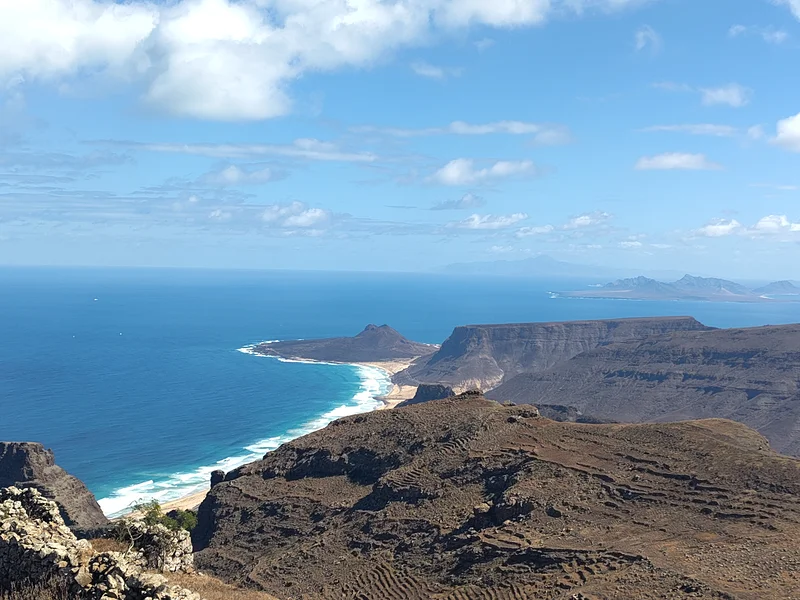
Visiting Cape Verde: Atlantic Africa, Ten Islands, Ten Different Worlds
Ten volcanic islands rise out of the Atlantic, roughly 375 miles off the coast of Senegal. Black lava meets white sand. Arid mountains drop straight into turquoise water. The sound of morna drifts out of cobblestone alleyways after dark. Cape Verde doesn't fit neatly into any category: it's not quite African, not quite European, not quite Caribbean. It's an archipelago that built its own identity out of Portuguese colonial history and deep West African roots.
Is This the Right Trip for You?
Cape Verde rewards travelers who want authenticity over polish. If your idea of a perfect trip is an all-inclusive resort with a swim-up bar, this isn't your place.
What the islands do offer is real: bumpy mountain roads, stays with local families, and bowls of cachupa (a slow-cooked stew) at no-frills neighborhood spots. The archipelago pulls in hikers (Santo Antão is serious trekking territory), kitesurfers (Sal and Boa Vista have some of the most consistent trade wind conditions in the Atlantic), and live music lovers who end up closing down bars in Mindelo night after night.
Fair warning: infrastructure is basic on some islands. Mountain roads are rough. Inter-island ferry crossings get canceled when the wind picks up. And the rainy season (August through September) can turn hiking trails into rivers.
Prices are higher than you'd expect for West Africa, because almost everything is imported. But for travelers who can roll with those realities, the islands deliver raw natural beauty and genuine warmth that's hard to find anywhere else.
Santo Antão and Fogo: The Islands With Personality
Santo Antão
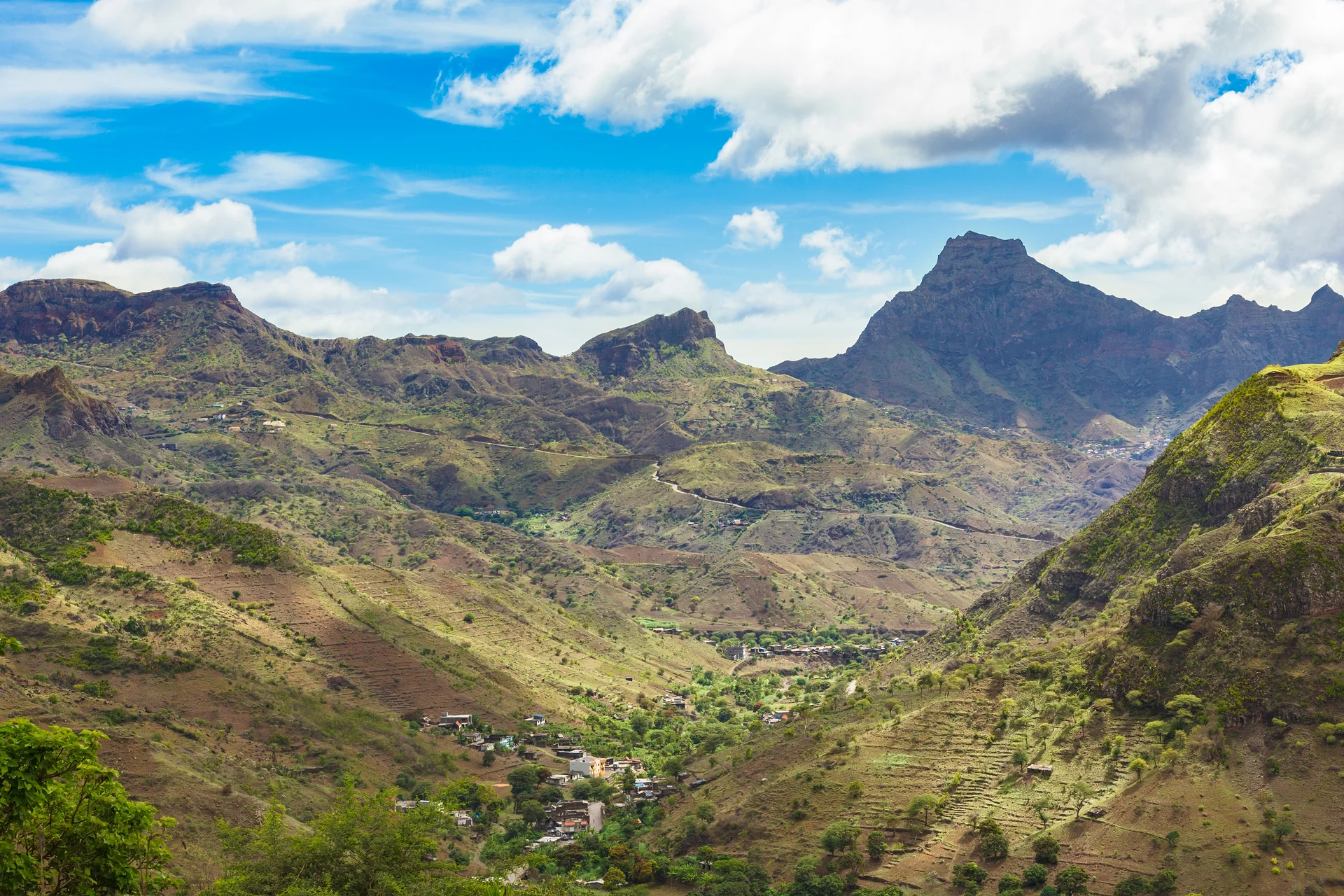
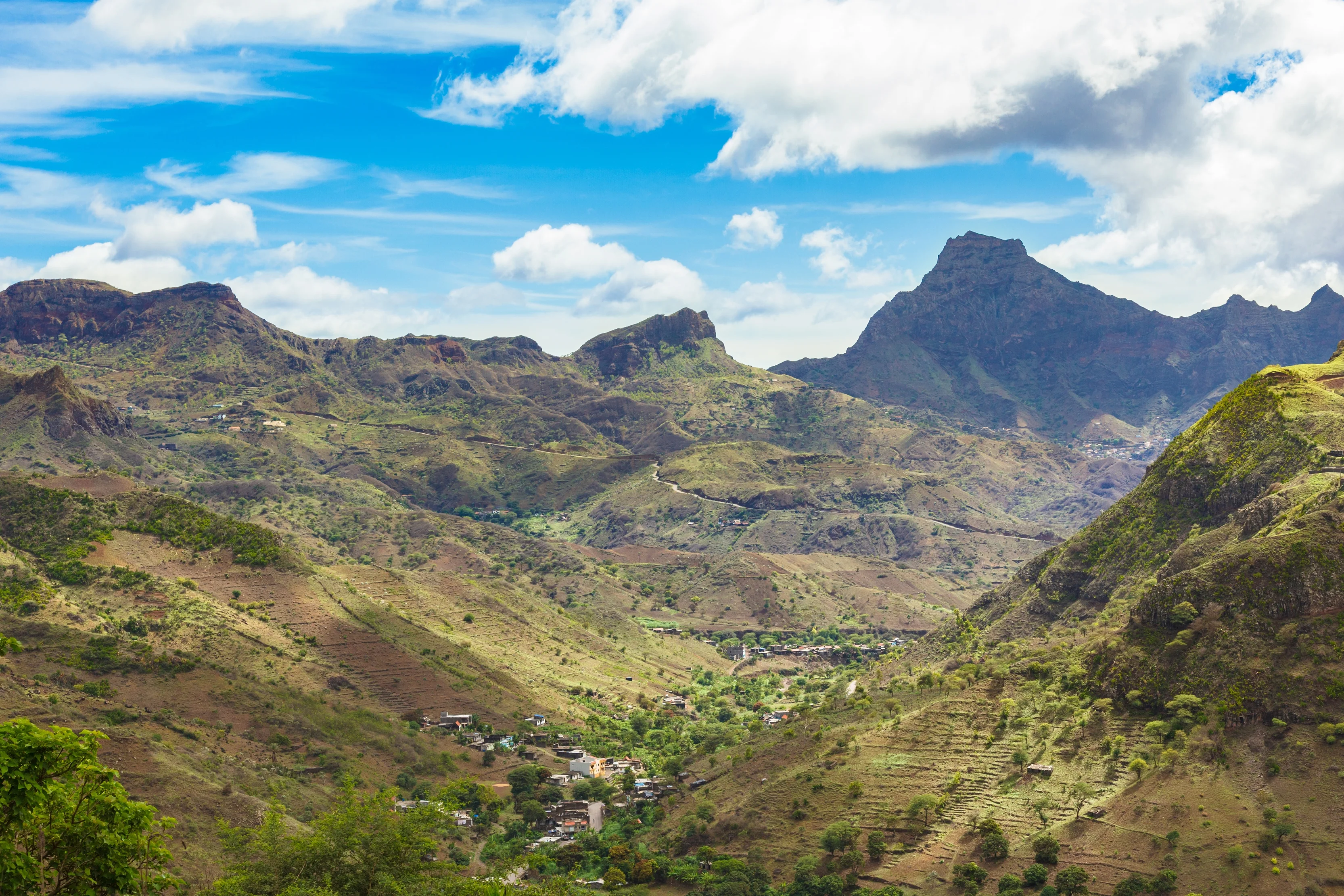
Santo Antão is Cape Verde's rugged, agricultural heart. The ferry from Mindelo drops you at Porto Novo after a one-hour crossing, and from the moment you arrive, the island looks like it was carved by erosion over millions of years. The road winding toward Ribeira Grande passes through green valleys planted with sugarcane, villages clinging to cliff faces, and terraced fields that seem to defy gravity.
The hiking here is exceptional. The trek from Cova to Paul takes you down into a volcanic crater that's been transformed into a lush garden, three to four hours through banana trees, papaya, and coffee plants, with steep sections but nonstop scenery. Locals distill grogue (artisanal sugarcane rum) in traditional copper stills you'll spot along the trail.
Insider tip: Hire a local guide for your hikes. Trail markings are inconsistent in places, and a good guide will get you invited into homes to taste homemade grogue and share a coffee. Worth every escudo.
Fogo
Fogo hits differently. The island is home to an active volcano that last erupted in 2014-2015. You can hike to the crater rim of Pico do Fogo (9,281 feet), the highest point in the archipelago. Most climbers start before dawn to beat the clouds that roll in by mid-morning. Plan on four to five hours of climbing through volcanic ash. Your legs will feel it, but the view from the top takes in the whole island chain.
At the base of the volcano, the village of Chã das Caldeiras is slowly rebuilding. Residents constructed new homes from lava stone after the eruption. They also grow grapes on volcanic soil that produces a surprisingly good wine. Local cellars offer tastings in a setting that looks like the surface of the moon.
Sal and Boa Vista: Beach Cape Verde
These two flat islands are where the archipelago goes full beach destination. Sal draws kitesurfers from around the world to Ponta Preta and Kite Beach. From November through June, the trade winds blow with clockwork consistency, creating ideal conditions on the water. Kite schools line the main strip in Santa Maria, the island's main tourist hub.
Sal also has miles of white sand beach. Santa Maria beach gets crowded, but walk 15 minutes south and you'll find stretches that are practically empty. Water temperature stays around 73-77°F year-round, with solid visibility for snorkeling.
Boa Vista takes it further with 55 kilometers (34 miles) of beaches. Chaves Beach on the west coast runs for six miles of fine sand. The wind is strong here (great for kite, less ideal for sunbathing), and Atlantic swells hit the shore hard. From June through October, loggerhead sea turtles come ashore at night to nest.
Day Trips from Boa Vista
The interior of Boa Vista is a moonscape of dunes and desert. 4x4 excursions head out to the Deserto de Viana, where white sand dunes contrast sharply against a deep blue sky. The ghost village of Viana, abandoned in the 1940s, occasionally emerges from the sand when the wind shifts and exposes the ruins.
Insider tip: To see the sea turtles nesting, book a guided nighttime outing through a local conservation association rather than a standard tour operator. You'll contribute directly to protecting the nesting sites, and the guides know how to observe without disturbing the animals.
Santiago and São Vicente: The Cultural Core
Santiago
Praia, the capital on Santiago, won't win any beauty contests. It's a sprawling, loud city that holds about half the country's population. But underneath the apparent chaos, it runs on the rhythm of contemporary urban Africa. The Sucupira market overflows with colorful fabrics, spices, and local crafts. The Plateau neighborhood still has crumbling colonial buildings that photograph well.
About nine miles north, Cidade Velha is worth the detour. Founded in 1462, it was the first European city established in the tropics. The ruins of its fortress, the old pillory, and the cobblestone main street sloping toward the sea are all still there. Fort Real de São Filipe, perched on a cliff above town, once kept watch over slave trading ships. Now a UNESCO World Heritage Site, the town tells the complicated story of the archipelago's role in the transatlantic slave trade.
São Vicente
Mindelo, on São Vicente, is where Cape Verde gets elegant. This port city runs on music. In the waterfront bars, live bands play morna and coladeira until sunrise. Cesária Évora, the barefoot diva whose voice put Cape Verde on the world music map, was born here, and her spirit comes through in every melancholy melody you'll hear.
Mindelo's bay, ringed by bare mountains, turns spectacular colors at sunset. Walk the Avenida Marginal, grab a table outside, and order a grogue with lime. The February carnival transforms the city into something Cape Verdeans genuinely compare to Rio, all rhythm and color for days.
Eating in Cape Verde: Creole Food and Fresh Fish
Cachupa is the national dish, full stop. This slow-cooked stew simmers for hours: corn, kidney beans, cassava, sweet potato, and either pork or tuna depending on the island and the budget. Every family has their own recipe, passed down through generations. The version called cachupa refogada takes yesterday's leftovers and fries them up in a pan with onions and eggs.
On the beach islands, fish and seafood dominate. Grilled lobster on Sal or Boa Vista often comes straight from local fishermen's traps. Fresh tuna shows up as tataki, carpaccio, or simply grilled with a spicy chili sauce. Prices climb fast at tourist-facing restaurants: a lobster can run 2,750-3,300 CVE (about $27-33).
Pastéis (small fried pastries) are everywhere: filled with tuna, local cheese, or sweetened with papaya jam. At the markets, try djagacida, a chicken stew with kidney beans and rice, or xerém, a corn porridge served alongside fish.
On the drinks side, grogue (sugarcane rum) goes down straight or as ponche, mixed with honey and lime. Fogo wine is a genuine surprise, especially the dry whites grown on volcanic soil. The local beer, Strela, is exactly what you want after a day on the beach or out on the trail.
When to Go to Cape Verde
The archipelago has pleasant weather year-round, with temperatures generally between 73°F and 86°F. But there are two distinct seasons worth knowing.
Dry Season
The dry season, November through June, is the sweet spot. Clear skies, almost no rain, and steady trade winds (great if you're kitesurfing, slightly annoying if you want flat water). December through March is peak season, when Europeans flee winter and hotel prices jump 30 to 50 percent. Some beaches on Sal get genuinely crowded during this window.
April-May and October-November are the best compromise: excellent weather, manageable crowds, and lower rates. Hikers tend to favor November-December, when vegetation is still green from the summer rains.
Rainy Season
The rainy season, August through September, is mild by most standards. Cape Verde is semi-arid, so "rainy season" means short, intense downpours rather than weeks of gray skies. Those bursts of rain temporarily turn Santo Antão's valleys into waterfall country. Temperatures nudge up to 84-88°F, humidity rises, and some trails become impassable. On the upside, it's low season: hotels drop to roughly half price, beaches empty out, and the islands feel genuinely local.
Getting to Cape Verde
From the US, there are no direct flights to Cape Verde. You'll connect through a European hub, most commonly Lisbon. TAP Air Portugal operates regular service from multiple US cities to Lisbon, with onward connections to Sal (the busiest airport in the archipelago) and Boa Vista. Total travel time from the East Coast typically runs 12 to 16 hours depending on the connection.
Cabo Verde Airlines (formerly TACV, the national carrier) operates flights from Lisbon and a handful of West African capitals. Fares vary significantly by season. Budget at minimum around 550,000-660,000 CVE (roughly $550-660) round-trip from Lisbon in low season; prices rise sharply in high season and on short notice.
To reach Praia (Santiago) or São Vicente, flights typically route through Lisbon or Dakar. Once on the ground, the inter-island TACV network connects the main islands by air, though schedules shift frequently and delays are common.
Getting Around Cape Verde
By Plane
Moving between islands takes patience. Domestic flights on TACV connect the islands with airports: Sal, Boa Vista, Santiago, São Vicente, and Fogo. Book early because these small planes fill up fast. Inter-island flights run roughly 6,500-11,000 CVE ($65-110). Always have a backup plan: cancellations and delays happen regularly.
By Ferry
Ferries are the cheaper option, though less predictable. Inter-Ilhas connects São Vicente to Santo Antão (one hour, about 800-1,000 CVE / $8-10), and runs routes between Santiago, Fogo, and Brava. Seas can get rough, and crossings sometimes get canceled for weather or mechanical issues. In high season, arrive at the port an hour early to secure a spot.
By Aluguer
On each island, aluguers (shared minibuses) are the local way to get around. They leave when full, stop on request, and charge a few hundred escudos per ride. The experience is 100 percent local: music loud, conversations lively, unscheduled stops. Just don't count on a timetable.
By Car
Renting a car gives you real freedom, and it's essentially necessary if you want to explore Santo Antão or Santiago's interior. Expect to pay 3,300-5,500 CVE ($33-55) per day depending on the vehicle. Get a 4x4 for mountain tracks. Drive carefully: roads are narrow and winding, potholes are common, and livestock wander onto the pavement. Some rental agencies prohibit their vehicles on the roughest dirt tracks.
Taxis require negotiating the fare before you get in. For a full-day excursion with a driver, push for 5,500-7,700 CVE ($55-77) for the day. On Sal and Boa Vista, quad bikes rent easily for exploring remote beaches, running around 4,400-6,600 CVE ($44-66) per day.