
Visiting Picos de Europa National Park
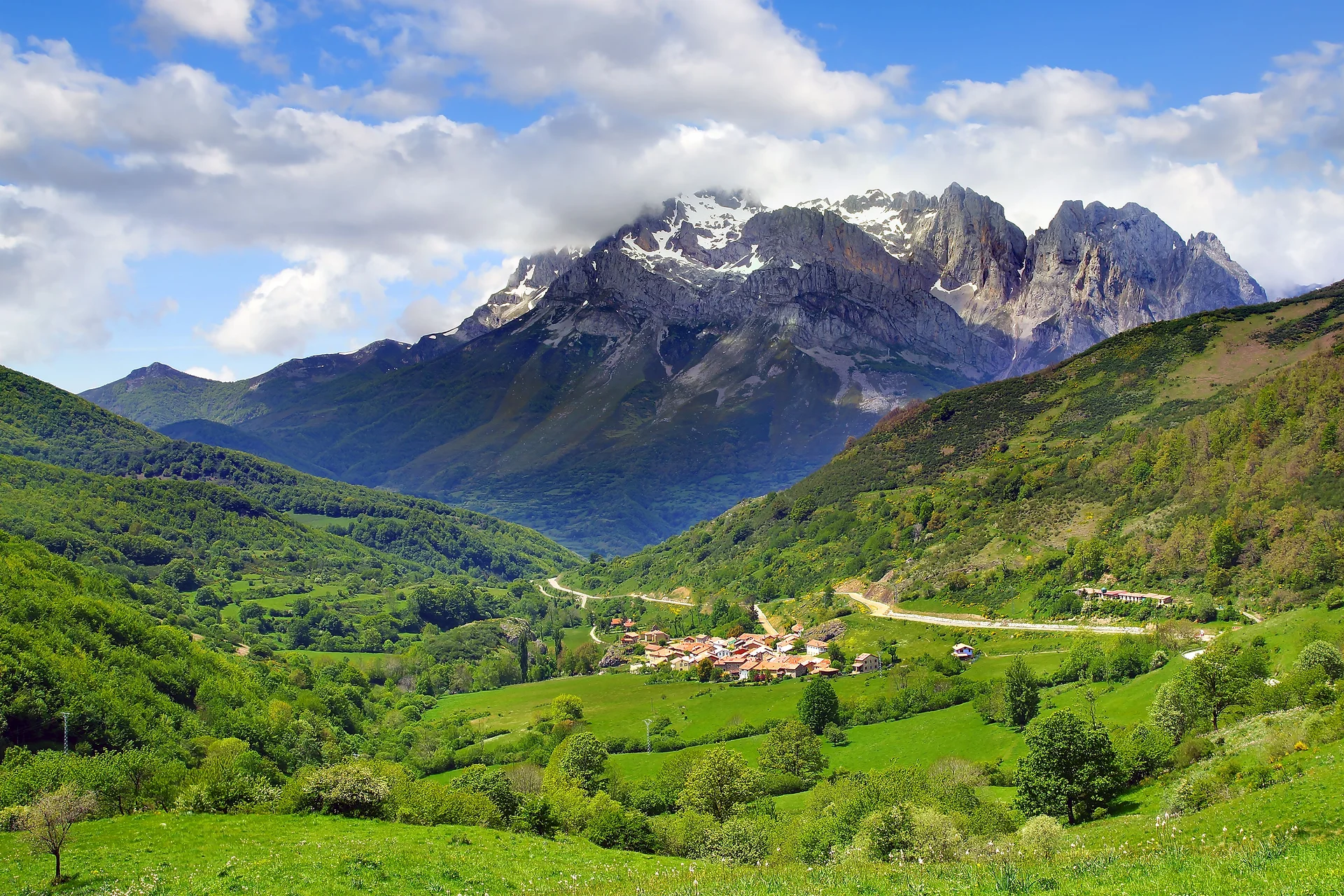
Picos de Europa National Park is defined by a single word: grandeur. Three provinces joined forces to create this massive 646 km² territory. Spanning the Principality of Asturias, León, and Cantabria, the park was founded in 1918 and expanded through 2015, an addition that now incorporates eleven municipalities. In the north of the Iberian Peninsula, this is a kingdom of giants, counting 200 peaks higher than 2,000 meters. Its massifs shift between deep valleys and high mountain ridges, creating a landscape that feels like a rugged, vertical wilderness similar to the North Cascades. You enter with the respect that such scale demands, as the entire area is strictly protected.
Three massifs for a thousand landscapes
The three massifs of the park offer distinct terrains, but the experience is consistently striking. Shaped by water and glacial ice, the valleys and gorges define incredible panoramas. The most expansive is the Peña Santa de Castilla, which reaches 2,596 meters. The northern slope is a local favorite, where the stars are the lakes of Covadonga: the massive Enol and its smaller neighbor La Ercina. At 2,440 meters, the Morra de Lechugales marks the eastern massif. It is the least vast, characterized by lush vegetation including oaks and beeches. A different atmosphere defines the central massif, which is classic high alpine territory. Here, ravines and jagged reliefs are sculpted by razor-sharp peaks, a favorite playground for Cantabrian chamois. Among the many summits is the highest point of the site, the famous Torrecerredo peak at 2,648 meters. The national park is a delicate environment where flora and fauna are preserved, with numerous endemic species recorded. Both mammals and birds live in balance with human activity. The majadas (mountain sheepfolds) highlight traditional grazing sites. From green meadows to clear rivers, life here exists in a state of raw power and fragility.

This national park is famous for its biodiversity and the beauty of its landscapes.
I was hoping to spot some wild animals, but despite a long hike, I had less luck than in other protected areas of the country.
Still, the site is very beautiful with its jagged mountains, lakes, and rich birdlife.
I found that it was quite crowded, so you have to move away from the main sites quickly to really find nature.