
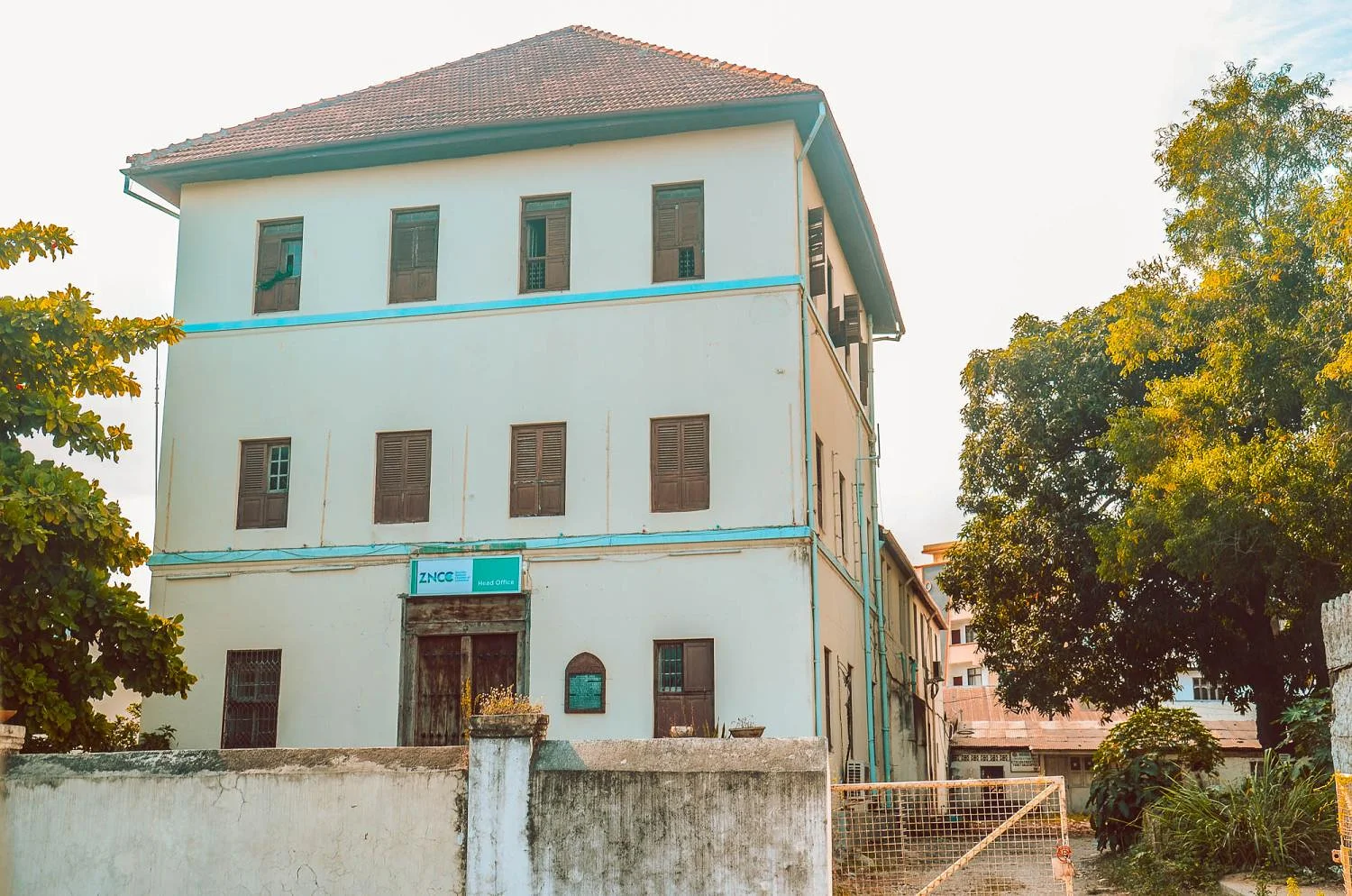
Livingstone's House: the final stop before the unknown
On March 19, 1866, a man walked out of this red-tiled building, never to return. David Livingstone set sail for the African continent, obsessed with a single goal: to find the source of the Nile. Seven years later, his loyal servants brought his embalmed body back to Zanzibar City after burying his heart under a tree in Zambia. This three-story residence, built for Sultan Majid around 1860, holds the memory of that quiet departure.
Why visit Livingstone's House?
This rectangular building in the Kinazini district, on the northeastern waterfront of Stone Town, was far more than a simple residence. The Sultan had it built as a resting place at the gates of the capital. History, however, had other plans. The house became the jumping-off point for major European expeditions into the interior of the African continent.
Livingstone was not the only person to pass through these doors. Richard Burton, John Hanning Speke, Verney Lovett Cameron, and Henry Morton Stanley all stayed here before heading into territories that European maps left blank. At the time, Zanzibar City served as the primary hub between the Indian Ocean and the mysteries of the continent.
The man who ended the slave market
Livingstone was not just searching for the source of the Nile. His letters and journals documented with clinical precision the horrors of the Arab slave trade he encountered during his travels. On July 15, 1871, he watched helplessly as slave traders massacred 400 Africans on the banks of the Lualaba River. His accounts shook British public opinion to its core.
Five weeks after his death on May 1, 1873, the great slave market of Zanzibar City closed permanently under pressure from the Royal Navy. The Sultan had no choice. A cross carved from the wood of the mpundu tree under which Livingstone's heart rests is now displayed in the Anglican Cathedral of Stone Town, which was built on the exact site of that market.
A building with many lives
After the era of exploration, the house passed through many hands. The island's Hindu community used it in the early 20th century. In 1947, the British colonial government purchased it to house a research laboratory focused on clove diseases, a crop that was vital to the economy of Zanzibar City at the time.
The 1964 revolution marked a new turning point. The building became the headquarters of the Tanzania Friendship Tourist Bureau, and later the Zanzibar Tourist Corporation, which still occupies it today. The architecture remains understated with whitewashed walls and red tiles. It is not a palace, but the site possesses a soul that history buffs perceive immediately.
Pro tip: The house contains administrative offices and is not open for tours like a traditional museum. Stick to the exterior and combine your visit with the nearby Anglican Cathedral to see Livingstone's wooden cross. A museum project is in the works, but there is no specific opening date yet.
In the footsteps of the explorers
The Kinazini district offers a pleasant walk along the waterfront. A few minutes away on foot, Forodhani Gardens and its sunset street food stalls are a great way to extend your outing. The Palace Museum and the ruins of the House of Wonders complete a logical circuit focused on the history of Zanzibar City during the era of sultans and explorers.
See also in the area:
- Christ Church Anglican Cathedral: built on the site of the former slave market, it houses Livingstone's wooden cross
- Tippu Tip House: residence of the famous slave trader who, paradoxically, helped several explorers
- Palace Museum: history of the sultans of Zanzibar City in their former residence
Opening hours
*Information subject to change

I went to see Livingstone's House out of curiosity, but honestly, there is not much to get out of it as a visitor. It is a pretty simple building, now turned into an administrative office, so it is not really set up for tourists. There is no tour to speak of, and no explanations on site. I stayed five minutes in front, took a photo, and that is it. If you are passing through the area, why not take a look, but it is clearly not a must-see. Only prioritize it if you are passionate about the history of Livingstone.