
Jesuit Ruins of Trinidad: Stone Cathedrals Under the Guarani Sky
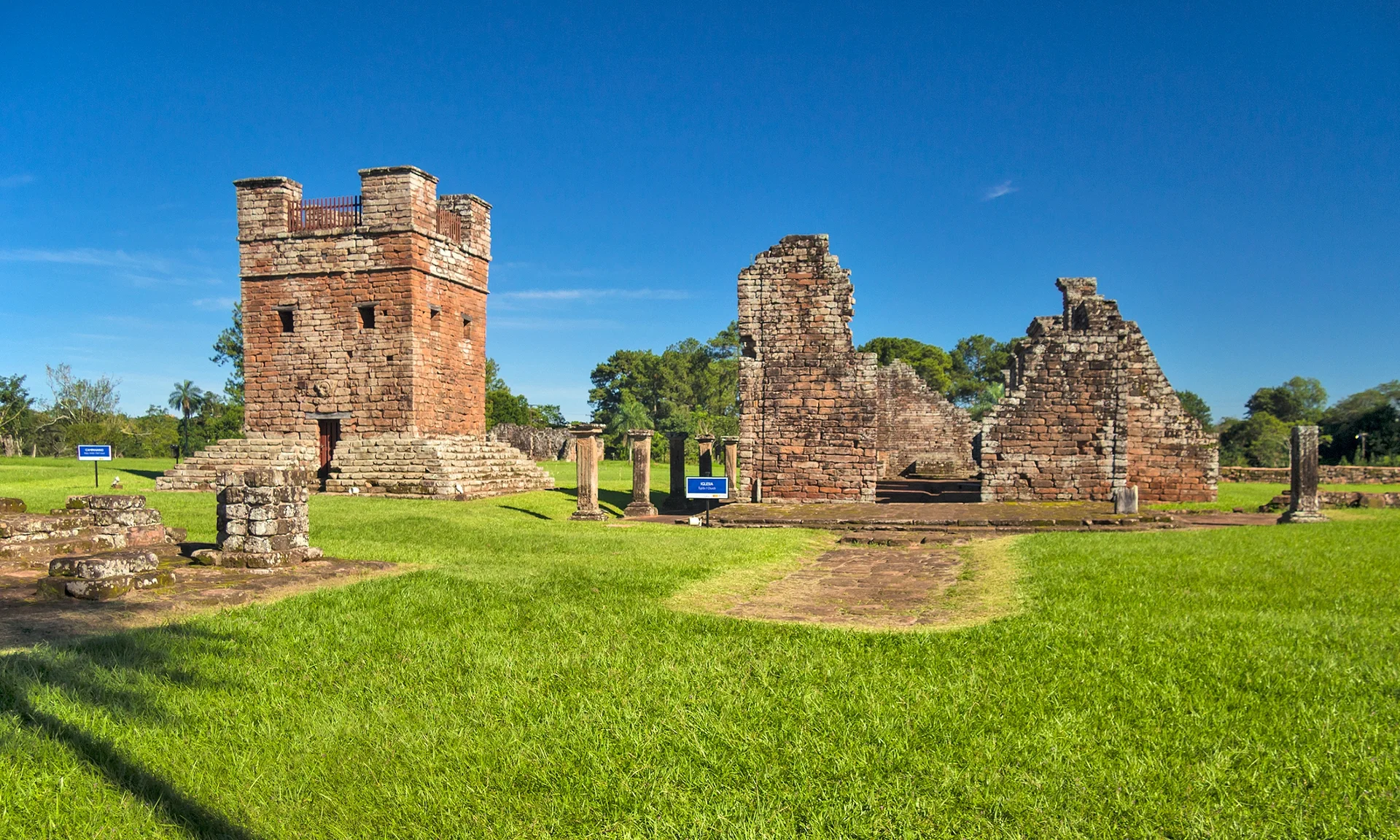
The silence here is near total. Only the wind moves through the pink sandstone arches where 3,000 Guarani people once lived. The church walls rise several stories high, starkly framed against a deep blue Paraguayan sky. The mission of the Santísima Trinidad del Paraná is one of the least visited UNESCO sites on the planet. You will likely have the place to yourself.
Why visit the ruins of Trinidad?
Founded in 1706, Trinidad marks the height of the Jesuit experiment in the Americas. The missionaries created a society where the Guarani could escape the forced labor imposed by colonial settlers. Here, they were taught Baroque architecture, sculpture, and music. The result is the largest temple among all the Jesuit reductions, built by indigenous hands with startling precision.
The expulsion of the Jesuits in 1767 froze Trinidad in time. Rediscovered two centuries later, the site was named a UNESCO World Heritage site in 1993. Unlike the crowded missions in Argentina, Trinidad offers a solitary and contemplative experience.
What makes the architecture of Trinidad exceptional
Le friso de los ángeles músicos (Frieze of the Musical Angels)
On the interior facade of the church, a carved frieze depicts angels playing the harpsichord, organ, and Paraguayan harp. These reliefs remain the only visual evidence of the musical sophistication within the missions before the discovery of the Moxos scores in Bolivia. The detail of the instruments, carved into stone by Guarani artisans, is remarkable.
The pulpit of over one thousand pieces
The stone pulpit, decorated with figures of the Evangelists, still retains faint traces of colored pigments. It is composed of over 1,000 carved elements. It stands as a testament to a hybrid craft, blending European technique with indigenous sensibility.
Roman arches of the Guarani dwellings
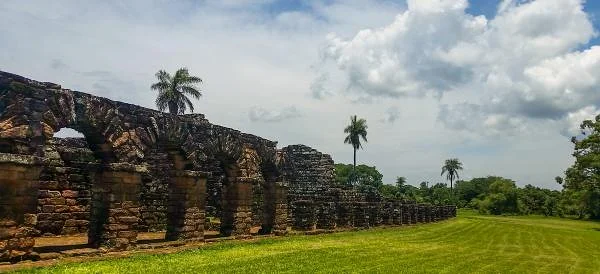
The stone galleries that once housed indigenous families resemble Roman aqueducts. Each building section spans 20 meters, separated from the next by a narrow alley. Sculpted rosettes decorate the lintels. These living quarters were sophisticated enough to impress even the Spanish colonists passing through.
The visitor experience
The entrance leads into the Jesuit museum, housed in the former sacristy. Inside, you will find Guarani sculptures, a scale model of the site, and the skeleton of an inhabitant from that era. A 5-minute video in English or Spanish summarizes the history of the reductions.
Look for these highlights:
- The Plaza Mayor, the focal point of social and religious life
- The pila bautismal (baptismal font) and the crypt, which remain intact beneath the main church
- The campanario (bell tower), which is accessible for a view of the entire site
- The workshops and the dungeon where those who broke the rules were briefly held
Friendly tip: The Luz y Sonido (Light and Sound) evening show, performed from Friday to Sunday, turns the ruins into an immersive stage with Baroque music and light displays. It is worth staying in the nearby city of Encarnación for the evening to see it.
Visitor logistics and ground realities
The site is completely exposed to the elements. There is almost no shade. Sunscreen, a hat, and water are essential. During rainy weather, the grass between the ruins becomes slippery. Wear closed-toe shoes.
The guides on-site speak only Spanish. Request one at the reception if no one is assigned to you, as their local knowledge adds significant context to the visit.
Opening hours
Luz y Sonido (Light and Sound) show: Friday through Sunday at 7:00 PM or 8:00 PM depending on the season. Arrive 20 minutes early.
*Information subject to change