
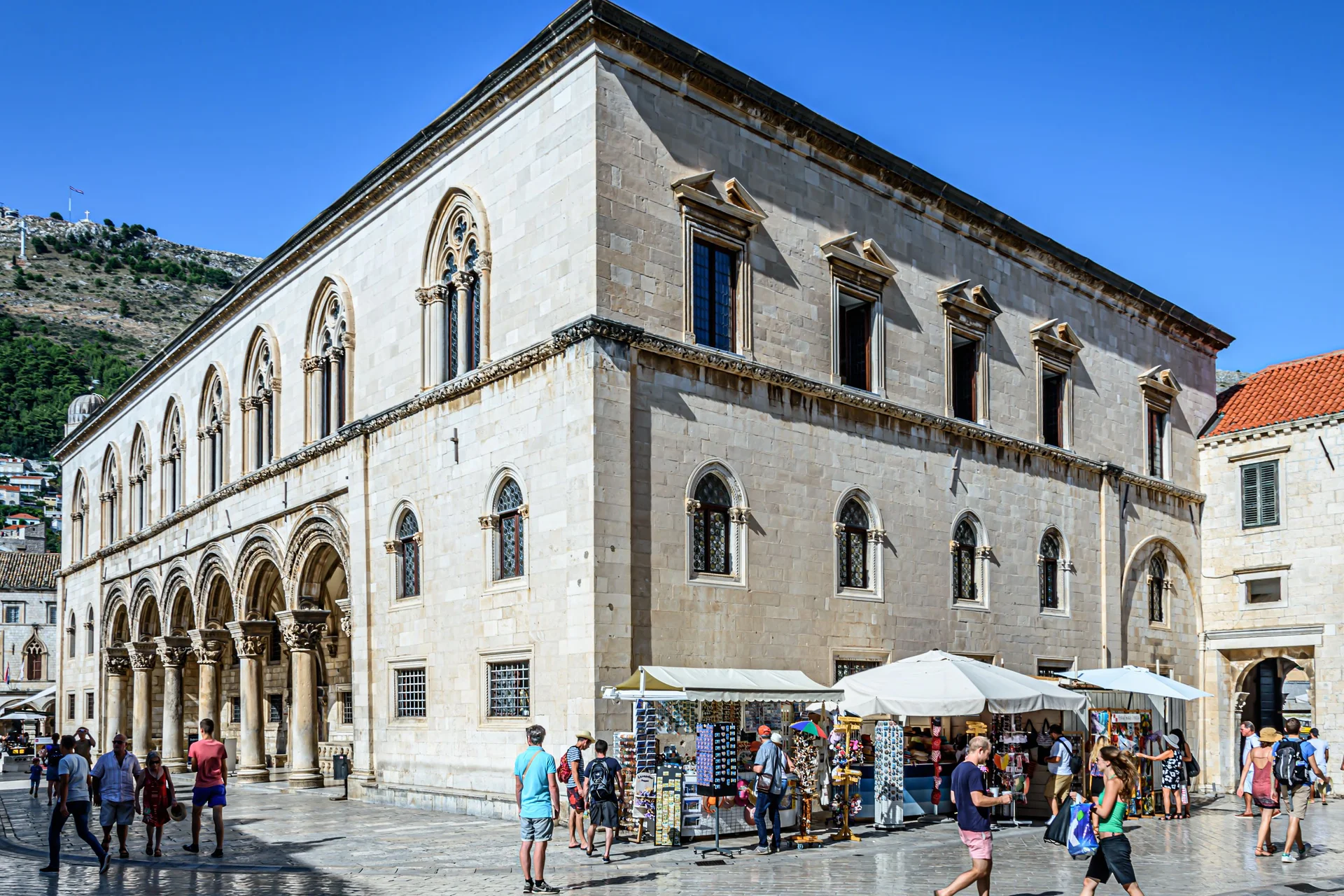
Visiting the Rector's Palace: The seat of power in historic Ragusa
Tucked away in the limestone maze of Dubrovnik, the Rector's Palace stands not just as a monument, but as the physical embodiment of the former Republic of Ragusa. This structure, equal parts restrained and imposing, served for centuries as the nerve center where political decisions were finalized, justice was carried out, and the future of this maritime power was determined.
Why is the Rector's Palace essential?
Visiting this palace provides a clear look into the unique governance of the Republic of Ragusa. The rector was elected for a term of only one month to prevent any abuse of power, and he was effectively confined to these walls for the duration. He could only leave the building for official duties, dedicating every waking moment to the state, as an inscription carved into the stone still reminds visitors today: OBLITI PRIVATORUM PUBLICA CURATE (Forget your private affairs, focus on public business).
An architectural masterpiece shaped by history
The palace is a survivor. Devastated by a gunpowder explosion in 1435 and again by the great earthquake of 1667, it has been rebuilt and modified several times. These historical scars have given it an unmistakable character, blending Gothic, Renaissance, and Baroque styles.
From the Gothic atrium to the Baroque staircase
Upon entry, the porch makes an immediate impression with its arcades and finely carved capitals, the work of Neapolitan architect Onofrio della Cava. The central atrium, with its galleries and well, served as a public meeting space. The grand monumental staircase, added after the earthquake, is a prime example of Baroque elegance and leads to the upper apartments and halls of power.
A deep dive into Ragusan power
The interior of the palace allows you to reconstruct the daily lives of the Republic's leaders. You can explore:
- The halls of the Small and Grand Council, where political debates took place.
- The private apartments and the rector's office, furnished with period pieces.
- The cells and dungeons on the ground floor, which highlight the building's judicial function.
- The armory and treasury, which showcase the city's military and economic strength.
Insider tip: The acoustics in the inner courtyard, or atrium, are exceptional. During the Dubrovnik Summer Festival, classical music concerts are held here. Attending a performance in this historic setting under the open sky is a memorable way to soak in the atmosphere of the site.
The Cultural History Museum: The memory of Dubrovnik
Today, the palace houses the Cultural History Department of the Dubrovnik Museums (Dubrovački muzeji). The visit is a trip through time, featuring diverse collections. You will see portraits of Ragusan nobles, ceremonial carriages, ancient coins, weapons, and numerous paintings by Italian and Croatian artists, all illustrating the past grandeur of this maritime republic.
Opening hours
*Information subject to change

The most beautiful building in the city! It is especially the small inner courtyard, which served as a filming location for the castle in Game of Thrones, that is worth the trip. Right next to it, I was pretty impressed by the prison. Aside from its architecture, the Palace has become a history museum, not essential, which houses, among other things, paintings, lovely furniture, and a prestigious government hall. An hour and a half was enough for me to walk through it at a relaxed pace.