
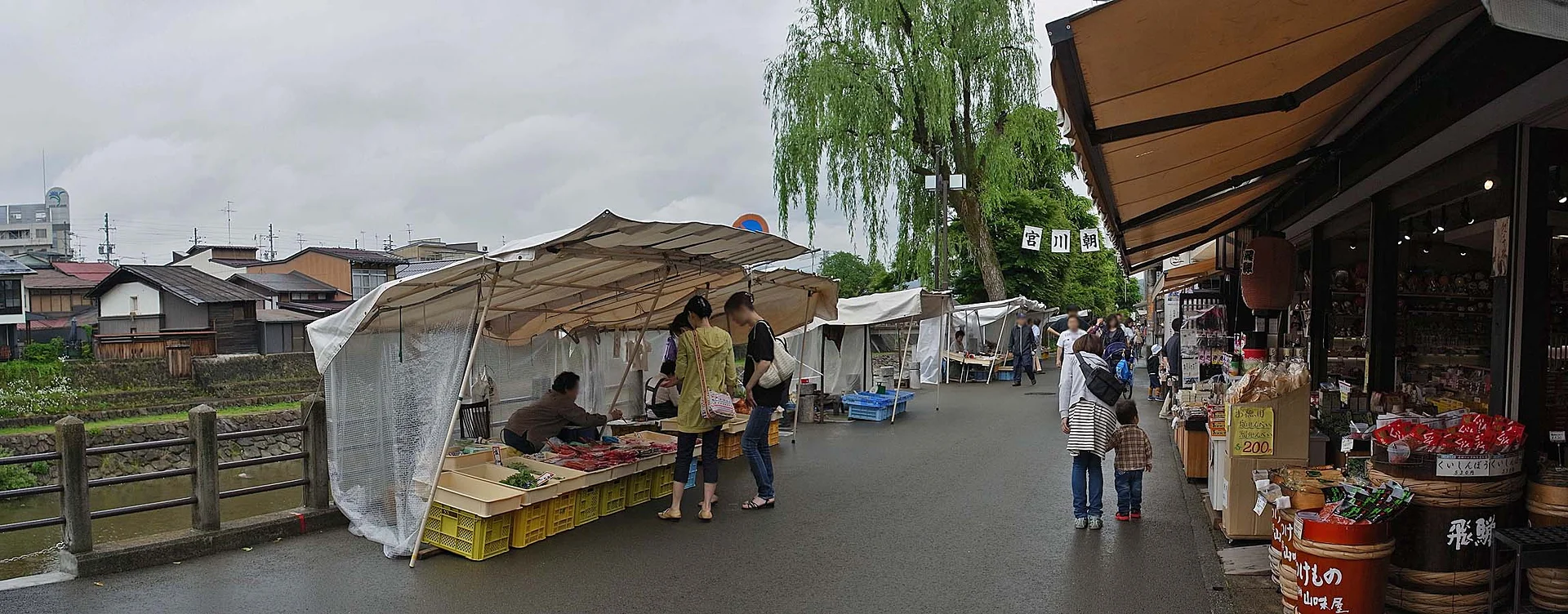
Miyagawa Morning Market: Two centuries of bustle by the river
It is 7:00 am in Takayama. Along the Miyagawa River, white stalls are already lining up for 350 meters between the Kajibashi and Yayoibashi bridges. The voices of vendors echo in the crisp mountain air, punctuated by the murmur of clear water where colorful koi carp swim. This is the daily backdrop of one of the three largest morning markets in Japan, alongside those in Wajima and Katsuura.
Why visit this two-century-old market?
The history of this market stretches back to 1820, during the Edo period. Originally, farmers sold rice, flowers, and mulberry leaves intended for silkworm farming. After the decline of sericulture, farmers' wives, known as kakasa in the local dialect, began offering their vegetables here starting in 1894. The market moved to the banks of the Miyagawa in 1962, after spending a long time on Yasukawa Street.
This is not a simple tourist trap. Residents of Takayama do their shopping here, exchange news, and maintain a tradition that has structured local life for generations. The stalls change with the seasons: peaches in summer, apples and persimmons in autumn, and traditional red turnips from the Hida region in winter.
What you will find at the stalls
Fresh produce and local specialties
On the river side, farmers sell their daily harvest. Hida miso, fermented in the cool mountain cellars, stands out for its bold flavor. Tsukemono, those pickled vegetables made from closely guarded family recipes, vary from one stall to the next. Vendors routinely offer samples and are happy to explain their preparation methods, often in the Takayama dialect.
Traditional regional crafts
On the opposite sidewalk, permanent shops display local crafts. Sarubobo, those small, faceless red good-luck dolls, are handmade according to an ancient regional tradition. Ichii Itto-bori carvings, crafted from a single block of Japanese yew wood, showcase the skill of Hida artisans. Locally made wooden chopsticks, which are light and durable, make for a useful and refined souvenir.
Street food for a quick breakfast
Street food enthusiasts will find plenty to build a hearty breakfast:
- Hida beef nikuman: Steamed buns filled with the region's marbled meat
- Gohei mochi: Grilled rice cakes brushed with a sweet and savory miso sauce
- Anko-filled croissants from the Andersen bakery, a favorite spot for regulars
- Espresso served in an edible cookie cup, a specialty that is as fun as it is delicious
Pro tip: Arrive around 8:30 am to enjoy the market at its peak. Too early, and some stalls are not yet set up. Too late, and the best products will be gone. Bring cash, as most vendors only accept cash.
A setting as pleasant as the shopping
The Miyagawa River offers a soothing backdrop. Between purchases, walk down the steps to the bank to watch the koi carp and ducks. Some vendors offer fish food for 100 JPY (about $0.65). The view of the surrounding mountains is a reminder that Takayama sits in the heart of the Japanese Alps at an altitude of over 500 meters.
Once you finish at the market, the historic Sanmachi Suji district is just a short walk away. This proximity makes it easy to naturally transition into a visit to the old merchant houses, sake breweries, and museums that define the city.

A special way to experience another side of Japan, a more authentic one. A moment out of time in the old streets. The market takes place on both banks of the river, which makes the whole thing even more charming. You can discover local crafts here, but also a plethora of fresh vegetables and colorful flowers.