Réunion: The Island That Refused to Be Flat
An active volcano erupts several times a year. Entire villages are reachable only on foot. Bull sharks patrol sections of the coast. All of this happens on 2,512 square miles of French territory in the Indian Ocean, roughly the size of Rhode Island. Réunion packs lush tropical rainforest, lunar mineral desert, black sand beaches, and turquoise lagoons into a single island that has no business being this extreme.
Réunion Is a Hiker's Island, Not a Beach Destination
If you're picturing a laid-back tropical beach vacation, book a ticket to Mauritius instead (it's a 45-minute flight away). Réunion is built for hikers and adrenaline seekers. The island has over 620 miles of marked trails, and 42% of its territory has been a UNESCO World Heritage Site since 2010. Think less Caribbean postcard, more volcanic mountain range that happens to be surrounded by ocean.
One practical reality for US travelers: French and Creole are the languages here, and English is rarely spoken. If you don't have at least basic French, expect friction when booking a gîte (a local bed-and-breakfast style lodging) or ordering at a restaurant. The pace of life runs on its own schedule too: many shops close Sunday and Monday, and the bus system shuts down early in the evening.
Budget: Comfortable but Not Cheap
Plan on €80 to €120 per day per couple (roughly $85-$130): a gîte or chambre d'hôtes runs €60-€90/night ($65-$100), a sit-down restaurant meal costs €15-€25 ($16-$27), and a rental car starts around €200/week ($215). Activities push the total higher: canyoning or paragliding runs €60-€90 ($65-$100), and a helicopter flight over the volcano goes north of €200 ($215).
The Cirques: Cathedral Walls of Rock and Mist
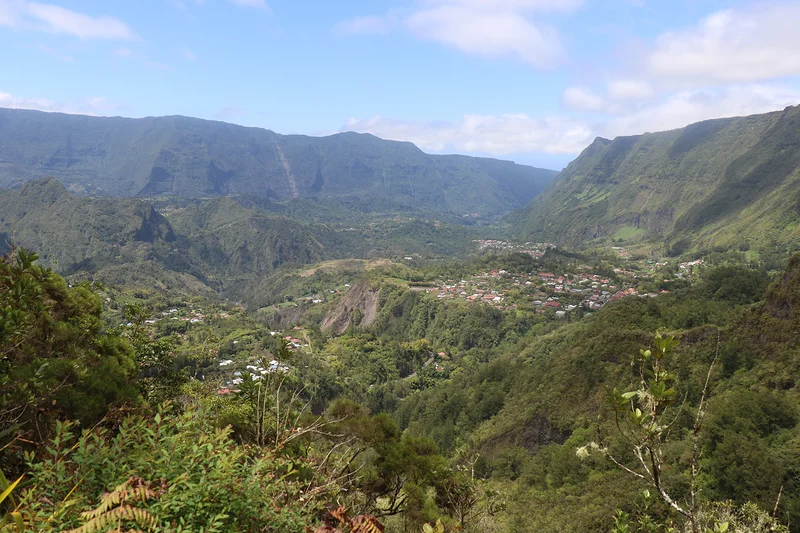
Three massive natural amphitheaters dominate the interior of the island, carved by erosion around Piton des Neiges, the highest point in the Indian Ocean at 10,075 feet. Each has its own character and deserves at least a few days.
Mafate: The Cirque With No Roads
No road reaches Mafate. You get in on foot or by helicopter, full stop. About 800 people live in villages like La Nouvelle and Marla, where supplies are flown in by air and children leave after primary school to continue their education. The name is said to come from a Maroon slave who took refuge here in the 19th century.
Heads up: Book your gîtes well in advance by phone (in French), pull cash before you leave, and carry enough water. The villages of Mafate have no ATMs and no reliable cell coverage.
Cilaos and Salazie
Getting to Cilaos means driving a legendary road with more than 400 switchbacks. The village sits at 3,900 feet and has the feel of an old mountain spa town, with Creole-style houses and a calm that makes it a natural base camp for climbing Piton des Neiges. Most hikers start the ascent at night from the Caverne Dufour refuge to reach the summit at sunrise.
Salazie, the greenest and rainiest of the three cirques, has around a hundred waterfalls, including the Voile de la Mariée (Bridal Veil Falls), visible right from the road. The village of Hell-Bourg, recognized as one of the most beautiful villages in France, preserves well-kept Creole houses surrounded by flowering gardens.
Piton de la Fournaise: Hiking an Active Volcano
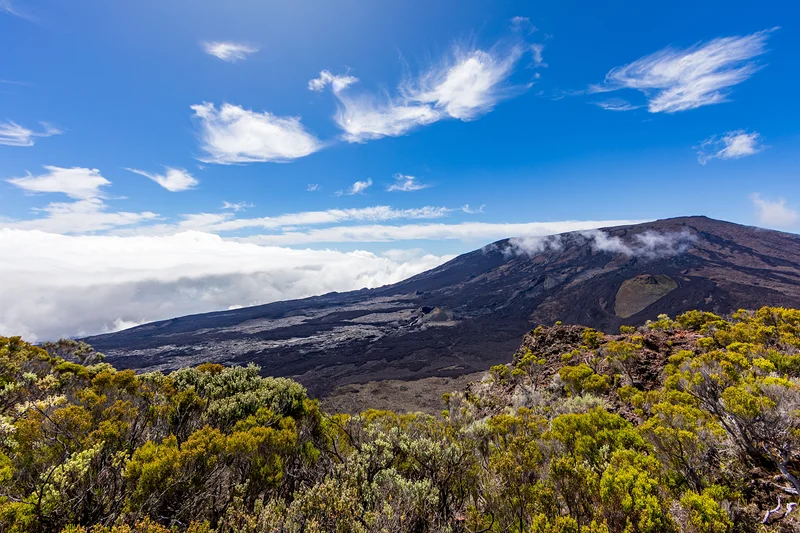
Piton de la Fournaise is one of the most active volcanoes on the planet, erupting multiple times a year. Lava flows regularly pour toward the sea along the Grand Brûlé corridor on the island's southeastern flank. The standard hike starts at Pas de Bellecombe at 7,582 feet. The round trip to the Dolomieu crater takes 5 to 6 hours and covers about 8 miles with 1,640 feet of elevation gain.
The trail crosses the Plaine des Sables first, a mineral desert in shades of ochre and purple that genuinely looks like Mars. Leave before dawn to stay ahead of the clouds. Check trail conditions through the ONF (the French national forestry office) before heading out: when volcanic activity picks up, access to the crater is closed.
The Coast: Protected Lagoons and Wild Shorelines
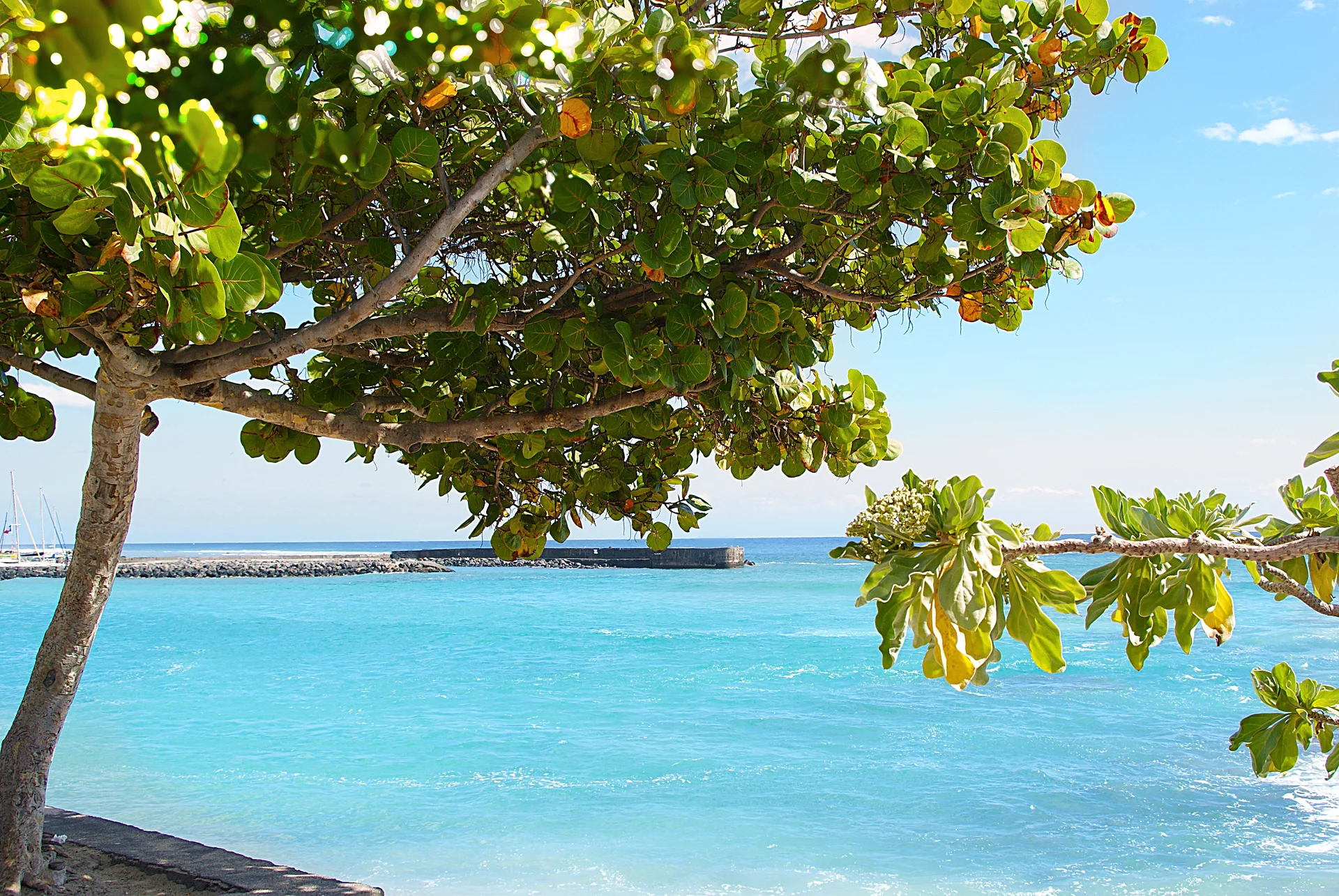
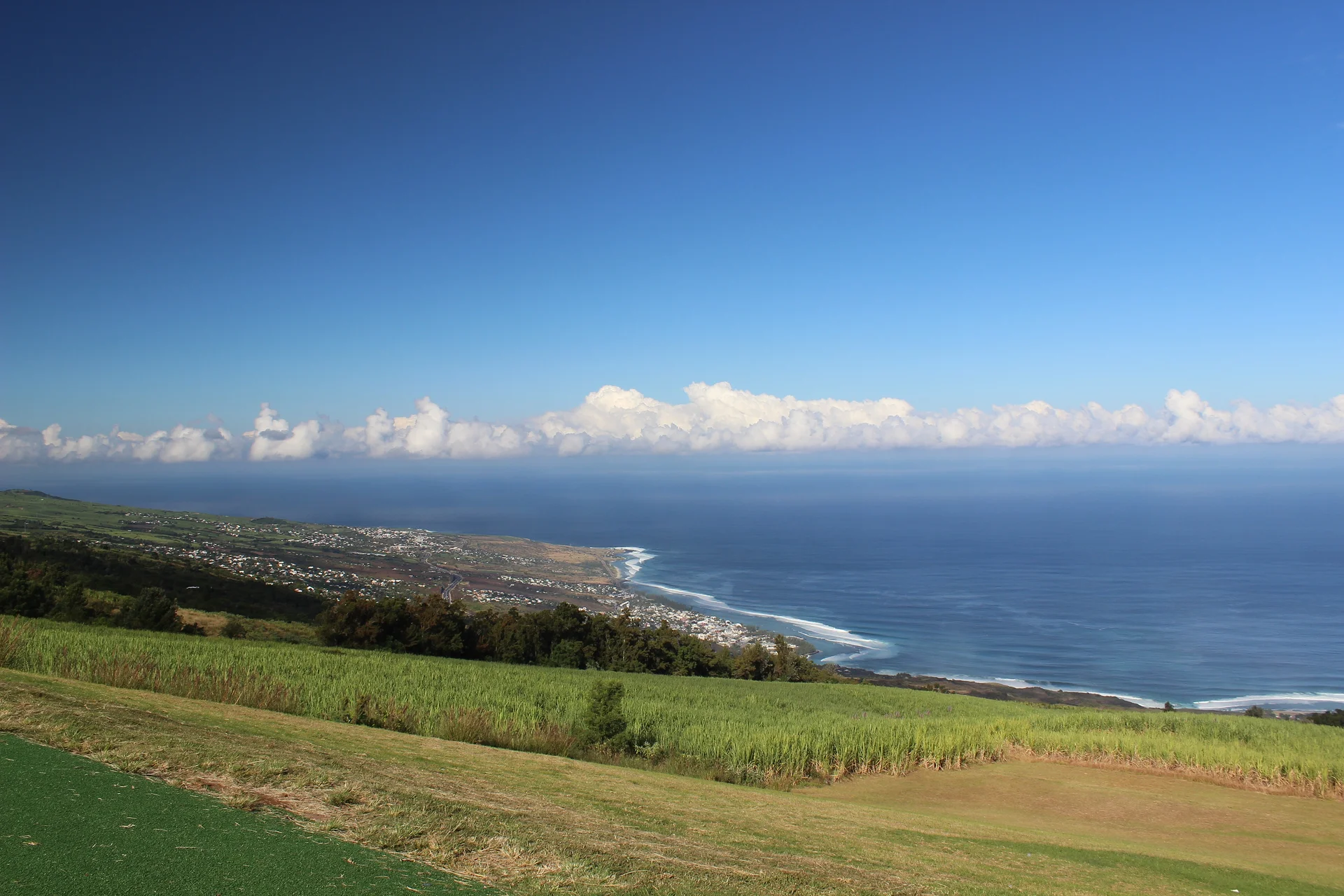
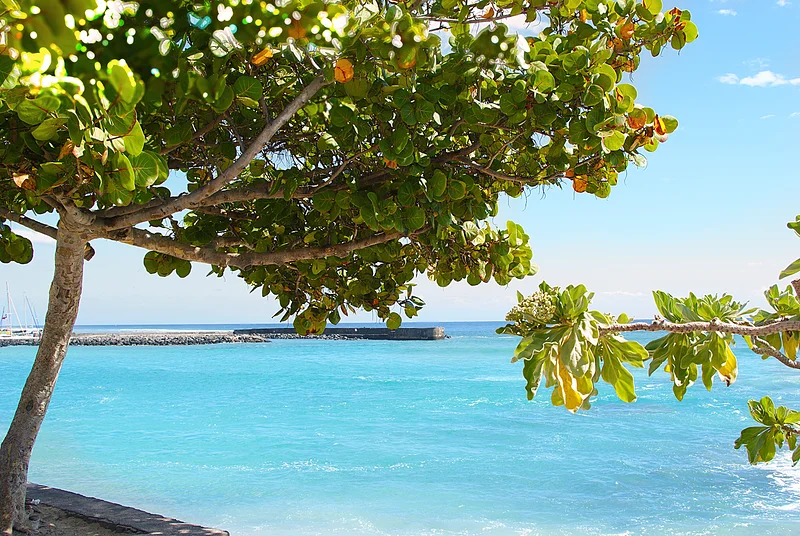
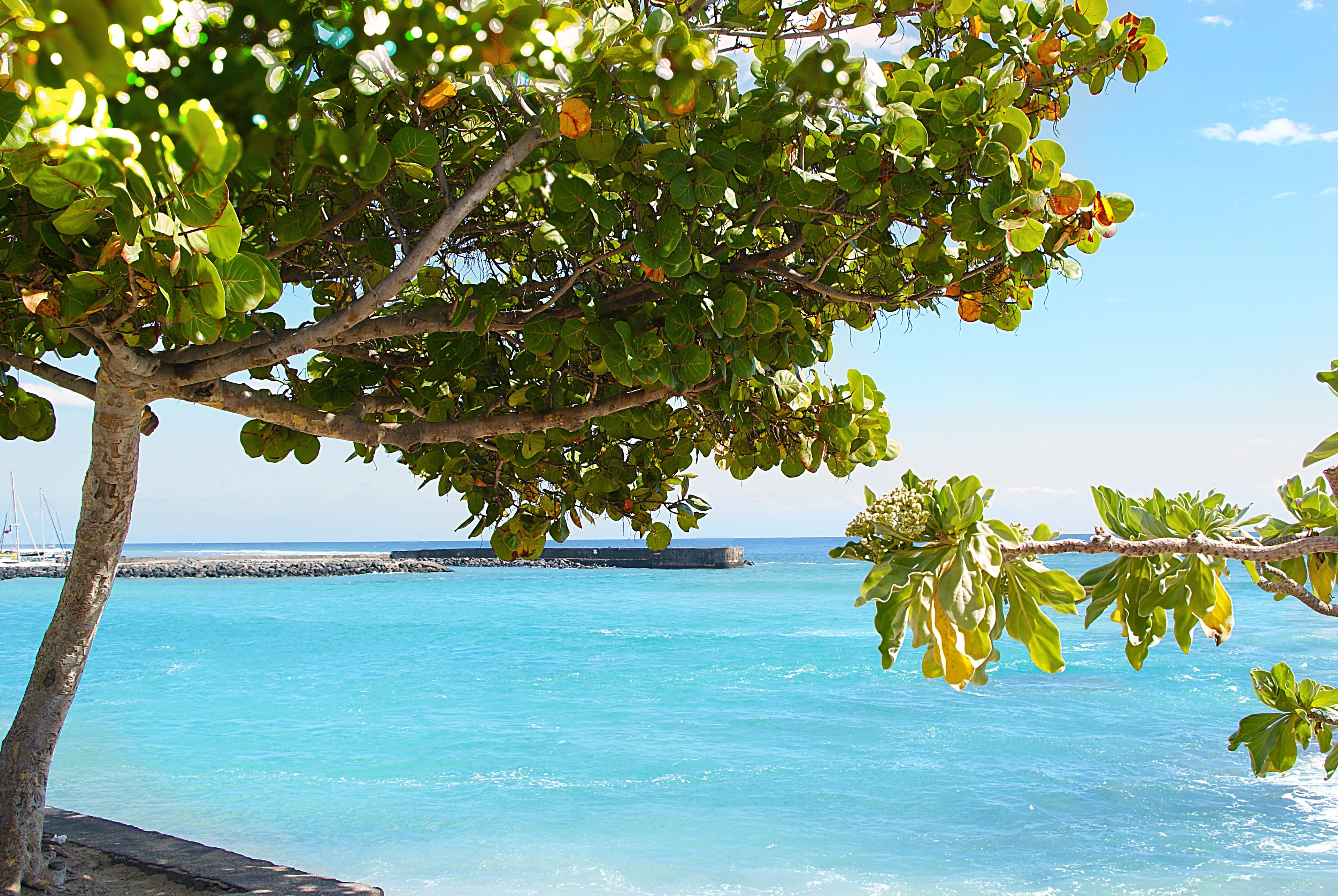
The beaches cluster along the west coast between Saint-Paul and Saint-Leu. A coral reef protects calm, clear water at l'Hermitage-les-Bains, Saint-Gilles, and Boucan-Canot. This is the only reliably safe swimming zone on the island, with shark nets in place.
The shark situation is not a rumor. Between 2011 and 2019, Réunion accounted for roughly 16% of fatal shark attacks worldwide, driven by a bull shark population in the surrounding waters. Swimming and surfing are prohibited outside marked zones. Down south, the beach at l'Étang-Salé is covered in black volcanic sand and worth seeing, but swimming there is off the table.
Experiences Worth Doing
Canyoning in the gorges of Salazie or Cilaos means rappelling down some serious waterfalls. Paragliding from Saint-Leu puts you in the air facing the open ocean, with over 300 flyable days per year. From June through October, humpback whales come to give birth in the warm waters offshore, and several operators offer guided swims with them for around €75 ($80).
Food in Réunion: Cari Every Day
Cari, the island's version of curry, is the daily staple. Chicken, pork, or fish simmers with onions, ginger, tomatoes, and fresh turmeric. It comes with rice, grains (stewed legumes), and a spicy rougail condiment on the side. Rougail saucisse is the dish locals are most proud of: smoked sausages in a punchy tomato sauce.
Before the meal, snack on samoussas, bouchons (pork-stuffed steamed dumplings), and bonbons piments (chili fritters) alongside a glass of rhum arrangé, the island's house-infused rum. Every family has their own recipe, built around Bourbon vanilla, lychee, Victoria pineapple, or ginger. The Friday market in Saint-Paul and the Saturday market in Saint-Pierre are the best places to pick up tropical fruit and spices.
When to Go
The dry season (May through October) is the sweet spot: cooler, low humidity, ideal for hiking. Coastal temperatures stay comfortable while the higher elevations get genuinely cold. This is also prime whale-watching season.
The wet season (November through April) brings heat, humidity, and the real possibility of cyclones from January through March. Trails turn muddy and cloud cover swallows the viewpoints. Avoid French school vacation windows if you can: the island fills up fast and accommodations book solid.
Getting to Réunion
All international flights land at Roland Garros Airport in Saint-Denis. From the US, you'll connect through Paris or Mauritius. Air France, Air Austral, Corsair, and French Bee operate direct flights from Paris in around 11 hours. Round-trip fares from Paris run €500 to €900 ($540-$970) depending on the season. From Mauritius, short-hop flights take 45 minutes and cost €80-€150 ($85-$160). As a French overseas department, Réunion follows EU entry rules: US citizens do not need a visa for stays under 90 days, and a valid US passport is all you need.
Getting Around
Rent a car. There's no real alternative. The "Car Jaune" bus network covers coastal towns for €2 ($2.15) a ride but doesn't go up to the volcano or trailheads, and service stops around 7 p.m. Budget €200 to €350/week ($215-$380) for a rental. Gas is cheaper here than in mainland France.
For Mafate, your options are your legs or a helicopter. Hélilagoon and Corail Hélicoptères both offer transfers and scenic flights ranging from €200 to €350 ($215-$380).