
Visiting the Akrotiri Archaeological Site, a city buried under ash
Located in the south of Santorini, the Akrotiri Archaeological Site is one of the most compelling remnants of the Minoan civilization. Destroyed by a volcanic eruption in the 17th century BC, the ancient city is now partially excavated, revealing well-preserved ruins and providing a unique look into life in the Aegean Sea during prehistoric times.
A city frozen in time
Buried under several meters of volcanic ash, Akrotiri was shielded from looting and erosion, allowing archaeologists to uncover intact structures. Visitors can walk along paved streets, see multi-story buildings, and view the remains of colorful frescoes that testify to the artistic and technical sophistication of this lost society.
A window into the Minoan civilization
Unlike other ancient sites, Akrotiri did not yield any human remains, which suggests that the residents had time to evacuate before the eruption. The objects found on site, including pottery, tools, and furniture, indicate that the city was a thriving commercial hub, maintaining strong ties with Crete and other regions of the Mediterranean.
A modern, covered site
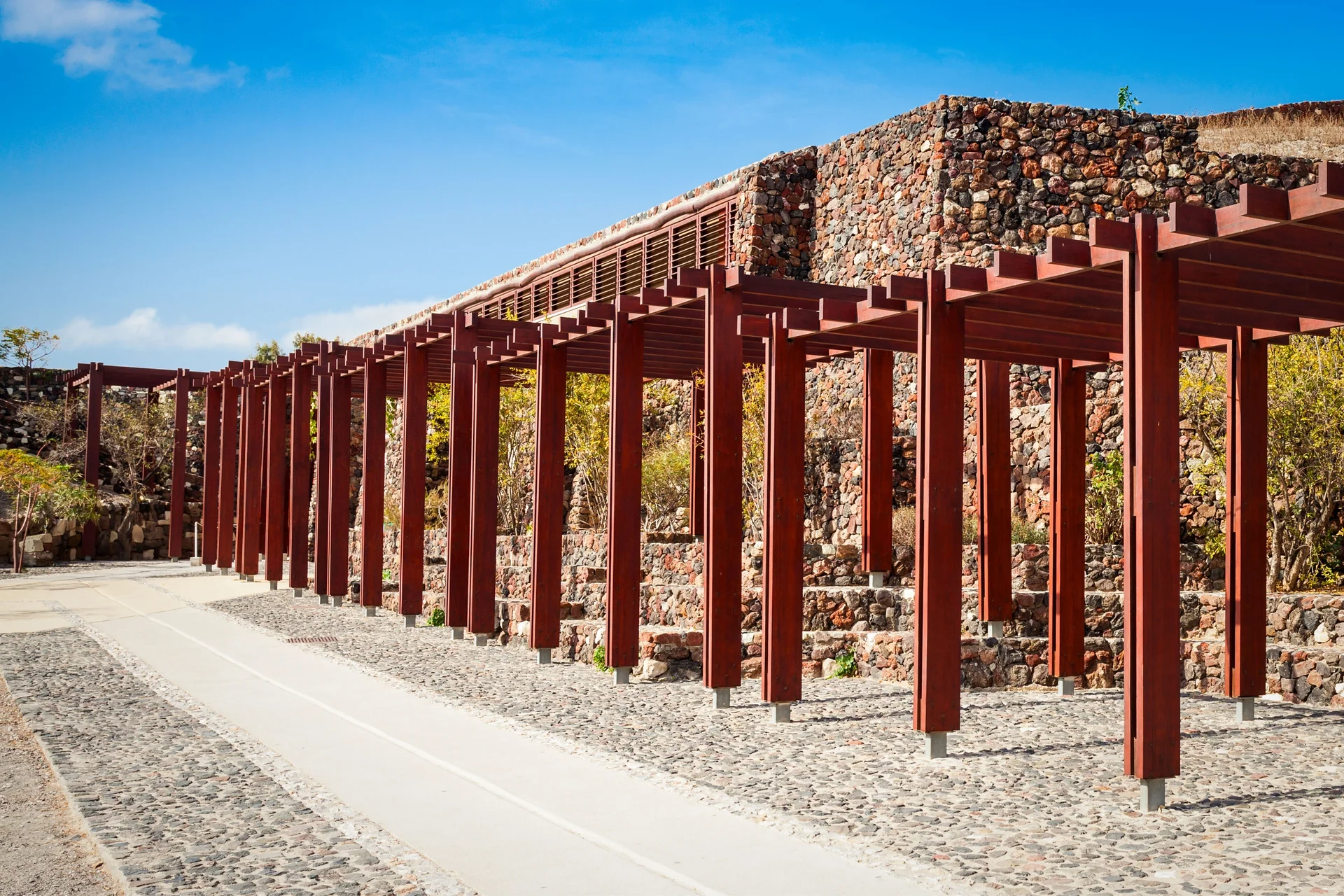
Protected by a modern canopy, the site can be visited year-round, shielded from the sun. Elevated walkways allow you to observe the ruins without damaging them. Although some frescoes and artifacts have been moved to the Museum of Prehistoric Thera, the experience of being on-site remains impressive due to the scale and condition of the ruins.
Opening hours
*Information subject to change

This very well-preserved site offers a true immersion into the history of Cycladic civilization. It is entirely covered, which gave me the impression of strolling through a museum city.
I had booked the tour through GetYourGuide, which offers entrance tickets at a good price with a guide accessible on your phone. Unfortunately, the Wi-Fi did not always work very well. I also recommend going to see the Museum of Prehistoric Thera in Fira to admire the objects found on site.