
Fifteen centuries of Cyprus, room by room
Dozen upon dozen of lined-up terracotta figurines, a large bronze statue of a Roman emperor, Bronze Age ceramics, the Musée archéologique de Chypre (Cyprus Museum) gathers antiquities unearthed across the entire island. You move through the galleries in chronological order.
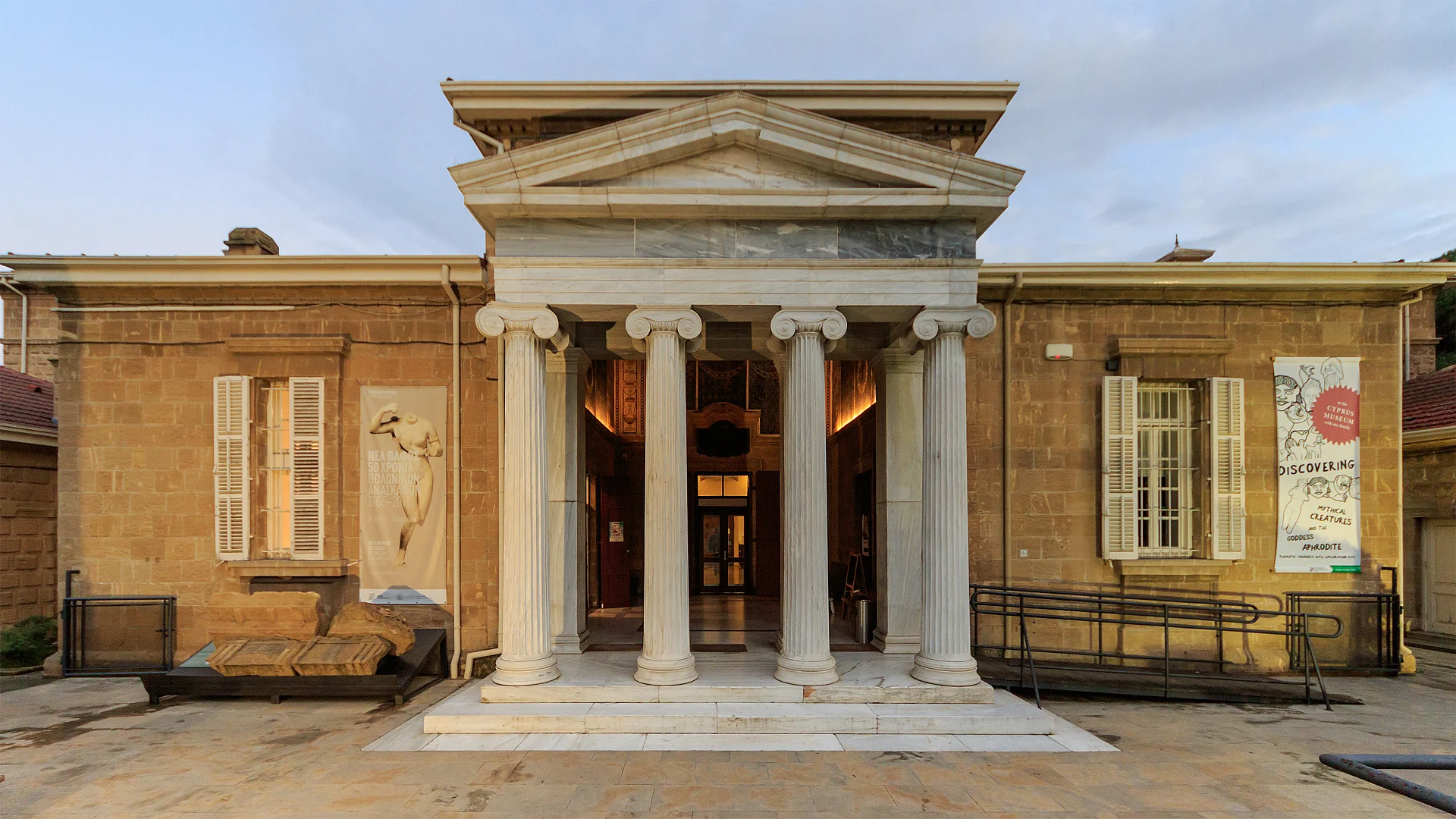
The neoclassical building was constructed to house the archaeological collections of Cyprus, which were previously kept in temporary quarters.
Why visit the Musée archéologique de Chypre
It is the largest archaeological museum on the island, located just south of Nicosia, not far from the historic center enclosed by Venetian walls. Its collections span from the Neolithic prehistory through the Roman era and into the early Byzantine period.
Walking through the galleries helps you understand the history of Cyprus before heading out to the archaeological sites themselves. The museum provides the framework, and the sites supply the setting.
Highlights of the visit
The life-size bronze statue of the Emperor Septimius Severus, discovered in Kythrea, towers over the bronze artifact collection and serves as a reminder that Cyprus was once part of the Roman world.
The terracotta figurines from the sanctuary of Agia Irini, excavated by the Swedish Cyprus Expedition, form another striking collection. Their sheer numbers reveal the scale of offerings left at an ancient place of worship.
Cypriot Bronze Age ceramics sit alongside stone and marble sculptures originating from ancient city-kingdoms. You can examine local craftsmanship and trace the evolution of styles from one era to the next.
Friendly tip: Plan your visit for the beginning of your stay. The museum puts the context in place for what you will see later in the field, making the archaeological sites much more meaningful.
How long for this activity
Plan on spending 2 to 3 hours to take in all the chronological collections at a relaxed pace.