
The Temple of Athena Pronaia, silent guardian of the world's navel
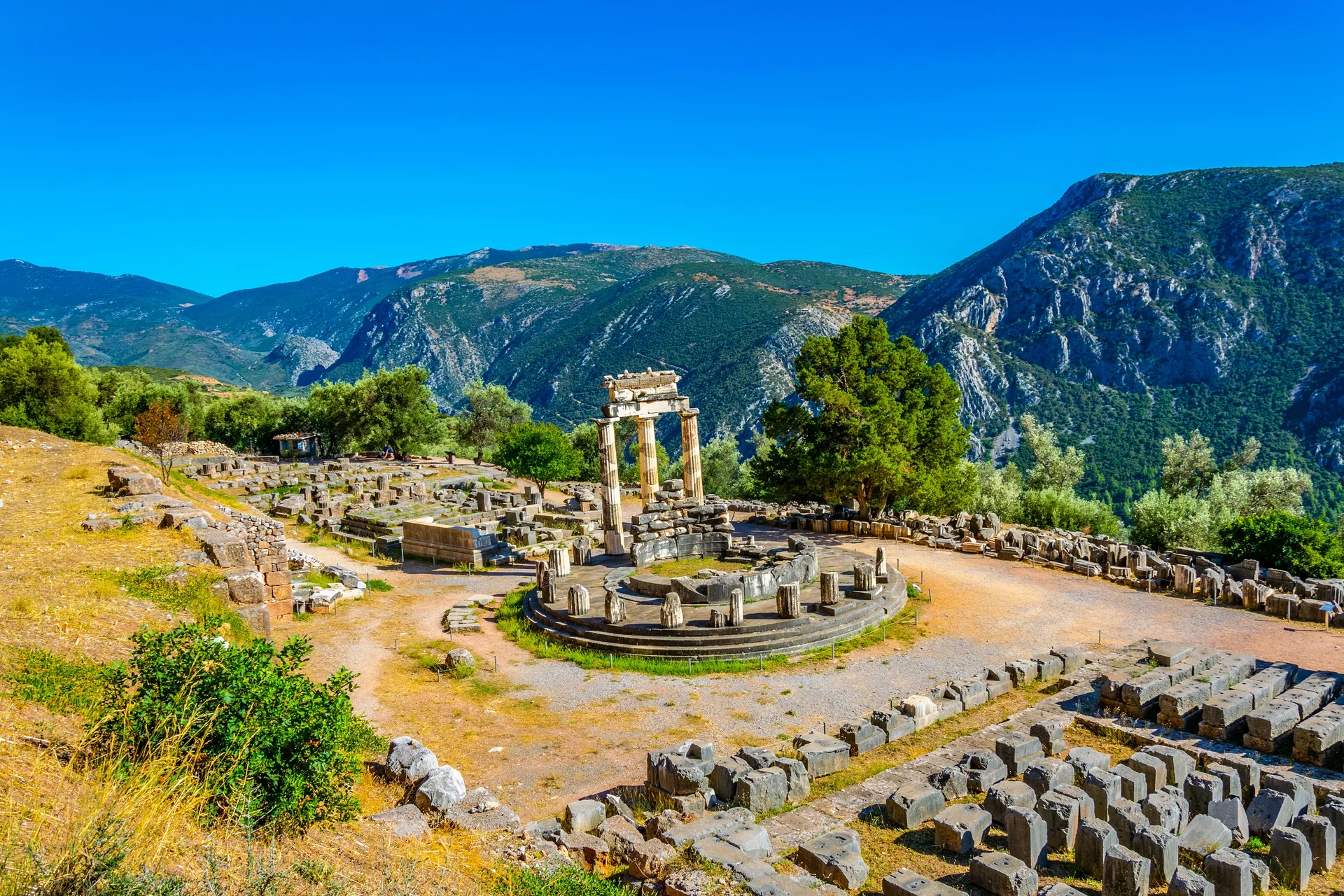
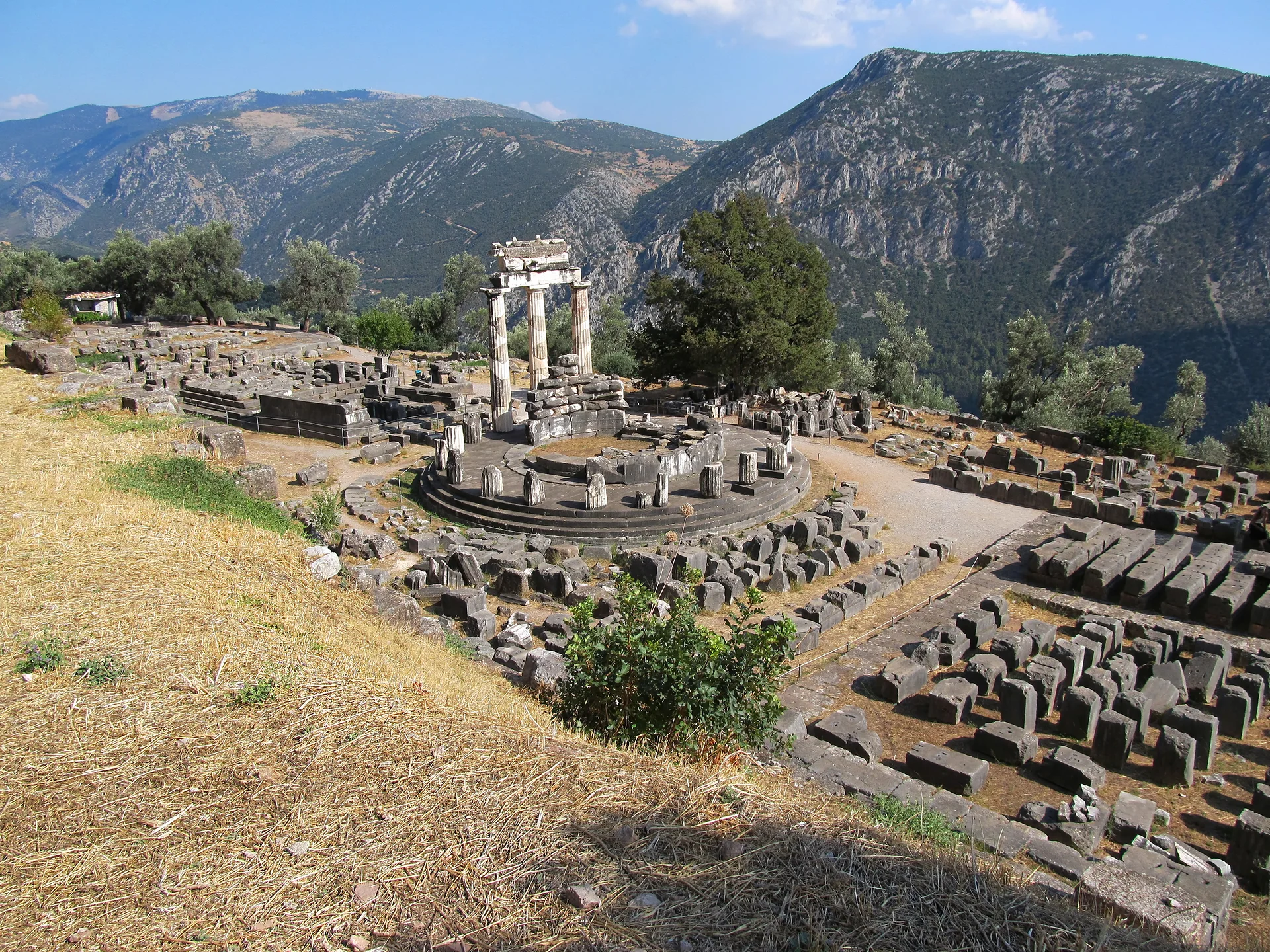
Across the gorge of Castalia, tucked below the modern road, three Doric columns stand in a quiet, mineral silence. They outline the Tholos, an enigmatic rotunda that has captivated photographers and puzzled archaeologists for over a century. Here, Parian and Pentelic marble glows under the Greek sun, earning the site its local nickname Marmaria, meaning the marble quarry.
The contrast with the activity at the sanctuary of Apollo is immediate. This terrace feels more intimate and contemplative, as if Athena is still keeping a quiet watch over her divine half-brother.
Why visit the sanctuary of Athena Pronaia?
This sanctuary was not merely an add-on to the main Apollonian complex. For pilgrims arriving from the east along the ancient road from Kirra, this was the first sacred space they encountered. The name Pronaia literally means she who is before the temple, highlighting the protective role Athena played toward Apollo and his oracle.
Excavations show that worship on this site dates back to the Mycenaean period, between 1500 and 1100 BCE. Hundreds of terracotta figurines depicting a mother goddess, likely Gaia, were found beneath the foundations of the first temple. This continuous use of the site over three millennia makes it an exceptional witness to the evolution of Greek religion.
The mystery of the Tholos: beauty without function
The undisputed star of the sanctuary remains the Tholos, built around 380-360 BCE by the architect Theodore of Phocaea. Its circular shape is striking in classical Greek architecture, which was dominated by rectangular temples. Twenty Doric columns once surrounded the structure, supporting a frieze decorated with sculpted metopes showing battles between Giants and Amazons.
Inside, ten Corinthian pilasters were set against the cella wall, creating a rare level of architectural sophistication. Yet, no one knows what this monument was used for. Some suggest it was a reliquary for a precious statue, while others think it was an honorary building. The mystery remains.
Pro tip: Visit in the late afternoon once the tour buses have pulled away. The low light of sunset sets the marble on fire, and you will have the site almost to yourself. The three columns reconstructed in 1938 stand out beautifully against the twilight sky.
The three temples of Athena: three centuries of history
The archaic temple (7th century BCE)
The first temple, built from grayish porous stone, was among the oldest Doric structures in Greece. Twelve columns defined its sober design. It was destroyed in the 6th century, likely by an earthquake.
The classical temple (510 BCE)
Built as part of a restoration program led by the Alcmaeonids, this second temple measured 13.25 by 27.46 meters. Fifteen columns were still standing in 1905 when a rockslide brought them down. The clay metopes adorned with mythological figures are now on display at the archaeological museum, including the head of Athena that once decorated the pediment.
The late temple (circa 360 BCE)
Erected after the devastating earthquake of 373 BCE, this third temple was cautiously built further to the west using local limestone. Six columns on the facade preceded a vestibule and a cella. It is curiously simple and lacks any sculpted decoration on its metopes, perhaps to avoid competing with the nearby Tholos and its flamboyant reliefs.
Treasuries and altars: witnesses to ancient wealth
Two treasuries punctuate the terrace. The Doric Treasury, dated to 490-460 BCE, remains of unknown attribution. More spectacular, the Treasury of the Massaliotes was built around 530 BCE by the city of Marseille to celebrate its victory over the Etruscans. Its two Aeolic columns made of Parian marble were a testament to the growing economic power of the Phocaean colony.
To the south of the sanctuary, several altars served for sacrifices. Inscriptions from the 5th century reveal they were dedicated to Athena, Zeus, Hygeia (goddess of health), and Eileithyia (goddess of childbirth). This diversity of worship highlights the sanctuary's role as a place of holistic protection for the faithful.
Between the Tholos and the road, the remains of the gymnasium serve as a reminder that Delphi hosted the Pythian Games. Athletes trained there in the xystos, a long covered colonnade where they ran during bad weather, before purifying themselves in baths fed by the Castalian spring.
Opening hours
*Information subject to change

I visited it right after the main archaeological site. Plan on about a ten minute walk to reach it and make sure you have good shoes, because the path is uneven. I found this place pretty enigmatic, especially the Tholos. The three reconstructed columns really help you imagine the scale of the original monument. It is both impressive and intriguing to see, because you find yourself wondering what exactly the place was used for. The spot also offers a beautiful view of the valley below.