
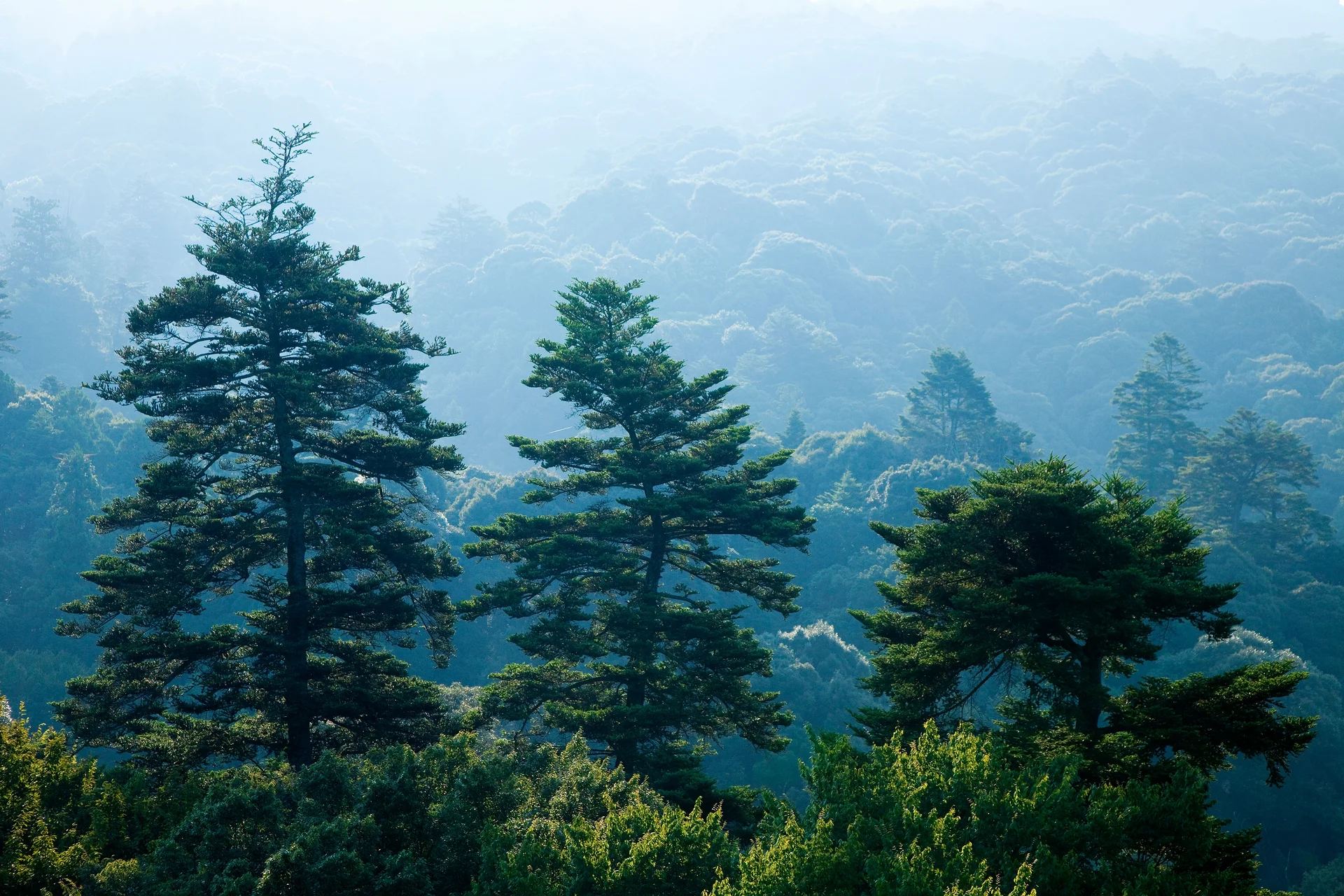
Kasugayama Primeval Forest: walking through a sacred forest twelve centuries old
The moss-covered path leads under a canopy of cedar trees, some of which are over 400 years old. The scent of pine resin and damp earth slowly replaces the noise of Nara park. You are only a ten-minute walk from the Kasuga-taisha shrine. Hunting and logging have been strictly prohibited here since 841.
Why visit Kasugayama Primeval Forest?
This 298-hectare expanse covering the Mikasa and Hanayama mountains is one of only three forests in Japan elevated to the rank of Special National Natural Monument. It shares this distinction with Yakushima and Shirakami, two sites recognized worldwide.
Designated a UNESCO World Heritage site in 1998 as part of the historic monuments of ancient Nara, this is neither a manicured park nor an ordinary forest. It is the domain of the kami, the Shinto deities, and priests from Kasuga-taisha still perform rituals in areas closed to the public.
The vast majority of the forest remains inaccessible to visitors to preserve its sacred character. However, what is open is more than enough to understand why this place has survived for over a millennium without being disturbed.
What you will traverse: the Takisaka no michi trail
The main path, the Takisaka no michi (Waterfall Slope Path), connects the Kasuga-taisha shrine to the depths of the mountain. The vegetation changes quickly. Japanese evergreen oaks, podocarpus, wild wisteria, and rare ferns carpet the undergrowth. More than 800 varieties of plants have been identified throughout the massif, including 598 flowering species.
Along the trail, you will find Jizo statues and Buddhas carved directly into the rock of small caves. These works, created by monks who once came to pray in the mountains, appear between the roots like forgotten relics. We have rarely felt this specific quality of silence found only in the presence of the sacred.
The waterfall and the giant cedar
About 600 meters from the main trail, a waterfall marks the heart of the valley between Mount Hanayama and Mount Takamado. Higher up, a sacred cedar tree aged 600 to 700 years stands about 50 meters tall with a trunk circumference of 4 meters. It is one of the trees classified as a natural monument of the UNESCO site. Standing before it, the human scale suddenly feels very relative.
The grand loop: combining Kasugayama, Mount Wakakusa, and the shrine
The full hike connecting the Kasuga-taisha shrine, Mount Wakakusa, and the primeval forest forms a loop of approximately 11.6 km with 441 meters of elevation gain. The trail is well marked at every junction. The first third of the path follows an unpaved gravel surface before entering the dense canopy. The descent from Mount Wakakusa crosses an open, grassy slope, so bring water and sun protection.
Quick facts for the loop:
- Average duration: 3.5 to 4 hours depending on your pace
- Difficulty: moderate, with some sustained inclines
- Restrooms and rest areas available along the route
- Free access, no entry fee for the forest (200 JPY for access to the summit of Mount Wakakusa)
Friendly tip: Internal trails leading to the high mountain zones are closed to the public and are not maintained. Remain on the marked trails. In autumn, the colors of the Japanese maples add another dimension to the journey. The period from September to November is consistently cited as the best time to visit the forest.
Pros
- Millennium-old preserved forest, free to access
- Rare spiritual atmosphere, very few visitors once you move away from the shrine
- Abundant wildlife: sika deer, rare birds, over 1,000 animal species recorded
- Complete loop combining nature and panoramas over the city of Nara
Points of vigilance
- Large part of the forest inaccessible to the public (sacred zones reserved for priests)
- Panoramic views limited inside the dense forest
- Intense heat in summer on the exposed sections of Mount Wakakusa
Opening hours
The trails of the Kasugayama Primeval Forest are open to the public at all times with no set hours.
Mount Wakakusa is open from 9:00 AM to 5:00 PM. It is closed from mid-December to mid-January, as well as on Mondays that do not fall on a weekend or a public holiday.
How long for this activity
*Information subject to change

I really recommend visiting the shrines in this forest. Imagine a very green place, with dense and imposing trees. There are some beautiful trails and an incredible sacred atmosphere. You only need to see statues or stone lanterns covered in moss to feel like you have entered another world. You would almost expect a mischievous spirit to pop out.