
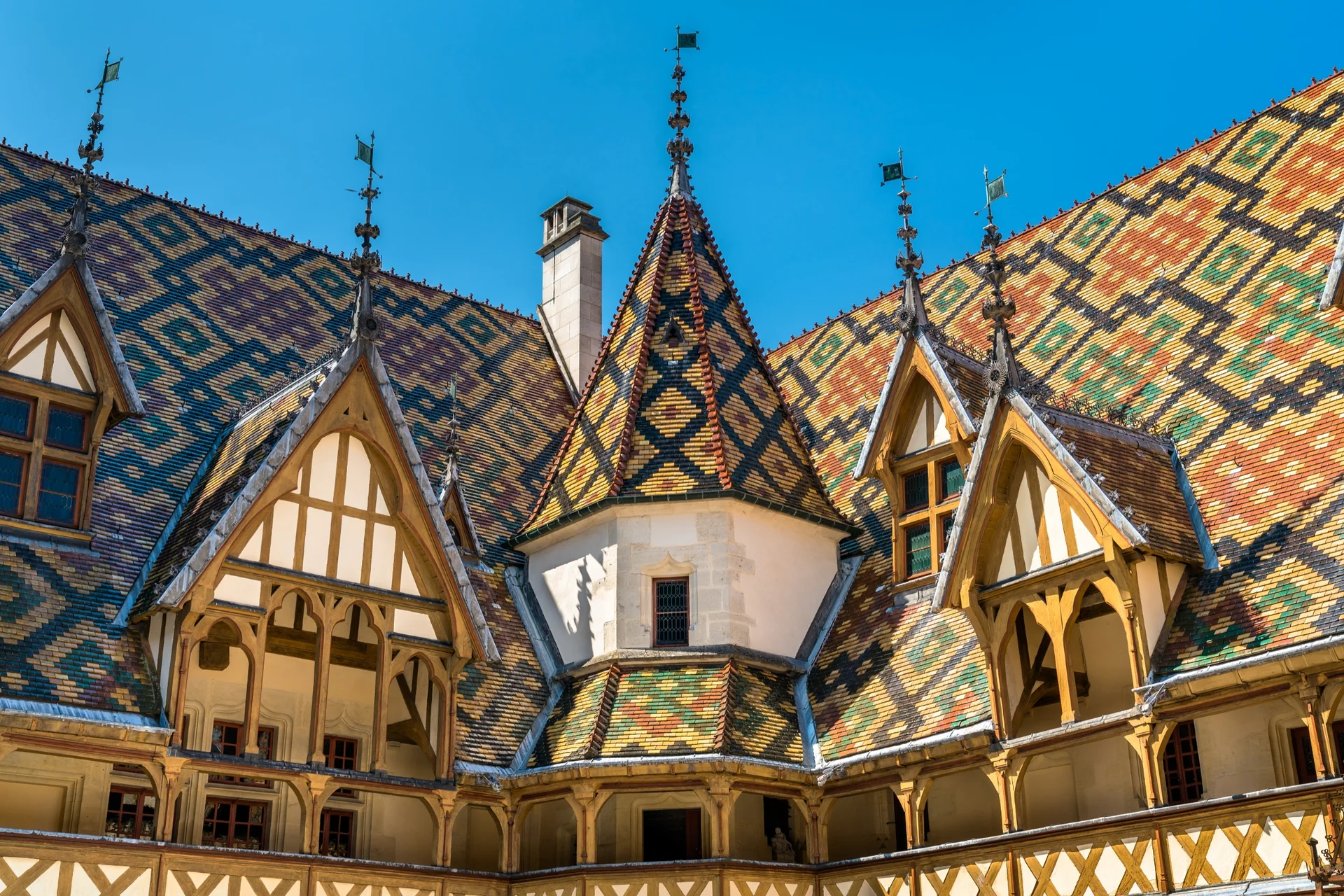
Hospices de Beaune, a Gothic masterpiece with fiery roofs
Glazed tiles gleam under the sun in Beaune. Red, green, yellow, and black geometric patterns create hypnotic diamond shapes across the steep rooflines. In 1443, chancellor Nicolas Rolin founded this hospice for the poor. Nearly six centuries later, the building remains one of the most striking examples of medieval civil architecture in Europe.
Why visit the Hospices de Beaune?
This former hospital functioned until 1971. Nuns cared for the sick here under conditions that seem like another era today. A visit provides insight into how charity, illness, and death were approached during the Middle Ages. The site is striking for its remarkable state of preservation, including original furniture, kitchen utensils, and medical instruments. Everything here tells a story.
Beyond the historical aspect, the Hospices de Beaune houses a major work of Flemish painting, the Last Judgment polyptych by Rogier van der Weyden. This altarpiece, commissioned by Nicolas Rolin himself, is worth the trip alone.
The Grande Salle des Pôvres, the beating heart of the hospice
Standing sixteen meters high under a timber frame shaped like an overturned ship hull, this room impresses the moment you walk in. Thirty red canopy beds line the walls. Each bed was designed to hold two patients. At the far end, a chapel allowed bedridden patients to follow Mass without moving.
The painted beams still bear the coats of arms of Nicolas Rolin and his wife Guigone de Salins. Their motto, Seulle, appears everywhere, carved into stone and wood. The original floor tiles have retained their centuries of wear.
The Last Judgment polyptych
A prestigious commission
Rogier van der Weyden, the official painter of Brussels, created this altarpiece around 1450. Measuring over five meters long when opened, it depicts Christ in majesty separating the saved from the damned. The faces of the resurrected express terror or bliss with unsettling realism.
Observing the details
A magnifying glass is provided for visitors. It reveals the finesse of the work, such as tears on cheeks, reflections in eyes, and fabric textures. The Hell panel shows contorted bodies being pulled toward the flames. The Paradise panel is bathed in a soothing golden light.
Friendly tip: Arrive at opening time or after 4pm to view the polyptych without the crowds. The exhibition room is small and heavy traffic makes it difficult to see the details.
Pharmacy and kitchen, witnesses to daily life
The pharmacy lines its faience pots from Nevers on walnut shelves. Theriac, cantharides ointment, and viper powder labels evoke a form of medicine where remedies often bordered on poison. A bronze mortar from 1782 sits in the center of the room.
The kitchen keeps its mechanical rotisserie powered by an automaton. Copper pots hang above the hearth. Soups and porridges were prepared here for the residents.
The courtyard with polychrome roofs
This is the iconic image of Beaune. The steep roofs descend almost to the first floor level. Their glazed tiles form chevron and diamond patterns. The wrought-iron well in the center of the courtyard dates to the 15th century. Half-timbered galleries run along two levels, offering shelter from the rain to visitors then and now.
Don't miss:
- The gargoyles sculpted on the roof corners
- The sundial on the south facade
- The ornate flamboyant Gothic dormer windows
The Hospices wine auction
Every third Sunday of November, the most famous charity wine auction in the world takes place here. Wines produced on estates bequeathed to the Hospices over the centuries reach record prices. The event sets the tone for the Burgundy vintage and attracts collectors from around the globe.

This is the one site you cannot miss in Beaune! I have already been twice and I never get tired of it. The building is magnificent, particularly its roof with the multicolored glazed tiles. The beautiful inner courtyard looks out onto the historic rooms you can visit. The centerpiece remains the famous Last Judgment polyptych by Rogier van der Weyden, a true masterpiece, but I also enjoyed the paintings, the Flemish tapestries, as well as the pharmacy, which immersed me in ancient medical practices.
While there is an entrance fee, the ticket office offers a very wide choice of experiences with unique tours, or even the starry night, which I loved, featuring telescope observations.