
Visiting the Estense Palace: the Versailles of Varese in an Eden-like garden
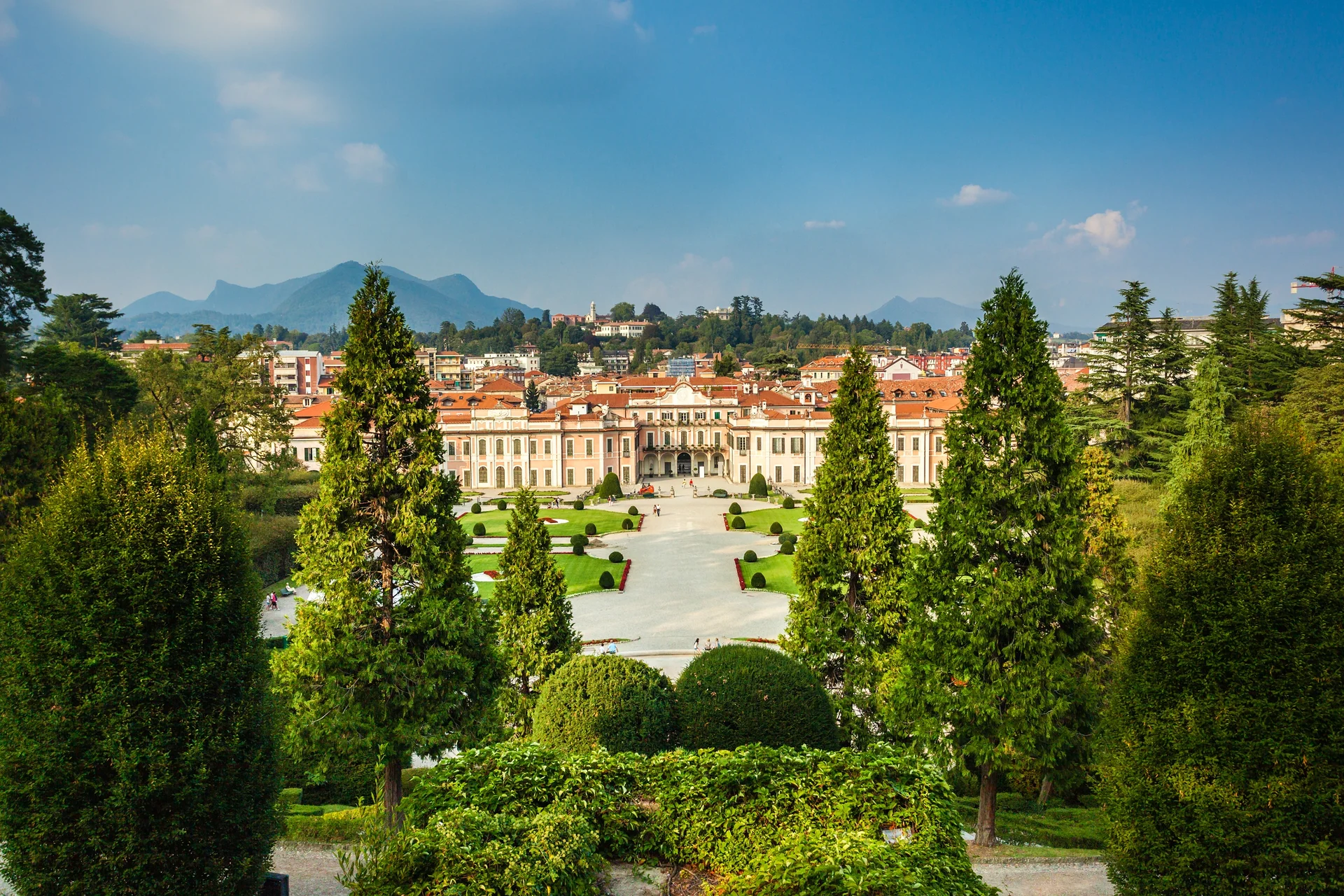
Far from being just another municipal building, the Estense Palace is the elegant, beating heart of Varese. Commissioned in the 18th century by a duke as his opulent summer residence, the palace surprises visitors. Its main facade does not face the street, but instead opens majestically onto one of the most beautiful public gardens in Italy.
Why is this palace a Varese landmark?
The Estense Palace embodies the vision of its patron, Francesco III d'Este, the Duke of Modena and governor of Milan. He wanted a court that rivaled Vienna and drew inspiration from Austrian imperial estates. Often called the little Versailles of Milan, it is a striking example of late Lombard baroque architecture. Its elegance extends into a spectacular park, creating a space of rare harmony in the city center.
The Estense Gardens: a symphony of greenery and water
The true treasure of the palace, open to all, is its garden. Designed like a theater stage, it frames nature for the pleasure of the senses. The perspective is grandiose. From the central parterre, the view rises toward a series of terraces, fountains, and water features, culminating in a nymphaeum at the foot of a wooded hill.
A stroll at the pace of nature
Wandering through the paths of the Giardini Estensi is an experience in itself. The air is scented by flowerbeds, while the soothing sound of water flowing from the large circular fountain masks the noise of the city. The French-style layout, defined by symmetry, invites an orderly walk, while the surrounding English-style areas offer shaded corners and winding trails.
Do not miss:
- The central parterre, with its geometric patterns and colorful flowers.
- The large fountain, the focal point of the perspective.
- The belvedere at the top of the hill, for an overall view of the park and the palace.
A living palace, between history and daily life
Although the palace now serves as city hall and is only partially open to the public, its spirit is far from static. The south facade, with its ochre-yellow plaster and stucco decorations, is a masterpiece of balance. When crossing the threshold during special occasions, one can catch a glimpse of the splendor of the past, particularly in the Salone Estense, or Salon of Honor, with its monumental fireplace made of polychrome marble and ornate decorations.
Insider tip: Do not just stick to the main garden. Behind the hill, by passing through the adjacent Villa Mirabello (which houses the civic museums), you will find a botanical giant: a centuries-old cedar of Lebanon. It is a quiet, secret spot, perfect for a break in the shade of its imposing branches, far from the more crowded main thoroughfare.

The Palazzo Estense has beautiful gardens that are free to access all year round. It is a very pleasant walk, especially when it is hot outside. I did not have the chance to see the inside, which is only open during guided tours or special events. Do not hesitate to check in advance.