
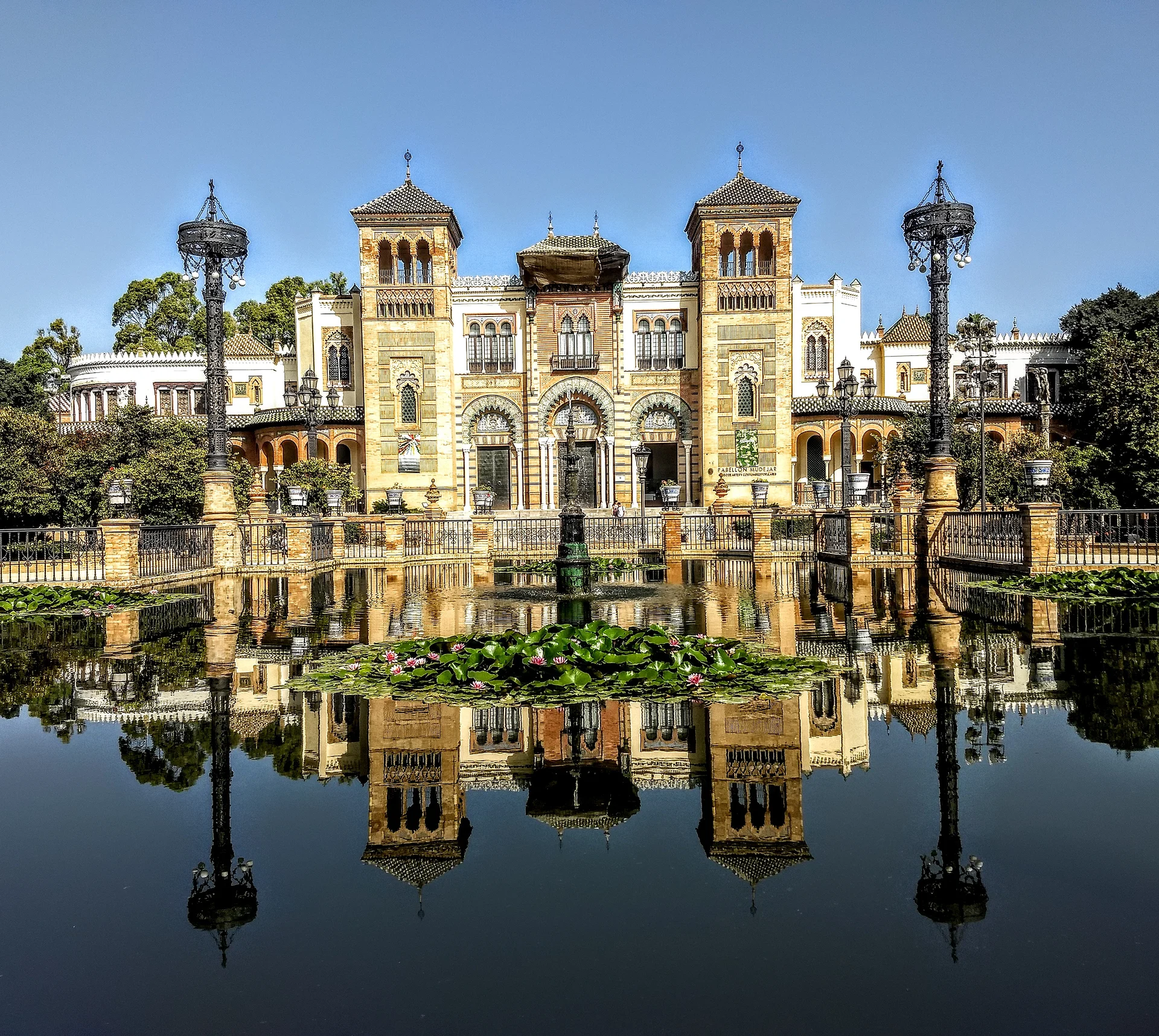
Visiting the Museum of Popular Arts and Traditions
The Museum of Popular Arts and Traditions in Seville offers a deep dive into Andalusian culture. It functions like a time machine for artisan craftsmanship, showcasing a heritage that shines through in every exhibit. Housed since 1973 in the Pavillon mudéjar (Mudejar Pavilion), a building of remarkable grace constructed for the 1929 Ibero-American Exposition, this museum could not have found a more fitting home.
Between craft and art, a fascinating culture
Before you even step inside, you are greeted by one of the city's most striking structures. The Pavillon mudéjar is an architectural standout, with its facade reflecting beautifully in the water feature of the Parc Maria Luisa (Maria Luisa Park). This grand monument spans four floors dedicated to Andalusian traditions. The main floor features 2,000 square meters of space, split between temporary exhibitions and a gallery housing the Díaz Velázquez embroidery and lace collection. It is one of the most extensive collections in Europe, including domestic trousseaus, clothing, table linens, and lingerie. From needlework to bobbin lace, the delicate, intricate world of gold and silk is captivating. A recreation of the collector's own home offers a look inside a 19th-century upper-middle-class residence. You will find similar period furniture in the basement, alongside kitchen utensils, home decor, and various household items, as well as rooms dedicated to specific trades. Here, the line between craft and art blurs among leatherworking, cooperage, castanet making, gilding, tanning, pottery, and ceramic painting. The exhibits also include weapons from the 17th to the 20th century, historical agricultural techniques, and a significant collection for fans of azulejo (ornamental ceramic tile) work. The visit is genuinely educational, providing a worthy sanctuary for the vast and complex culture of Andalusia.

Located in the magnificent Mudejar Pavilion, this very rich museum focuses on Andalusian culture, especially its traditional craftsmanship. I learned so much about local customs thanks to the many objects on display and the exhibit path, which does a great job of highlighting the arts and trades of the region. I loved the Velazquez collection dedicated to lace and embroidery, as well as the section on paintings from the costumbrismo movement, which I did not know at all. It is impossible to see everything in two hours, it is huge.