
Visiting Maria Luisa Park
Spanning 34 hectares, Maria Luisa Park is the largest public park in Seville. This green space once formed part of the gardens of the San Telmo Palace, known in Spanish as Palacio de San Telmo, which belonged to the Infanta María Luisa, second daughter of King Ferdinand VII, and her husband the Duke of Montpensier. Following the Duke's death, the widowed Infanta gifted the gardens to the city in 1893, which then had them redesigned ahead of the 1929 Ibero-American Exposition. French landscape architect Jean Claude Nicolas Forestier led the project.
An Iconic Spot in Seville
The park was laid out in coordination with the creation of the Plaza de España and the Plaza de América by architect Aníbal González. Alongside the ubiquitous water features, these plazas are defined by monumental palaces and former pavilions built for the Ibero-American Exposition, such as the pavilion of arts, now the Seville Archaeological Museum, and the Mudéjar pavilion, converted into the Museum of Popular Arts and Customs of Seville. The Plaza de América also features a monument honoring the writer Miguel de Cervantes.
What to See in Maria Luisa Park
Maria Luisa Park functions as a botanical garden featuring Mediterranean flora including palms, kentia palms, date palms, magnolias, and eucalyptus trees. For wildlife, visitors can spot exotic birds such as green parakeets and peacocks.
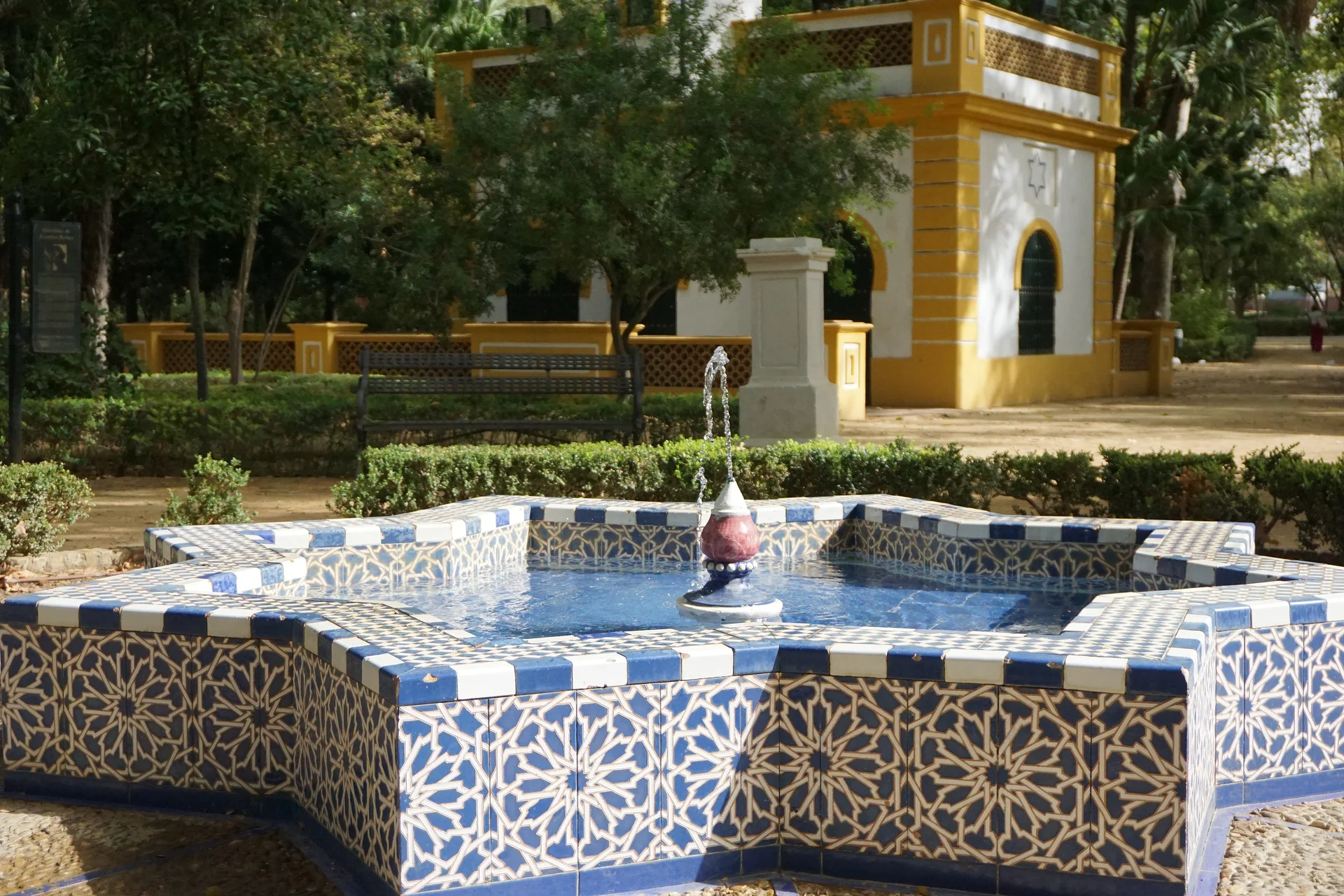
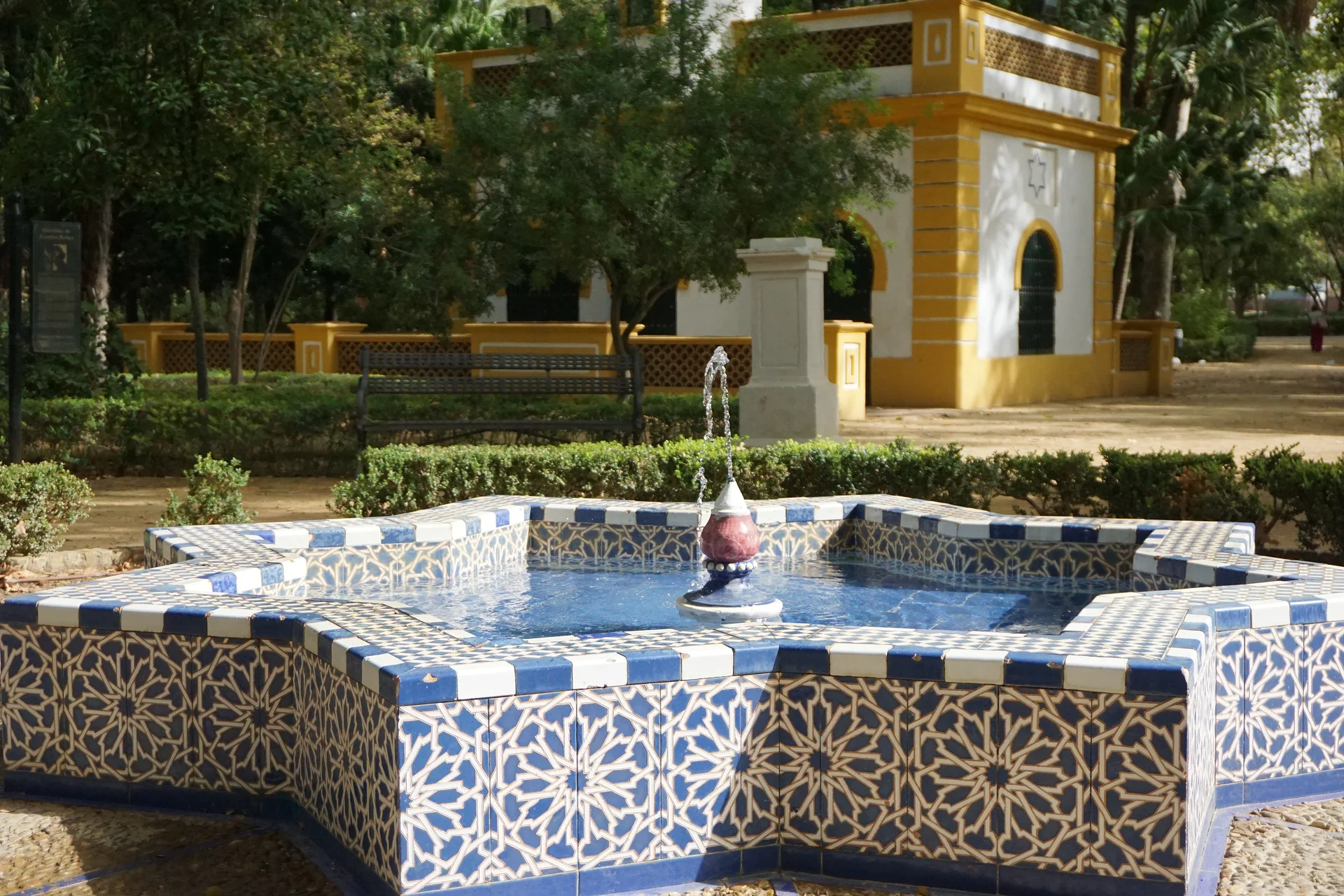
The Isleta de los Pájaros is the largest body of water in the park. Conceived in the 19th century, it is overlooked by the elegant Alfonso XII pavilion. Do not miss the Lions Fountain, decorated with ceramic tiles known as azulejos, or the Frogs Fountain. The monument to Bécquer, erected in the northern section of the park, is a marble statue paying tribute to the romantic poet Gustavo Adolfo Bécquer.

This beautiful garden is worth the trip!
It is for everyone, and it will satisfy the whole family.
The paths are well laid out and overflowing with palm trees, ficus, and orange trees.
The park can be explored throughout the year. I was lucky enough to walk through it in winter and in summer.
In February, you will be able to admire the orange trees covered in beautiful bright oranges, and in July, you will enjoy the welcome shade of the gigantic trees...