
Angkor Wat, the temple that defies the ages
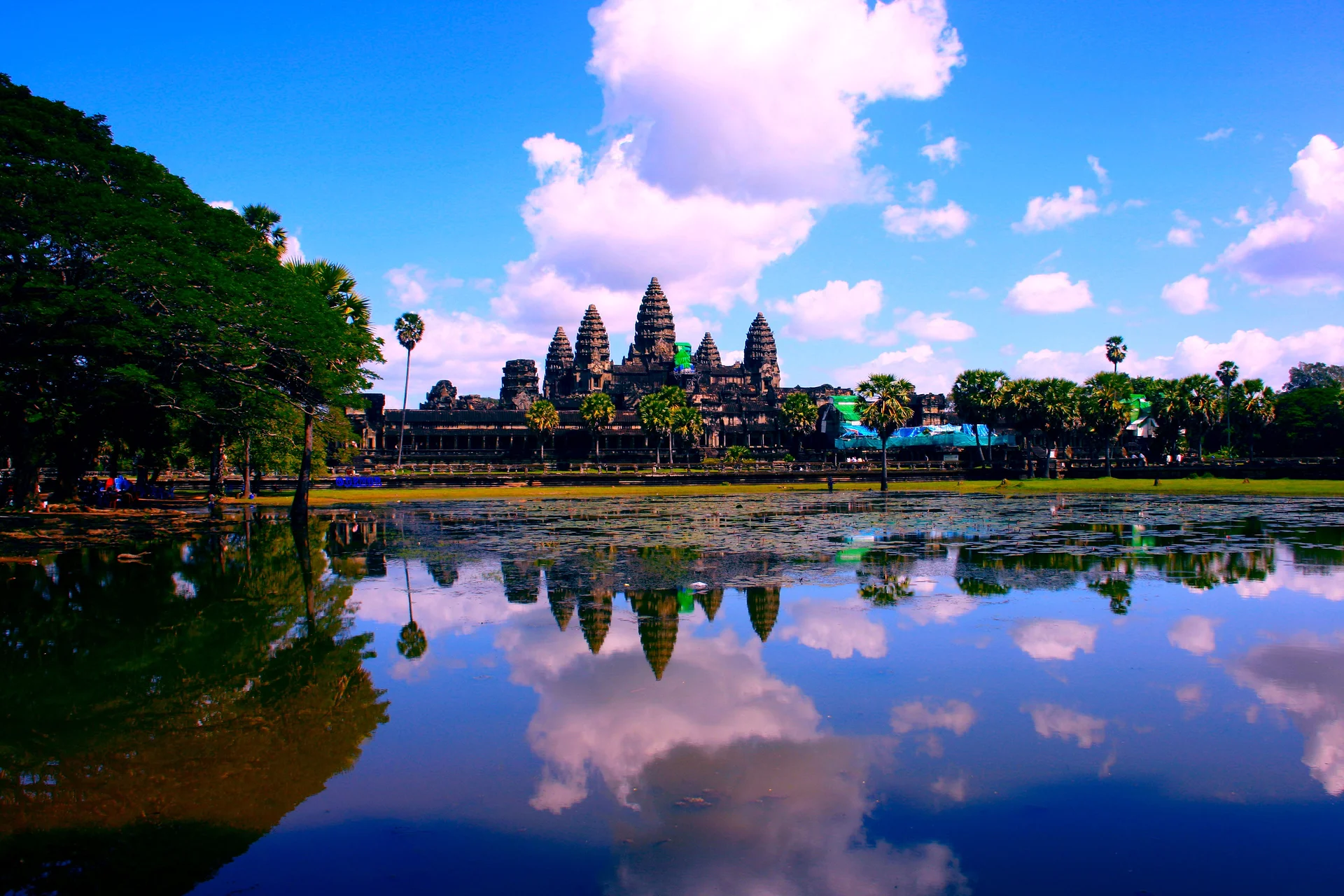
The sun rises slowly over the five sandstone towers, their silhouettes reflected in the calm waters of the sacred pool. Around you, the silence is broken only by the calls of tropical birds. You are standing before the largest religious monument in the world, a temple-city spanning 162 hectares that has dazzled everyone who passes through its gates for nine centuries.
Why is Angkor Wat so fascinating?
Built in the early 12th century by the Khmer king Suryavarman II, Angkor Wat served as both a state temple dedicated to the Hindu god Vishnu and the future mausoleum for the monarch. This architectural marvel broke with the earlier Shaiva tradition of previous kings and illustrates the power of the Khmer Empire at its peak. By the end of the 12th century, the temple gradually transformed into a Buddhist place of worship, a dual spiritual identity that continues to deepen its symbolic significance today.
The unusual orientation of the temple toward the west, likely linked to the worship of Vishnu, remains a mystery that still divides experts. This peculiarity adds to the enigmatic aura of the site, which has become not only the symbol of Cambodia but also the only architectural monument to appear on a national flag.
Architecture that reaches for the sky
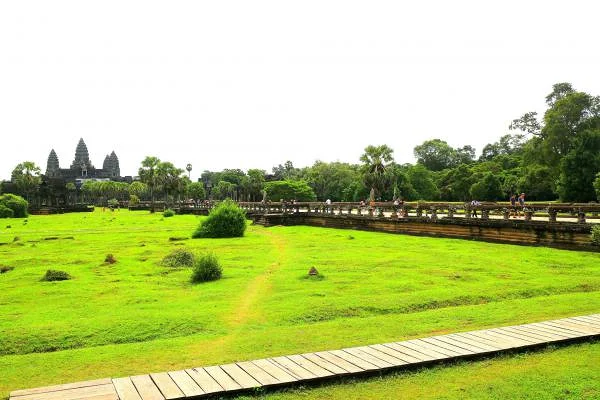
Angkor Wat physically embodies Hindu and Buddhist cosmology. Its five towers in a quincunx arrangement represent the five peaks of Mount Meru, the mythical home of the gods. The moat, stretching over five kilometers, symbolizes the cosmic oceans, while the three nested rectangular galleries evoke the mountain ranges surrounding the sacred world.
The structure rises in three levels, reaching a height of 65 meters. To reach the central sanctuary, you must climb steep stairs that test both your physical endurance and spiritual resolve. The central tower, once reserved for the king and high priests, offers a striking view over the entire complex.
The technical feats of Khmer builders
The construction of Angkor Wat required nearly 30 years of labor and 1.5 million cubic meters of sandstone. The stone blocks, quarried from Phnom Kulen 40 kilometers away, fit together without mortar or nails thanks to millimeter-perfect precision. This surgical accuracy explains why the monument has withstood the passage of time, the encroaching jungle, and successive wars.
Bas-reliefs, an epic carved in stone
The galleries of the first level house one of the most extraordinary collections of narrative sculptures in the world. Over 1,200 square meters, Khmer artists chiseled scenes of breathtaking complexity into the sandstone. These bas-reliefs, standing two meters high, display artistic talent that rivals the greatest works of humanity.
The Churning of the Ocean of Milk
This 49-meter panel, located in the east gallery, illustrates the Hindu creation myth. Demons and gods pull alternately on the cosmic serpent Vasuki, coiled around Mount Mandara, to bring forth the elixir of immortality. In the center, Vishnu supervises the operation while his turtle avatar supports the mountain. The dynamics of this composition create an impression of perpetual movement that captures the eye.
The Battle of Kurukshetra and other epics
The southwest gallery depicts the titanic clash of the Mahabharata between the Pandavas and the Kauravas. Warriors, mounted on elephants and chariots, collide in an organized chaos where every detail counts. The northwest gallery depicts the Battle of Lanka from the Ramayana, described by researchers as an inextricable entanglement of monkeys and demons.
In the southwest gallery, discover the historical procession of Suryavarman II himself, surrounded by his military commanders perched on elephants, the number of parasols indicating their rank. The southeast gallery presents the 32 hells and 37 heavens of Hinduism, with Yama, the judge of the dead, enthroned on a buffalo at the center of the composition.
A local tip: To admire the bas-reliefs in the best light, go in the morning between 7:00 AM and 10:00 AM. The columns of the gallery create a natural play of light and shadow that reveals the depth of the sculptures. Follow the visitor flow in a counter-clockwise direction, always keeping the monument on your left, just as the Khmer architects intended.
Experiencing the sunrise
The spectacle of the sunrise over Angkor Wat draws hundreds of visitors every morning, and for good reason. When the sun emerges behind the temple towers, casting their silhouettes onto the waters of the reflection pool, the magic happens instantly. The colors shift from deep purple to pale pink, then to blazing gold in the space of a few minutes.
To escape the crowds gathered in front of the north pool, which is the most photographed spot, head toward the south pool, located slightly to the right. You will get the same spectacular view with far fewer people. Arrive by 4:45 AM to secure your spot. Once the sun is up, do not leave immediately. It is the perfect time to explore the temple in relative quiet while photographers pack up their gear and the heat remains manageable.
Beyond Angkor Wat
The site is part of the vast Angkor Archaeological Park, which has been a UNESCO World Heritage site since 1992. This international recognition has facilitated major restoration and conservation programs, notably led by the APSARA Authority (Authority for the Protection and Management of Angkor and the Region of Siem Reap) and international teams from Germany, France, and India. Projects like the German Apsara Conservation Project work meticulously to preserve the thousands of devatas (female deities) sculpted on the temple walls.
Despite challenges like natural erosion, tourism impact, and past restoration efforts that were sometimes ill-suited, Angkor Wat remains a living symbol. Buddhist monks still pray there, Cambodian families come to picnic, and the temple continues to be the spiritual and cultural heart of the country.
Opening hours
*Information subject to change