
Alexander III Bridge at a Glance
Connecting the Hôtel des Invalides to the Winston-Churchill avenue, which borders the Petit and Grand Palais, the Alexander III Bridge draws locals and visitors alike with its distinct profile. As a UNESCO World Heritage site, it serves as a gateway between the 7th and 8th arrondissements of Paris.
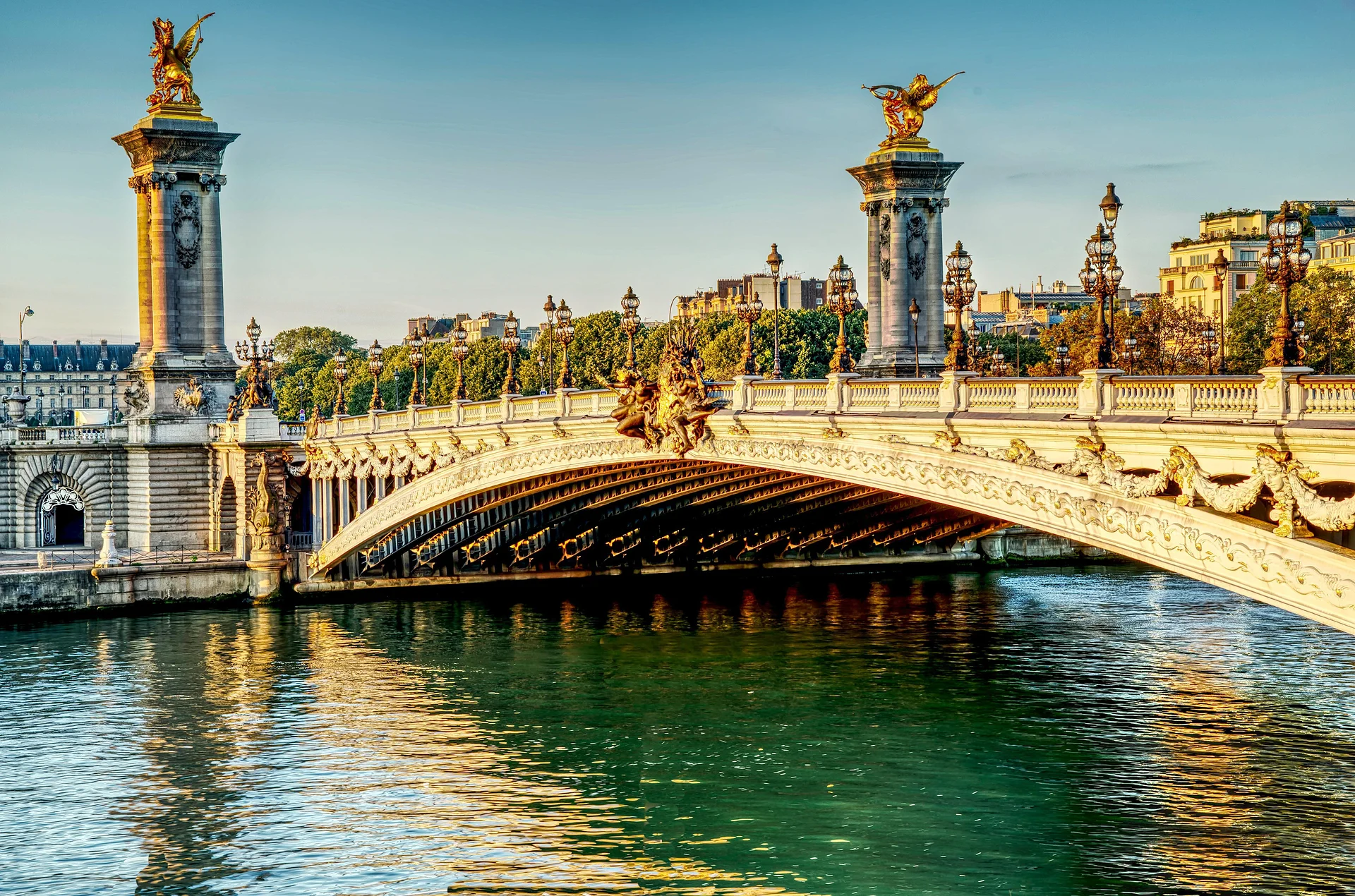
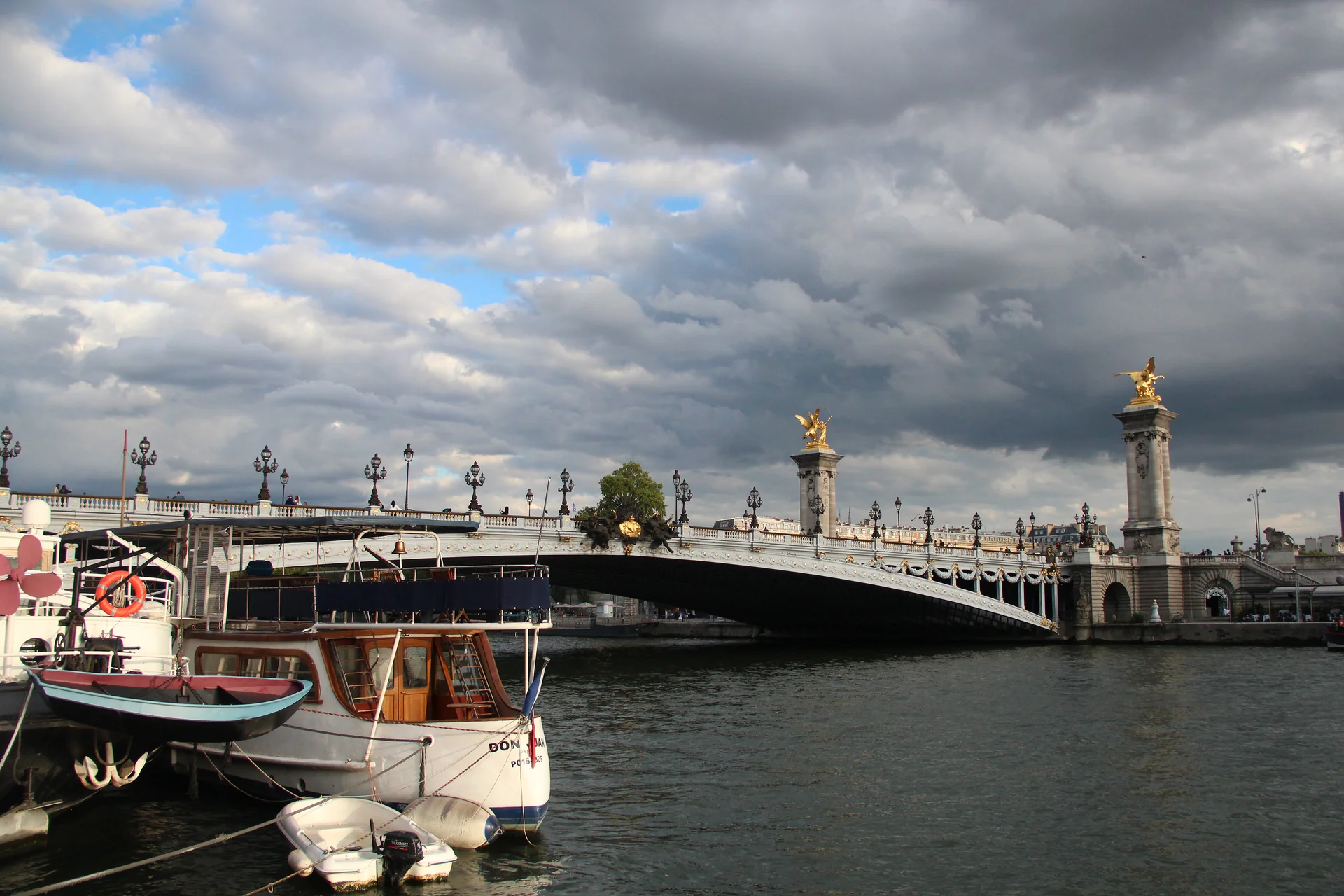
Inaugurated for the 1900 World Fair by President Sadi Carnot, the bridge was built to honor the friendship between France and Russia, specifically referencing Nicholas II and his father, Alexander III. Constructed from molded steel because a suspension design proved impractical, the bridge spans 160 meters. Its shallow height, relative to its length, presented significant engineering challenges during construction.
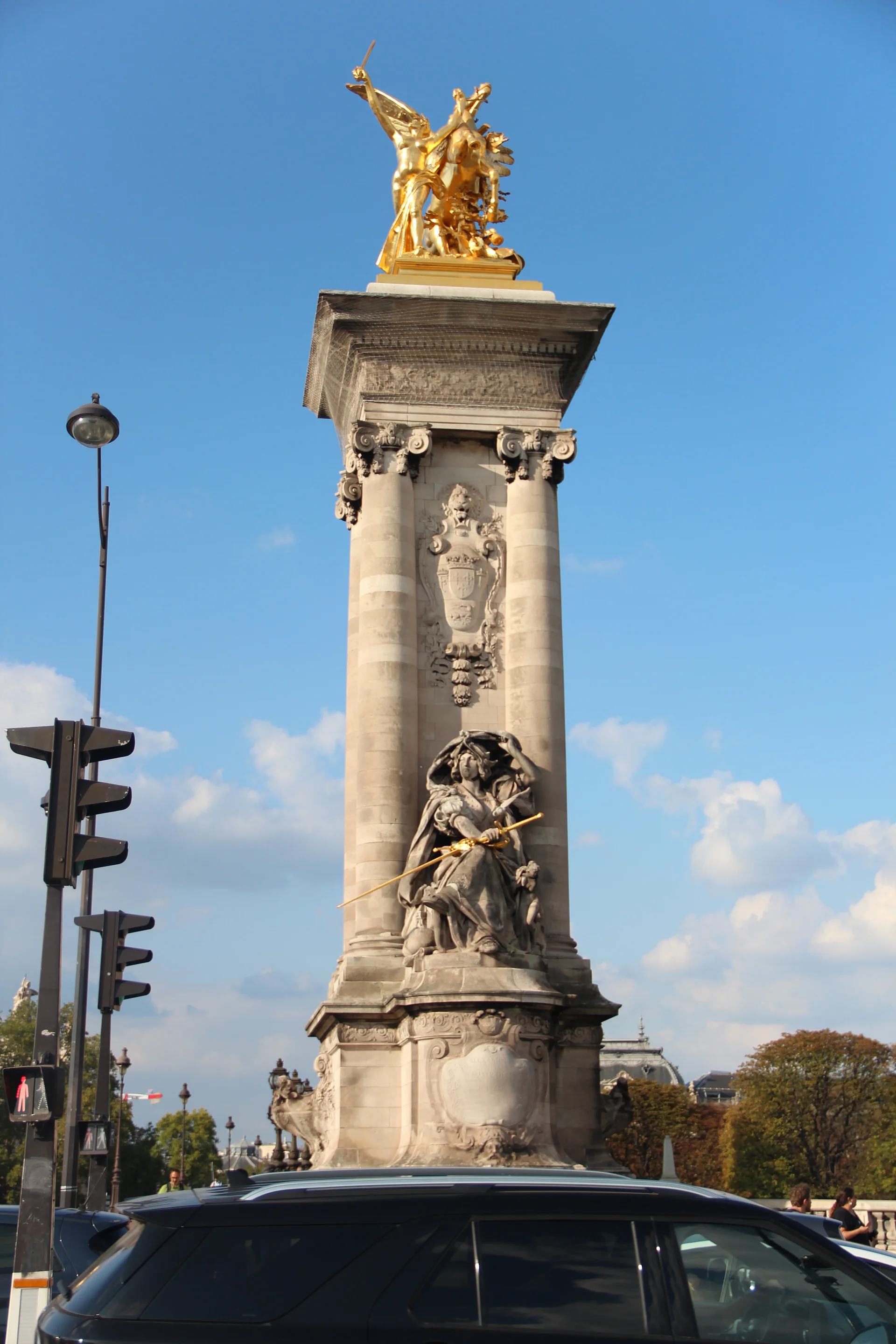
The bridge features a single, 107-meter arch that allows river traffic to pass underneath. While it was originally a brownish-green, time and weather have turned the structure a soft pearl gray. These tones provide a backdrop for the four bronze statues known as the Renommées (The Renowns). Positioned on pylons at each entrance, these figures represent the arts, sciences, combat, and Pegasus. Look closely at the additional ornamentation, which depicts various eras of French history, including the Middle Ages, the Renaissance, the reign of Louis XIV, and the modern age, alongside figures like lions, cherubs, and nymphs.
When the sun goes down, the 32 ornate lampposts illuminate the span. For a change of pace, the Faust restaurant, bar, and club is located right under the bridge, known for a crowd that tends to be on the showy side.

Very beautiful views, pretty statues, elegant architecture, for me the most photogenic bridge in Paris.