
Le Luco, a hundred statues and the living memory of Paris
At seven in the morning, when the groundskeeper unlocks the gates with their gilded arrowheads, the Luxembourg Gardens still belong to the joggers and the sparrows. The air carries the scent of damp earth and plane trees. Nobody is in a rush. This is arguably the best time to understand why Parisians have given it this affectionate nickname: le Luco.
Why visit the Luxembourg Gardens?
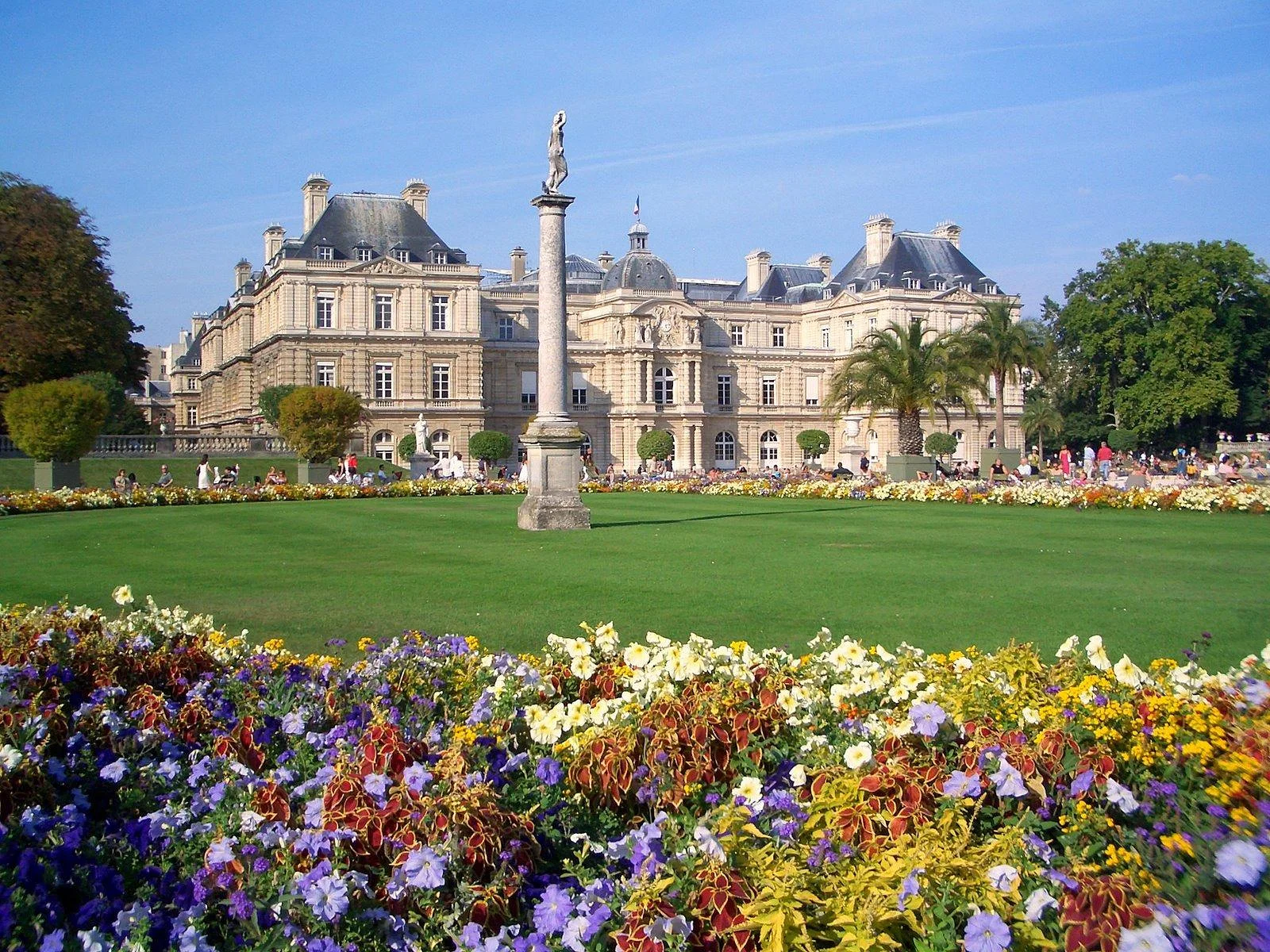
Owned by the Sénat (French Senate) since 1799, this 57-acre estate between Saint-Germain-des-Prés and the Quartier latin (Latin Quarter) hosts millions of visitors every year. Its origins are Florentine. It was Marie de Médicis who, feeling nostalgic for her Tuscan childhood, purchased the ducal mansion of Luxembourg in 1612 to build a palace in her own image. She entrusted the grounds to Jacques Boyceau de la Barauderie, using the Boboli Gardens in Florence as a blueprint.
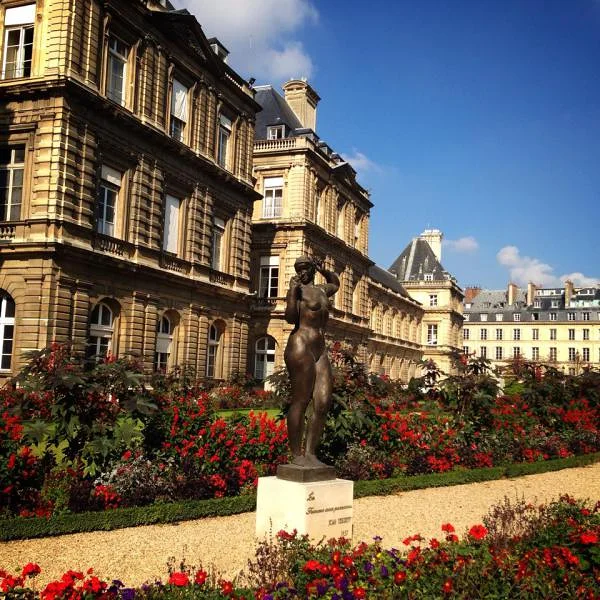
Remodeled by André Le Nôtre in 1635 and later heavily restructured under Haussmann in the 1860s, the gardens now house over 100 statues and monuments, a conservatory orchard, apiaries, greenhouses, and a globally recognized orchid collection.
Three gardens in one
The space reads like three overlapping worlds. The central axis, facing the palace, follows the jardin à la française (French formal garden) style with geometric flowerbeds, a circular fountain, and strict perspectives. To the west, near rue Guynemer, the English landscape style takes over with winding paths and more naturalistic woodland. To the south, an open lawn and a century-old orchard with espaliered fruit trees complete the scene.
This is where you realize why the Luco is not just any park. There are the green metal chairs that people drag into the sun. The chess players who have occupied the same tables for decades. And the children sailing wooden toy boats on the main fountain, a tradition dating back to the early 20th century.
The Médicis Fountain and must-see statues
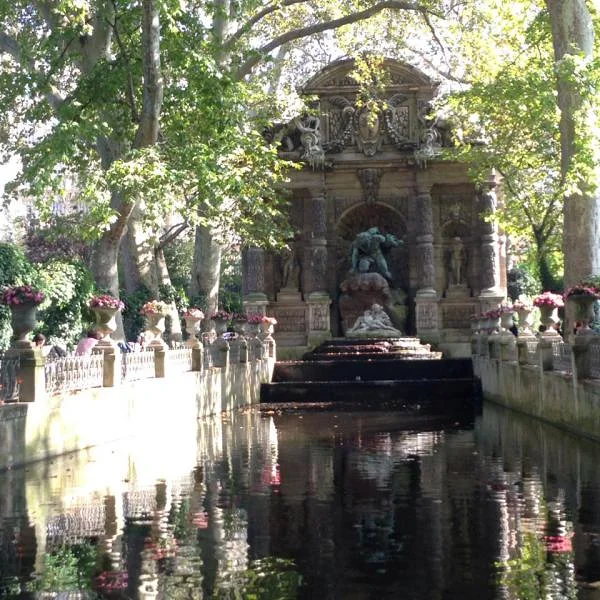
The fontaine Médicis (Médicis Fountain), a classified historic monument since 1889 and restored in 2020-2021, deserves a slow walk. Its long, shaded basin is flanked by plane trees that form a leafy tunnel. At the back, the sculptural group by Auguste Ottin depicts Polyphemus surprising Acis and Galatea, a bronze cyclops leaning over in a display of pure jealousy while the lovers cling to each other in the dappled green light.
The rest of the park is an open-air museum. Look for:
- The statue of Liberty: a recent copy serves as a reminder that Bartholdi created his first models for the gift to America here (the original has been at the Musée d'Orsay since 2012).
- The Queens of France: twenty marble figures that have formed a double row around the terrace since 1848, their eyes fixed on the fountain.
- The fontaine de l'Observatoire (Observatory Fountain), on the south side, with its bronze horses that appear to be surging from the ground.
Garden life: beehives, orchids, and the bandstand
The greenhouses, at the corner of rue Auguste-Comte and boulevard Saint-Michel, hold one of the most important orchid collections in France. They open to the public during seasonal exhibitions organized by the gardeners of the Sénat. The estate's apiaries produce honey that is sold every autumn during a highly anticipated public sale.
The kiosque à musique (bandstand) hosts free concerts on weekends from May through September. We think this is one of the most pleasant experiences you can have in Paris without spending a dime. The first notes carry far through the morning stillness.
Pro tip: Arrive as soon as the gates open on a weekday. The park is nearly empty, the low light slices through the chestnut tree alleys, and you can pick your chair in the exact spot you prefer. On Saturday and Sunday afternoons in the summer, the area around the central fountain gets very crowded.
What the Luco does best
- Completely free admission, every day of the year
- Renovated gates and boundary walls (2021-2024 program), their gilded arrowheads shine once again
- Médicis Fountain restored to its former glory
- Unique atmosphere where students, retirees, families, and travelers coexist easily
- Varied activities: concerts, horticultural exhibits, beekeeping, fruit tree pruning classes
Points to anticipate
- Large crowds on sunny weekends, especially around the central fountain
- Greenhouses and the orangerie are only accessible during specific events
- Tree replanting program on the east side is still underway, so some alleys look temporarily sparse
Entry and paid activities: price guide
| Activity | Estimated price |
|---|---|
| Admission to the gardens | Free |
| Children's playground (Ludo Jardin) | Paid (reduced rate for 6th arrondissement residents) |
| Sailboat rental (central fountain) | About 4 EUR (about $4.30) / 30 min |
| Tennis courts | By reservation, variable hourly rate |
| Puppet shows | About 5-6 EUR (about $5.40-$6.50) per child |
Estimated prices subject to change
Opening hours
How long for this activity
*Information subject to change

The Luxembourg Gardens are clearly one of my favorite parks in Paris. If you want to soak up the sun in the summer, it is possible. If you want to take a walk even when it is raining, you can easily find shelter under the trees. If you just want to read a bit or relax, you can sit on the famous green chairs. In short, never miss a chance to stop by during your trips to Paris.