
Palais Garnier, the palace of gilded illusions
Bathed in the soft glow of thousands of gold leaves, the Grand Escalier (Grand Staircase) unfolds its marble curves like an invitation to a dream. The Palais Garnier is more than just a performance hall. It is an architectural manifesto where every ornament reflects the outsized ambition of the Second Empire.
Why does the Palais Garnier fascinate so many?
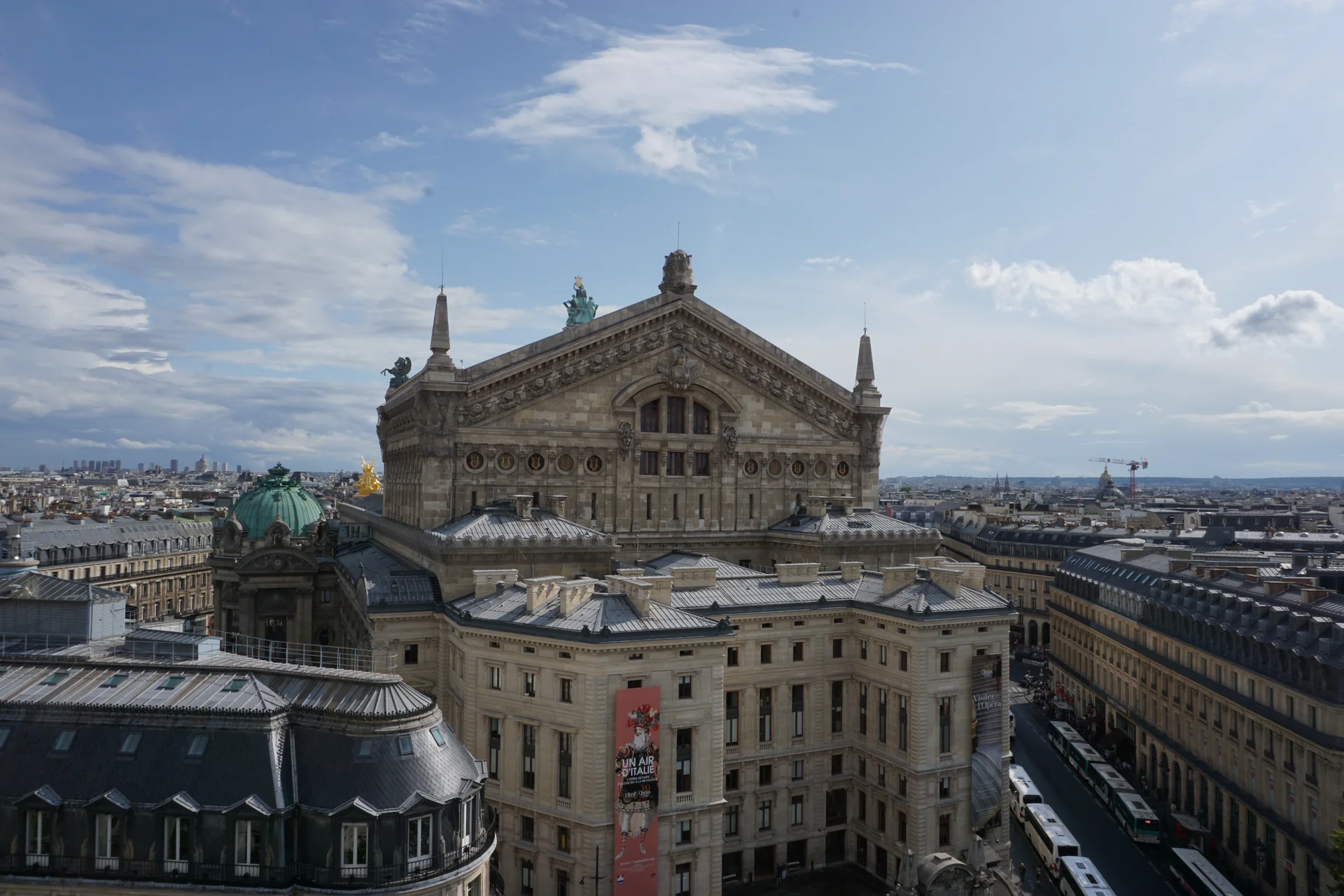
Inaugurated in 1875 after fifteen years of construction, this masterpiece by Charles Garnier embodies the Napoleonic vision of an imperial Paris. The young architect, then unknown, won a competition against 170 candidates with a bold design blending Baroque, Classical, and Renaissance styles. Today, the monument draws nearly 450,000 visitors each year, drawn as much by its prestigious programming as by its exuberant architecture.
Beyond the performance, it is the soul of the place that captivates. Think of its hidden corridors, the underground lake that inspired Gaston Leroux for The Phantom of the Opera, and a unique atmosphere where history dialogues with contemporary creation.
The auditorium, a red and gold jewel box
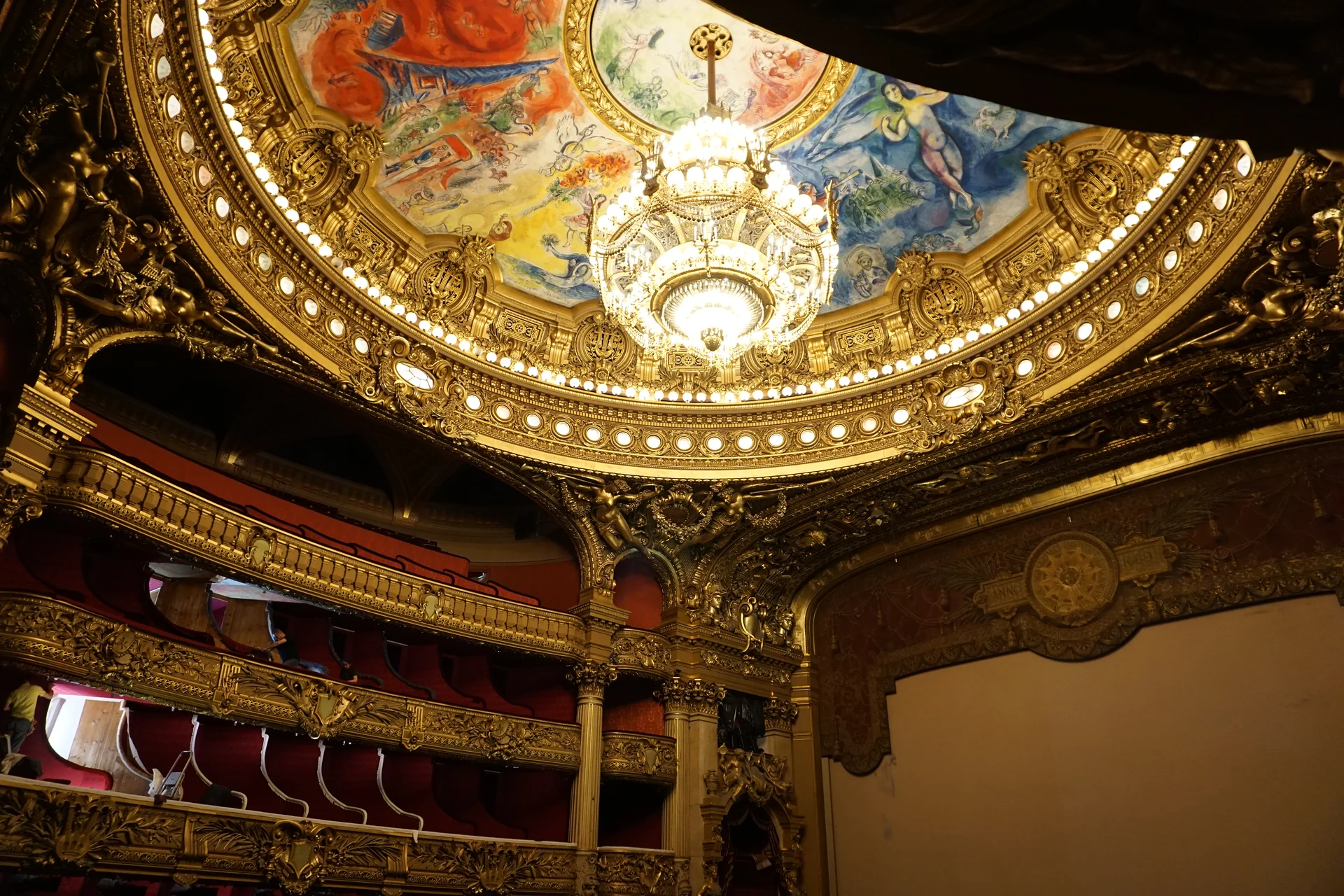
Stepping into the Italian-style hall is a visual shock. The red and gold tones pop under the bronze and crystal chandelier weighing eight tons and holding 340 lights. Look up. The ceiling painted by Marc Chagall in 1964 breaks intentionally with 19th-century aesthetics, creating a striking contrast between tradition and modernity.
The hall holds 2,054 spectators across five levels of balconies. The acoustics, long criticized for prioritizing aesthetics over function, still offer a particular intimacy from the central orchestra seats.
Local tip: to admire the Chagall ceiling without a neck ache, take a seat in the orchestra for a few minutes before a show begins. The ushers generally allow this if you are discreet.
The public spaces, a dazzling journey
The marble Grand Escalier
The Grand Escalier is the highlight of any visit. Its first thirty steps of white marble, flanked by two bronze torch-bearing candelabras, lead to a double divergent staircase. The onyx and Swedish green marble balustrades catch the natural light filtering through the glass ceiling. This is where the Parisian elite came to be seen during opening nights.
The Grand Foyer and the Rotonde des abonnés
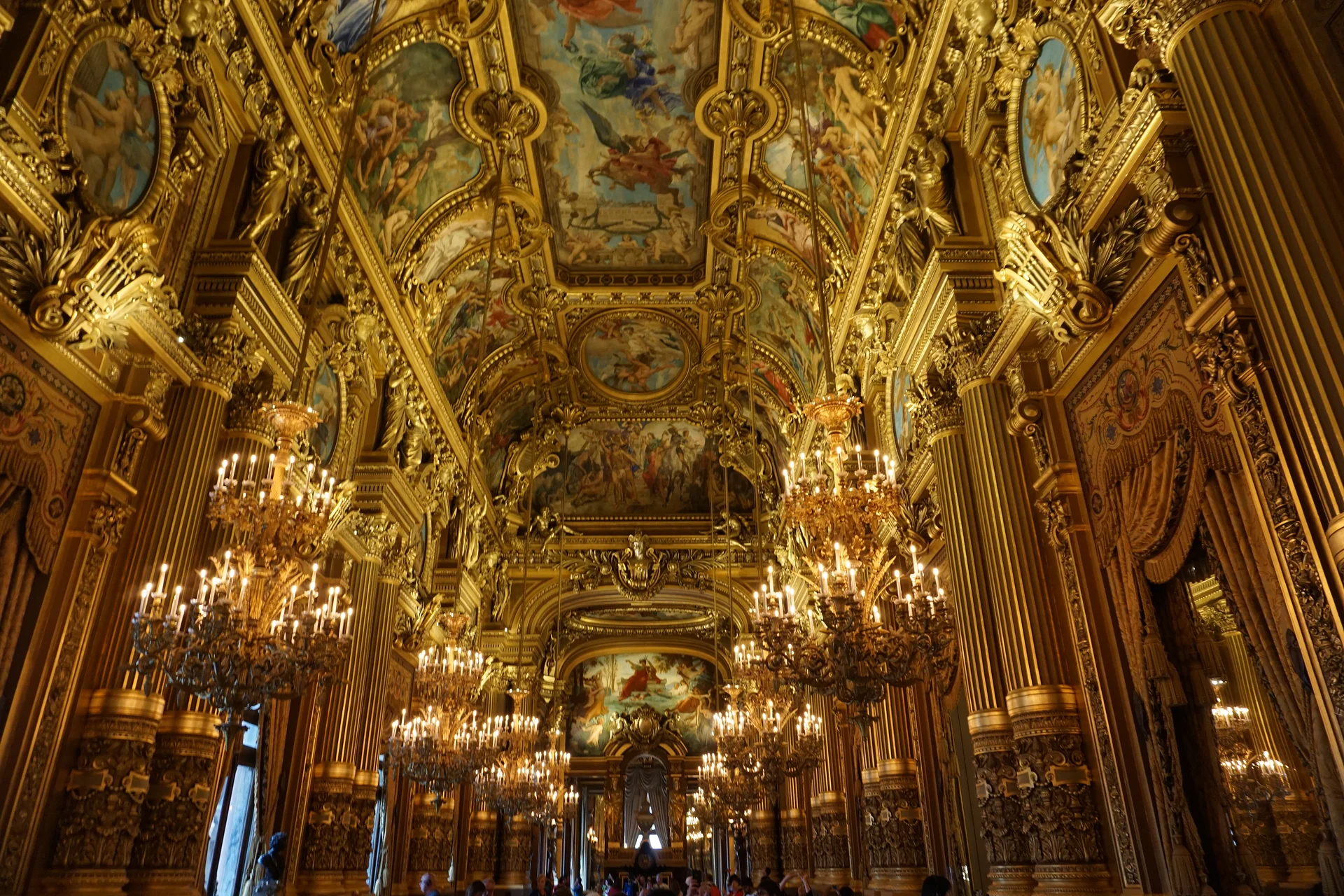
Spanning 154 meters, the Grand Foyer rivals the Hall of Mirrors at Versailles. Its gilded mosaics, mirrors, allegorical paintings, and marble columns create a permanent theatrical backdrop. During intermissions, this is the preferred spot for spectators to wander.
The Rotonde des abonnés (Subscribers' Rotunda), with its polychrome marble and porphyry columns, served as a private lounge for the Parisian elite. Today, it hosts spectators during performance intermissions.
Visiting the Palais Garnier: the highlights
Must-sees:
- The library-museum of the opera, with its exceptional archives of costumes, models, and scores
- The salons dedicated to the Moon and the Sun, decorated with mythological frescoes
- The Bassin de la Pythie (Pythoness Basin) in the entrance hall, with its shimmering mosaics
- The stage-side boxes to observe the architecture of the hall from a privileged angle
Self-guided tours allow you to explore at your own pace, but guided tours reveal anecdotes about the backstage area, the superstitions of the artists, and the construction secrets of this colossal monument.
Opening hours
*Information subject to change

Pourquoi "fléau" ? Pour moi, ce mot veut dire "calamité" :)