
Paris Bourse in brief
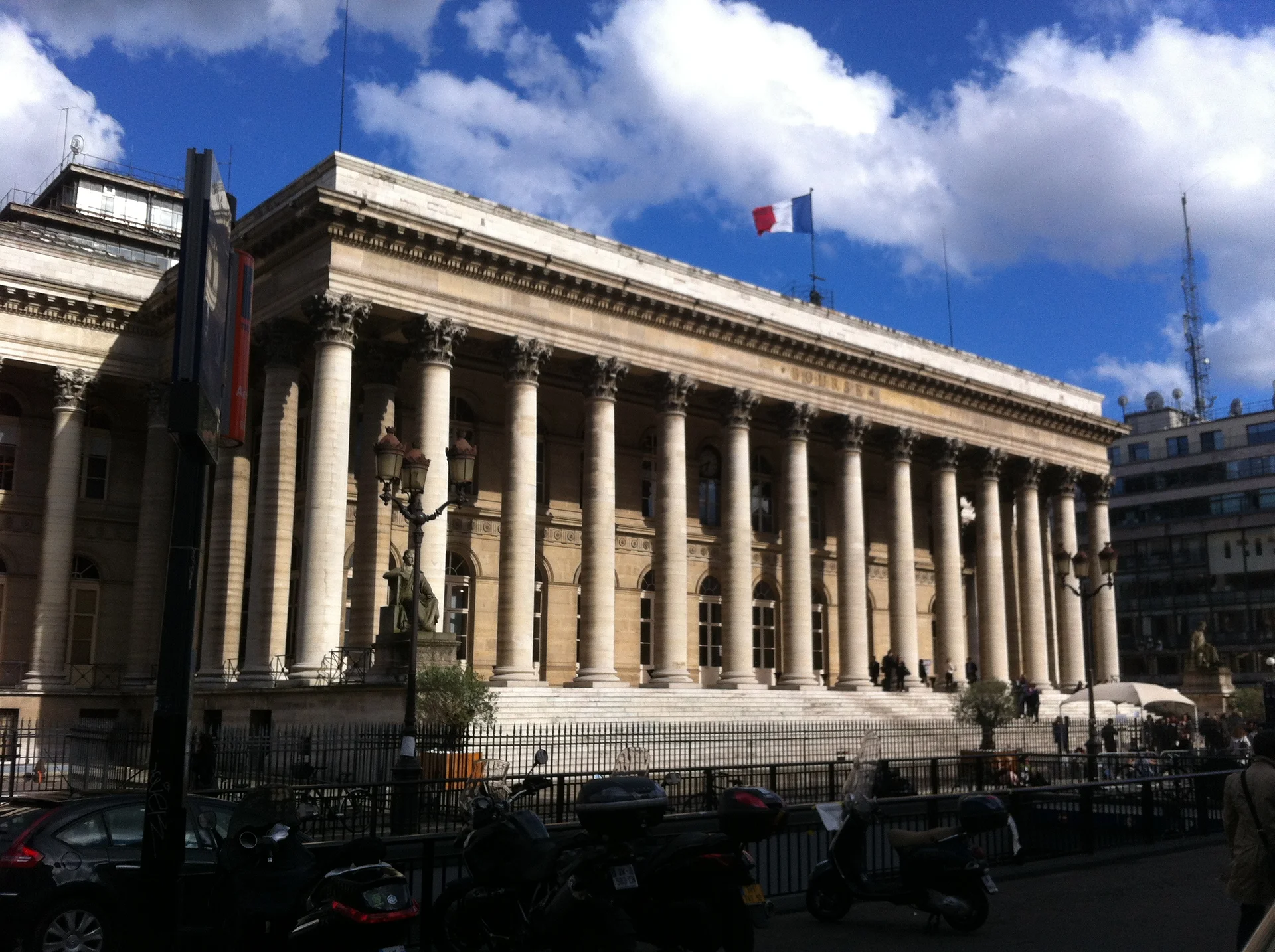
The Palais Brongniart, a superb neoclassical building named after its architect, was constructed in Paris during the early 19th century under Napoleon Bonaparte. From 1826 to 1986, it served as the headquarters for the French Stock Exchange, which rose to become the second largest in the world after London. Erected on the former site of the Filles Saint-Thomas convent in the heart of a business district that already included the Banque de France, the Palais Brongniart, along with the Madeleine Church and the Palais Bourbon, symbolized the power of the Empire.
Start by admiring the exterior. Inspired by the Temple of Vespasian in Rome and the Maison Carrée in Nîmes, the Paris Bourse measures 69 meters long by 41 meters wide and features 82 columns. Inside, four statues represent commerce, agriculture, industry, and justice. Do not miss the ceiling decorations or the bright glass roof over the main hall.
Alexandre-Théodore Brongniart, who also designed the Père Lachaise Cemetery, died during the building construction and never saw the finished result. It was Eloi Labarre who was tasked with completing the project.
In 1886, the anarchist Charles Gallo failed in an attempt to bomb the building, an act that earned him 20 years in prison. Initially closed to women, they had to wait until 1967 to be allowed inside. Successfully converted into a center for prestigious conferences and events, its 4,000 square meters host approximately 20,000 visitors each year. The event space consists of two auditoriums with 100 and 600 seats, four meeting rooms for 16 to 26 people, and six reception salons. The European School of Internet Professions is housed there, along with several start-ups.

This financial landmark is located on the Place de la Bourse. Back when the stock exchange had a physical location, it was inside the Palais Brongniart. Today, the life of the Palais is punctuated by a few exhibitions that take place there throughout the year.