
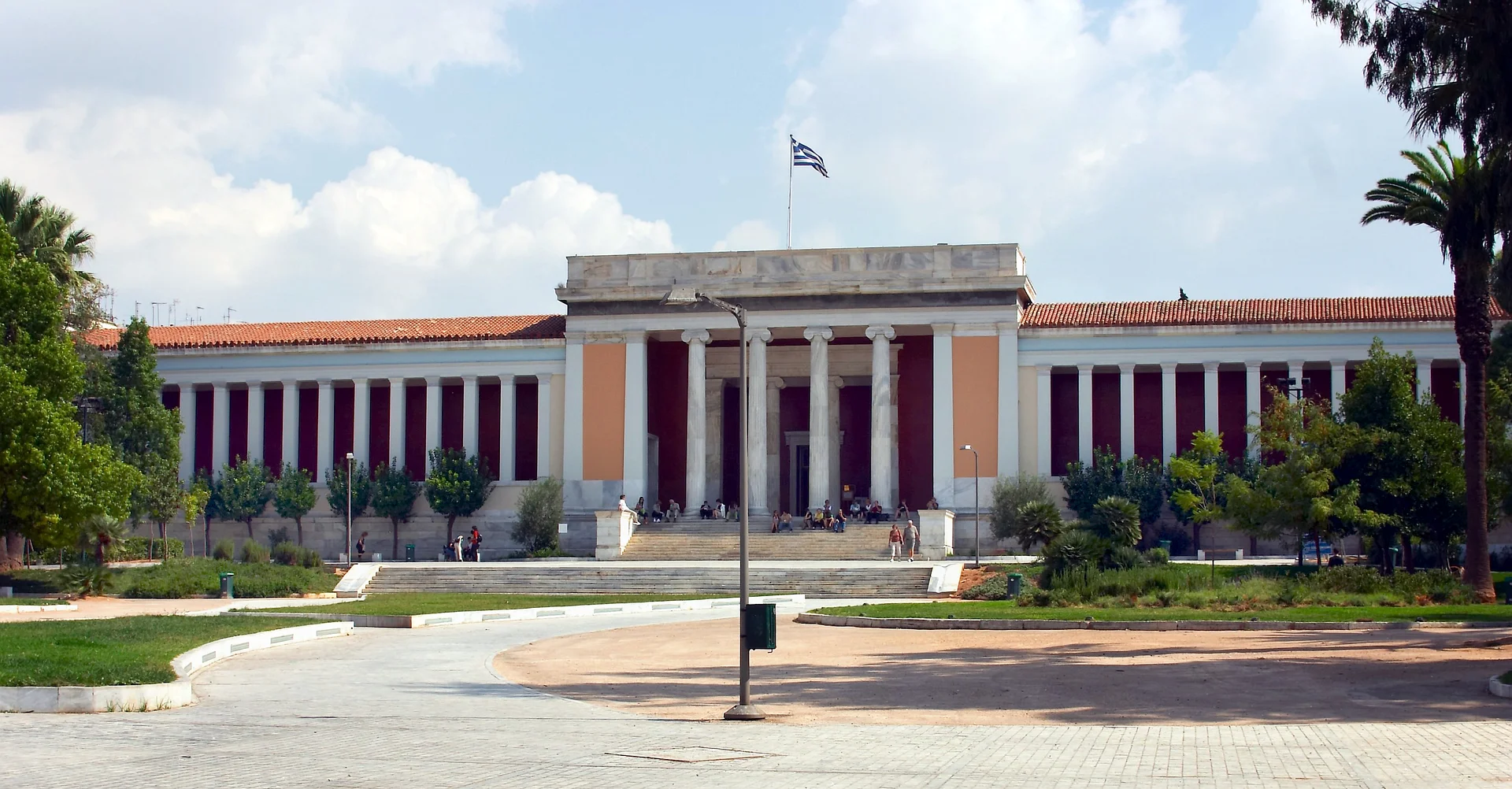
The Guardian of Ancient Greek Treasures
In the heart of Athens, housed within a grand 19th-century neoclassical building, lies the most extensive collection of Greek antiquities ever assembled. Its 8,000 square meters of exhibition space showcase more than 11,000 artifacts spanning seven millennia of history, from the Neolithic era to Late Antiquity.
Why this museum is essential
Founded in 1829, the National Archaeological Museum of Athens is the largest archaeological institution in Greece and one of the most significant globally. Its history mirrors that of the nation itself. During World War II, curators hid the collections in crates to protect them from looting.
Today, the museum houses treasures excavated from all major Greek archaeological sites. Each gallery offers a chronological journey through the civilizations that defined the Mediterranean.
Legendary collections you cannot miss
Mycenaean Splendor
Room 4 pulls you into the golden world of Mycenae. The legendary Mask of Agamemnon, discovered in 1876 by Heinrich Schliemann, is the immediate focal point. This solid gold funerary mask actually dates to 1550 B.C., long before the Homeric king lived. Surrounding it are intricate jewelry, gold cups, and ornate weapons that highlight the sophistication of this era.
Bronzes that defy time
Rooms 15 and 36 house a breathtaking collection of ancient bronzes. The Artemision Bronze, a monumental statue depicting either Zeus or Poseidon with arms outstretched, commands attention through its sheer scale. Nearby, the Jockey of Artemision from the 2nd century B.C. captures a horse in motion, a rare technical feat for the period. These sculptures survived only because they spent centuries resting on the seafloor.
The Antikythera Mechanism
In Room 38, a modest object changes how we view the ancient world. This system of bronze gears, dating to the 2nd century B.C., is considered the world's first analog computer. It predicted planetary positions and the dates of the Olympic Games with remarkable precision.
Frescoes, vases, and hidden treasures
Upstairs, the spectacular Minoan frescoes of Santorini transport you into a world of vivid color. These wall paintings, preserved by a volcanic eruption in the 16th century B.C., depict daily life scenes with surprising clarity.
The ceramics collection traces the evolution of styles from Geometric to Hellenistic. Panathenaic amphorae, once filled with sacred olive oil and awarded to victors of the games, perfectly illustrate the link between athletics and divinity in ancient Greece.
Friendly tip: Look for the Unseen Museum initiative, which rotates exceptional pieces from the archives every three months. These small temporary exhibits provide rare access to treasures typically kept in storage.
The Egyptian Collection
Rooms 40 and 41 house a surprising Egyptian collection, the only one of its kind in Greece. Donated by collector Ioannis Dimitriou in 1890, it features artifacts ranging from 5000 B.C. to the Roman conquest, including painted sarcophagi, mummies, papyri, and Fayum funerary portraits with hauntingly lifelike eyes.
Opening hours
April to October: 8:00 AM to 8:00 PM (1:00 PM to 8:00 PM on Tuesday)
November to March: 8:30 AM to 3:30 PM (1:00 PM to 8:00 PM on Tuesday)
Closed on December 25-26, January 1, March 25, Orthodox Easter Sunday, and May 1.
*Information subject to change

I was surprised by the size of this museum, which is really very vast and has numerous works on display. You can admire sculptures, paintings, frescoes, statues... You will need at least two to three hours on site. It is a must-see in Athens.