
Visiting the Almudena Cathedral
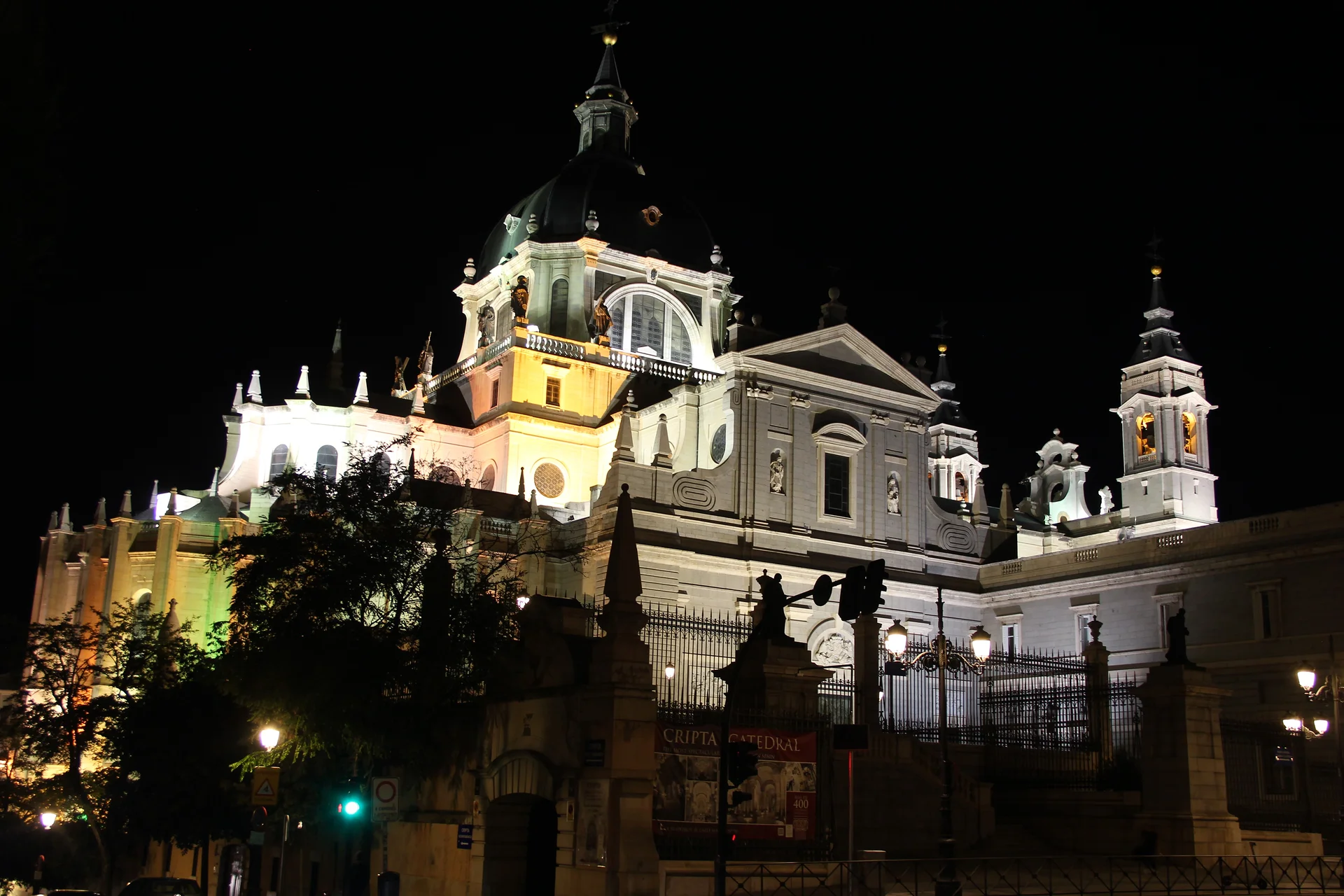
The Almudena Cathedral is a modern structure, built entirely in the 20th century in Madrid. While plans for a church here date back earlier, Pope Leo XIII made the decision in 1885 to elevate Madrid to the status of a diocese. This change necessitated a cathedral for a city that was rapidly expanding. You will find the cathedral facing the Royal Palace on the plaza de la Armería (Armory Square), dedicated to the city patron saint, the Virgin of Almudena. Pope John Paul II personally consecrated the cathedral in 1993.
The long construction of the Madrid cathedral
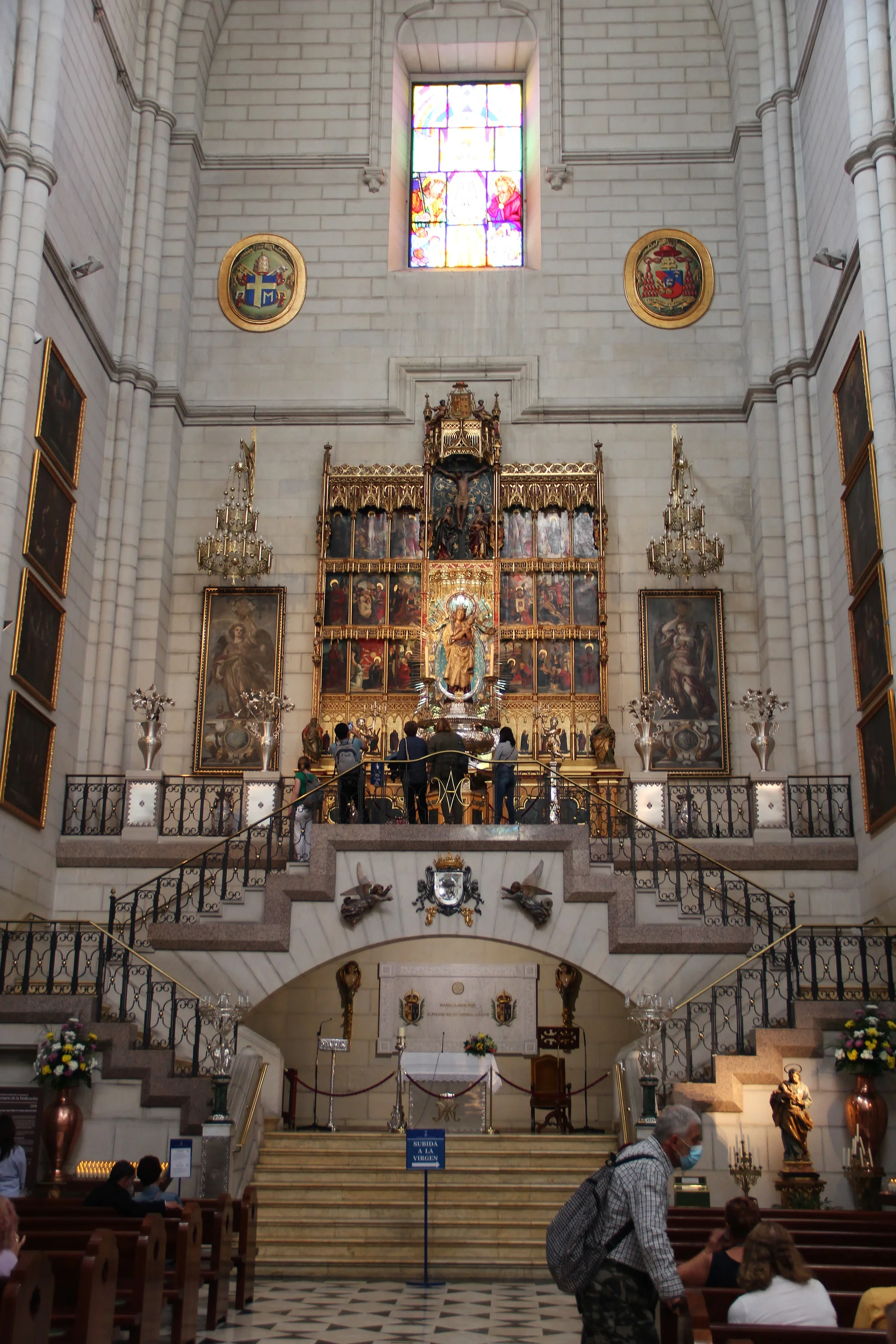
Although the decision to build the cathedral was made in 1885, the project took nearly a century to complete. Political instability and funding shortages frequently stalled progress. The original plans were drafted in the late 19th century by Francisco de Cubas, with work beginning on the crypt. Completed in the early 20th century, the crypt features a neo-Romanesque style and a Latin cross layout. It houses a representation of the Virgin of the Almudena that dates to the 16th century.
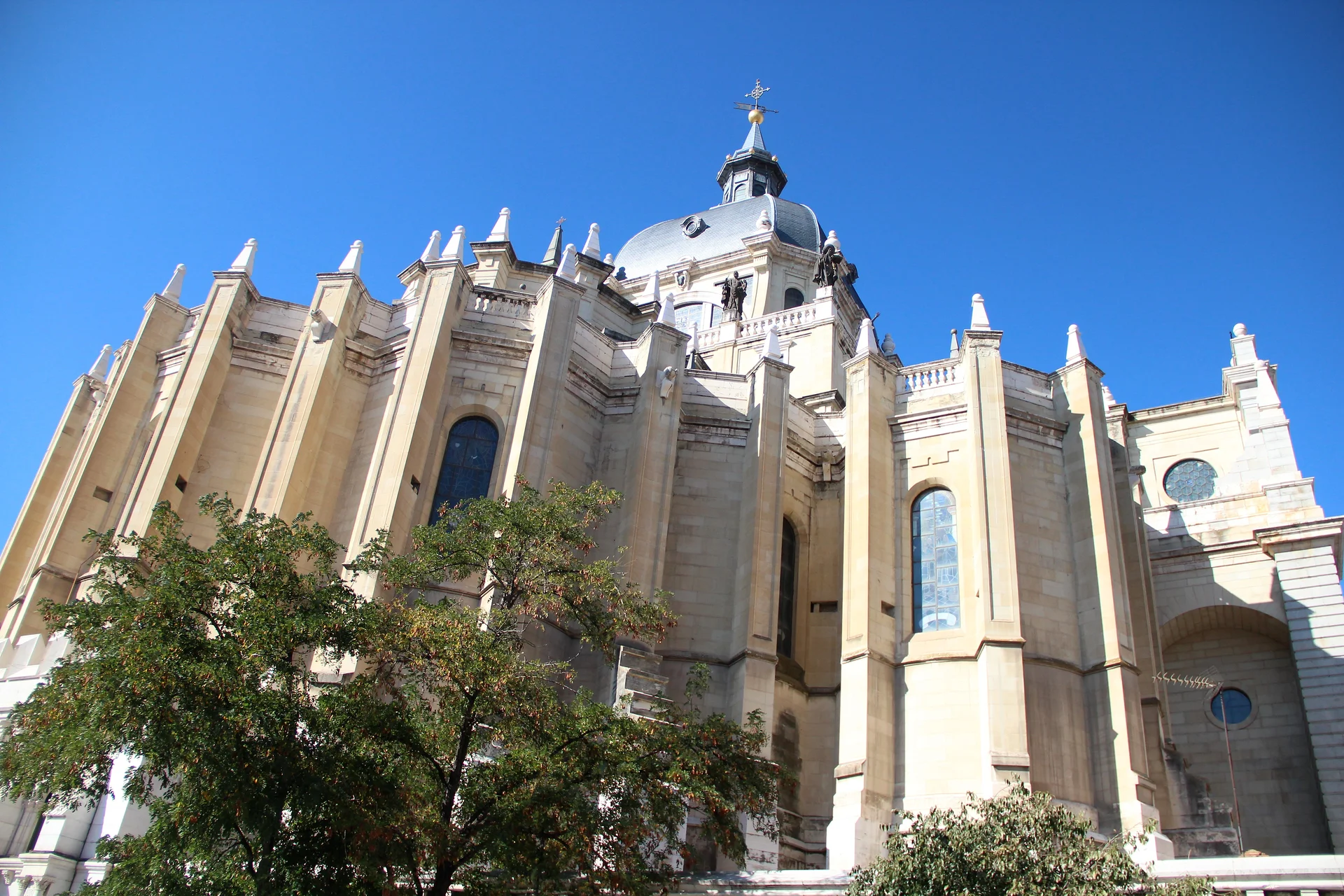
Construction did not resume in earnest until 1950. Because of the prolonged timeline, the cathedral in Madrid displays a mix of architectural styles. While the exterior sports a neoclassical facade that mirrors the Royal Palace across the square, the interior is distinctly neo-Gothic.
A modern landmark
The cathedral was built using granite and stone from Novelda, a town in the region of Alicante. The building reaches a height of 102 meters at its central dome, which features a suspended Catholic cross inside.
The site also includes a museum that documents the history of the diocese and the construction of the cathedral itself. Entry to the museum grants access to a panoramic terrace with views across Madrid.

A very beautiful cathedral located right near the Spanish Royal Palace. Several chapels can be visited inside. Keep your eyes peeled because there are so many details to take in. A €1 donation is requested at the entrance. Easy access by metro, Opera station. An hour to an hour and a half is enough to see everything.