
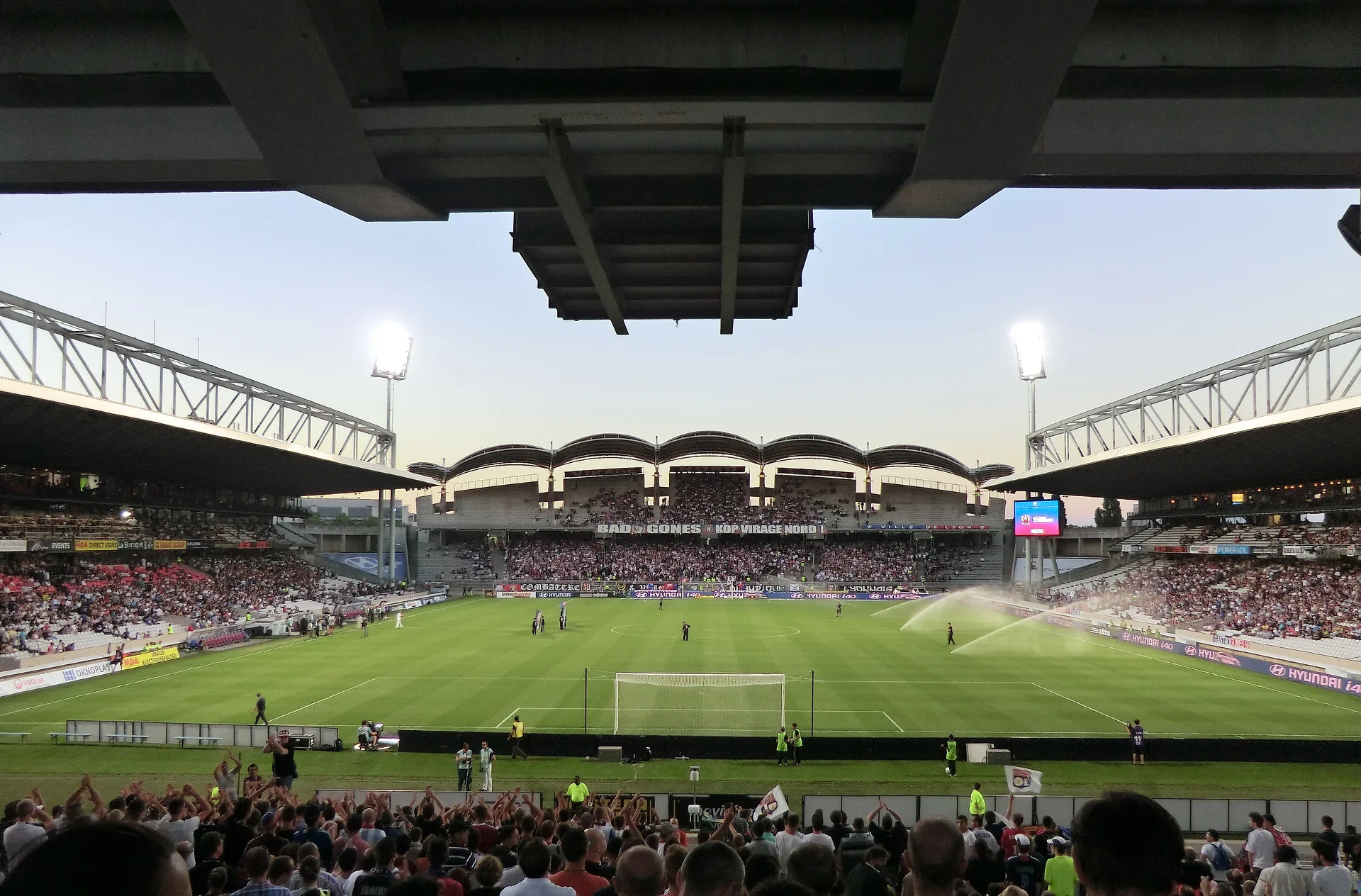
Stade de Gerland at a glance
Located on the left bank of the Rhône, south of Lyon, the Stade de Gerland, now known as the Matmut Stadium Gerland, remains a major athletic venue in the city. It served as the home turf for the Olympique Lyonnais for 65 years before the club relocated to the modern Groupama Stadium. This complex is dedicated to sports culture and features elegant, antiquity-inspired arcades, a museum, and a vibrant atmosphere during home games for the Lyon olympique universitaire rugby team or major concert events.
The project was championed by mayor Edouard Herriot, who viewed athletic training as essential for public health. It was designed by local architect Tony Garnier for the 1914 International Exhibition. Construction delays and the onset of World War I meant it took 12 years to complete. As one of the first stadiums to be fully funded by private investment, the site was eventually designated a Monument Historique (Historic Monument). Its original design included athletic tracks, grandstands, and locker rooms, later expanded to include a raised swimming pool with a diving board, team sports fields, and a physical education institute.
Take a look at the lion statue guarding the main entrance. It once stood on the pont la Feuillée, alongside a bronze twin that was gifted to the city of Montreal. The stadium consists of two main grandstands, Jean Jaurès (the official stand) and Jean Bouin (the sideline stand), plus two curves named after Tony Garnier and Coubertin. While the current capacity is 35,000 spectators, the stands once packed in nearly 50,000 fans during intense derbies between OL and AS Saint-Etienne.

L'architecture de Gerland est intéressante. Mais pour un stade de foot, il faut des gradins plus compacts et enveloppant... Comme le prochain Stade des Lumières justement !