Russia at a Glance
As the largest country on earth, Russia holds a vast cultural heritage paired with massive variations in terrain. Home to the Tsars and the Soviets, classical ballet, and carved matryoshka nesting dolls, it draws deep curiosity. Set out to explore Moscow, the ancient towns of the Golden Ring, and cultural powerhouse Saint Petersburg. Take a river cruise along the Volga or ride the legendary Trans-Siberian Railway. Russia also holds plenty of wild, remote corners: if you love untouched nature and local traditions, you will find plenty to explore.
The climate leans continental with harsh winters, short spring and autumn seasons, and intense summer heat.
Experience Moscow, the largest city in Europe
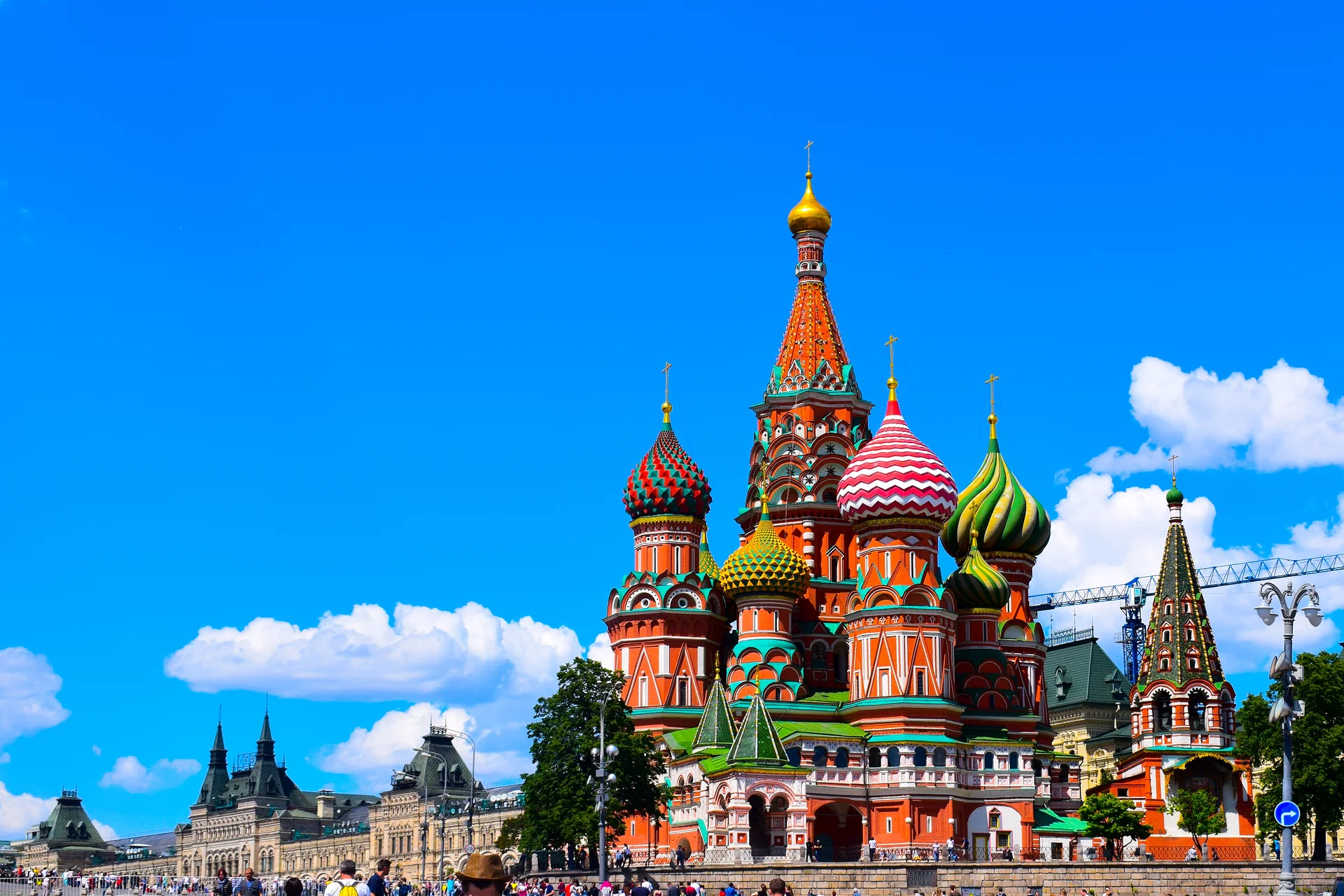
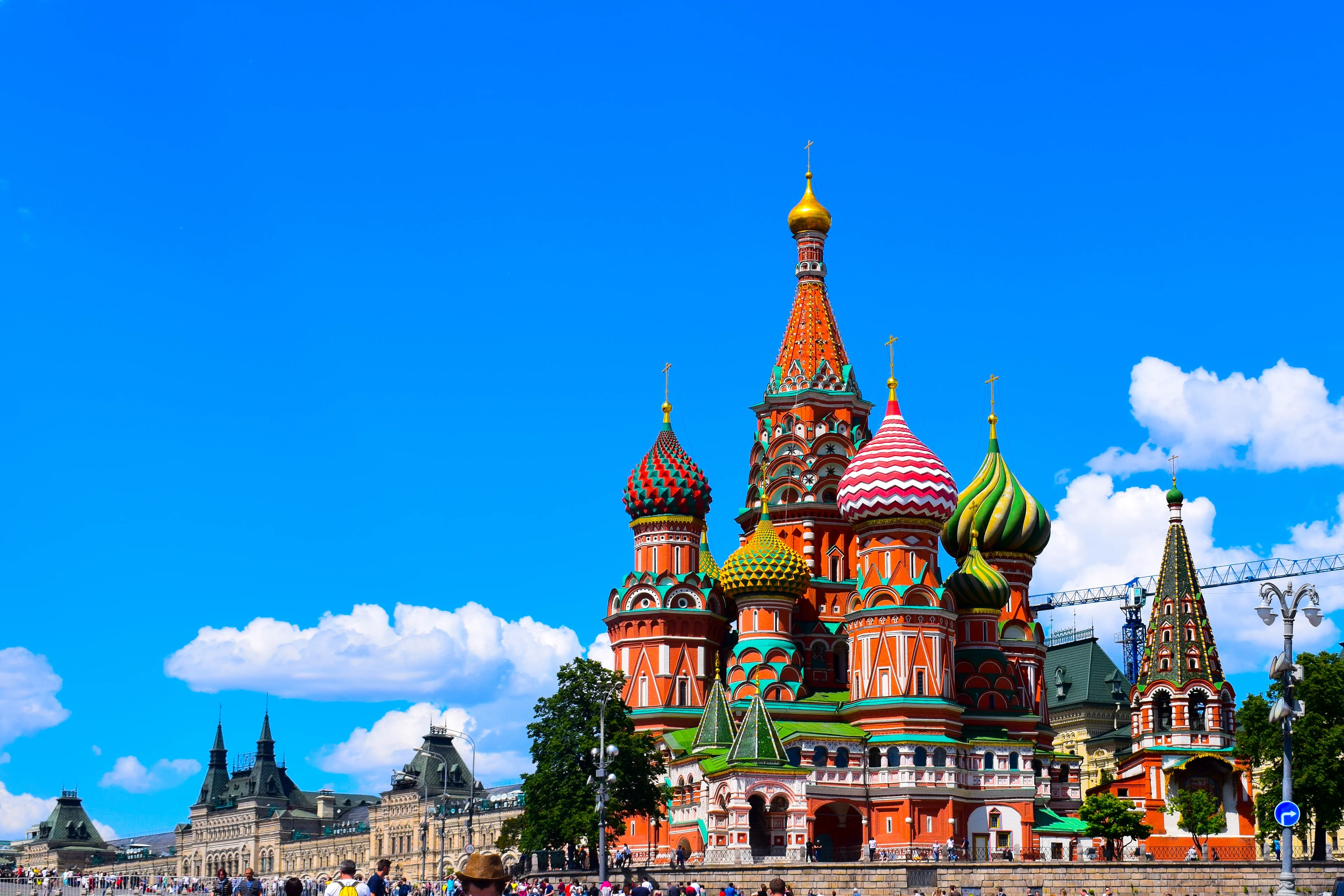
As a modern, fast-moving capital, Moscow breaks past old stereotypes of a grim metropolis with recent investments in urban renewal and public parks. Start at Red Square, known in Russian as Krasnaya Ploshchad, which translates closer to "beautiful square" than red square, and move to the Kremlin with its grand palace acting as the historical seat of power. Inside, you will find Lenin's Mausoleum, the red-brick State Historical Museum, the ornate Saint Basil's Cathedral Khram Vasiliya Blazhennogo acting as the city icon, the upscale GUM department store, the Cathedral of the Assumption, the white-walled Annunciation Cathedral with golden domes holding historic icons, and the Bolshoi Theatre. Art fans can head to the Tretyakov Gallery for classical Russian works or the Winzavod Center for Contemporary Art for modern exhibits. Unwind in Gorky Park, and check out the fairground rides if you are traveling with kids. If you have extra time, the Izmailovo market combines a sprawling flea market with outdoor leisure spaces. For an authentic local ritual, visit a traditional banya, with the Sanduny baths standing out as the most famous.
Tour the princely towns of the Golden Ring
East of the capital within a radius of 70 to 300 km, seven historic river towns make up the Golden Ring, packed with kremlins, monasteries, and old citadels. Yaroslavl, located 4 hours away by train from Moscow, is a prosperous old city on the banks of the Volga. Its downtown features dozens of ornate churches, two historic monasteries, and bell towers, with interiors decorated in colorful frescoes and ceramic tiles.
Pereslavl-Zalessky, a 2.5-hour drive from Moscow, was founded in the 12th century and sits beside a scenic lake. Check out the views of the Nikitsky Monastery with its unique architectural details, then head to the fairy-tale Goritski Dormition Monastery.
Sergiyev Posad, meaning the settlement of St. Sergius, serves as a major Orthodox pilgrimage site. Its white, gold-domed Trinity Cathedral draws crowds who come to see the relics of St. Sergius; the blue domes scattered with gold stars belong to the neighbouring Cathedral of the Dormition. Attending a service here offers a firsthand look at local religious traditions.
Alternative stops include Ivanovo, Suzdal, and Vladimir.
Soak in culture and stroll through historic Saint Petersburg, the Venice of the North
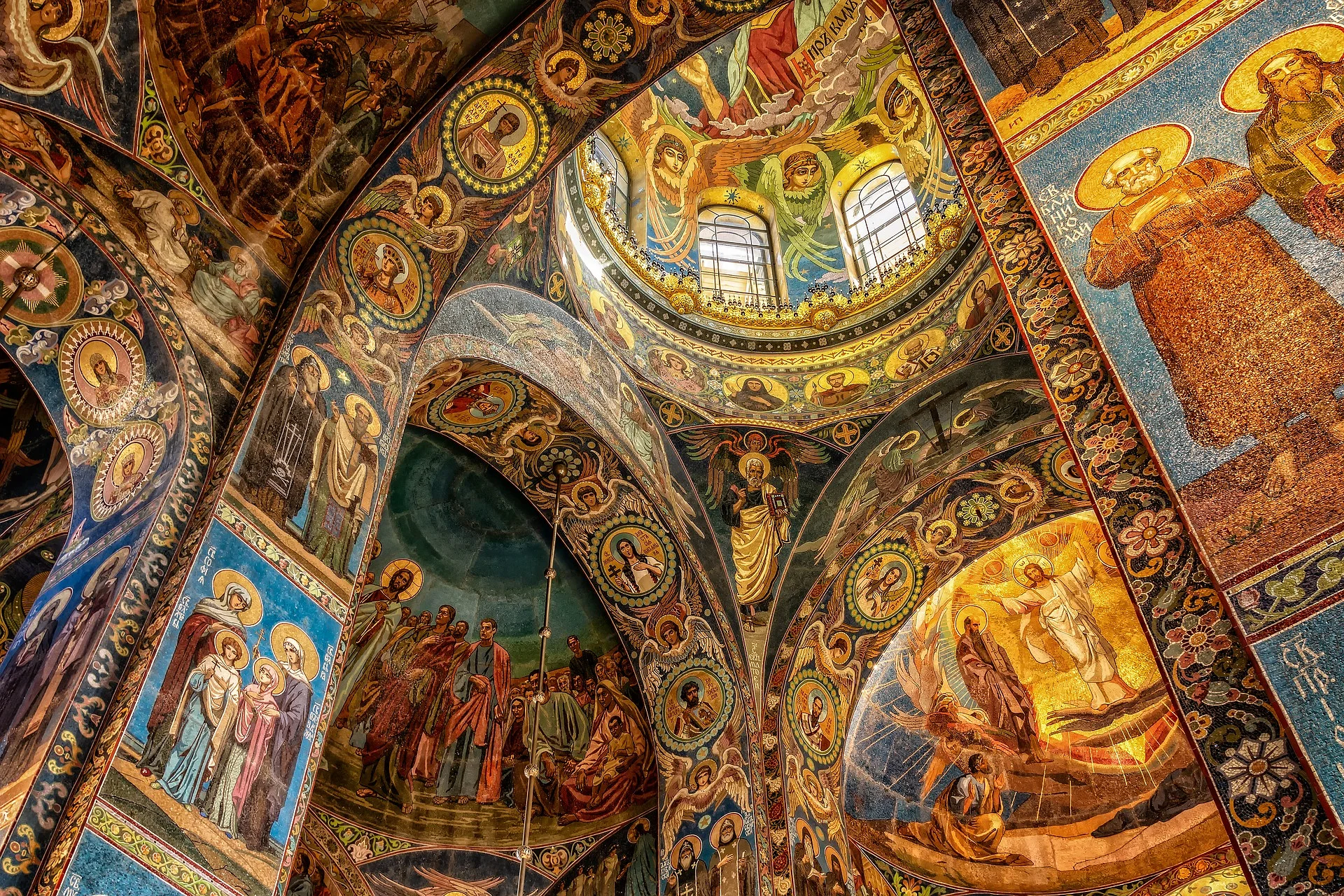
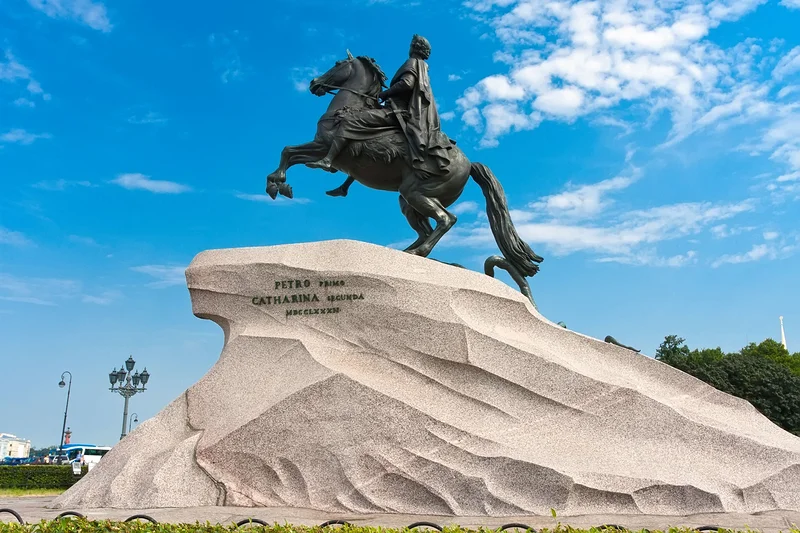
Built by Peter the Great as a gateway to Europe, Saint Petersburg draws the highest number of visitors in the country. The Hermitage Museum alone justifies the trip, holding over a thousand rooms filled with vast art collections. The city atmosphere blends grand imperial palaces with quiet canals for a scenic setting. Start down Nevsky Prospekt, the main commercial avenue, before exploring the historic center. Do not miss Kazan Cathedral, influenced by Saint Peter's in Rome, or the vibrant Church of the Savior on Spilled Blood. Cross over to Petrogradskaya, Hare Island, the historic birthplace of the city, to tour the Peter and Paul Fortress and its striking cathedral.
Located 30 km outside Saint Petersburg, Peterhof is often called the Russian Versailles for its grand palaces and fountains.
Explore the wilderness near the Finnish border across the White Sea, forests, and lakes
In Karelia, stretching from Lake Ladoga to the Arctic Circle, hundreds of thousands of lakes and dense forests create endless outdoor opportunities. Petrozavodsk, on Lake Onega, is the natural base for this northern region influenced by Sami culture. Further east, outside Karelia, Vologda, meaning clear waters, is worth the detour. Its kremlin contains multiple historic churches and cathedrals covered in preserved frescoes.
In the depths of winter and in early spring, the Kola Peninsula and its fjords provide clear skies for spotting the Northern Lights. Other notable stops include Kizhi Island on Lake Onega, home to the 37-meter-tall wooden Church of the Transfiguration.
Relax on the Russian Riviera or ski the Caucasus Mountains
Long associated with remote isolation, the Caucasus region and the Black Sea coast serve as a primary vacation getaway for locals. Sochi, a coastal resort town put on the global stage by the 2014 Winter Olympics, offers options for outdoor adventure, beach relaxation, and mountain sports.
Unwind in the Ural Mountains among quiet peaks and green forests
In Yekaterinburg, the regional hub, visit the Church on the Blood and Ganina Yama, a monastery built at the site connected to the Romanov family.
Slow down in Irkutsk, the Siberian Paris near Lake Baikal
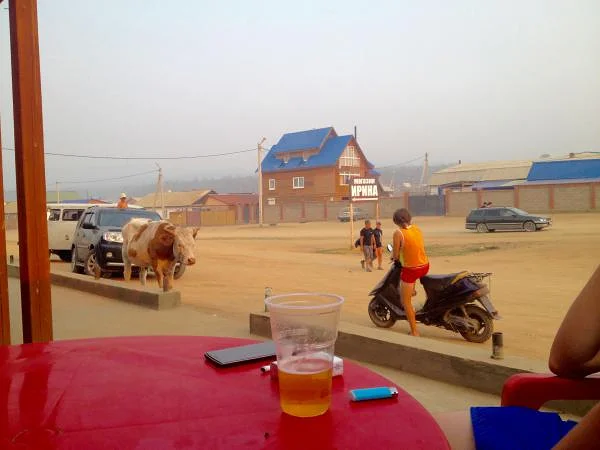
Historic wooden houses decorated with intricate carved window frames give Irkutsk a distinct visual character. Set on a hill surrounded by parks, the city charms visitors with stops like the Church of the Savior for panoramic views and the Znamensky Monastery. During summer months, outdoor concerts take place along the Gagarin promenade.
As the largest freshwater reserve on earth, Lake Baikal stretches across a distance comparable to the drive from Los Angeles to San Francisco. Fed by mountain glaciers, its water is exceptionally clear.
When to Go
Russia welcomes travelers year-round. For classic city trips to Moscow and Saint Petersburg, spring and early summer work best, peaking in June during the White Nights when the sun barely sets. If you are after snowy landscapes, plan your visit for February and March when fresh snow covers the ground.
How to Get There
There are no flights at all between North America or the European Union and Russia: the airspace has been closed in both directions since 2022, and US carriers stopped serving Moscow and Saint Petersburg then. Getting there now means connecting in Istanbul on Turkish Airlines, Dubai on Emirates or flydubai, Belgrade on Air Serbia, or Yerevan, and budgeting a full day of travel. Check your government's current travel advisory before you plan anything.
Getting Around
Domestic flights connect major regions well. Regional carriers like Aurora and Pobeda compete alongside S7 Airlines, Ural Airlines, and Yakutia Airlines. Alternatively, the Sapsan high-speed train connects western hubs, taking under 4 hours between Moscow and Saint Petersburg. Russian stations ran on Moscow time for decades, but tickets and departure boards switched to local time in 2018. On a route that crosses several time zones, check which clock your ticket refers to anyway.