Serbia Does Nothing by Halves
The first Serbian coffee shop opened in Belgrade in 1522, a full 33 years before Istanbul. That historical trivia sums up the national character pretty well: ahead of the curve, yet flying low enough under the radar to border on anonymity. Serbia remains one of Europe's best-kept secrets, tucked between louder neighbors.
Is Serbia Right for You?
This country targets travelers who appreciate authenticity without the tourist hordes. If you are chasing white-sand beaches, look elsewhere since Serbia is landlocked. But if you like capitals that run until dawn, medieval monasteries hidden in mountain valleys, and the rare sensation of having a UNESCO site entirely to yourself, you are in the right spot.
On the practical side, expect a few adjustments. The Cyrillic alphabet dominates road signs, though younger generations speak English fluently. Hotel infrastructure is improving but remains spotty outside major cities. The cost of living runs notably lower than in Western Europe, with a hearty meal in a good restaurant running $14 to $17*. Serbians practice an almost overwhelming brand of hospitality, and turning down a shot of rakija in someone's home crosses into offensive territory.
Belgrade, the Capital That Never Sleeps
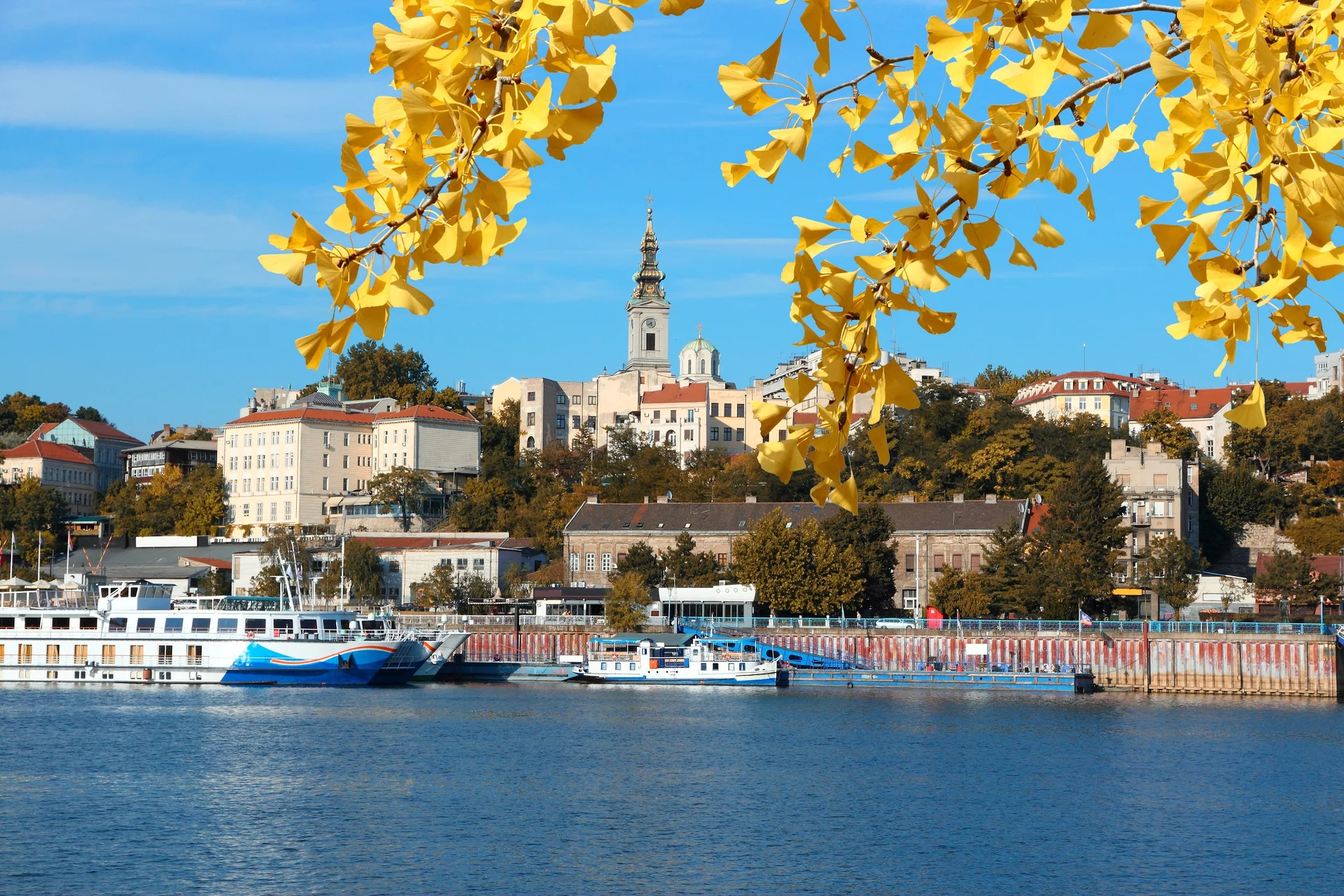
The Serbian capital spreads out across the confluence of the Danube and Sava rivers, a strategic perch that got the city destroyed and rebuilt some forty times over the centuries. That resilience shows in the streets, where Ottoman architecture bumps up against Austro-Hungarian facades and deliberate reminders of the 1999 bombings left standing as monuments to recent history.
The Kalemegdan fortress overlooks the river junction. At sundown, locals head up to walk, grab a coffee, or just take in the view. The Skadarlija neighborhood, with its cobblestone alleys and century-old kafanas, drops you straight into 19th-century bohemian Belgrade. Romani musicians weave between tables, and finishing the night singing folk tunes with complete strangers is entirely normal.
Splavovi, Floating Clubs Found Nowhere Else
Belgrade's nightlife reputation rests largely on its splavovi, old barges turned into bars and clubs moored along the riverbanks. More than 200 floating venues cover every sonic angle from underground techno and R&B to Balkan brass and commercial pop. The peak season runs from May to September, though a few splavovi stay open year-round. Parties rarely kick off before midnight and routinely stretch past sunrise.
Friendly tip: Skip Fridays and Saturdays if you hate lines. Thursday nights deliver an equally electric crowd with shorter waits and easier bar tabs.
Novi Sad and Vojvodina, Serbia's Other Face
An hour's drive north of Belgrade, Novi Sad adopts a completely different mood. Austro-Hungarian influence shapes the pastel downtown architecture. The Petrovaradin fortress, dubbed the Gibraltar of the Danube, has stood guard over the riverbank since the 17th century. Its underground tunnels stretch for over 16 kilometers of galleries, and its clock tower features a local quirk: the long hand shows the hours while the short hand marks the minutes.
Every July, the fortress hosts the EXIT festival, one of Europe's top music events drawing 200,000 festival-goers over four days. Launched in 2000 as a student pro-democracy movement, it now mixes global headliners and emerging acts across more than 40 stages.
Sremski Karlovci and the Vineyards of Fruška Gora
The small town of Sremski Karlovci, fifteen minutes outside Novi Sad, anchors the country's winemaking heartland. Family cellars pour tastings of bermet, a regional dessert wine spiced with herbs. Legend has it that the Titanic carried bottles in its hold on its maiden voyage. The surrounding Fruška Gora national park shelters 16 Orthodox monasteries built between the 15th and 18th centuries, some still inhabited by monks.
Medieval Monasteries, Spiritual and Artistic Treasures
Serbia holds some of Europe's finest Orthodox monasteries, often tucked away in remote river valleys. The Studenica monastery, a UNESCO World Heritage site, dates back to the 12th century. Its Byzantine frescoes rank among the best preserved on the continent. The Church of Saint Nicholas, the smallest building in the compound, protects the oldest and most moving artwork.
Further south, Sopoćani preserves 13th-century frescoes of striking detail despite centuries of abandonment and exposure to the elements. The Manasija monastery, ringed by eleven defensive towers, reflects an era when these sites doubled as spiritual centers and hideouts against Ottoman invasions.
Friendly tip: Rent a car to tour the monasteries since public transit to these sites is sporadic. Car rentals run between $29 and $45* per day and give you crucial flexibility across a compact country with winding roads.
Wild Nature: Canyons, Mountains, and Deep Forests
The Uvac canyon serves up one of the most dramatic landscapes in the Balkans. The river carved sharp limestone meanders, creating hairpin loops visible from several clifftop overlooks. Griffon vultures, reintroduced successfully to the area, glide over the gorges. Boat tours thread right through the towering walls for a close-up look at the raptors.
The Tara national park in the western part of the country protects some of Serbia's densest forests and a resident population of brown bears. The Banjska Stena viewpoint looks straight down over Perućac Lake, formed by a dam on the Drina river. Nearby, the village of Drvengrad, built entirely of wood by filmmaker Emir Kusturica for his movie Life Is a Miracle, now operates as a quirky open-air museum.
The Iron Gates and the Dramatic Danube
The Đerdap national park stretches across the section where the Danube punches through the Carpathian Mountains, carving out the river's most impressive gorges. The Golubac fortress, perched on a rocky headland, has guarded the canyon entrance since the 14th century. Recently restored, it stands as one of the best-kept medieval castles in the region. The nearby archaeological site of Lepenski Vir unearths civilization traces dating back over 8,000 years.
On the Plate: Generous Portions and Grilled Meats
Serbian cooking steers clear of light eating. Portions are massive, flavors are punchy, and meat takes center stage. Ćevapi, small grilled skinless sausages of minced meat, come tucked inside flatbread called lepinja, loaded with raw onions and kajmak, a thick, sharp clotted cream. Every town claims its own secret recipe.
The pljeskavica, a giant spiced meat patty akin to a heavy-duty burger, rivals it in popularity. In winter months, sarma, fermented cabbage leaves stuffed with minced meat and rice, simmers for hours in home kitchens. Ajvar, a smoky relish made from roasted red peppers and eggplant, accompanies almost every dish. Traditional kafanas serve these staples in lively rooms backed by live musicians.
When it comes to drinks, rakija rules. This fruit brandy comes in dozens of varieties including plum, quince, apricot, grape, and honey. Families often distill their own and pour generous pours for guests. Alcohol content frequently climbs past 40 percent.
When to Visit Serbia
Spring and autumn deal the best hand for exploring the country. From May to June, temperatures hover in the 70s and low 80s, days stretch longer, and street terraces fill up. September and October paint the national parks and vineyards in rich fall colors.
Summer can turn oppressive, particularly in Belgrade where the thermometer regularly tops 95°F in July and August. Still, this peak season draws the biggest crowds thanks to the EXIT festival and a heavy calendar of cultural events. Winter attracts skiers to the slopes of Kopaonik, the country's main resort, but slows down sightseeing in the natural parks.
Getting to Serbia
Air Serbia flies nonstop from New York JFK to Belgrade's Nikola Tesla Airport, about nine hours eastbound and the only direct link from North America. From anywhere else you connect through a European hub, Air France via Paris or easyJet from several Western European cities, and Belgrade sits barely two and a half hours from all of them. Low-cost carrier Wizz Air covers the intra-European leg cheaply, $57 to $230* round-trip when booked ahead, with spikes during July and August.
US citizens do not need a visa for tourist stays under 90 days, and your passport simply needs to remain valid for the duration of your stay. Serbia sits outside the Schengen Area and the eurozone, meaning the local currency is the Serbian dinar, though credit cards are widely accepted across cities.
Getting Around Serbia
The bus network links major cities efficiently. Belgrade-Novi Sad departures leave every 15 to 30 minutes, costing about $5.70* for a 90-minute trip, though a high-speed rail line now connects the two cities in under an hour with upgraded comfort for a similar fare.
Reaching monasteries, canyons, and national parks requires a car. Main highways are in decent shape, but secondary roads demand caution, especially in the mountains. Cyrillic-only signage can throw you off initially. City taxis stay very affordable, and a 10-kilometer ride in Belgrade rarely tops $5.70*.
The legendary Belgrade-Bar railway connects the capital to the Montenegrin coast, rolling through dramatic mountain terrain for over 450 kilometers. The 11-hour run acts as an attraction in itself, even if onboard amenities are basic.