
Visiting Mykonos
Mention Mykonos anywhere in the world and you will see eyes light up. Often synonymous with high-energy nightlife and sunrise parties, it is easily the most famous of the Cyclades. With the Aegean Sea as a backdrop, the island turns into an open-air stage throughout July and August, humming with DJs and festivals day and night. Yet, there is far more to the island than its nightlife, as a walk through the capital will prove. Locals call the town Chora, and it is a place of endless charm, defined by quintessential Greek architecture and distinct, character-filled neighborhoods. Tourism is the primary industry here, with 50,000 people visiting each year.
The Romance of the Old Port
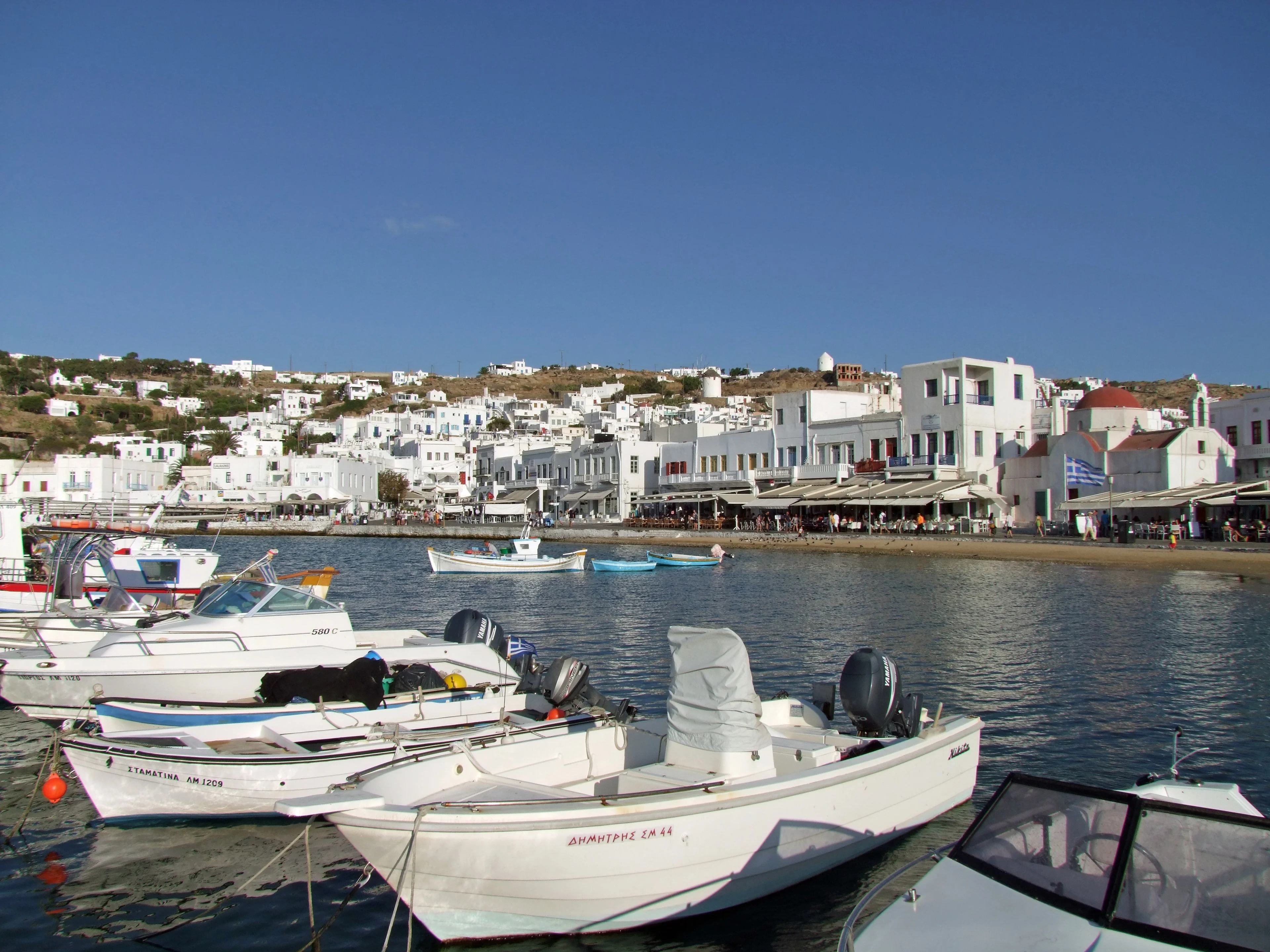
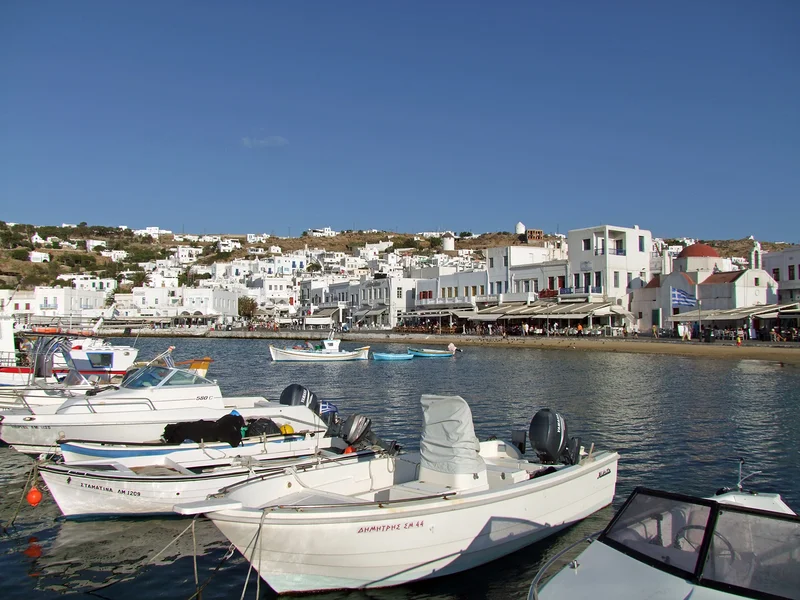
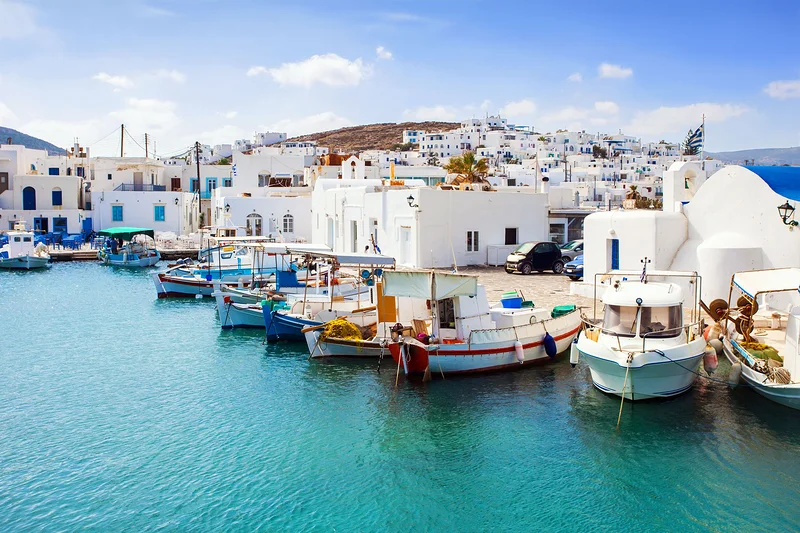
Wandering through the maze of narrow streets, Manto Square is a primary landmark. Named after a heroine of the Greek War of Independence, the square features a marble bust in her honor. It sits at the heart of the old port, now reserved for smaller boats, where the quayside makes for a perfect, scenic stroll. A few steps away, Little Venice is the town's most iconic neighborhood. Also known as Alefkandra, it is the classic postcard image of the island, featuring a romantic bay and 18th-century houses that appear to rise directly out of the sea. Numerous bars and restaurants have opened here, providing a perfect setting to explore the local food scene. For an appetizer, try kopanisti, a local spicy cheese, often served with mostra, a rusk topped with tomatoes. Other regional staples include louza, which is air-dried pork loin, along with rafiolia, small pastries that come in both sweet and savory versions, and local honey pie. From the terraces, you cannot miss the Kato Mili. These seven 16th-century windmills with their thatched roofs sit atop a hill and have become a symbol of the island. Toward the center, the Aegean Maritime Museum chronicles the evolution of Aegean watercraft and features a lighthouse in its garden.
Cycladic Architecture
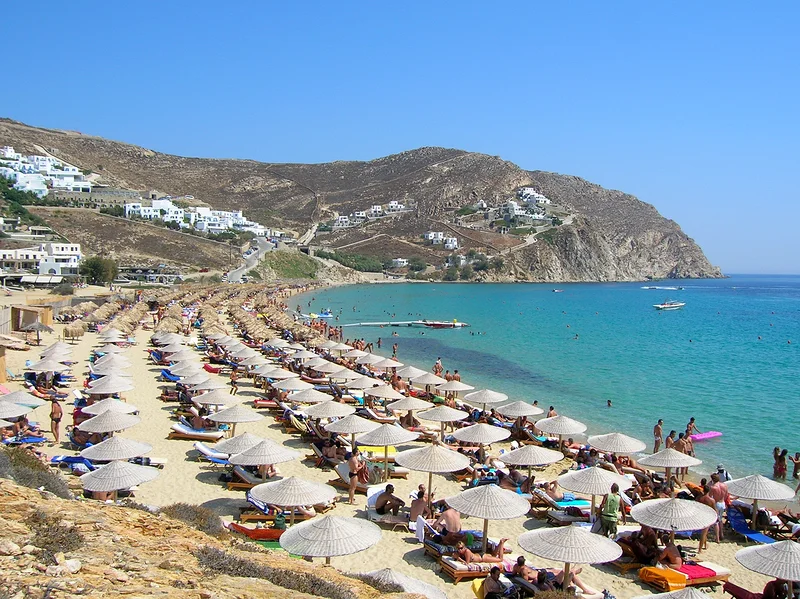
On your way toward the old town, the extensive Archaeological Museum houses finds from excavations on the island of Rhenia, including tombs, sculptures, and pottery. In the Kastro neighborhood, you will find the architecture that made Mykonos famous. Small, whitewashed houses feature brightly colored doors and shutters, often painted in deep blues, while blooming bougainvillea spills over the alleyways. The heart of the Cyclades is everywhere you look. The town's oldest and most famous church shares this aesthetic, standing out against the azure sky and sea. The white Panagia Paraportiani illuminates the area with a unique, asymmetrical structure that is unlike anything else in the world. Beaches are a major draw, offering fine sand and crystal-clear water. The most central is Megali Ammos, though it can get crowded, leading some travelers to prefer the quieter Mirsini Beach.
When to go
Temperatures are ideal from May through October. During the off-season, the winds can be intense and the water is generally too cold for swimming. July and August are the months for heavy partying, so plan accordingly if you are looking for a quiet vacation.
How to get there
Ferries run to Mykonos from Athens, departing from the port of Piraeus or the closer port of Rafina. The airport is located 4 km from the town and offers seasonal flights from major European hubs.
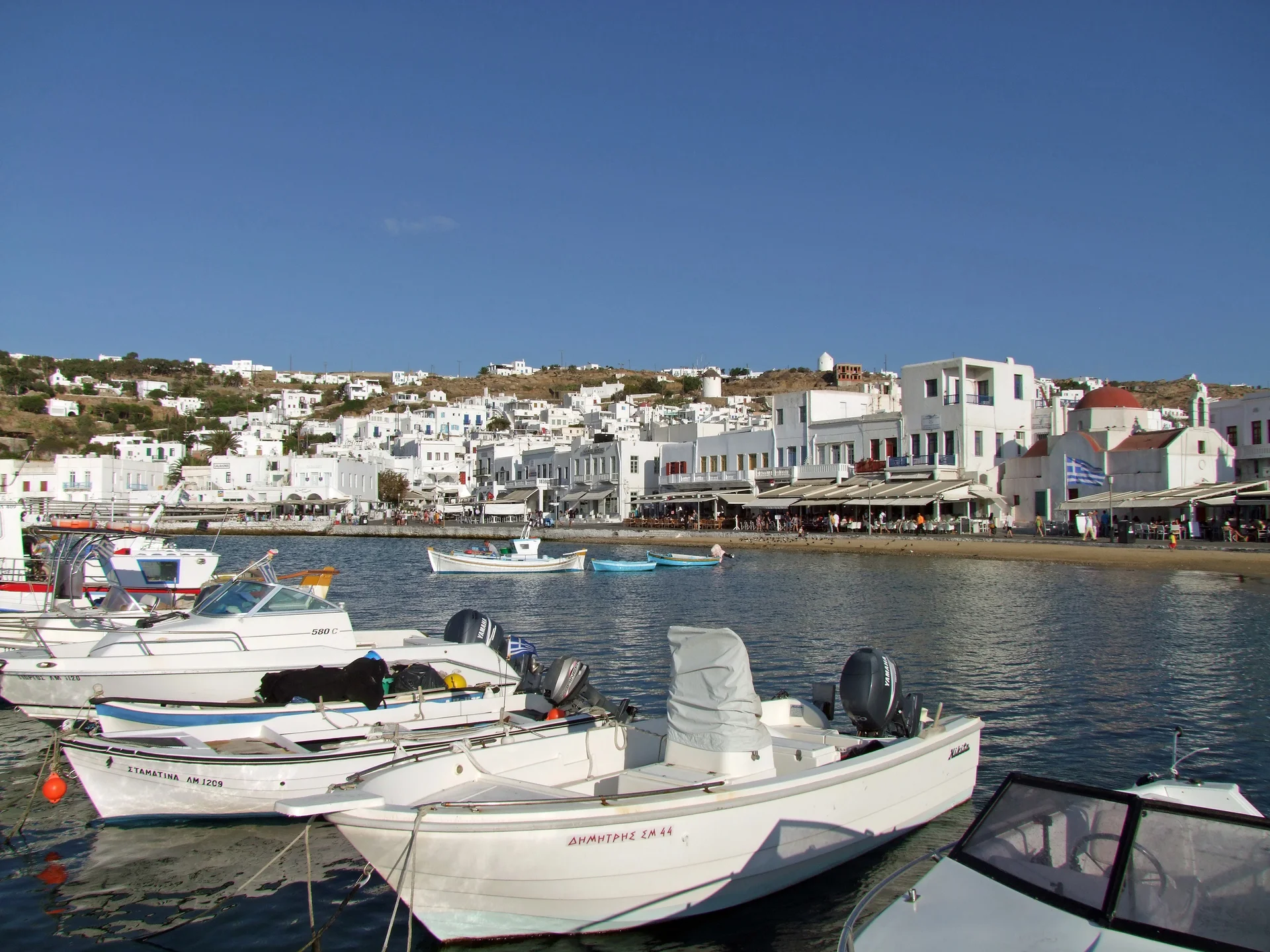
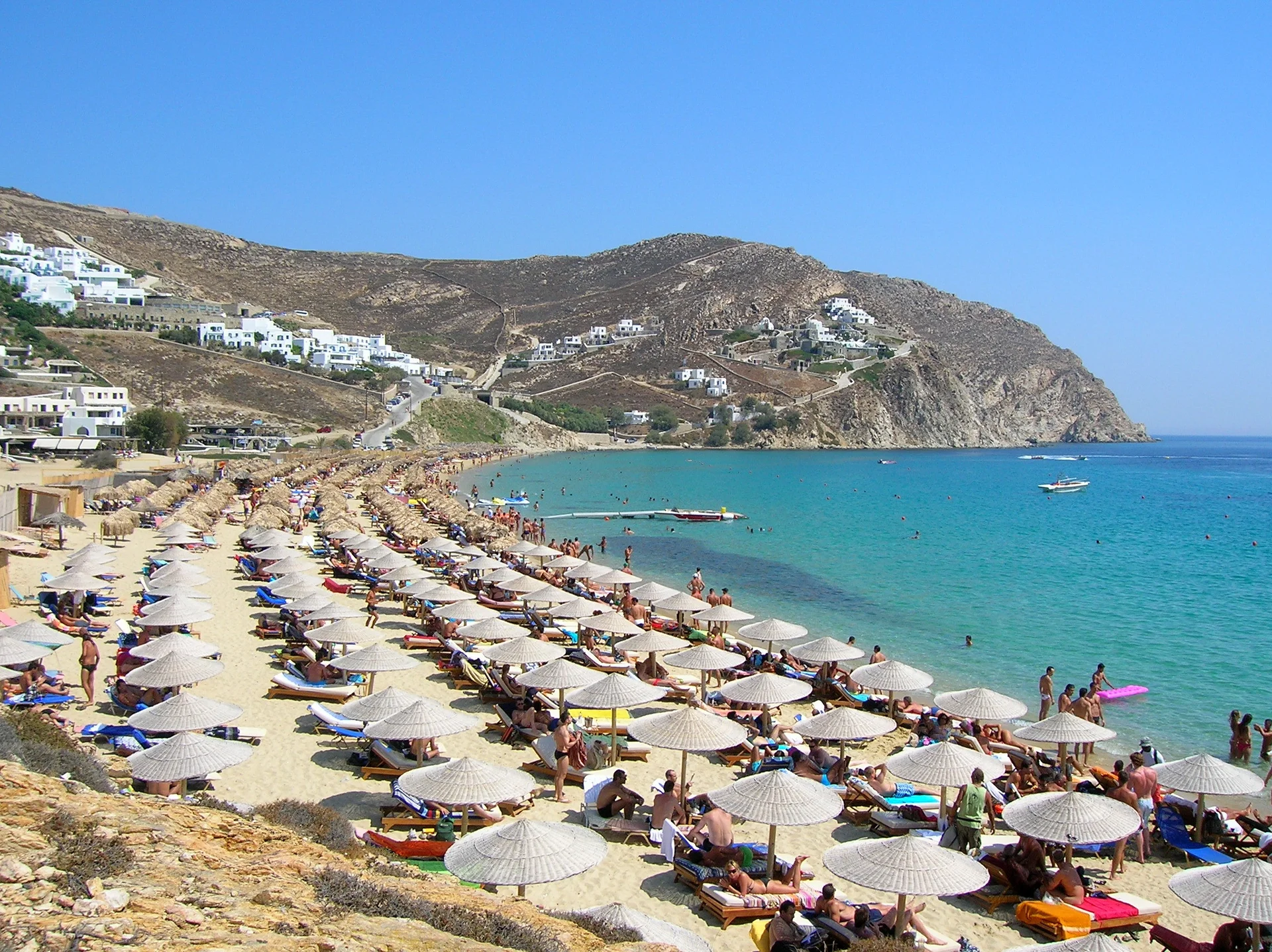
Party people of all backgrounds, LGBT, straight, Mykonos welcomes you without any fuss or elitist jet-set nonsense. You just have to want to party, enjoy the sun, the sea, and the rest :)