
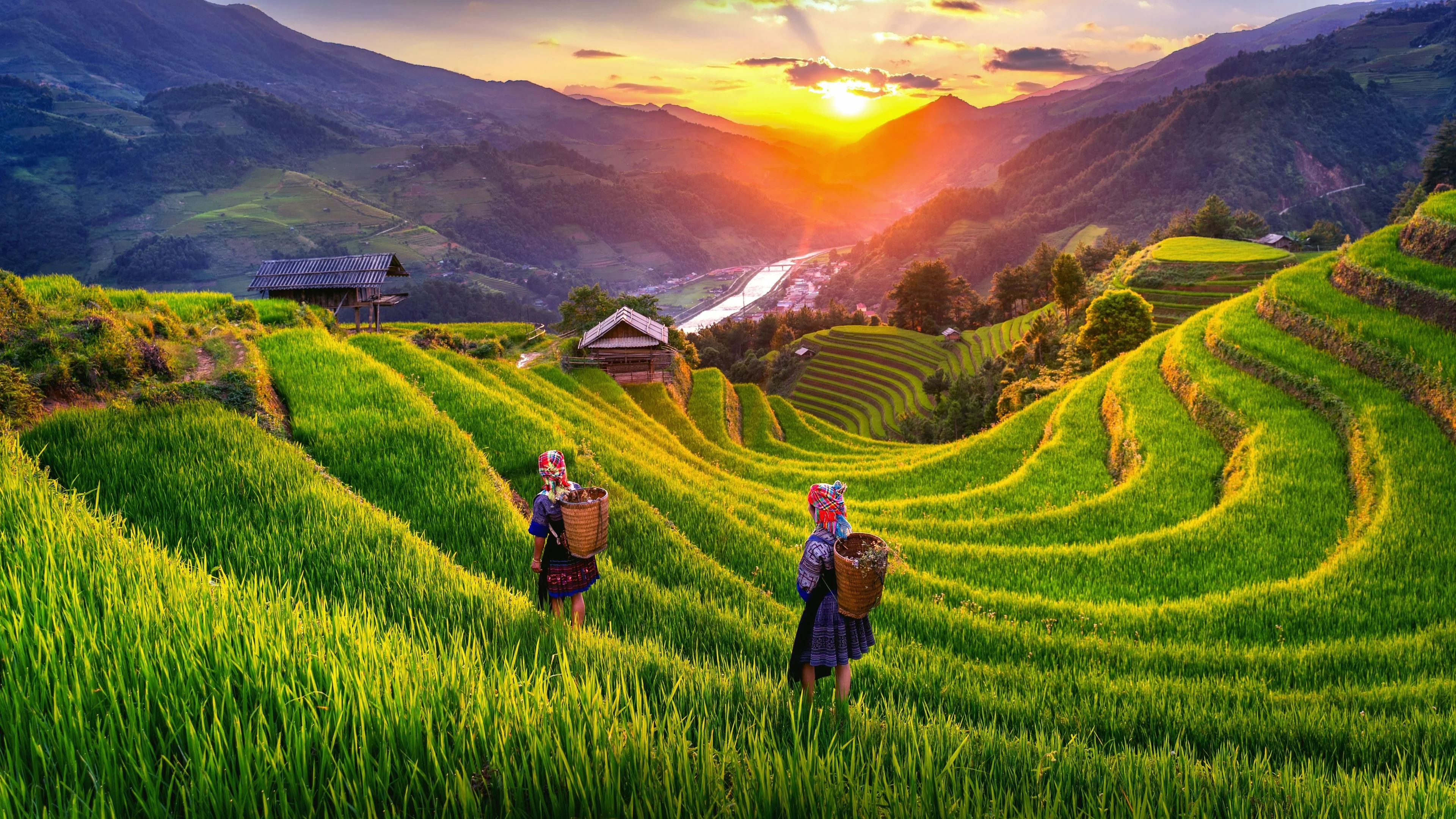
Yen Bai, where the rice fields touch the sky
The scent of freshly roasted sticky rice drifts up from the villages below. It is 6 a.m., and the first light of day turns the rice terraces into golden stairs. You are at the Khau Pha pass, at an altitude of 1,200 meters (3,937 feet), and the fog is slowly lifting to reveal one of the most striking views in Vietnam.
Yen Bai feels unlike any other province in the country. Tucked away from the well-trodden paths of Sapa and Ha Giang, it remains largely ignored by the crowds, which gives it a rare sense of authenticity.
A destination for those who want to go off the beaten path
This mountainous province in northwestern Vietnam appeals to travelers seeking dramatic landscapes without the tourist crush. If you dream of terraced rice fields as photogenic as those in Sapa but without the hordes, Yen Bai is for you. Hikers, photographers, and those looking to meet ethnic communities in an unspoiled setting will find what they are looking for here.
However, this destination requires some effort. The roads are winding and sometimes bumpy, tourist infrastructure remains basic, and English is rarely spoken outside of a few ecolodges. If you are looking for the comfort of a resort or pre-packaged tours, you might be frustrated. Yen Bai rewards adventurers, not travelers in a rush.
An accessible budget for mountain Vietnam
Yen Bai remains a value-oriented destination compared to Sapa or Ha Giang. Budget about 800,000 to 1,300,000 VND per day (about $30-50) for a backpacker experience, with homestay nights around 200,000 to 400,000 VND (about $8-15), local meals for 50,000 to 100,000 VND (about $2-4), and motorcycle rentals at 125,000-250,000 VND (about $5-10) per day. More comfortable ecolodges will bring the daily cost closer to 1,000,000 to 1,500,000 VND (about $40-60) per night, but the experience is worth it.
The rice fields of Mu Cang Chai: the province's beating heart
It is impossible to talk about Yen Bai without mentioning Mu Cang Chai, the district that holds the most iconic landscapes. More than 700 hectares of terraced fields have carved the mountainsides for generations, creating a spectacle that The Telegraph ranked among the twelve most beautiful terraced fields in the world. The communes of La Pan Tan, Che Cu Nha, and De Xu Phinh hold the most vertigo-inducing viewpoints.
The Mam Xoi hill, literally "sticky rice tray," offers a circular view of the terraces that wrap around the summit like a staircase to the sky. To get there, you take a local motorcycle taxi from the visitor parking area. These drivers, nicknamed "young buffaloes," zip down these steep paths at full speed. Close your eyes on the descents if you are afraid of heights.
Traveler tip: Avoid the high season at the end of September and book your accommodation several weeks in advance. The period from late May to early June, when the rice fields fill with water and turn into mirrors, attracts fewer people and offers exceptional reflections for photography.
Khau Pha pass and the Tu Le valley
Nicknamed "horn of the sky" in the Thai language, the Khau Pha pass stretches for 30 kilometers (18 miles) of tight turns between ancient forests and sheer cliffs. It is one of the four great passes of Vietnam, alongside Ma Pi Leng, O Quy Ho, and Pha Din. Each year, the Flying Over the Golden Season festival allows paragliding enthusiasts to soar over the golden fields from this spectacular starting point.
Before tackling the pass, stop in the Tu Le valley. This village is not just a place for peaceful panoramas: it produces the most renowned sticky rice in Vietnam. In September, the air is thick with the aroma of freshly harvested grains. The natural hot springs, nestled at the foot of the pass, are perfect for relaxing after a day on the road, with views of pine-covered mountains.
The villages of Lim Thai and Lim Mong, three kilometers from Tu Le, offer some of the most preserved landscapes in the region. The track leading there becomes slippery in rainy weather, but the rice fields take on deep green hues during those times.
The Pung Luong bamboo forest
Open to the public since 2020, this dense forest covers more than one hectare. The bamboo stalks sometimes reach nine meters (30 feet) high and create an almost surreal atmosphere when the wind blows through them. It is the ideal place to escape the heat and take photos in the shade of the canopy.
Thac Ba lake: the Ha Long Bay of the mountains
15 kilometers from Yen Bai city, Thac Ba lake is the largest artificial lake in Vietnam. Created during the construction of a hydroelectric dam in 1970, it covers 23,400 hectares and features more than 1,300 islets scattered across its calm waters. The limestone caves that dot its shores add a mysterious dimension to boat trips.
The region is home to the White-Panted Dao communities in the Vu Linh commune. These villages offer an experience radically different from the classic tourist sites of northern Vietnam: here, there are no souvenir stalls or folk shows staged for visitors. The locals go about their daily lives, and your presence does not change that.
Traveler tip: To reach the lake from Hanoi, take the Bao Ngan bus from My Dinh station. It is the only company that provides a direct connection, with a departure at noon.
Nghia Lo and the Muong Lo plain
The second largest rice plain in northwest Vietnam, Muong Lo spreads around the town of Nghia Lo. This is the historic territory of the Black and White Thai people, who represent the majority of the 17 ethnic groups in the valley. The village of Sa Ren, on the edge of the Thia stream, offers homestays where you can learn to prepare traditional Thai dishes and participate in xoe dances around the fire.
The Muong Lo market is worth a visit for its brocade handicrafts and local specialties. The hot springs of Van Chan, nearby, are a great way to round out the trip.
Where to eat and drink in Yen Bai?
Yen Bai's cuisine reflects the heritage of the ethnic minorities who populate the region. Xoi Tu Le, the sticky rice with plump grains whose scent can be detected from hundreds of meters away, is the local pride. It accompanies most dishes or is eaten alone, still steaming. The smoked buffalo meat of the Black Thai of Nghia Lo is prepared with a forest pepper called mac khen, which gives it a unique woody taste.
Com lam, sticky rice cooked in bamboo tubes over embers, was originally the meal of mountain dwellers on long expeditions. Today, it is served with grilled chicken or crushed peanuts with sesame. The black banh chung of Muong Lo, a traditional rice cake colored by vegetable ash water, is surprising for its chewy texture. For dessert or a snack, try the com of Tu Le, which are flakes of young rice that are roasted and pounded, served with ripe bananas or persimmons.
Where to sleep in Yen Bai and the surrounding area?
In Mu Cang Chai, the Mu Cang Chai Ecolodge remains the benchmark for those looking for a compromise between comfort and immersion. Its stilt bungalows, built in the traditional Thai style, overlook the Nam Khat valley. The owner, Dzung, speaks French and English and organizes guided hikes to the best viewpoints.
Homestays like Hello Mu Cang Chai or Lapantan Paradise offer spectacular views for a tighter budget. You sleep in stilt houses, share meals with the host family, and discover the daily life of Hmong communities. In Nghia Lo, the hotel offer is more classic, with establishments like the Muong Thanh Luxury Yen Bai Hotel for those who prefer standardized comfort.
How to get to and around Yen Bai?
From Hanoi, it takes between 6 and 8 hours by bus to reach Mu Cang Chai. The companies The Anh, Daily Limousine, and Son Phuong offer sleeper buses from My Dinh station, for about 300,000 to 750,000 VND (about $12-30) depending on the level of comfort. The train connects Hanoi to Yen Bai city in 4 hours, but you then have to take a bus or taxi to continue toward Mu Cang Chai or Nghia Lo.
Renting a motorcycle in Hanoi for a full road trip remains the most flexible option, but it requires good experience driving in the mountains. The roads, although paved on main routes, include tricky sections, especially on the Khau Pha pass during rainy weather. Once there, the motorcycle is the preferred means of transport to explore the rice fields and reach the viewpoints.
From the United States, there are no direct flights to Yen Bai. Fly into Hanoi, then organize your ground transfer. Expect a full day of travel from the U.S. to reach the province.
When to go?
The period from mid-September to mid-October offers the sight of golden rice fields ready for harvest, with a dry climate and pleasant temperatures around 20°C (68°F). This is also high season, with increased foot traffic in recent years. May and June correspond to the watering season, when the terraces fill up and reflect the sky like thousands of mirrors. The heat is more pronounced, but the landscapes are worth the trip. Avoid July and August: monsoon rains make the roads dangerous and can cause landslides in mountainous areas.
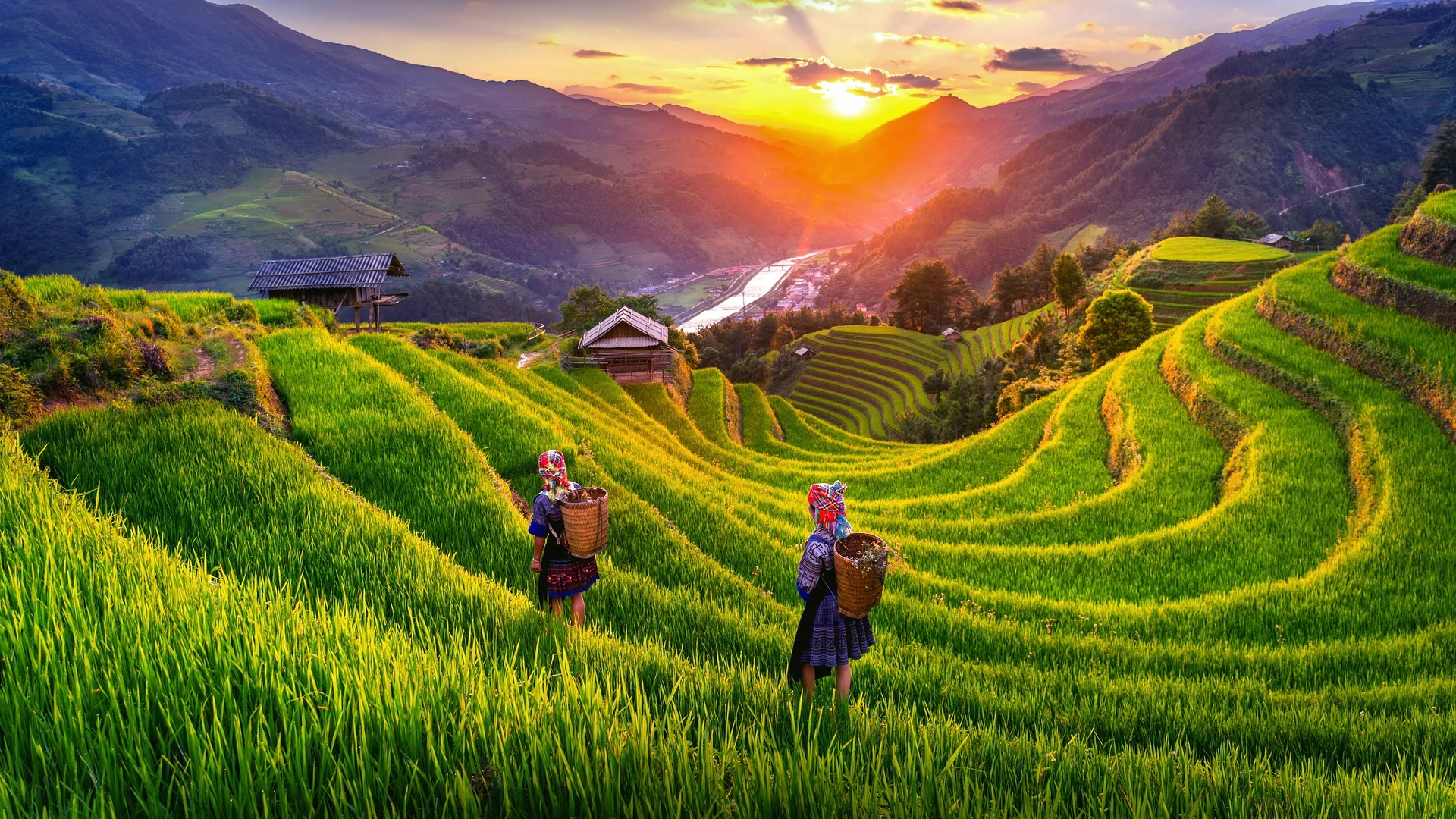
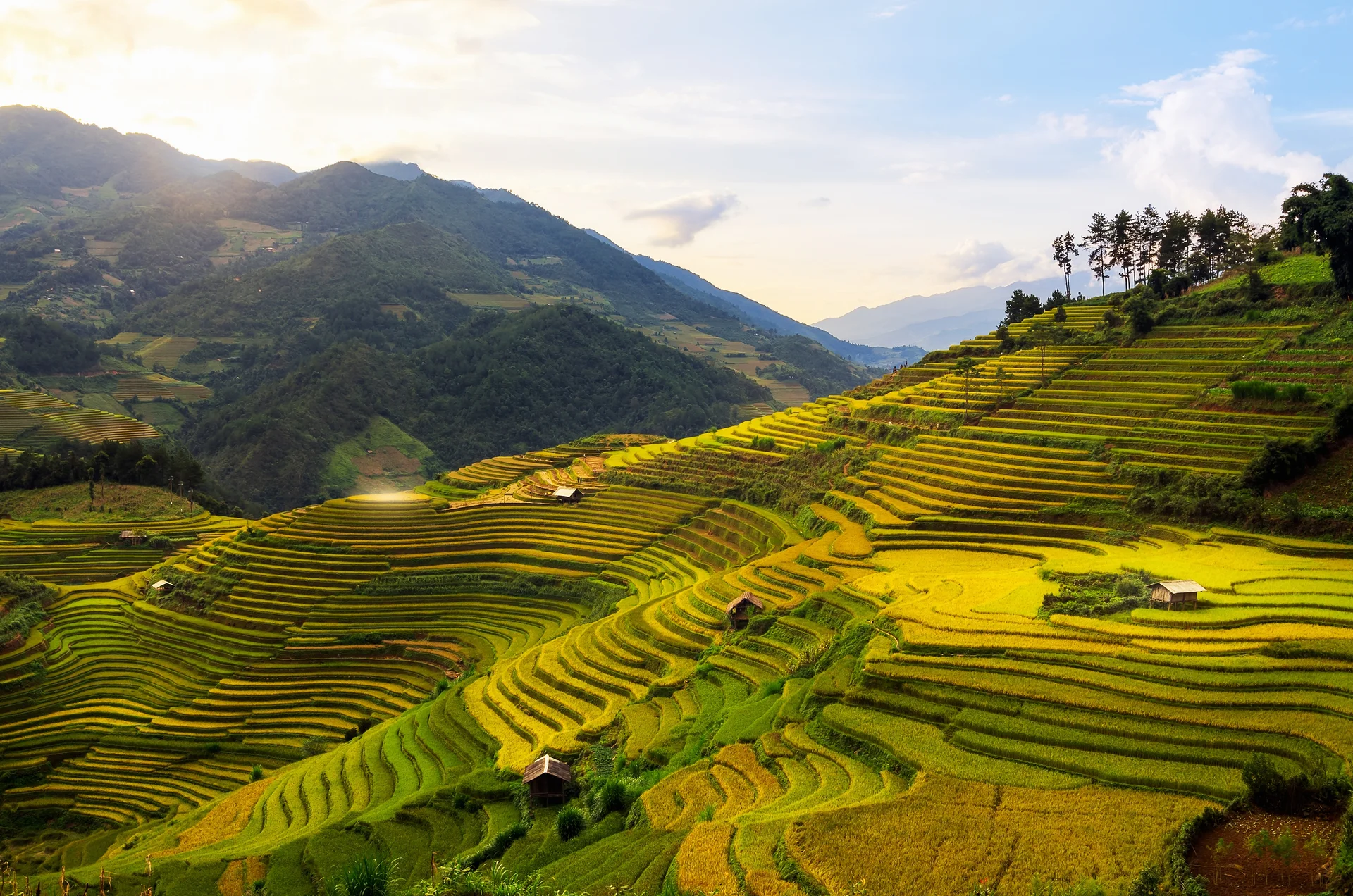
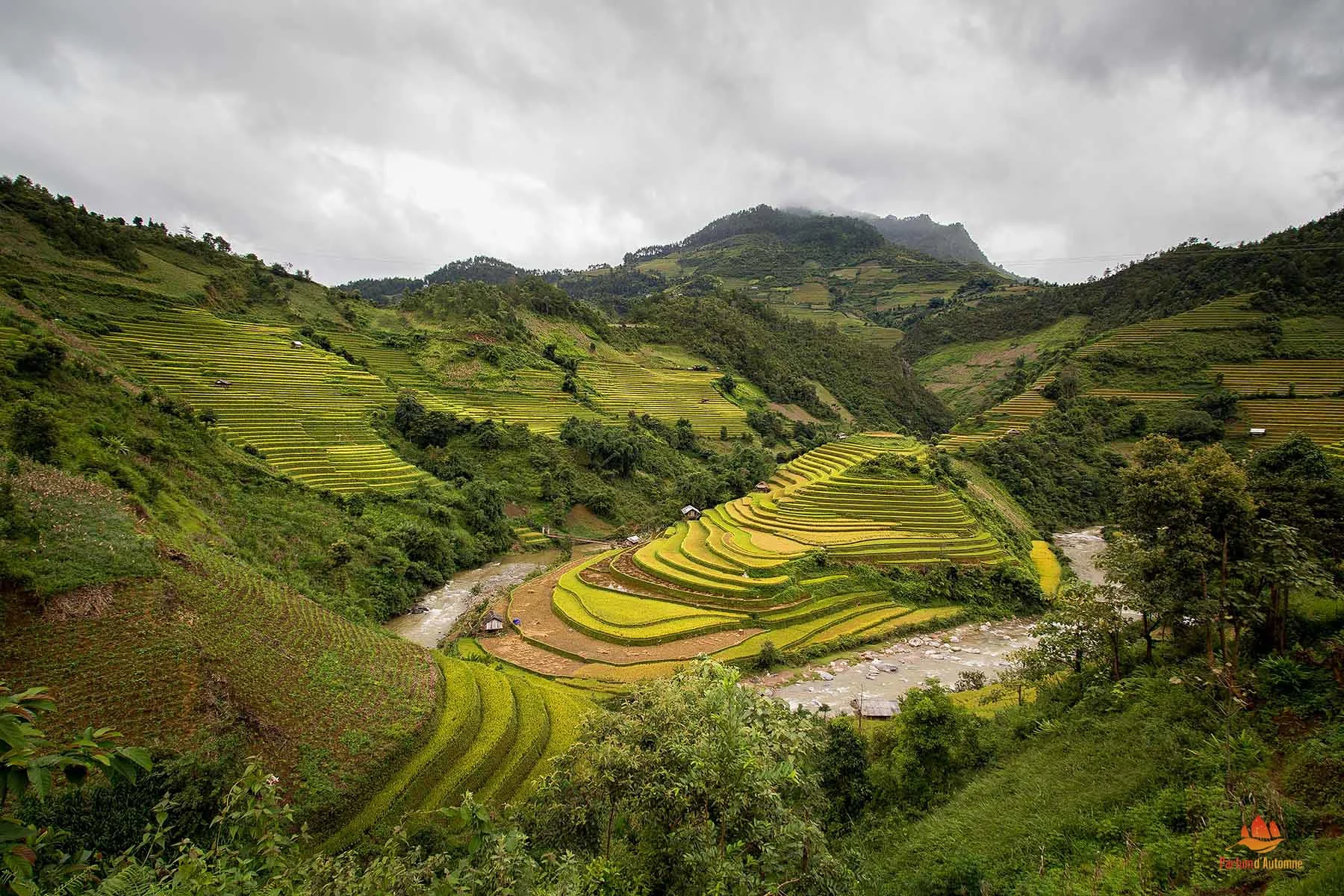
A beautiful region of northern Vietnam, with mountains, tropical forests, terraced rice paddies, and villagers who are welcoming without being pushy or touristy.