
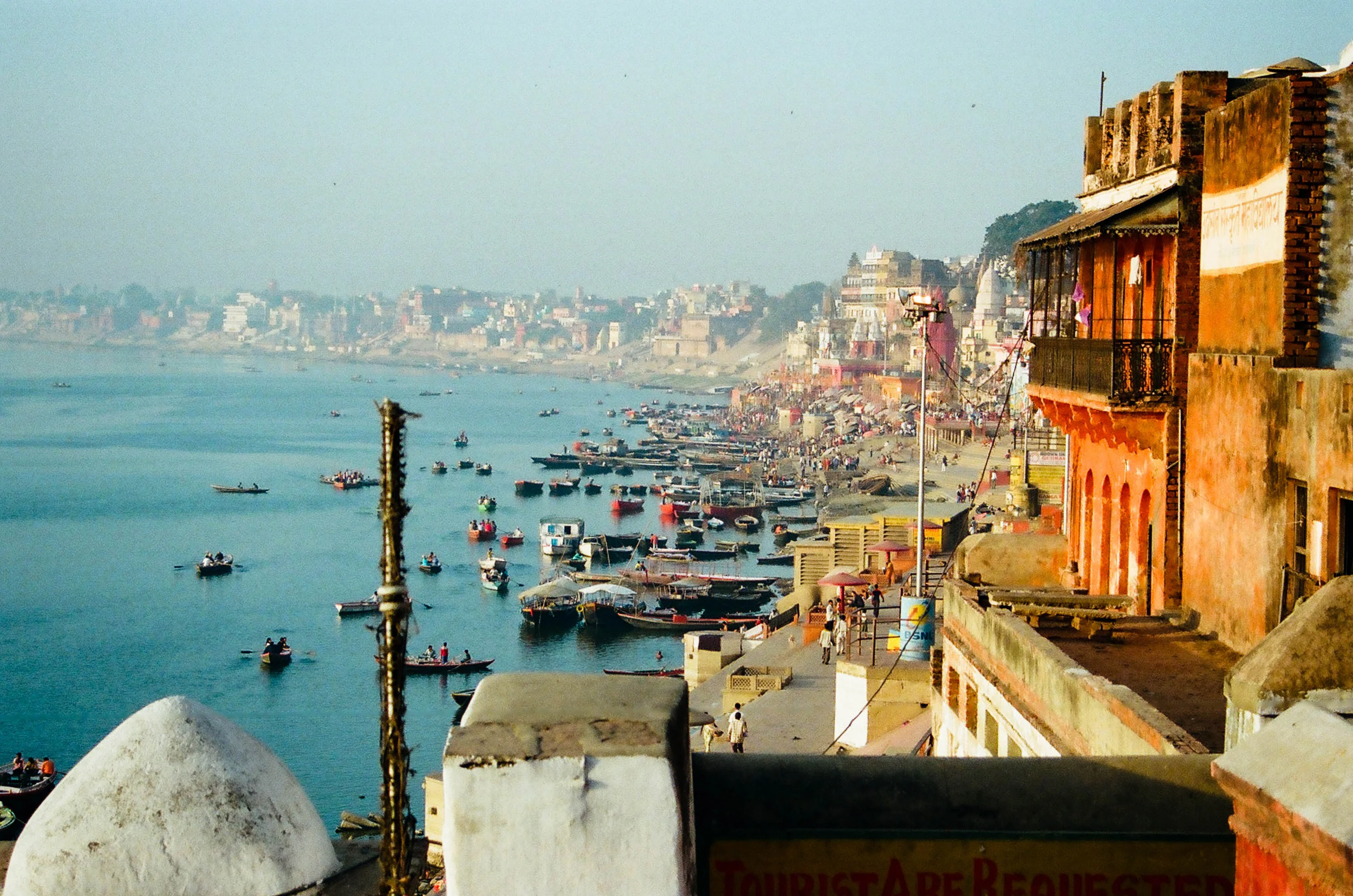
Varanasi, where life and death stare each other down
It is 5am. The sun has not yet burned through the haze hanging over the Ganges. Yet the ghats are already swarming with activity: pilgrims immerse themselves in the sacred water, a barber shaves a head right on the steps, funeral pyres crackle while a procession moves toward the river. Just a few feet away, children fly kites. This raw coexistence between the sacred and the everyday, between death and play, is the true essence of Varanasi. No other city on earth is quite like it.
An experience that is not for everyone
Varanasi is not a standard vacation destination. This city of over a million residents is the spiritual capital of India, one of the most sacred sites in Hinduism. Open-air cremations, the scent of sandalwood mixing with river smells, relentless noise, and visible poverty can hit you hard. Travelers seeking spirituality, fans of ancient cultures, and photographers will find inexhaustible material here.
This city is not built for anyone looking for comfort or cleanliness. The Ganges displays staggering pollution levels, cows and dung overrun the alleyways, and scams wait around every corner. But if you let go and surrender to it, Varanasi will leave a permanent mark on you. Plan for at least two full days to absorb the shock and start making sense of it.
India on a shoestring budget
Varanasi remains one of the most affordable destinations in India. A decent room near the ghats costs between 500 and 1500 rupees a night, or $5.20 to $16*. A hearty street food meal runs 50-100 rupees. A boat ride on the Ganges negotiates to around 150-200 rupees per person, though boatmen frequently try to extract 500 rupees from tourists.
The ghats: 84 stairways to the sacred
The word ghat refers to the massive stone steps leading down to the river. Varanasi has 84 of them, spread across nearly 7 kilometres along the left bank of the Ganges. Each has its own history, often tied to a king or patron who funded its construction to build good karma. The classic route runs from Assi Ghat in the south up to Manikarnika Ghat in the north, which is a 3 km walk, or several hours if you take your time to watch.
Dashashwamedh Ghat is the beating heart of the city. Legend says Brahma sacrificed ten horses here. Today, it hosts the nightly Ganga Aarti ceremony, a ritual of fire and prayer honoring the river. Priests handle giant oil lamps while the crowd chants and floats flower offerings on the water. The show starts around 6:30pm and lasts half an hour.
Friendly tip: The Dashashwamedh Ganga Aarti draws massive crowds. For a more intimate experience, head instead to Tulsi Ghat or Assi Ghat where similar ceremonies take place with less tourism.
Cremations: the great transition
Every day, about 200 bodies are cremated on the banks of the Ganges in Varanasi. For Hindus, dying here breaks the cycle of reincarnation and grants direct access to moksha, spiritual liberation. Families travel from all over India to accompany their loved ones on this final journey. Manikarnika Ghat, the largest crematorium, operates 24 hours a day, 7 days a week.
The pyres burn continuously. It takes about 400 kg of sandalwood to consume a body, and everything has a price: the wood type, the pyre location, the priest's services. Women do not attend the cremation because their tears might trap the soul of the departed on earth. Children under ten, pregnant women, and sadhus are not burned but submerged directly in the river since they are considered already pure.
Friendly tip: Photographing cremations is strictly forbidden and deeply disrespectful. If someone offers to guide you toward the pyres in exchange for money for the wood, it is a common scam. Observe from a distance in silence, or from a boat in the middle of the river.
The old city: a 3,000-year-old labyrinth
Behind the ghats stretches a maze of alleyways so narrow they are called galis. Shops are jammed together, temples pop up at every intersection, and cows block the way. Getting lost is part of the experience. The Kashi Vishwanath Temple, dedicated to Shiva, is the most sacred in the city. Its dome covered in 800 kg of gold shines above the rooftops. Non-Hindus cannot enter the main sanctuary, but the atmosphere in the surrounding streets is worth the detour.
Old Varanasi sits on the site of the ancient city founded in the 7th century BCE. The streets still bear the names of ancient trades. Thatheri Bazaar brings together brass and copper artisans. For silk saris embroidered with gold, head to the Vishwanath Gali market.
Sarnath: the Buddha's first sermon
Located 10 km from Varanasi, Sarnath is one of the four most sacred sites in Buddhism. This is where the Buddha delivered his first teaching after reaching enlightenment in Bodh Gaya. The 43-metre-tall Dhamekh Stupa marks the exact spot of that sermon. The archaeological museum houses the famous Lion Capital of Ashoka, which became India's national emblem.
Sarnath offers a striking contrast to the chaos of Varanasi. The gardens are peaceful, and Buddhist monks meditate in silence. It is the ideal day trip to catch your breath after the intensity of the ghats.
Where to eat and drink in Varanasi?
Street food reigns supreme. Kashi Chaat Bhandar on Dashashwamedh Road serves aloo tikki and dahi puri that draw lines out into the street. Varanasi lassis are legendary: thick, creamy, and sometimes spiked with bhang, a cannabis preparation tolerated in this religious context but to be consumed with caution.
For a sit-down meal with views of the Ganges, Pizzeria Vaatika Cafe near Assi Ghat offers decent international food and riverfront terraces. Rooftops are multiplying in the old town, so look for those overlooking the ghats at sunset. Benarasi Dum Aloo, a dish of spiced, simmered potatoes, is the local specialty you have to try.
Where to stay in and around Varanasi?
You have two main choices. The Assi Ghat sector in the south attracts travelers looking for relative quiet. Cafes are plentiful there, yoga classes too, and the vibe is more laid-back than in the center. The Ganges Grand and Sri Omkar Palace offer clean rooms with river views.
To be right in the middle of the action, pick a spot near Dashashwamedh Ghat. Family guesthouses crowd the area, often in older buildings with dizzying staircases. Ganpati Guest House features a rooftop restaurant overlooking the Ganges. Heads up: the alleyways are a labyrinth, so let the hotel staff guide you upon arrival.
How to get to and around Varanasi?
Lal Bahadur Shastri Airport sits 25 km from the center. Direct flights connect Delhi, Mumbai, and Bangalore multiple times a day. Plan for about an hour for the transfer to the ghats, sometimes longer depending on traffic. The train from Delhi takes between 8 and 12 hours depending on the line, with departures from Anand Vihar or New Delhi Station.
Inside the city, skip motorized vehicles for exploring the old town because the alleys are too narrow. A rickshaw or tuk-tuk will drop you off at the entrance to the historic district. From there, everything is on foot. For the ghats, rent a rowboat early in the morning or late in the day. Negotiate the price firmly before getting in.
When to go?
The best period runs from October to March, when temperatures hover between 5°C and 25°C. The Indian winter lets you walk the ghats without suffocating. The Dev Diwali festival, fifteen days after Diwali, lights up the Ganges with thousands of lamps for a striking spectacle. Avoid the monsoon from June to September, when the river level rises dangerously and boat trips become impossible.
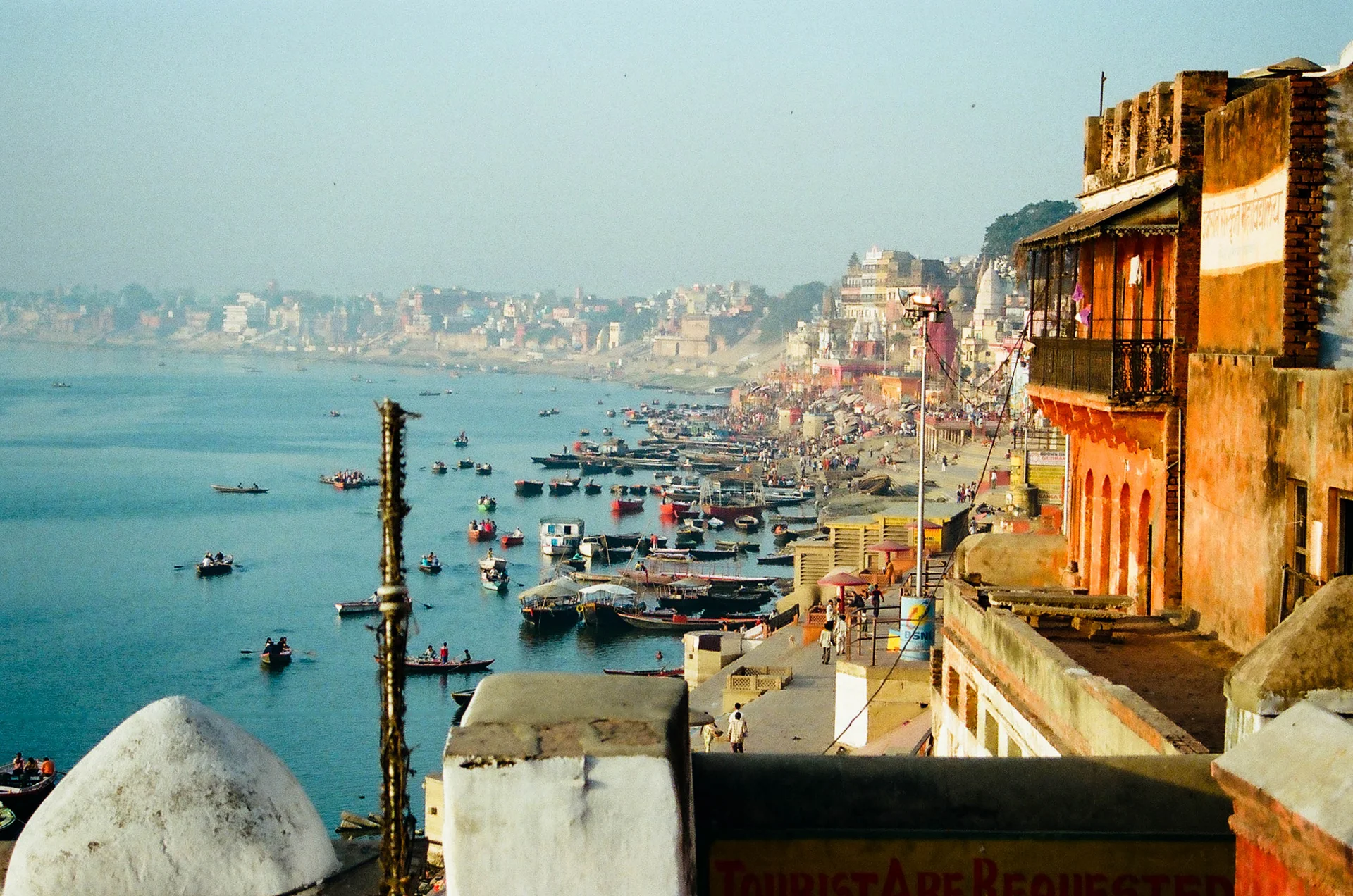
In this city, many pilgrims come to purify themselves in the Ganges, await their death, or accompany a loved one in theirs. To understand the cremation rites, I recommend hiring a guide. There are plenty of things to see, like the old city with its dark, colorful alleyways, as well as temples on every street corner. Not to be missed: the Aarti ceremony, which takes place in the evening at sunset on the ghats.