Ecuador: From Volcano Summits to Darwin's Islands
Breakfast in front of a snow-capped volcano at 19,347 feet. Lunch beside a turquoise crater lake. Dinner sweating it out in the Amazon rainforest. Ecuador packs more geographic variety into a territory roughly the size of Colorado than most countries manage across an entire continent.
One of the Best Entry Points into South America
Ecuador is built for travelers who are genuinely curious about Andean culture and wildlife, and who don't mind altitude and winding mountain roads. Hikers, wildlife enthusiasts, and anyone who has dreamed of watching giant tortoises or blue-footed boobies up close will find exactly what they came for. The colonial cities of Quito and Cuenca deliver serious architecture and history for those who want it.
That said, if you're picturing Caribbean-style white sand beaches, Ecuador isn't it. The Pacific coast is raw and rugged, not polished. Road infrastructure has improved but varies widely by region. Altitude is a real factor: Quito sits at 9,350 feet, and Andean excursions routinely push past 13,000 feet. Plan two to three days of acclimatization before attempting any serious trekking. One genuine convenience for US travelers: Ecuador runs entirely on the US dollar, so there's no currency exchange to worry about.
Budget: Affordable by South American Standards
Mainland Ecuador is one of the most affordable countries on the continent. Budget travelers can get by on $27 to $38 per day, while mid-range comfort runs $65 to $100 per day. Set lunch menus at local comedores (neighborhood diners) run $2.50 to $4. Intercity buses cost roughly $1 per hour of travel. The Galápagos is a separate budget category entirely: plan on a minimum of $1,600 to $2,700 for a week on a land-based trip, and considerably more for a cruise.
The Avenue of the Volcanoes: Ecuador's Andean Backbone
Alexander von Humboldt called it the "Avenue of the Volcanoes" back in the 19th century. This north-to-south corridor through the Ecuadorian Andes lines up a series of peaks whose names read like an adventure checklist: Cotopaxi, Chimborazo, Tungurahua, Cayambe.
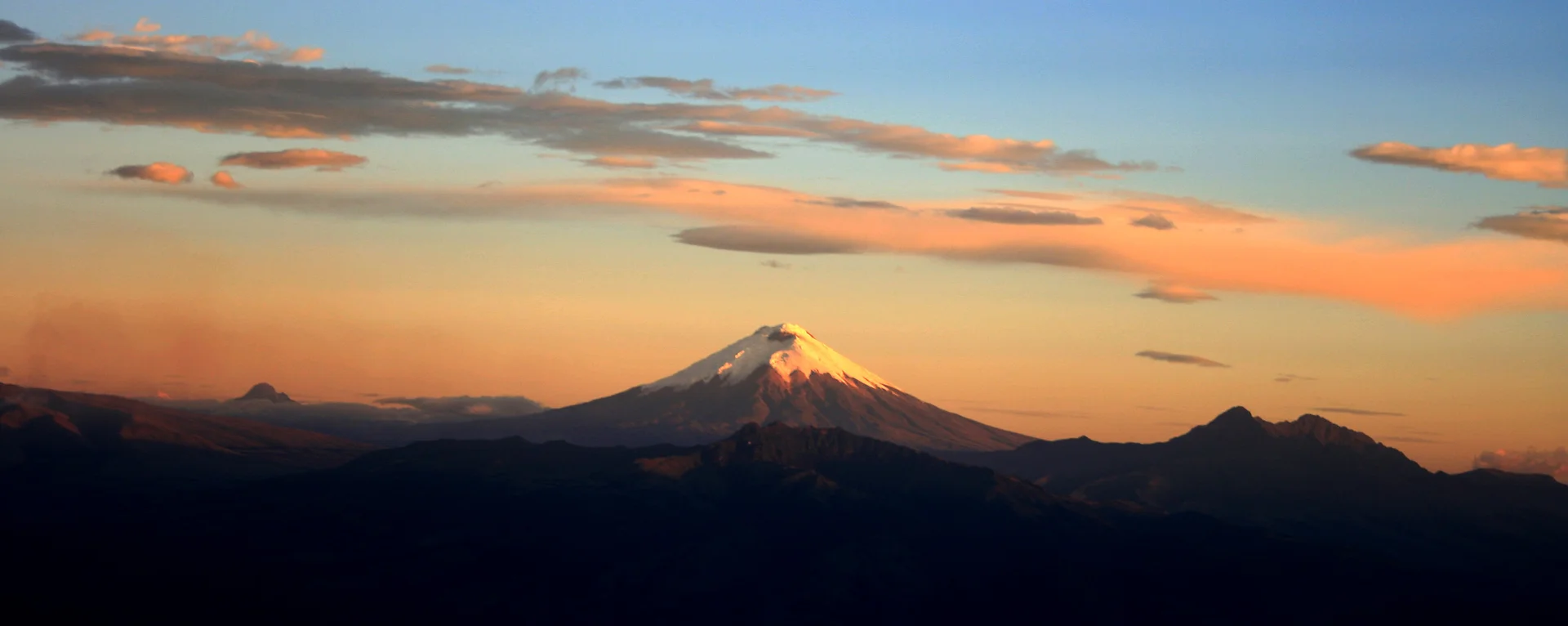
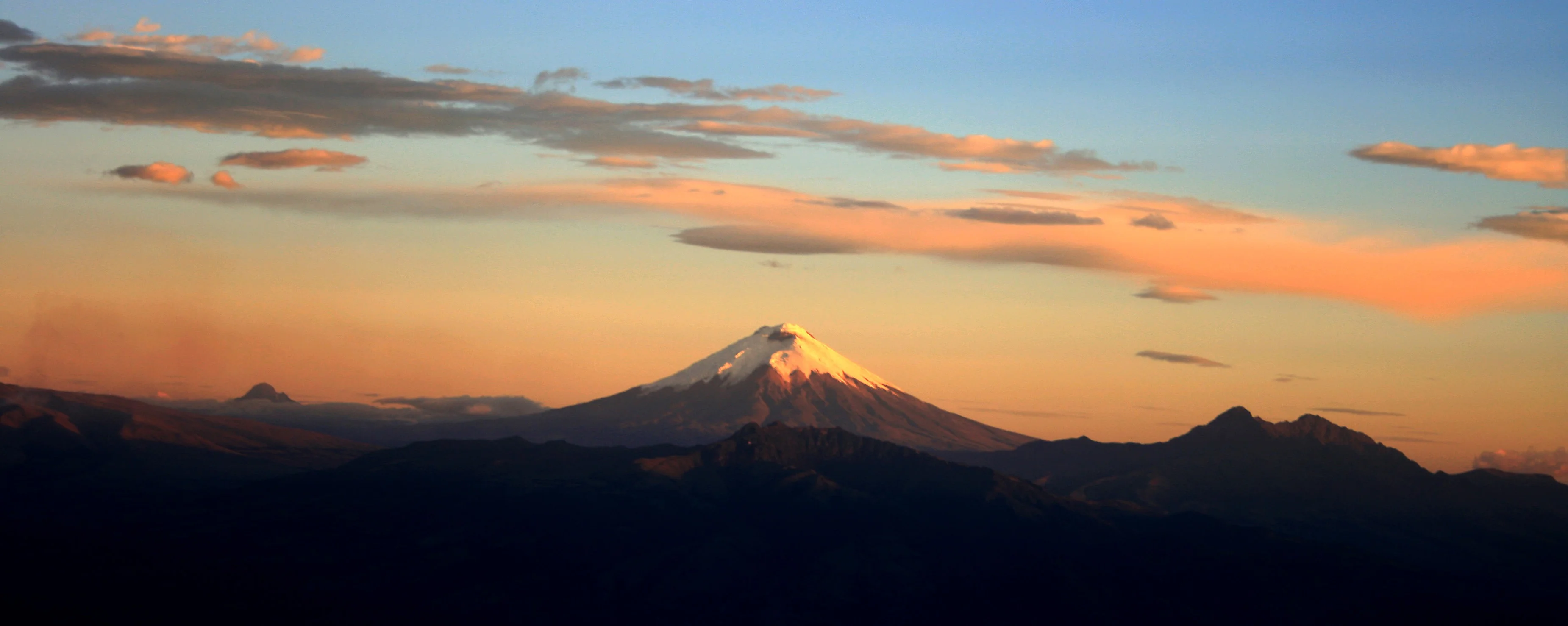
Cotopaxi, at 19,347 feet, is considered one of the highest active volcanoes on Earth. Its perfectly symmetrical cone, permanently capped with glaciers, dominates the national park of the same name. The hike up to the refuge at 15,750 feet is manageable for anyone in solid physical shape. More experienced mountaineers can attempt the summit with a certified guide, an expedition that starts around midnight to take advantage of hardened snow conditions.
Chimborazo tops out at 20,702 feet and holds a record most people don't know about: because of the equatorial bulge of the Earth, its summit is actually the point on the planet's surface farthest from the Earth's center, farther than Everest. Alpacas and vicuñas graze freely on its slopes.
Heads up: to avoid altitude sickness, drink plenty of water and take it easy for your first two days in Quito. Unlike Peru, coca leaves aren't widely used here as a remedy.
Quilotoa Lagoon and the Andean Village Loop
The Quilotoa Lagoon fills the crater of a volcano that collapsed 800 years ago. The water shifts between emerald green and deep blue depending on the light. Standing at the crater rim at 12,841 feet, looking down at it, is one of those moments that's hard to describe. The hike down to the water takes about 40 minutes; the climb back up is significantly harder and takes close to an hour.
The Quilotoa Loop is a two-to-three-day trek connecting Andean villages where daily life moves at a pace that feels completely removed from the modern world. Isinlivi, Chugchilán, and Sigchos all have simple but welcoming family-run hostels. The weekly markets, particularly the Thursday market in Guamote, offer a genuine look at indigenous community life well off the standard tourist circuit.
The Galápagos: Darwin's Living Laboratory
The Galápagos Islands, sitting about 620 miles off the coast, are the holy grail for anyone serious about wildlife. The animals here never learned to fear humans. Sea lions sprawl across park benches. Marine iguanas cross the path without breaking stride. Blue-footed boobies perform their mating dance a few feet from where you're standing. It's the kind of wildlife encounter you simply don't get anywhere else.
Two main options: cruise or land-based. A cruise gets you to the more remote islands and maximizes your time, but the prices climb fast. Budget $3,800 to $8,700 per person for a week. A land-based trip, staying on inhabited islands like Santa Cruz, San Cristóbal, or Isabela and doing day excursions, costs significantly less and still delivers remarkable wildlife encounters.
The national park entrance fee is now $200 per adult, plus a $20 transit card. Round-trip domestic flights from Quito or Guayaquil run $350 to $500.
Heads up: book your diving and snorkeling excursions once you're on the islands rather than from the mainland. Prices are usually better, and you can check out the operators in person before committing.
The Ecuadorian Amazon: Jungle Without the Expedition
Unlike Peru or Brazil, where reaching the Amazon requires a serious journey, Ecuador's Amazon is just a few hours from Quito by road. The Cuyabeno Reserve in the northeast protects some of the best-preserved primary rainforest on the continent. You get in by dugout canoe, gliding through black-water channels lined with mangroves while caimans watch from the banks.
The Tena and Misahuallí area offers a more accessible and less expensive alternative. Lodges here run two-to-four-day packages that include forest hikes, visits with Huaorani or Cofán indigenous communities, and nighttime wildlife spotting. Pink river dolphins, howler monkeys, and scarlet macaws are all part of the local cast.
Amazon trips are typically sold as all-inclusive packages out of Quito or Coca. A three-day mid-range lodge stay with transfers and activities included runs $160 to $325 per person.
Ecuadorian Food: From the Andes to the Coast
The food tracks the geography closely. In the highlands, locro de papa is the dish that keeps you warm at altitude: a thick, creamy potato soup finished with cheese and avocado. Cuy (roasted guinea pig) is a traditional Andean dish, served at festivals and special occasions. It takes a moment to get past the presentation, but the meat is genuinely delicate.
On the coast, Ecuadorian ceviche is a different animal from the Peruvian version. The seafood sits in a tomato and lime broth and comes with toasted corn and plantain chips. Encebollado, a tuna and yuca stew loaded with onions, is the local hangover cure, served at market stalls from dawn. Bolones de verde, fried plantain balls stuffed with cheese or chicharrón (fried pork), are a coastal breakfast staple.
The markets overflow with fruit you won't find back home: naranjilla, granadilla, pitahaya, chirimoya. Fresh-squeezed juices cost under a dollar and beat anything you'd pay $12 for at a juice bar in the States.
When to Go to Ecuador
Ecuador is a year-round destination, but each region runs on its own seasonal logic. In the highlands, the dry season runs June through September, with sunny days and cool nights. Temperatures don't swing dramatically through the year, staying between roughly 50°F and 68°F depending on elevation. The rainy season, December through May, brings short afternoon showers rather than all-day downpours.
On the Pacific coast, the pattern flips: the warm, humid season from December to April is best for beach time. Humpback whale watching off Puerto López runs June through September. In the Amazon, the drier months fall August through February, though "dry" is relative in a rainforest.
In the Galápagos, both seasons have their appeal. The warm season, December through May, brings warmer water for snorkeling and active bird nesting. The cool season, June through November, draws divers with better underwater visibility and the presence of whale sharks around Darwin and Wolf Islands.
Getting to Ecuador
From the US, the most straightforward connections to Quito run through Miami on American Airlines, with LATAM, Avianca, and Delta also serving the route. Guayaquil on the coast is a solid alternative entry point, sometimes cheaper and more convenient if you're heading straight to the Galápagos or the Pacific coast. Total travel time from most US cities runs 8 to 14 hours depending on your connection. Round-trip fares typically fall between $600 and $1,100, with better deals available in March and September.
US passport holders do not need a visa for tourist stays of up to 90 days. Your passport needs to be valid for at least six months beyond your planned return date, which is standard CBP guidance for international travel.
Getting Around Ecuador
The bus network covers the entire country with impressive reach. Private companies offer several comfort tiers, from local buses to air-conditioned "ejecutivo" coaches with reclining seats. The Quito-to-Cuenca run takes about eight hours and costs $10 to $15. Bus terminals, called "terminales terrestres," are usually on the outskirts of cities.
Renting a car gives you real flexibility, especially for the Avenue of the Volcanoes, but driving here takes some adjustment. Signage can be inconsistent, and slow-moving trucks on mountain roads are a constant. Budget $38 to $55 per day for a mid-range vehicle, and get full coverage insurance without question.
In the Galápagos, speedboat ferries connect the main inhabited islands for around $25 to $30 per crossing. They're efficient but can be rough in choppy conditions. In Quito and Guayaquil, Uber works reliably and is a safer, more predictable option than hailing a random cab.