

Visiting Alexandria
As Egypt's second-largest metropolis, Alexandria is a place of constant motion and sharp contrasts. Its history begins with Alexander the Great in 331 BC, and he would likely recognize the ambition behind its current status as a major port and industrial hub. While the city has weathered earthquakes, wars, and shifting empires, it remains an indomitable urban sphinx on the edge of the Nile Delta. From its Roman and Byzantine eras to its time as a center for early Christianity and its eventual submission to General Bonaparte, the city owes much of its modern economic life to the Suez Canal. It remains a destination where ancient ruins sit comfortably alongside Islamic history and Greco-Roman treasures.
A waterfront of wonders
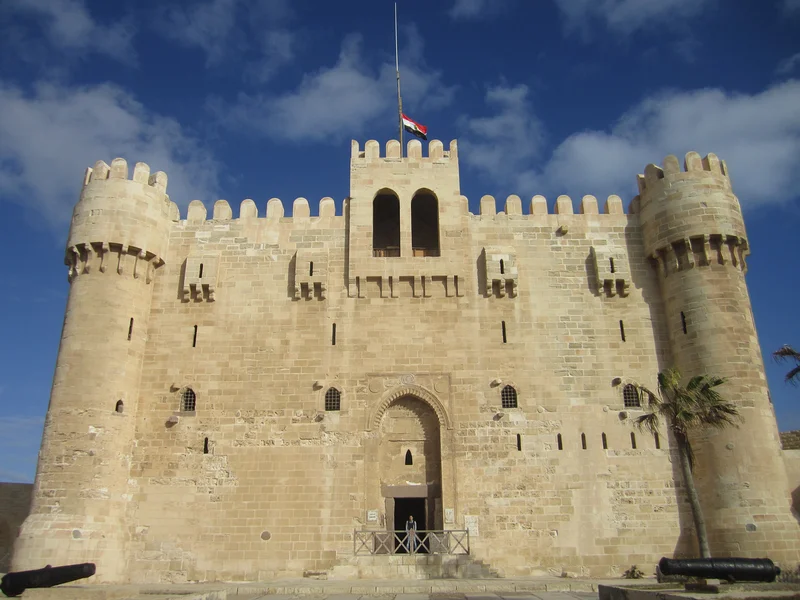
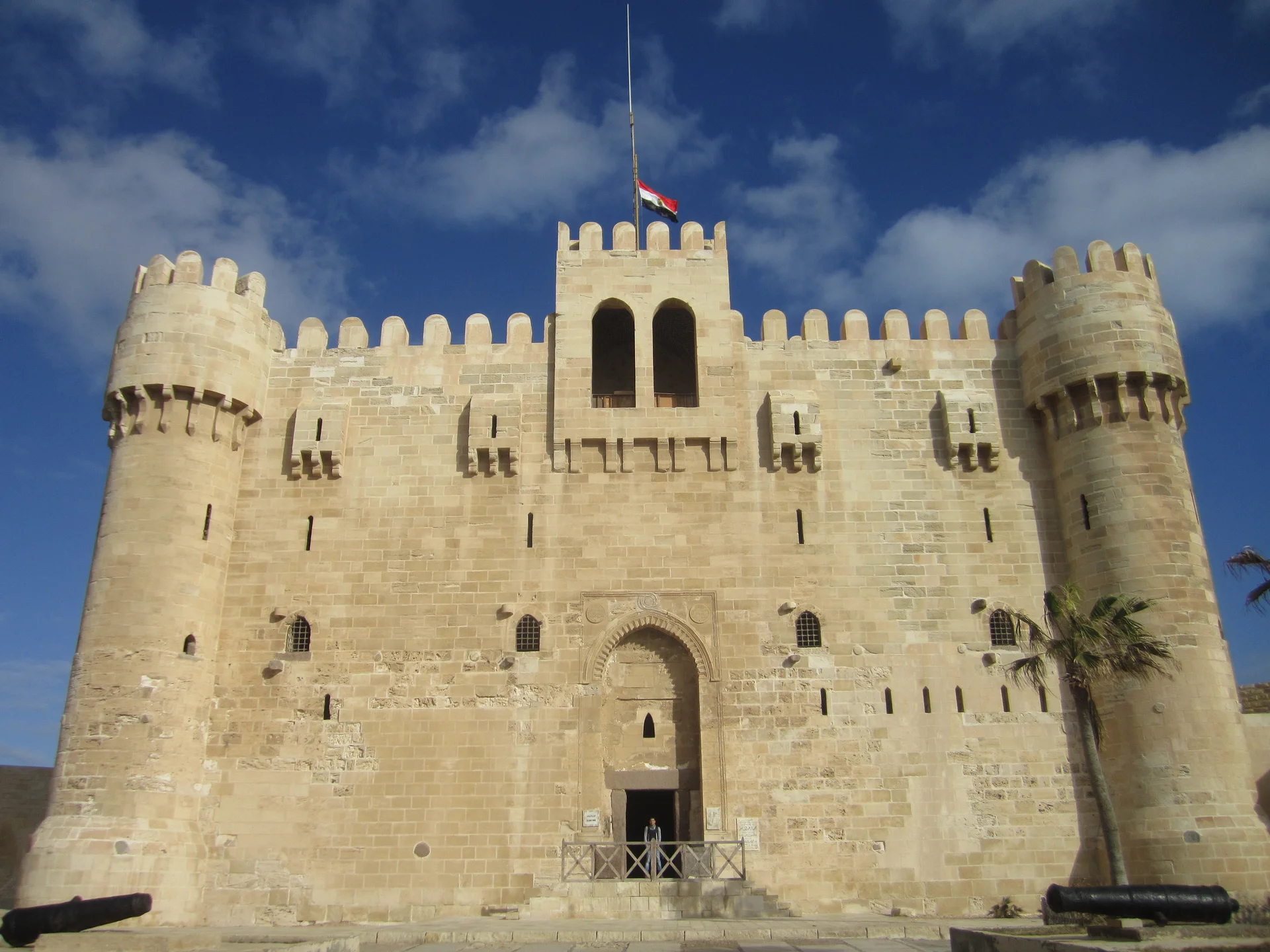
The best way to get your bearings is to walk along the corniche. It is the city's primary artery and a perfect starting point for any itinerary. During the day, you will see local fishermen and merchants at work, but the area really hits its stride after sunset. At the port, fishing boats provide a constant backdrop, and while the legendary lighthouse was lost in the earthquake of 1303, you can still find remnants of it at the Citadel of Qaitbay. Built on the original lighthouse site using some of its salvaged stones, this defensive fortress from 1477 is a masterclass in military architecture. Between the vaulted ceilings, intricate carvings, and the sea views, it is a local landmark. Underwater, archaeologists have recovered sphinx statues and columns, many of which are now on display at the Marine Museum on-site. Nearby, the Abu el-Abbas el Mursi Mosque, with its five domes and two minarets, is worth a visit.
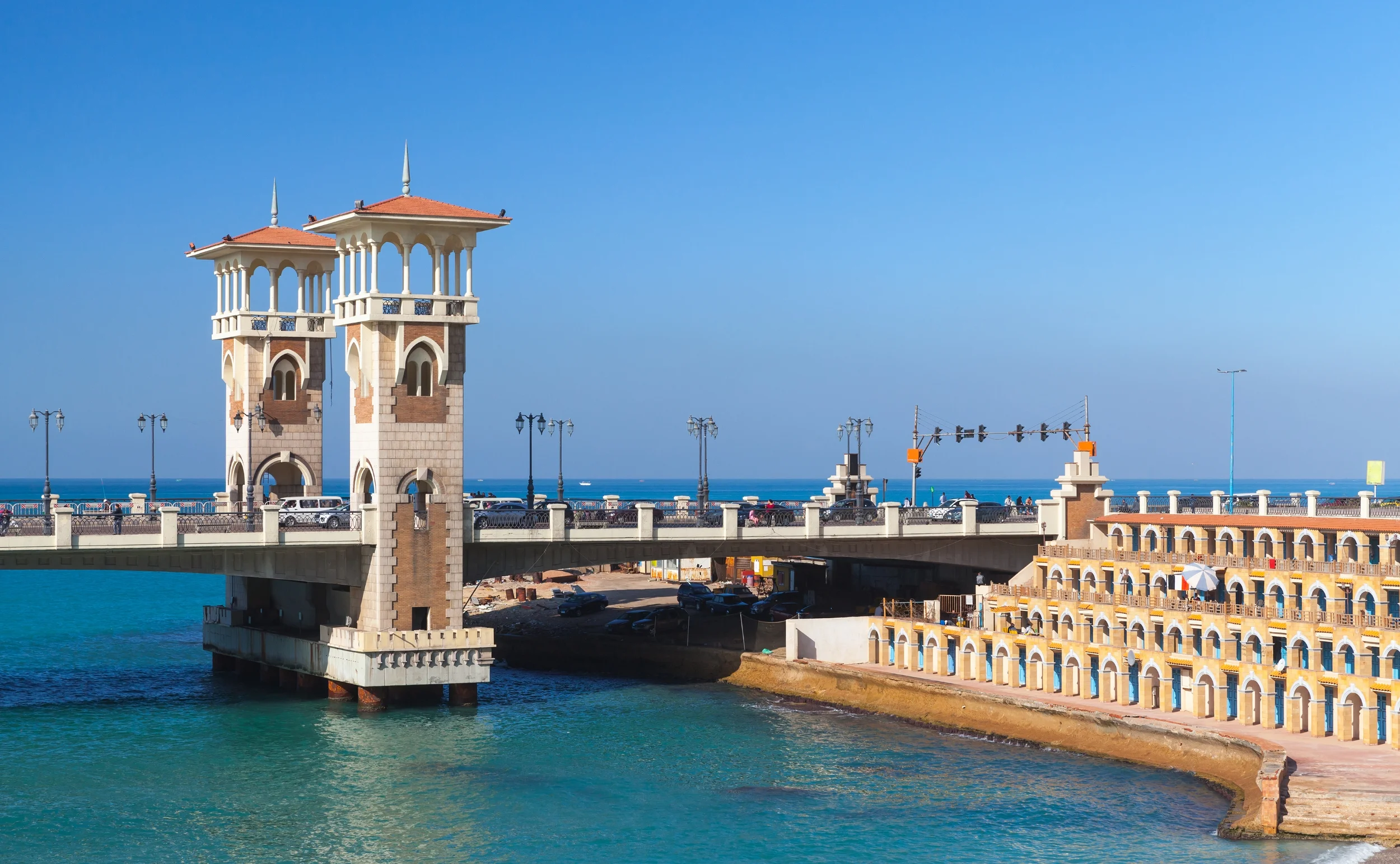
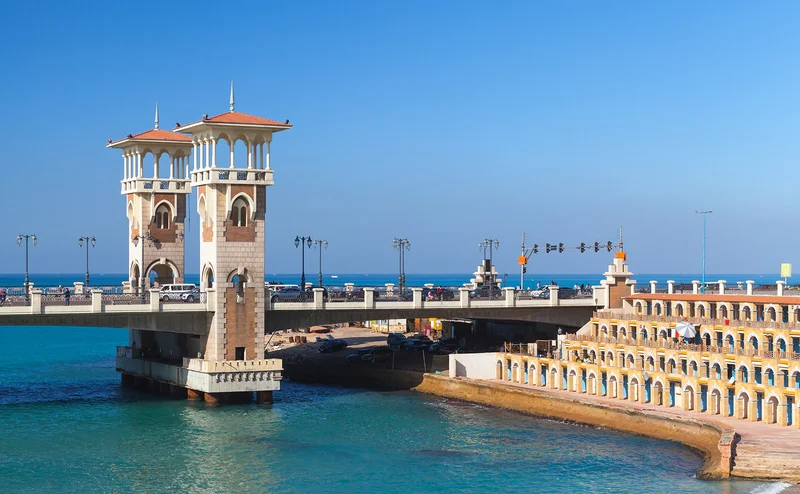
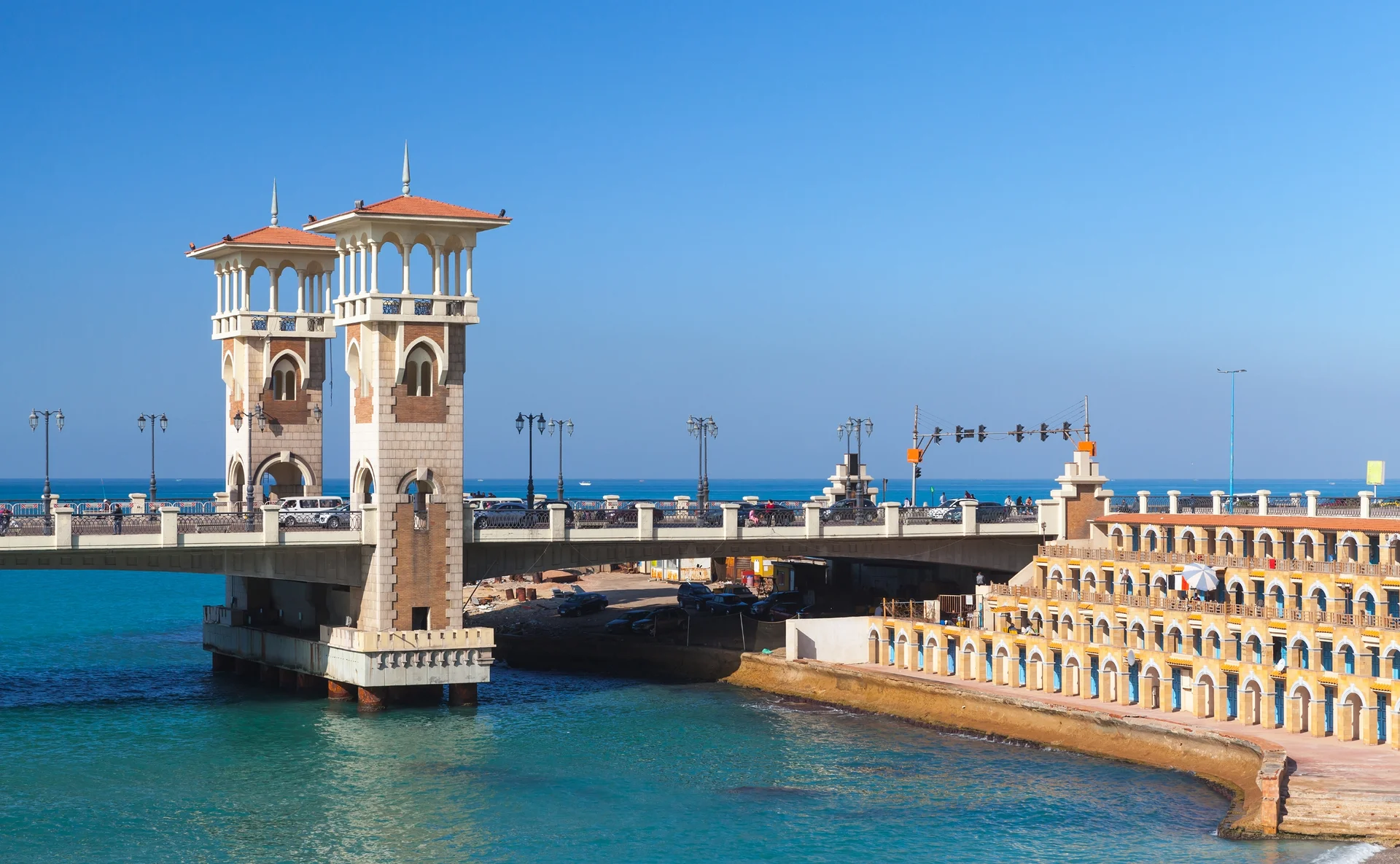
In the same neighborhood, the Royal Jewelry Museum is housed in the former Palace of King Farouk. With its Renaissance-style decor and stained glass, the building serves as a fitting home for a vast collection of 19th-century royal jewelry. Further along the coast, the ultra-modern, semi-spherical architecture of the Bibliotheca Alexandrina stands out. It holds the world's largest reading room, a collection of eight million books, and a dedicated museum for ancient manuscripts. Finally, the Stanley Bridge is a must-see along the corniche. It acts as a link between the city's different eras, and when it is illuminated at night, it offers one of the best spots in the city to watch the sunset.
A journey through history
The most significant ancient monument in Alexandria is Pompey's Pillar. Its 30-meter height gives you a sense of the scale of the Temple of Serapis that stood here at the end of the 4th century. Three pink granite sphinxes surround the site, which also includes underground galleries. Finds from the area, including a marble head of Serapis and the Apis bull, are displayed at the Greco-Roman Museum. With thousands of relics dating back to the 3rd century BC, it is considered the most important museum of its kind in the world. To the east, in the El Mandara district, the Montazah Palace, built in 1892, displays a Florentine-Turkish style defined by its massive tower and symmetrical design. While the interior is closed, the 150 hectares of manicured gardens, palms, and flower beds are open to visitors. La Mamoura Beach is located nearby and is a popular spot for a swim.
The waterfront bars and restaurants are ideal for sampling local food. Look for Kouchari, a hearty mix of brown lentils, rice, and tomato sauce, or balah el-bahr (sea dates) and gandofli (garlic clams). Street stalls are excellent for grabbing falafel or hawawshi, a pita stuffed with spiced meat. Alexandria is a dish best served with a view.
Getting there
While the main international airport in Alexandria is currently under renovation, the Borg el Arab airport serves as the primary hub and is located 48 km from the city center. Taxis and bus services are available for the transfer. Mediterranean cruises also frequently dock here. If you are arriving from Cairo, you can take a domestic flight, a bus, or the train.
When to go
The climate is mild year-round, with temperatures averaging 18°C (64°F) in January and reaching 31°C (88°F) in August. Expect the hottest weather between May and October.

The vibe in Alexandria seemed pretty relaxed to me, with a rather open-minded spirit and a small community of expats, students, and dedicated teachers.
And then, Alexandria is a historic city, with a cultural heritage that is well worth the trip.