
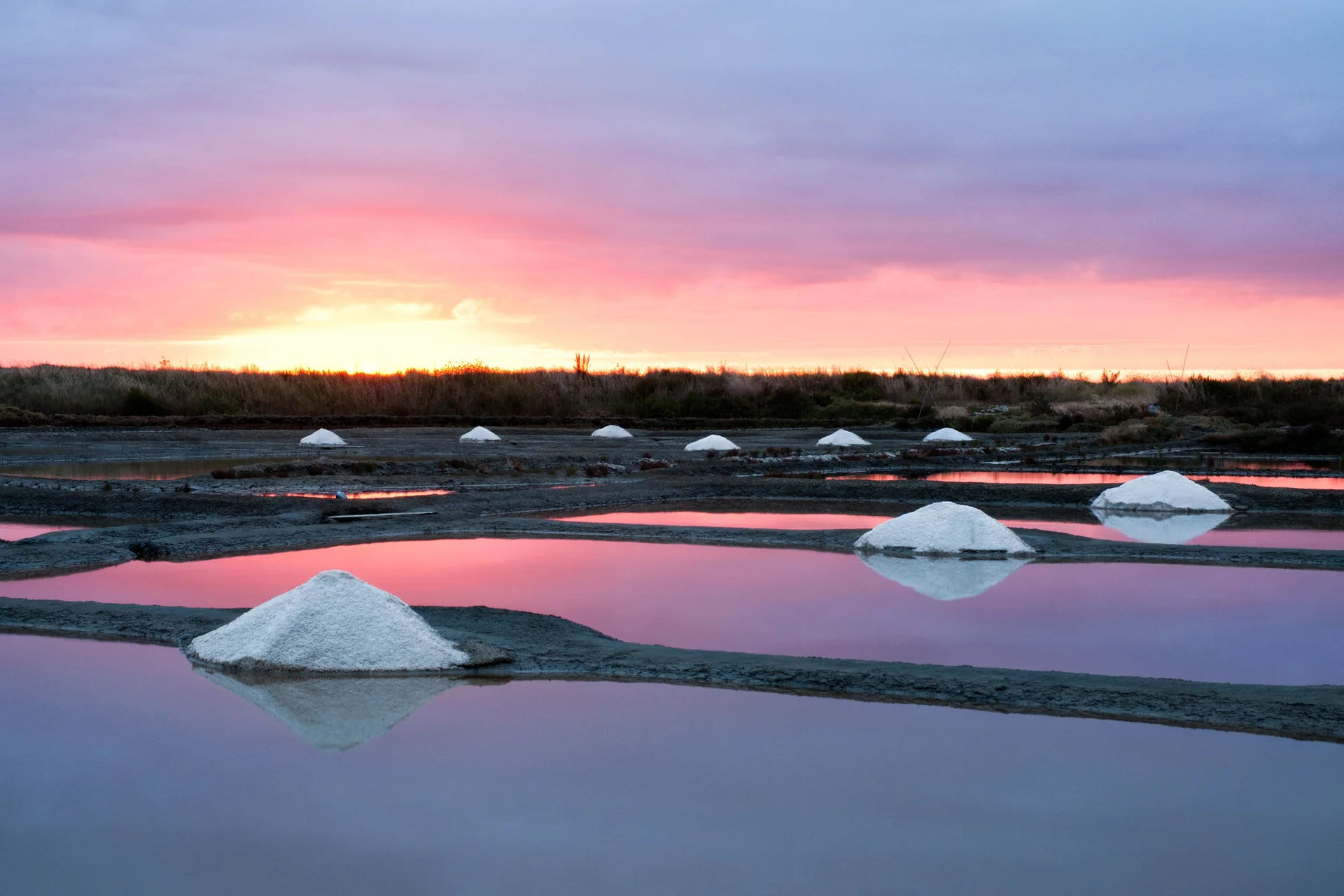
Guérande salt marshes: 2,000 hectares where the sea turns to crystal
It is 6 a.m. on a July morning. The first rays of sun catch the surface of the salt pans. The landscape shifts from pearl gray to a blinding white within minutes. This is the hour when the paludiers (salt harvesters) inspect their basins with a lousse (a long-handled tool) in hand, well before the heat sets in.
A history dating back to the Romans
Salt production at Guérande is no modern trend. Traces of harvesting dating back to the 3rd century AD have been found, but it was the monks of l'abbaye bretonne de Landévennec (Landévennec Abbey) who, in the 9th century, designed the hydraulic architecture still in use today. During the golden age of maritime trade in the 16th century, 2,500 additional salt pans were created. Ships loaded with this white gold left the port by the hundreds.
The site nearly disappeared in the 1960s. Competition from Mediterranean salt and industrial mines drove prices down. Harvesters abandoned their salines. A giant marina project even planned to level the marshes to build a resort town. Citizen mobilization saved this heritage in 1970, and today nearly 380 producers maintain these 2,000 protected hectares.
How the ocean transforms into salt
The process relies entirely on gravity and natural elements. At each high tide, Atlantic water rushes into the channels to fill the vasière (mud basin), the first pool in the circuit. Impurities settle at the bottom. Water then circulates through a series of evaporation basins with poetic names: cobiers, fares, adernes. Each stage reduces the water volume and concentrates the salt.
In the oeillets, the crystallization basins that cover the landscape, the salt finally forms. The harvest runs from June to September. The harvester uses a cimauge, a wooden shovel with a long handle, to scrape the coarse gray salt from the clay floor. The fleur de sel requires a different touch. In the late afternoon, when the east wind blows, a film of white crystals floats on the surface. The harvester collects it delicately with a lousse à fleur, a type of large skimmer. This fickle harvest represents only 200 to 300 tons per year, compared to 10,000 to 15,000 tons of coarse salt.
The colors that make all the difference
Come early in the morning or at the end of the day to capture the spectacle. The low light transforms the basins. They appear light gray at dawn, blinding silver at midday, and deep violet at dusk. The hues also shift with the seasons. Autumn dresses the marshes in copper and rust tones when the glasswort turns red and the reeds dry out.
Friendly tip: Opt for guided tours offered by independent harvesters rather than standard tourist circuits. You will walk through the heart of active salines, see basins that are usually off-limits to the public, and truly understand the complexity of this manual labor. Prices are often more competitive, and groups are limited to 15 to 20 people maximum.
A refuge for 280 bird species
The salt marshes form a wetland area classified as Natura 2000 and recognized by the RAMSAR convention. More than 280 species of migratory birds make a stop here. The avocette élégante (pied avocet) is recognized by its upturned black beak. The échasse blanche (black-winged stilt) parades on its long pink legs. The marsh harrier glides over the reeds. In the spring, the male bluethroat displays its electric blue bib spotted with orange or white.
The flora adapts to the salinity. Glasswort, a succulent with a briny taste, colonizes the edges. Sea lavender carpets the slopes in summer. Orache grows where few other plants survive.
Three places to understand the salt
Terre de Sel in Pradel
This flagship facility is open year-round and managed by the Le Guérandais cooperative. The 1,000 square meter exhibition space features models, a tide-simulator, and educational films. Guided tours depart directly from the recreated salines. Options vary by age and interest: short 45-minute circuits or 2-hour walks with tastings of edible plants. The shop is well-stocked for buying salt, fleur de sel, and regional products.
La Maison des Paludiers in Saillé
Located in the heart of the historic harvester village, this center offers 1.5-hour guided tours combining a walk through the marshes with a look at traditional housing. A 25-minute documentary about seasonal work is screened on-site. It remains accessible even in rainy weather thanks to indoor spaces.
Musée des Marais Salants in Batz-sur-Mer
Housed in former salt warehouses, this museum traces 2,000 years of salt-harvesting history. It features collections of tools, archival documents, and oral histories. The visit lasts about 50 minutes. It is closed in January and open year-round starting in February.

There are several types of guided tours offered for the whole family (fun, food-focused, unique, etc.), and they really let you see behind the scenes of the salt worker's trade. Remember to book ahead because they fill up fast, and definitely avoid booking during heatwaves because there is zero shade on the site! Also, don't miss the cooperative and its variety of salt-based products. A free exhibit inside covers the history of salt from its origins to today.