
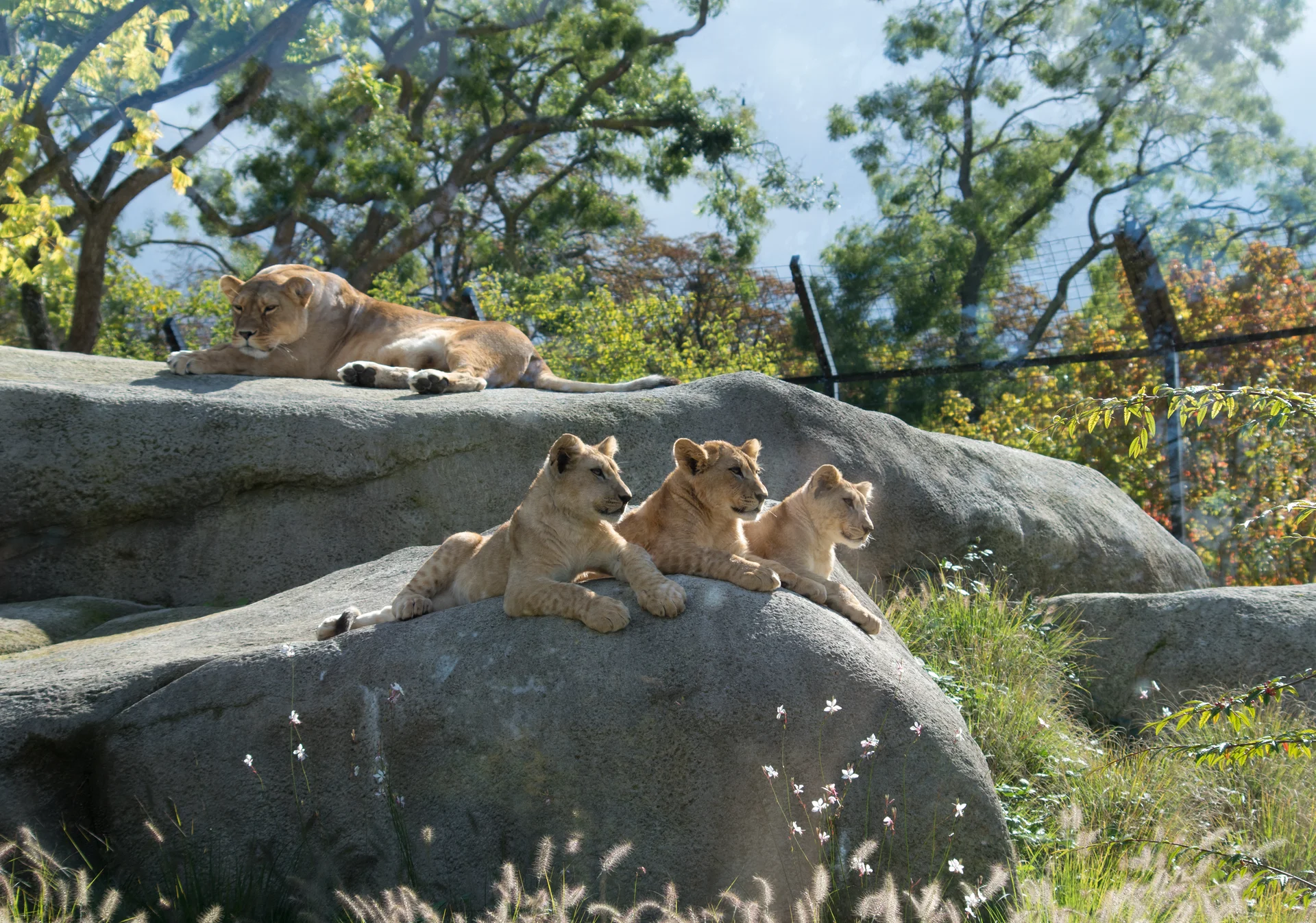
Visiting the Vincennes Zoo
Spanning 14.5 hectares between the 12th arrondissement of Paris and the bois de Vincennes, the Parc Zoologique de Paris awaits. Commonly referred to as the Vincennes Zoo, it operates under the Muséum national d'histoire naturelle (National Museum of Natural History).
A history dating back to the 19th century
The Muséum d'histoire naturelle originally maintained a menagerie at the Jardin des plantes. However, museum director Isidore Geoffroy de Saint-Hilaire proposed an annex as early as 1860 to study animal behavior. The Crown had ceded 16 hectares of the bois de Vincennes to the city of Paris, which then allocated the land to the museum.
This plot became a plant and animal reserve, but due to a lack of funding, it was not until 1931 that a temporary zoo opened during a colonial exposition, showcasing exotic animals. The event drew 5 million visitors in 6 months. Following this success, officials decided to establish a permanent zoological park on the site.
Geologist Paul Lemoine designed the park in 1932. Architect Charles Letrosne drew inspiration from the Hamburg Zoo to create a modern zoo without cages. President Albert Lebrun officially inaugurated the zoo on June 2, 1934.
A fresh start in 2014
By 2004, visitor numbers were in freefall and the park sat in a state of disrepair. After a long battle, the necessary funds were raised and the park closed for just over 5 years. The renovation cost 167 million EUR (about 180 million USD), and the park finally reopened its doors in April 2014.
The 5 biozones of the Vincennes Zoo
The Vincennes Zoo is divided into 5 distinct biozones, housing a total of 2500 animals from 234 species.
These biozones include Sahel-Sudan, Madagascar, Europe, Amazonia, and Patagonia. Additionally, the park features a 2000m² aviary and a 4000m² tropical greenhouse.
While zones for equatorial Africa and Australia are planned, Asia and Oceania are already represented at the menagerie in the Jardin des plantes.
The park promises a slice of wilderness just steps from the capital, making it an excellent idea for a family outing in Paris.
Opening hours
*Information subject to change

It is one of the closest zoos to Paris, and it is also the very first one I discovered as a child. I have been back several times since, and I have to say that my opinion is mixed. Compared to other parks, especially the Parc des Félins in Nesles, the Vincennes Zoo is not very big. Above all, the animals have really small enclosures, which does not always make the visit pleasant. There is, however, a nice diversity of species, so I still recommend it.