
Bercy Village at a Glance
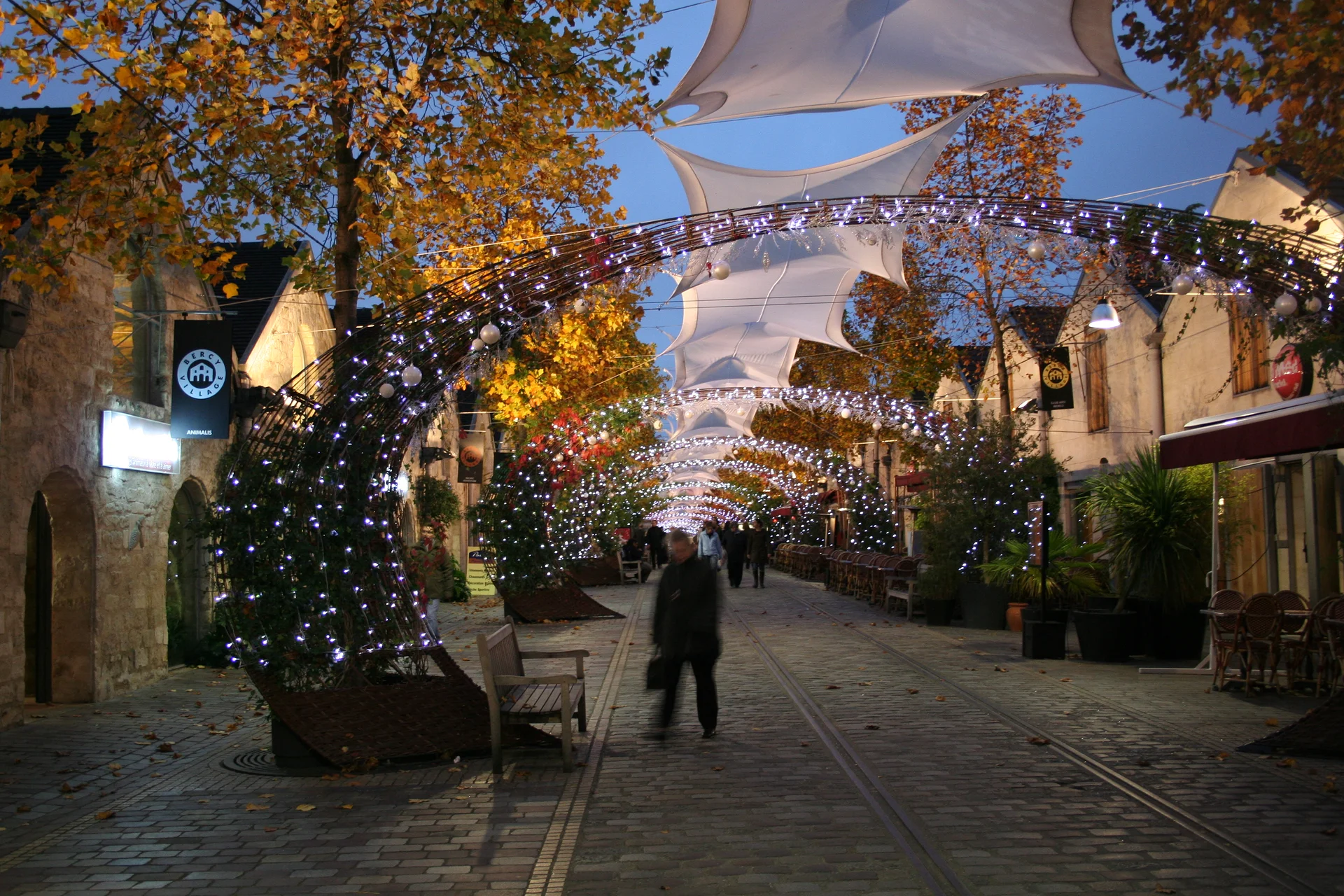
Located in the 12th arrondissement of Paris, Bercy Village opened in 2002 as a prime example of successful urban redevelopment. Notice its elegant white stone cottages, which are actually former wine storehouses protected as historical landmarks. Along with old railway tracks and cobblestone alleys, they bear witness to the era when Bercy, before becoming associated with the Ministère des Finances (French Ministry of Finance), served as the main wine hub in the French capital. Warehouses lining the Seine acted as storage and transit zones for alcohol exempt from a tax called the octroi. Back in the 19th century, people had to pay a toll upon entering cities. Material goods were also taxed, which allowed for tight inventory control and an effective way to combat smuggling. Before the municipality of Bercy was annexed by the capital, this zone reached up to 42 hectares at its peak.
Close to the Parc de Bercy and the Cinémathèque française, Bercy Village includes 45 shops, primarily food stores and clothing boutiques. You will find staples like Fnac, Sephora, and Nicolas, as well as a large cinema, the UGC Ciné Cité Bercy, and a gym.
Its main thoroughfare, the cour Saint-Émilion, named after the famous wines, is especially pleasant for walking. You can stroll here in a relaxed, family-friendly atmosphere. Vibrant yet peaceful, the area is popular with visitors and locals alike who come to unwind.
Opening hours
| Monday | 10:00-20:00 |
|---|---|
| Tuesday | 10:00-20:00 |
| Wednesday | 10:00-20:00 |
| Thursday | 10:00-20:00 |
| Friday | 10:00-20:00 |
| Saturday | 10:00-20:00 |
| Sunday | 10:00-20:00 |

Bercy Village is a pleasant place for a stroll in Paris. Depending on the season, the decorations change and are always original. You can find everything here: restaurants, shops, and even a movie theater. I recommend walking around nearby, where some very pretty green spaces like the Parc de Bercy are great for relaxing.