
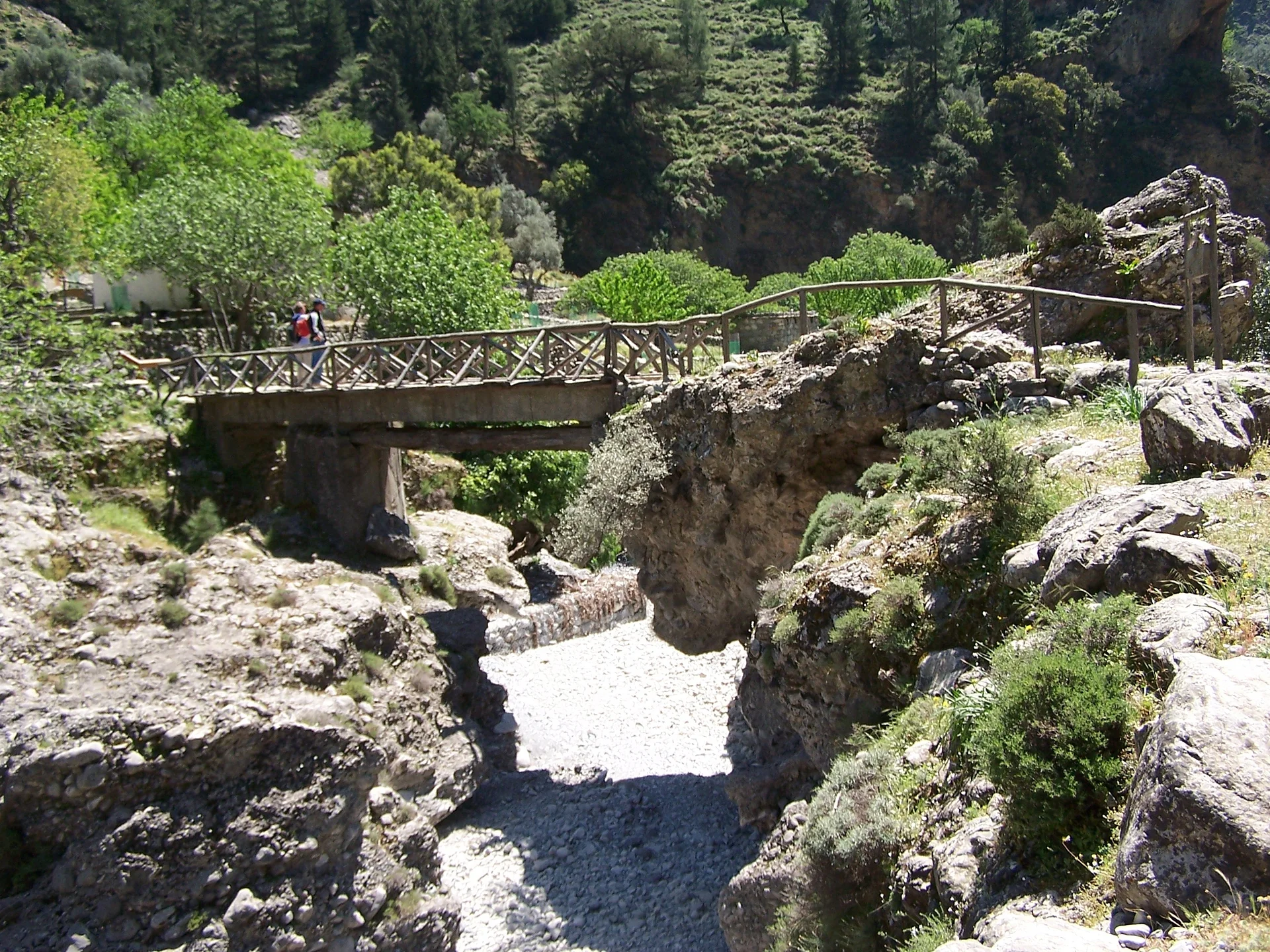
Visiting the Samaria Gorge
Every year, this massive natural site within the Samaria National Park draws thousands of visitors. Whether you are a dedicated hiker, an outdoor photographer, or just curious about the landscape, this gorge is a deep fissure in the rock that leaves a lasting impression. It is rugged and grand, serving as a focal point for travelers in western Greece. Sitting at an elevation of 1,250m, it is a primary destination on the island.
A journey through the stone
Spanning 16 km, the Samaria Gorge ranks among the longest in Europe. Over millennia, erosion has carved and shaped this now iconic passage. Flanked by rock walls that reach 600m in height in certain sections, the hike is visually dominating. The trail is divided into several segments and typically begins in the Xyloskalo area, located at the plateau near the village of Omalos. The first three kilometers are challenging, though the path includes frequent rest spots. The walk between the White Mountains massif and the Volakias range is impressive. As you move through this protected environment, you are effectively entering the last natural sanctuary for the Cretan wild goat, an endemic species. The male, known as the Kri-Kri, is a symbol of the island. The route is filled with stone pines, cypresses, waterfalls, and streams. It is a true reserve that includes the remains of an abandoned village, Samaria. The hike concludes at the narrowest section, the famous Sideroportes, or Iron Gates, which measures just 3m across with walls towering 500m above. Agia Roumeli port waits at the end. Aside from arriving by sea, the Samaria Gorge is the only way to reach this small coastal village. While many hike the full length, some choose to start from the bottom, as the trail can be navigated in either direction.
Opening hours
*Information subject to change

That is how this natural park is sometimes described: the largest gorge in Europe. I do not know if that is the reality, but in any case, it is true that in some places, the cliffs overlooking Samaria are impressive and if you take your time, hiking the trail can take you a full day.
Regardless of whether it is true or not, the park is worth the trip for its natural heritage as a whole. Rugged terrain, adorable little streams, magnificent nature, especially in the spring. And then, the icing on the cake, the end of the trail leads you to Agia Roumeli, where you can go for a swim at the beach.
A few tips:
- Avoid the middle of summer and prefer the month of May: the weather is already beautiful without being a heatwave, and there are fewer crowds.
- Hiking boots are not necessary, but take at least some good sneakers and avoid flip-flops.
- There is quite a bit of walking, with some climbs and descents. It is very doable for an adult who is used to walking. Much less so for young children. So I do not recommend this visit with young children: they will end up asking you to carry them and that will ruin the walk for you a little bit.