
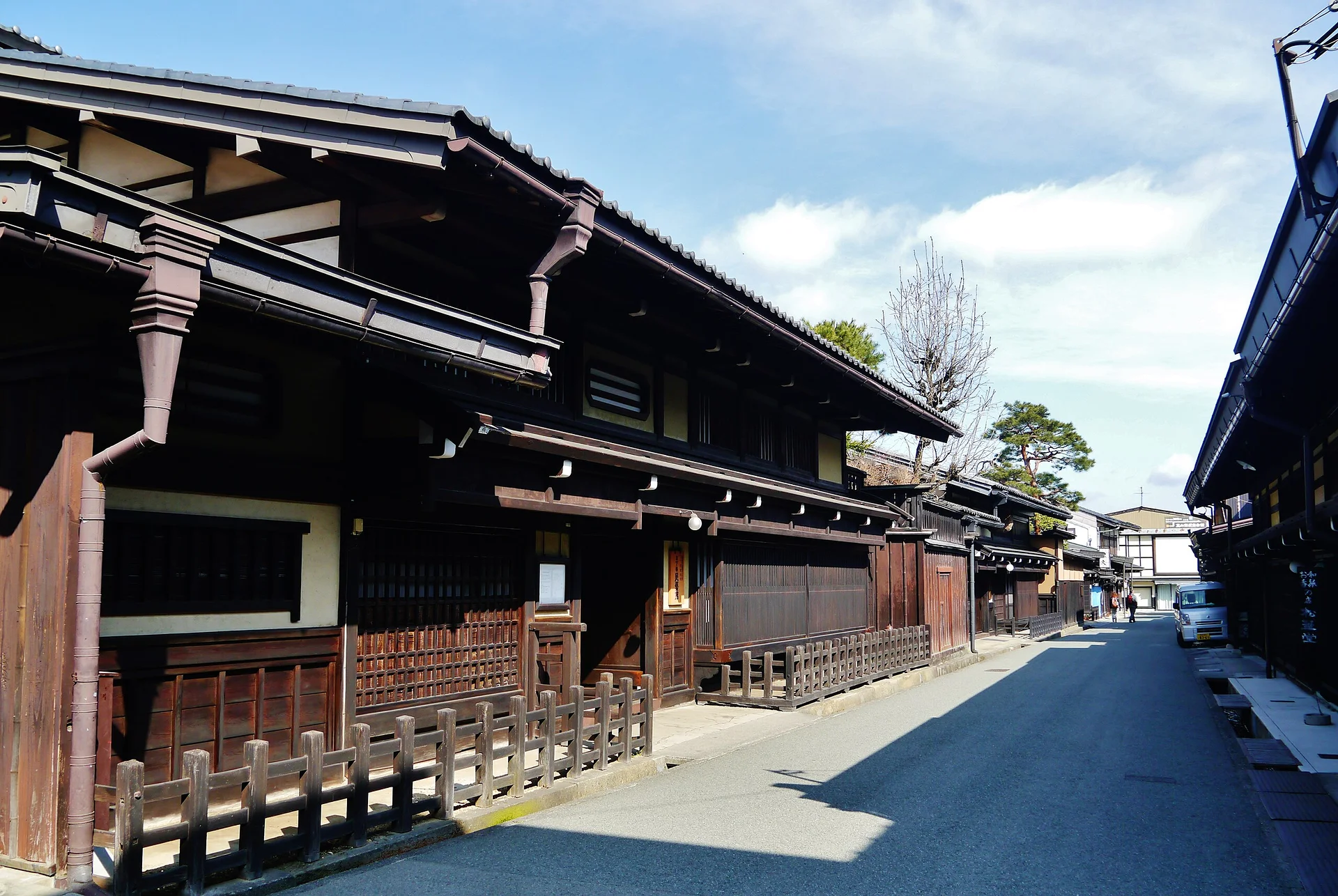
Kusakabe Mingeikan: A merchant estate turned temple of folk craft
The main beam spans 43 feet. It crosses the central hall in one single piece, without a single joint or seam. It is red pine from the Hida mountains, felled and dried for years before being hoisted under this roof in 1879. Looking up at this monumental timber frame, you immediately grasp what it meant to be wealthy in Takayama during the late 19th century.
Why visit the Kusakabe Mingeikan Museum?
The Kusakabe family made their fortune during the Tokugawa shogunate by acting as financial intermediaries for the local government. As pawnbrokers and money changers, their business was highly profitable. In 1875, a fire razed their home. The reconstruction, finished in just four years, employed the region's finest carpenter, Jisuke Kawajiri. The result is this massive house, built entirely of Japanese cypress, which has been designated an Important Cultural Property since 1966.
In 1966, the eleventh heir of the lineage, Reiichi Kusakabe, converted the residence into a folk art museum. He aligned the house with the Mingei movement, an aesthetic philosophy born in the 1920s that celebrates the beauty of everyday objects crafted by anonymous artisans. The house became a showcase for these modest yet moving collections.
Merchant architecture at its peak
The Tokugawa shoguns enforced strict rules on merchants, forbidding the construction of overly ostentatious homes. The Meiji era abolished these constraints, and the Kusakabe Mingeikan Museum stands as a testament to that sudden liberation. With double-height ceilings, exposed beams of massive proportions, and 16,145 square feet of living space over two floors, the house displays the success of its former owners without restraint.
Details to observe
The facade displays the classic features of Takayama machiya (traditional merchant houses): degoshi, the vertical wooden grilles that shield the windows, and a low-pitched roof typical of snowy regions. Inside, your eyes are drawn to the verticality of the central hall. The columns and crossbeams form a three-dimensional structure of near-brutal geometry. The dark wood, burnished by time, absorbs the light filtering in from the high windows.
At the center of the main room sits an irori, an open hearth dug into the floor that was used to heat the house and cook meals. Hanging above it is a heavy, hand-carved wooden hook, a centerpiece of the interior design. Its design varies from house to house, and the one belonging to the Kusakabe family is particularly intricate.
The Mingei collections: Beauty in anonymity
The museum displays everyday objects accumulated by the family over thirteen generations: lacquered bowls, locally produced Shibukusa-yaki pottery, hair combs, cosmetic boxes, and wedding kimonos. A bridal palanquin occupies a place of honor. These pieces bear no famous artist's signature. Their value lies in their utility, their patina, and the anonymous hand that shaped them.
An annex, a former kura (storehouse) converted into a gallery, presents a collection affiliated with the Japan Folk Crafts Museum in Tokyo, founded by Yanagi Soetsu, the father of the Mingei movement. The space is simple and bright, offering a contrast to the dense atmosphere of the main house.
Pro tip: Since August 2023, a free English-language audio guide is available via QR code. It compensates for the near-total lack of explanatory signage in foreign languages and provides context for the displayed objects.
Slow down: The cafe and events
The inner courtyard overlooks a small Japanese garden visible from the engawa, the wooden veranda that borders the rooms. A tea room occupies one of the spaces, serving hot green tea in winter and iced barley tea in summer. The pace slows down here. You can hear the wind in the bamboo, and sometimes the sound of a flute during scheduled performances.
The museum regularly hosts cultural events, taking advantage of the exceptional acoustics of the double-height hall. Programs vary, ranging from traditional music concerts and bunraku puppet theater to contemporary art exhibitions. Entry prices may increase slightly during these events.
Taniya: Sleeping in history
The neighboring building, a former Kusakabe outbuilding, has been converted into a luxury inn called Taniya. Guests receive private access to the museum after it closes to the public. In the evening, the house is yours. A bar can be set up on the engawa, and dinner can be served in the hall. The experience costs approximately 160,000 JPY (about $1,050) for a group of four, meals not included.

A museum dedicated to the traditional arts of Takayama. It is located in a magnificent old merchant house. You will find everyday items, ceramics, combs, and more. Nothing spectacular, but it is a soothing, simple, and clean space that will teach you about life during the Edo period.