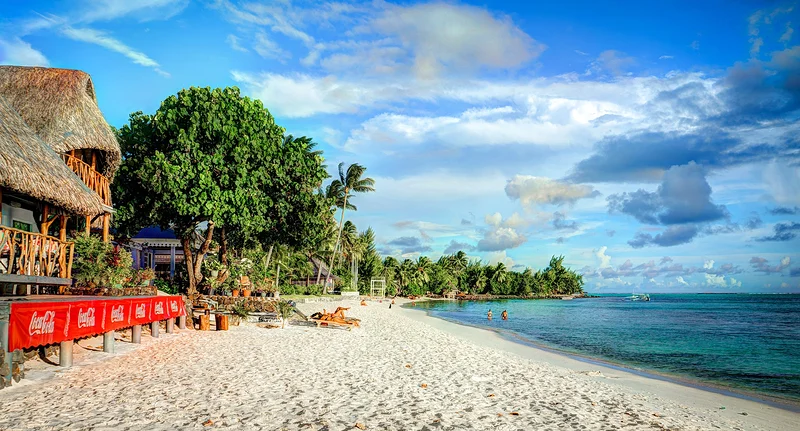
French Polynesia: Yes, Blue Really Does Come in 50 Shades
The first thing that hits you isn't the view. It's the smell. You step off the plane in Papeete and the tropical air wraps around you, thick with tiare flowers and frangipani. There are ukulele players in the arrivals hall. Someone drapes a flower lei around your neck. You've just landed in a territory where 118 islands are scattered across a stretch of the Pacific the size of Europe, yet all that actual land would barely fill a mid-size American state.
Who Is This Place Actually For?
French Polynesia is defined by its ocean. Five archipelagos make up the whole: the Society Islands, the Tuamotus, the Marquesas, the Australs, and the Gambier. Each has its own climate, personality, and culture. Lumping them together would be like saying Maine and Florida are basically the same because they're both on the coast.
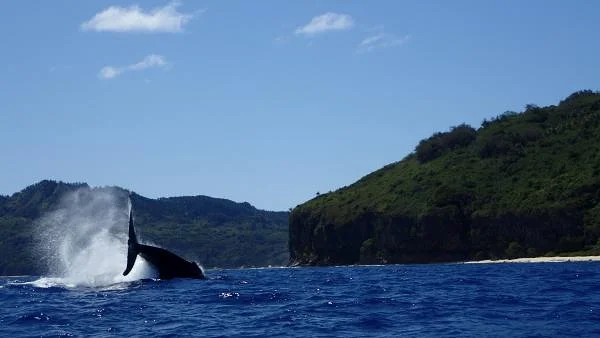
Divers come here for experiences that are genuinely hard to match anywhere else on the planet. Swimming alongside 700 gray reef sharks at Fakarava or snorkeling with humpback whales off Moorea from August through October are the kinds of things people plan entire trips around. Hikers will find serious reward in the lush valleys of the Marquesas or on Tahiti's volcanic trails. And honeymooners have been dreaming about Bora Bora's overwater bungalows for decades, and honestly, the lagoon there lives up to the hype: shades of turquoise that look almost digitally enhanced.
That said, if you're coming for nightlife, recalibrate your expectations. Evenings wrap up early, even in Papeete. Travelers who can't slow down will miss the point entirely. The pace here is set by the Pacific swell, not a clock. Inter-island distances also demand real logistical planning and a meaningful budget for internal flights. And if humidity is your enemy, be warned: even the dry season stays tropical.
The Budget Reality Check
No sugarcoating it: French Polynesia ranks among the most expensive destinations on earth. Consumer prices run about 40% higher than in mainland France, which already isn't cheap. Budget travelers should expect to spend roughly 17,900 to 35,800 XPF per day for two people (about $150 to $300 USD), covering a guesthouse, meals at food trucks, and limited activities. Overwater bungalows at luxury resorts start around 83,500 XPF per night (roughly $700) and can climb into the thousands. A round-trip flight between Tahiti and Bora Bora runs about 35,800 XPF ($300), and that's just one hop.
Lagoons That Redefine What Blue Means
The postcard version of French Polynesia is built around its lagoons, and that reputation is fully earned. Bora Bora's lagoon, ringed by the ancient volcanic peak of Mount Otemanu at 2,385 feet, is a geology lesson as much as a beach vacation. The central volcanic island slowly sank over millennia while the surrounding coral reef kept growing, creating that protected gradient of blues you've seen in every travel magazine.
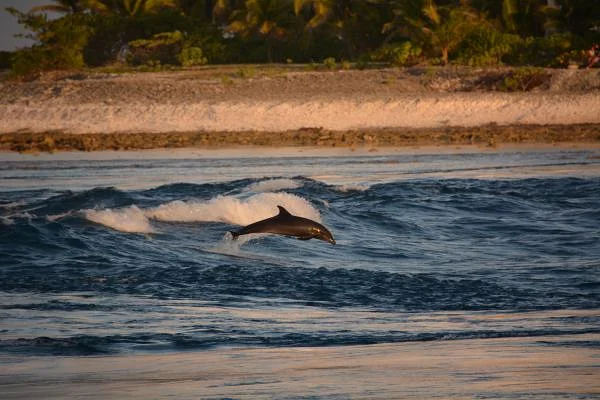
Rangiroa, in the Tuamotu archipelago, is the second-largest atoll in the world. Its lagoon is big enough to swallow the entire island of Tahiti. The Tiputa and Avatoru passes funnel plankton-rich currents that pull in dolphins, manta rays, and sharks in numbers that experienced divers rank among the top ten dive sites on the planet.
Insider tip: if your budget is tight, skip Bora Bora in peak season. Head to Maupiti instead, Bora Bora's smaller, far less developed neighbor, reachable by a short flight from Raiatea for a fraction of the price.
The Tuamotus for Serious Divers
This chain of 76 atolls is as close to a diver's paradise as you'll find in the Pacific. At Fakarava, a UNESCO Biosphere Reserve, the southern pass at Tumakohua holds a permanent population of roughly 700 gray reef sharks. No feeding programs, no bait. These encounters are entirely natural. Even beginners can get a taste of it: the snorkeling from the beach is exceptional on its own.
The Marquesas: A Completely Different Polynesia
About 930 miles northeast of Tahiti, the Marquesas Islands look nothing like the brochures. No lagoons here. Instead: sheer cliffs dropping straight into open ocean, lush valleys roamed by wild horses, and an archaeological record that rivals anything in the South Pacific.
Nuku Hiva, the largest island in the archipelago, is home to Vaipo, French Polynesia's tallest waterfall at 1,148 feet. The Hatiheu Valley holds ancient ceremonial sites where tikis and petroglyphs point to a sophisticated pre-contact civilization. On Hiva Oa, the site of Iipona contains the largest tiki in French Polynesia: the Tiki Takaii stands nearly 8 feet tall and dates to around the 14th century.
Marquesan craftsmanship is particularly distinctive, especially its wood carvings and traditional tattoos. The patutiki, the Marquesan tattooing tradition, was banned by missionaries in the 19th century and is now experiencing a serious revival. Both Paul Gauguin and Jacques Brel are buried at the cemetery in Atuona on Hiva Oa. They didn't end up here by accident.
Insider tip: the cargo-passenger ship Aranui 5 runs 12-day cruises that stop at six Marquesan islands. You travel alongside the islanders who depend on these supply deliveries, which gives the trip a texture no resort stay can replicate.
Moorea and the Society Islands: The Sweet Spot
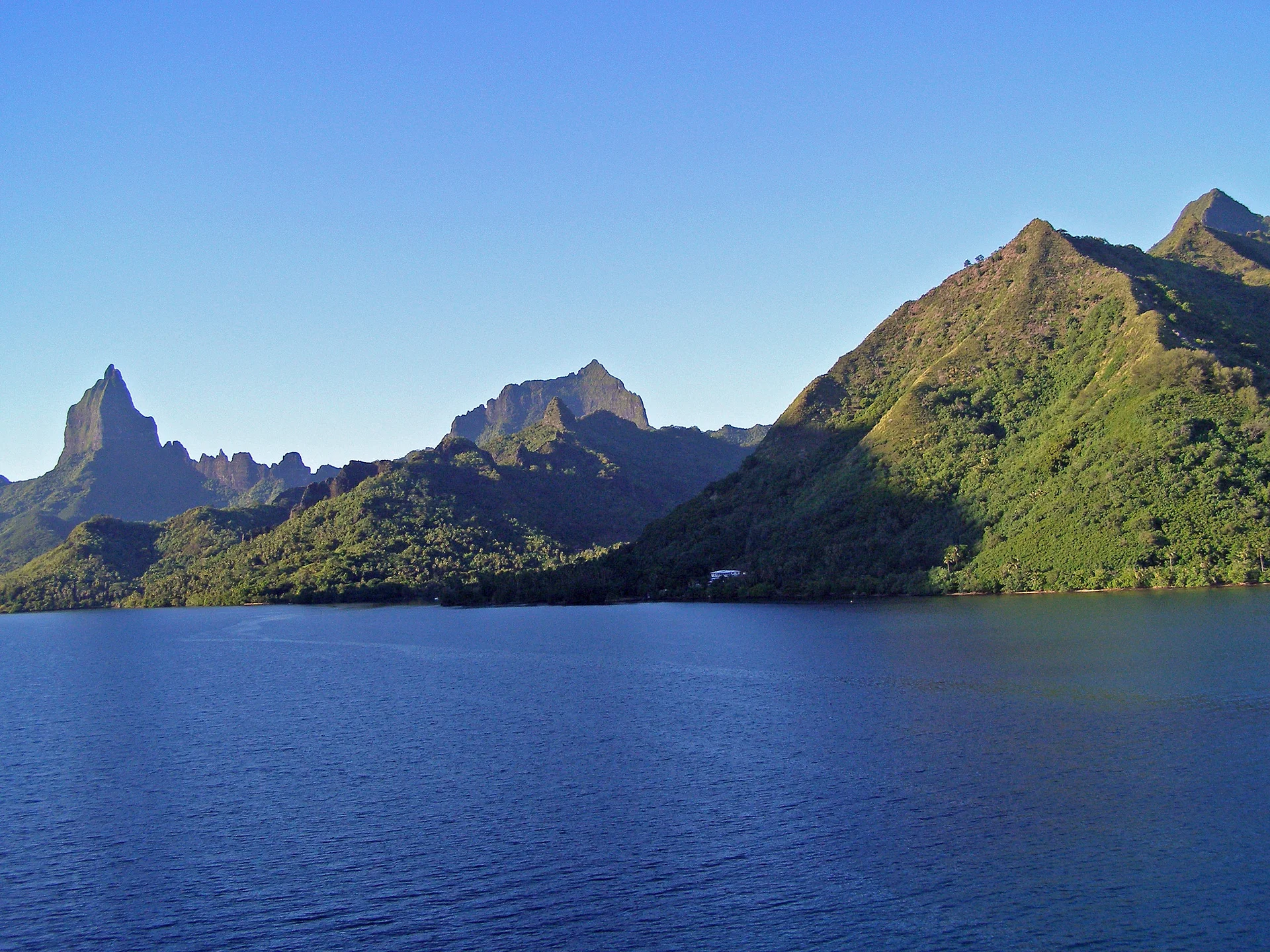
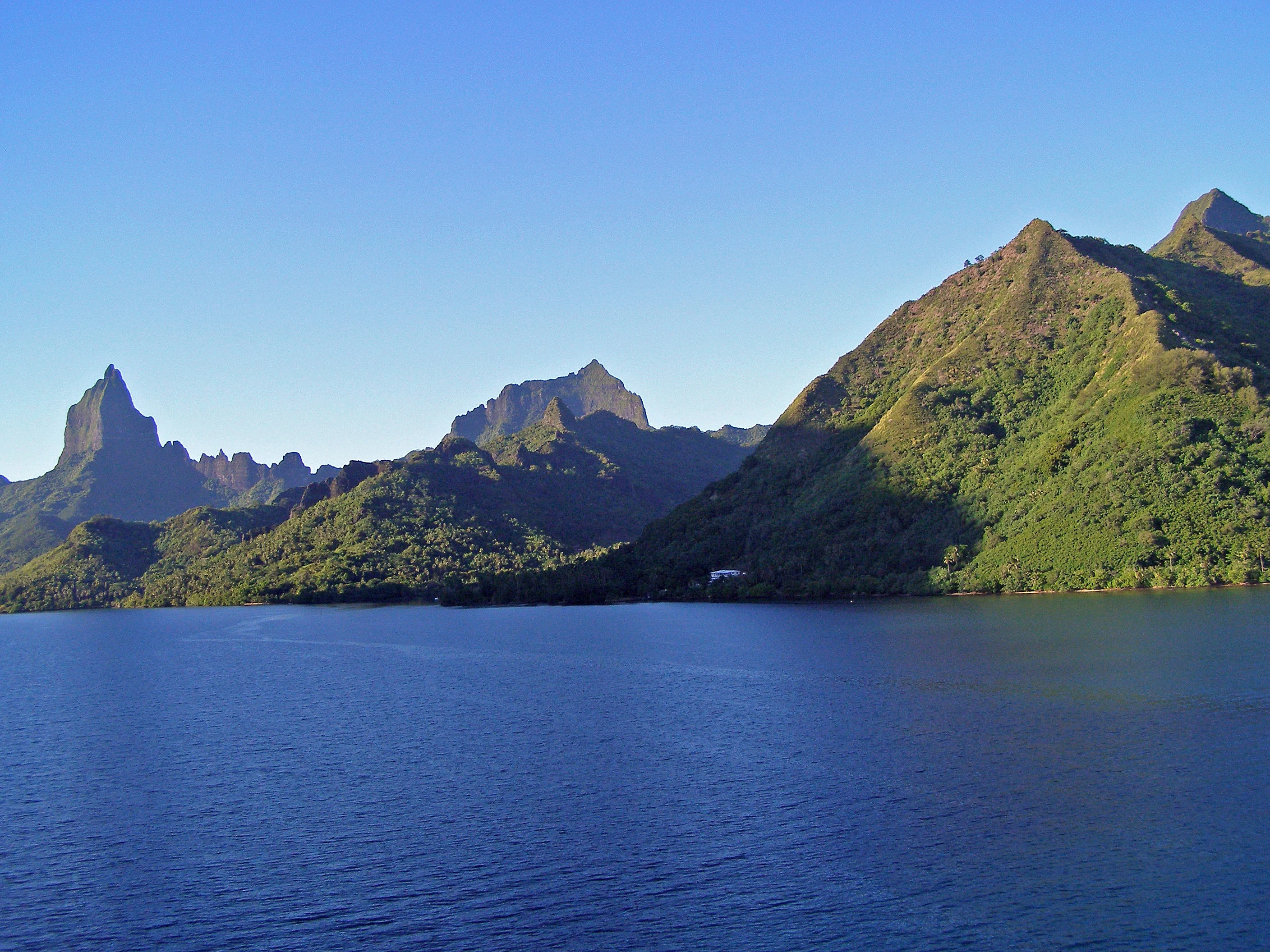
Just 30 minutes by ferry from Tahiti, Moorea hits a balance between easy access and genuine escape. Its two signature bays, Cook and Opunohu, carve a dramatic mountain silhouette that's hard to forget. The Belvedere lookout gives you a panoramic view over both bays and the pineapple fields that cover the interior.
Moorea is also home to Coral Gardeners, a marine conservation group that lets visitors participate in coral reef restoration. From July through November, humpback whales come into these protected waters to give birth. Swimming near a mother and her calf is the kind of experience that stays with you.
Further northwest, Huahine has held onto its character and stayed largely off the mass-tourism radar. Its archaeological sites, particularly the marae at Maeva, are among the best preserved in all of French Polynesia. Surfers appreciate the consistent waves, though the local lineup can be territorial, so read the vibe before paddling out.
Taha'a: The Vanilla Island
Taha'a produces 80% of French Polynesia's vanilla, which chefs around the world consider the most aromatic variety available. A plantation visit walks you through the painstaking process of hand-pollination and months-long drying. The island shares its lagoon with Raiatea and is only reachable by boat from its neighbor's airport.
What to Eat: From the Lagoon to the Table
Poisson cru à la tahitienne is the dish that defines the local kitchen. Fresh tuna diced and marinated in lime juice, tossed with crunchy vegetables, and finished with freshly pressed coconut milk. It shows up everywhere, from street-side food trucks to upscale restaurants, and every family has their own version passed down through generations.
The roulottes at Place Vaiete in Papeete are an institution worth knowing about. These are food trucks that set up along the waterfront every evening, serving generous plates for around 1,200 to 1,800 XPF (about $10 to $15): chao mein, grilled fish, steak and fries. Local families show up in force, and the relaxed atmosphere is a sharp contrast to hotel restaurant prices.
Ma'a Tahiti is the traditional feast cooked in an underground oven called an ahima'a. Pork, chicken, fish, taro, and bananas slow-cook wrapped in banana leaves over heated stones. Many hotels stage these dinners with traditional dance performances, but a family version hits differently. Don't skip the dessert: po'e, a pudding made from mashed banana or papaya with cassava starch and coconut milk.
When to Go to French Polynesia
The dry season runs May through October. Temperatures stay between 75°F and 82°F, humidity is manageable, and the trade winds keep things comfortable. This is also peak tourist season, so book accommodations and internal flights months ahead. The Heiva festival in July is a major cultural event featuring competitive traditional dance and singing.
The wet season from November through April brings heat, brief tropical downpours, and noticeably lower prices. The Tuamotu atolls, flat by nature with no terrain to trap clouds, stay pleasant even during this period. Cyclone risk exists but is low. The shoulder months, particularly April to May and September to October, offer the best trade-off between decent weather and thinner crowds.
One exception worth noting: the Marquesas run on a partially reversed schedule, with the best conditions falling between August and December.
Getting to French Polynesia
From most US gateway cities, you're looking at a flight through Los Angeles to Papeete. Air Tahiti Nui operates direct LAX-PPT service, and Air France connects through LA as well. Round-trip fares from the US start around $1,200 to $1,500 when booked well in advance. French Bee, a budget carrier, flies from San Francisco with lower base fares, but you're on a 21-hour flight with limited service, so factor that in.
As a US passport holder, you don't need a visa for stays under 90 days. Your passport should be valid for at least six months beyond your return date. If your routing takes you through another country, check entry requirements for that stopover as well.
The time difference from the US West Coast is about 3 hours behind (Tahiti doesn't observe daylight saving time), which makes adjustment easier than most long-haul destinations. From the East Coast, you're looking at a 6-hour difference. Plan a buffer day before any serious physical activity.
Getting Around French Polynesia
Internal flights are the main way to move between archipelagos. Air Tahiti serves 48 of the 118 islands, with fares that vary significantly by distance. Multi-island passes can cut costs considerably if you're hopping several stops: a pass covering four Society Islands runs around 53,700 XPF (about $450).
For the Society Islands, the ferry is a practical and affordable alternative. The Tahiti-Moorea crossing takes 30 minutes and costs around 1,800 XPF (about $15). Ferry connections also exist to Huahine, Raiatea, Taha'a, and Bora Bora, though travel times get long quickly.
On individual islands, renting a car is often the only real option. Expect to pay around 4,200 XPF per day (roughly $35) on Tahiti, more on remote islands. A 4x4 is necessary if you're heading into the interior or exploring the Marquesas, where many roads are unpaved. On Moorea or Bora Bora, a bicycle works fine for getting around at a reasonable pace.
Insider tip: on smaller islands like Maupiti, guesthouses typically include airport transfers and often throw in bicycle or canoe use. Ask before booking a rental you don't need.