
Death Valley National Park: The Most Extreme Desert in North America
On July 10, 1913, the thermometer in Furnace Creek hit 56.7°C. This global heat record has never been broken. Yet every year, this California desert draws hundreds of thousands of visitors to see its golden dunes, multicolored canyons, and vast white salt flats that feel like another planet.
Why Visit Death Valley National Park?
Death Valley National Park lives up to its name, standing as the hottest, driest, and lowest place in North America. Badwater Basin, sitting at 86 meters below sea level, marks the lowest point on the continent. This 13,600 km² desert basin nevertheless supports over 1,000 plant species and wildlife adapted to extreme conditions.
The pioneers of 1849, lost on their way to the gold rush, gave the valley its grim name after wandering through it for several weeks. As one of them left the valley, he reportedly turned back to murmur, "Goodbye, Death Valley." The area became a national monument in 1933 and a national park in 1994, with a dark sky preservation mission that makes it an exceptional spot for stargazing today.
Key Landscapes to Explore
Badwater Basin and the Scenic Drive
The salt crust crunches beneath your boots. Before you, a blinding white expanse stretches out to the Panamint mountains. Badwater Basin offers a singular sensory experience defined by absolute silence, harsh light, and the rough texture of salt polygons formed by evaporation. A sign marks sea level on the cliff behind the parking lot, nearly 90 meters above your head.
Artist's Palette and Artist's Drive
This 14-kilometre loop winds through hills of improbable hues. The oxidation of volcanic metals has painted the rocks in shades of green, pink, purple, and yellow. The colors grow more intense in the late afternoon when the low sun sharpens the contrasts. The main viewpoint comes with a parking area and vault toilets.
Zabriskie Point and the Badlands
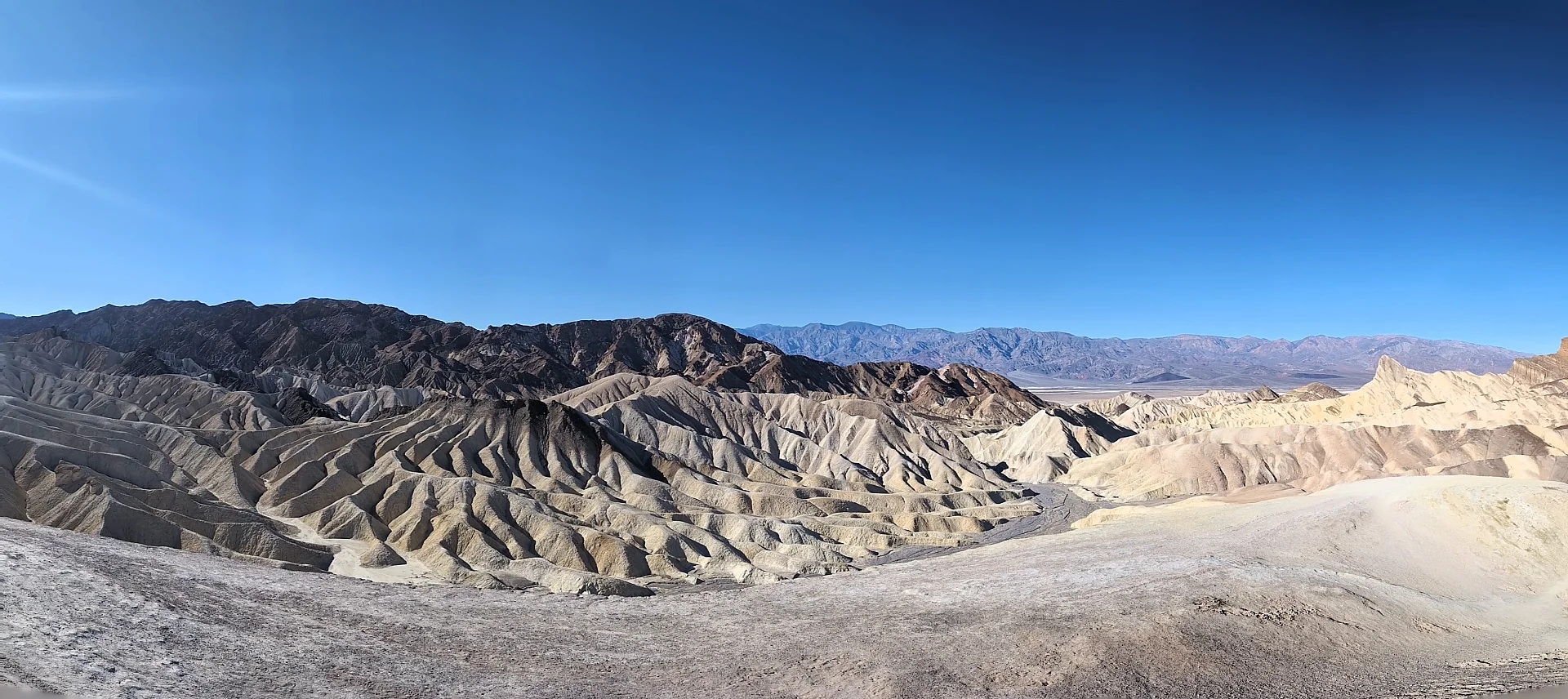
Sunrise turns this overlook into a show. Low rays carve the eroded ridges into golden and copper tones. The badlands below, carved by millennia of erosion, reveal ocher and beige strata. The parking lot sits a short walk from the viewpoint.
Mesquite Flat Sand Dunes
These dunes served as a filming location for Star Wars to represent the planet Tatooine. Rising about 30 metres (100 feet) high, they make an ideal playground for photography at sunrise or sunset when long shadows reveal every ripple in the sand. The wind erases footprints overnight, so arrive early to find pristine ridges. The tallest dune sits about 1.5 km from the parking area.
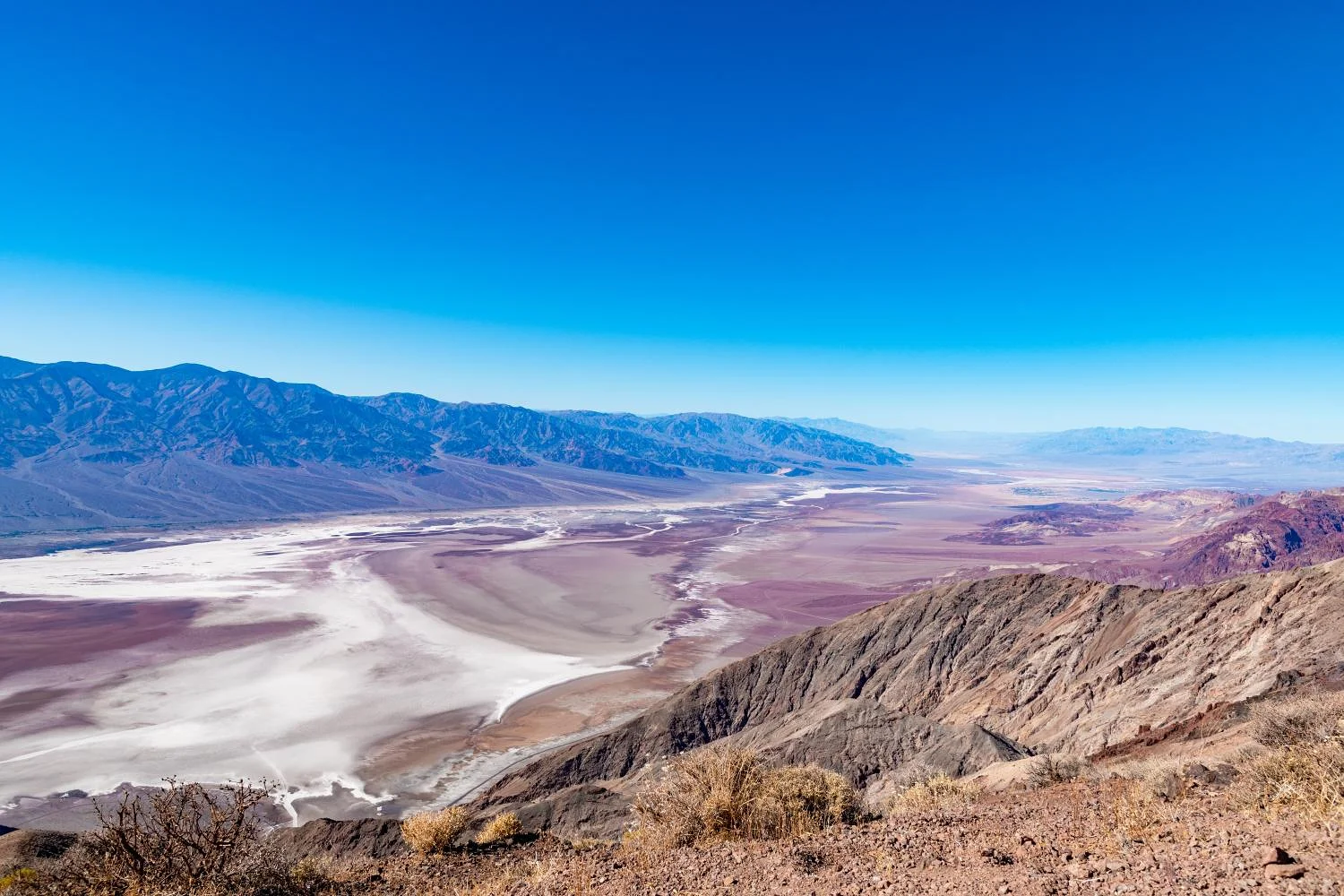
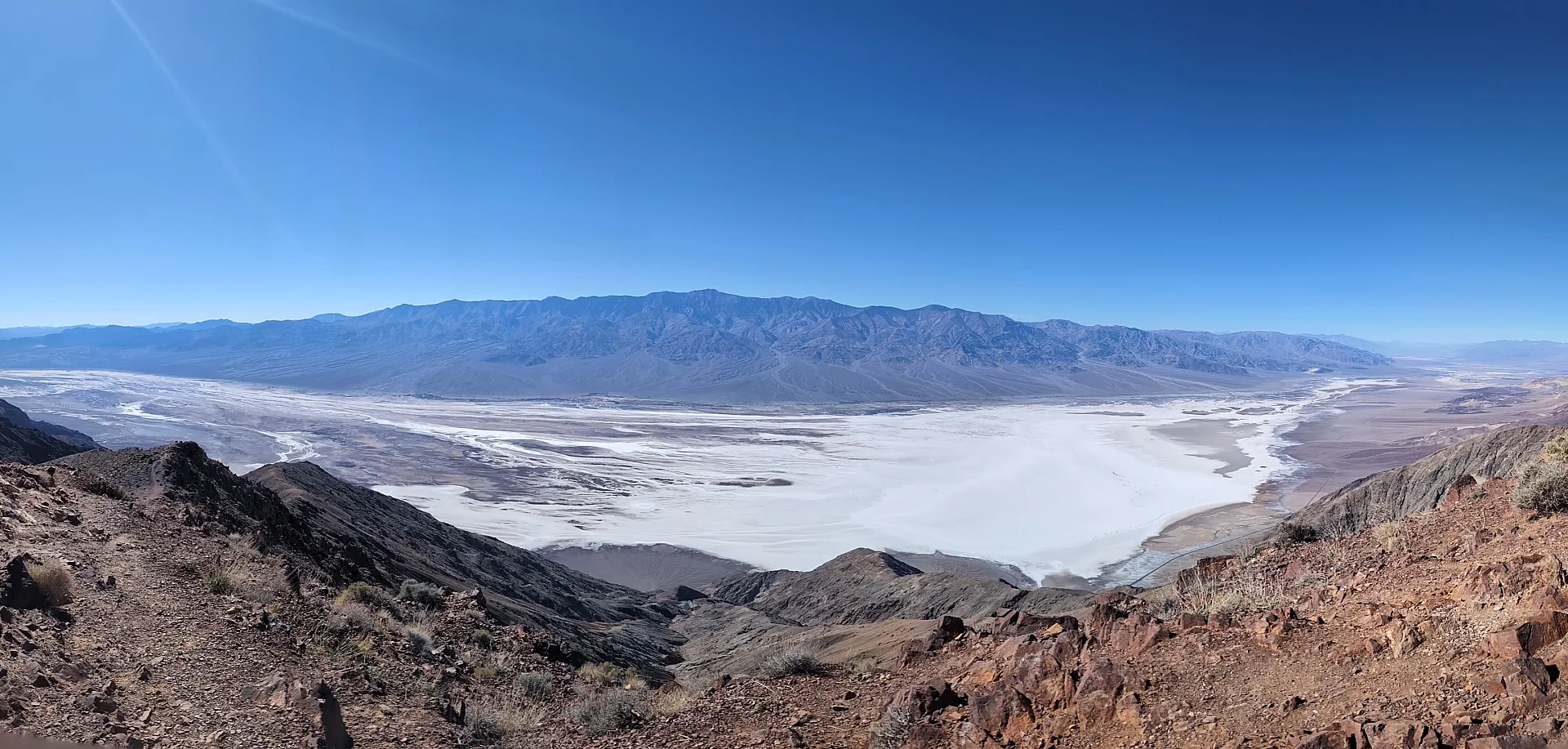
Friendly tip: Plan for sunrise at the Mesquite Dunes and sunset at Dante's View. This overlook sits at 1,669 metres of elevation, towering over the entire valley and letting you spot both the lowest point and Mount Whitney on a clear day.
Surviving Death Valley National Park: Essential Precautions
The heat claims between one and three lives in the park every year. Bring at least 4 litres of water per person per day. Cell service is virtually nonexistent. Fill up on gas before entering, as the stations at Furnace Creek and Stovepipe Wells charge high prices and distances are deceiving. Avoid hiking between 10 AM and 4 PM from May to September. Your vehicle needs to be in top shape, since engine overheating and flat tires happen frequently on isolated dirt roads.
The Dark Sky Festival, held in early March, features astronomy talks, night photography workshops, and guided outings to view California's clearest skies.
Opening hours
| Monday | 08:00-17:00 |
|---|---|
| Tuesday | 08:00-17:00 |
| Wednesday | 08:00-17:00 |
| Thursday | 08:00-17:00 |
| Friday | 08:00-17:00 |
| Saturday | 08:00-17:00 |
| Sunday | 08:00-17:00 |
*Information subject to change

I think Death Valley is one of the most beautiful places I have ever seen in my life. Desert expanses as far as the eye can see, absolutely majestic viewpoints, and plenty of completely different places to see: hikes in the canyons, sand dunes, incredible rock formations, a dry lake bed. My favorite will always be Dante's View, I think, which overlooks the Badwater Basin. Even in late October it was really hot for hiking, I do not even want to imagine it in the summer! Stop by the visitor center at Furnace Creek to get all the information you need for your visit!