
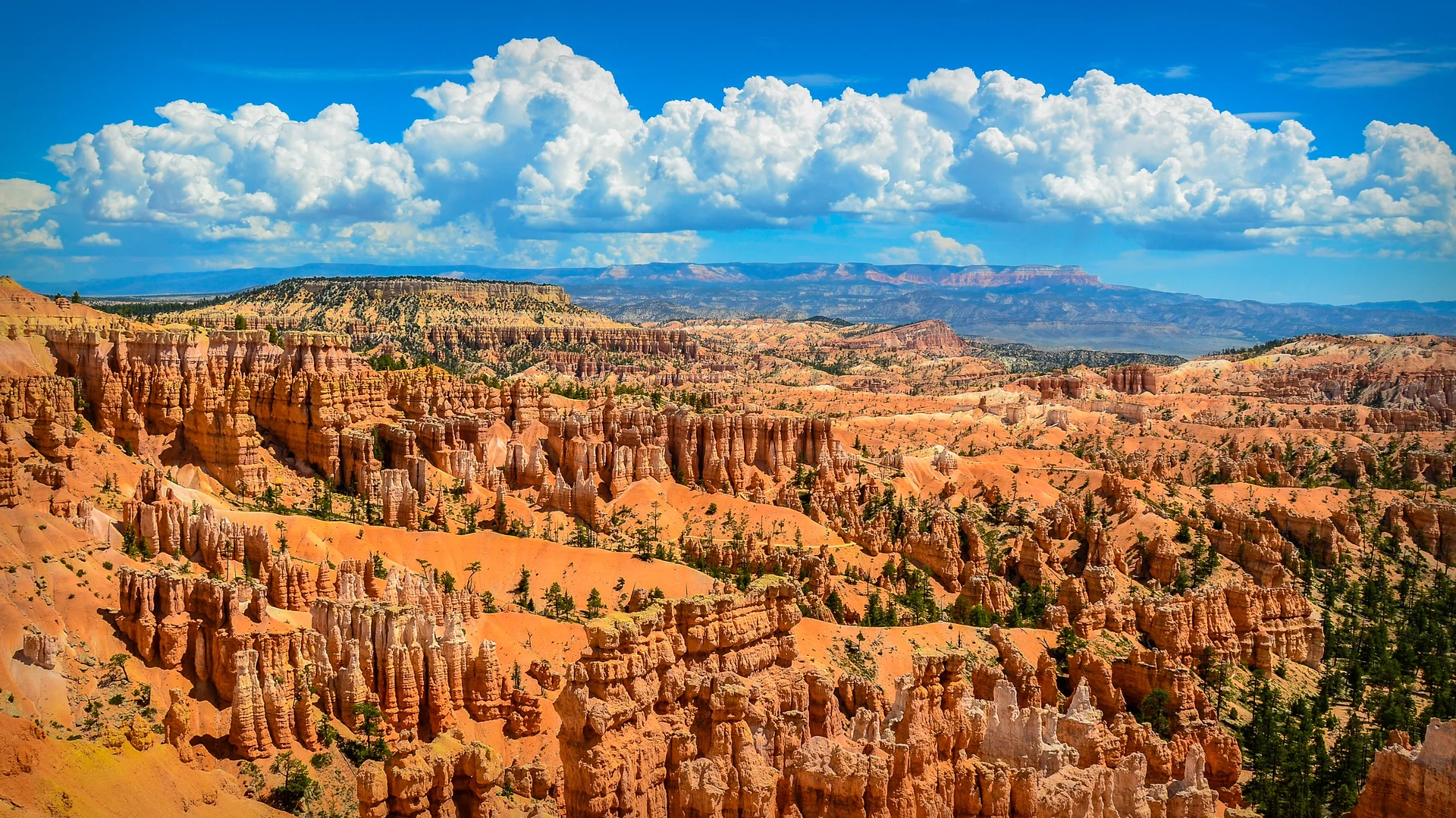
Visiting Bryce Canyon: Where Stone Comes Alive
The ground in Utah opens up without warning to reveal an otherworldly view. Thousands of fine, jagged rock spires stand in silent formation. Bryce Canyon National Park is not a gorge carved out by a river, but a series of natural amphitheaters where the orange rock seems to breathe beneath the shifting light of day.
Why Is This Landscape Unlike Anywhere Else?
The magic of Bryce Canyon lies in its creation. Here, the sculptor is not the brute force of a river, but the patient and relentless cycle of freezing and thawing. Water seeps into cracks, freezes, expands, and fractures the limestone, giving birth to these unique formations known as hoodoos.
For the Native American Paiute people, these stone pillars were the Legend People, ancient beings petrified by the Coyote god. Visiting Bryce means walking at the intersection of geological science and ancient myth, on land charged with a palpable energy.
The View From Above: The Scenic Drive and Overlooks
Your first encounter with the park often happens along the rim. A 29 km scenic drive offers plunging views over this geological theater. Each stop reveals a different perspective.
- Sunrise Point: Ideal for watching the first rays of sunlight set the hoodoos ablaze and reveal their vibrant colors.
- Sunset Point: The prime spot to watch shadows lengthen and the landscape tint purple at the end of the day.
- Inspiration Point: Offers a spectacular three tiered view, revealing the density and immensity of the main amphitheater.
- Bryce Point: The most expansive panorama, where your gaze gets lost in an ocean of rock spires.
Deep in the Labyrinth: Hiking Among the Hoodoos
Observing from above is one thing, but descending among these stone giants is another. Walking the trails is the only way to truly grasp their scale and the fragility of this landscape.
The Essential Loop: Navajo Loop & Queen's Garden
This trail combination (roughly 4.6 km) is the most complete experience. You will descend via tight switchbacks, pass through the narrow corridor of Wall Street, and find yourself at the foot of evocatively shaped formations like the Queen Victoria.
A Ridge Walk: The Rim Trail
For a more accessible option, this flat trail hugs the rim and connects the main viewpoints. It lets you enjoy the show without the steep elevation changes of the trails that drop into the amphitheater.
Beyond the Day: The Magic of Bryce Canyon Skies
The experience does not stop at dusk. Thanks to its high altitude and the lack of light pollution, the park is certified as an International Dark Sky Park. A moonless night reveals a Milky Way of startling clarity, a show often hosted by the park rangers. In winter, the contrast of snow on the orange rock offers a completely different dimension, quiet and pristine, perfect for snowshoeing.
Opening hours
*Information subject to change

For me, the most beautiful park in the American West, right along with Yosemite! The site feels quite natural, without too much pavement, with its red dirt paths. I spent hours admiring the magnificent hoodoos, those fairy chimneys typical of the park, with their palette of orange tones. It rained during my visit, but the colors were even more beautiful!
I walked the Rim Trail, which offers numerous viewpoints looking down, then at the bottom of the canyon on the Queen's Garden Trail. I recommend following it from Sunrise Point to Sunset Point. Be careful, you need good shoes and decent cardio, because the switchback climb back up is very dry and tough.
If you do not want to walk too much, it is possible to do a driving tour. The most beautiful perspectives are located between Inspiration Point and Sunrise Point, with the incredible Bryce amphitheater and its thousands of hoodoos.