
Gangō-ji Temple, a quiet guardian of 1,400 years of history
Dark tiles shimmer under the sun in Nara, serving as witnesses to an era when Buddhism first arrived in Japan. Here, in the heart of the quiet Naramachi district, Gangō-ji Temple tells a story that began long before the imperial capital was established. This understated temple, often overshadowed by its more famous neighbors, holds a title that no other can claim.
The cradle of Japanese Buddhism
Founded in 588 in the former capital of Asuka under the name Asuka-dera, Gangō-ji carries the weight of being the very first authentic Buddhist temple in Japan. When the imperial court relocated to Heijō-kyō in 718, the temple followed, reconstructed stone by stone. It became one of the seven great temples of Nara, alongside Tōdai-ji and Kōfuku-ji. Its inclusion as a UNESCO World Heritage site in 1998 confirms its importance in Japanese religious and architectural history.
Architectural treasures unique in the world
The Gokuraku-dō, a window into the past
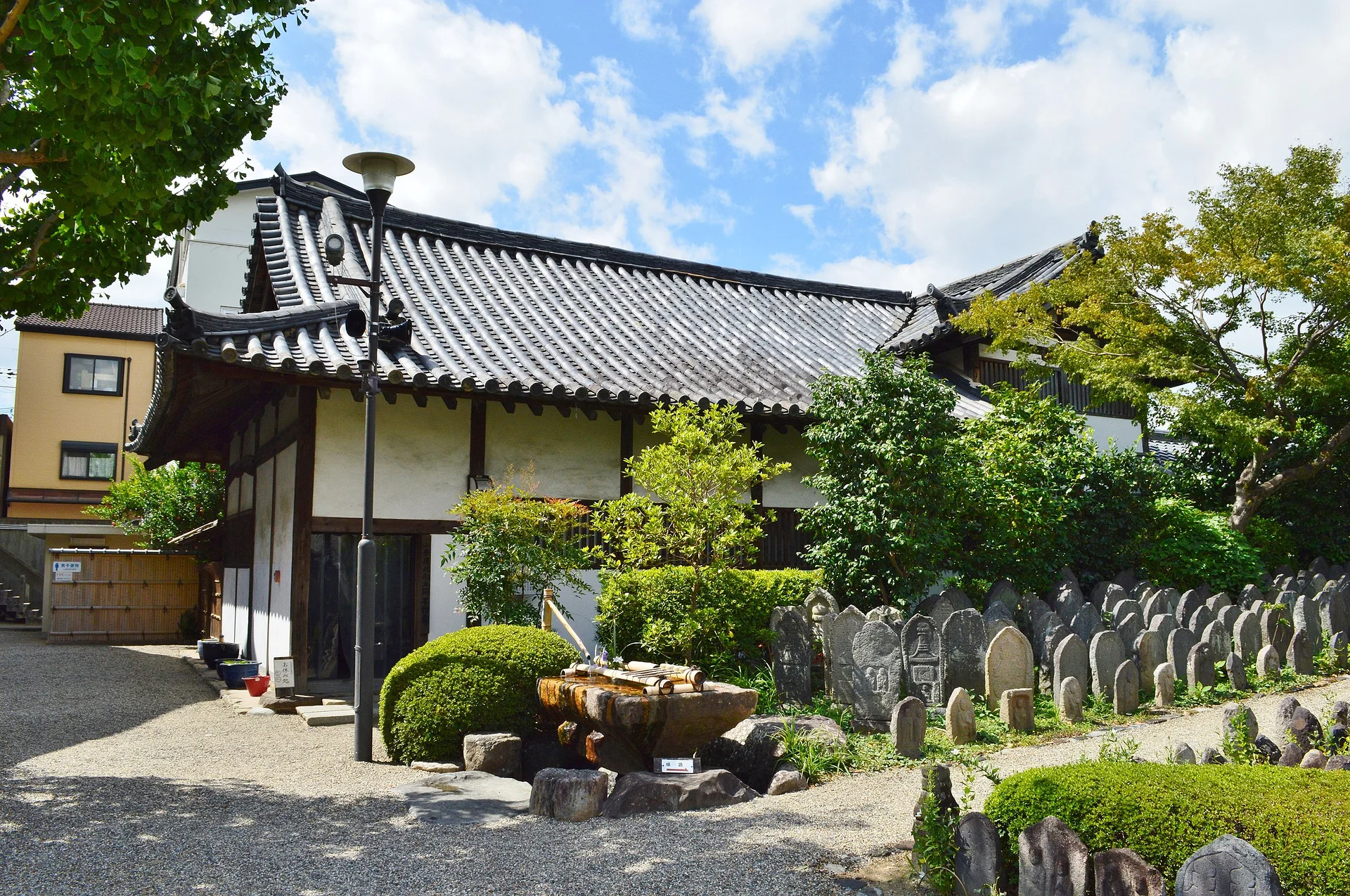
The Hall of Paradise, a national treasure, is the former monks' residence that has been repurposed over the centuries. Look up at its roof. The red and black tiles date back to the Asuka period (7th century), while the gray and white ones go back to the Nara period (8th century). These are the oldest roof tiles still in use in Japan. Their installation technique, mixing round and flat tiles, reveals the Korean influence on early Japanese religious architecture.
The Zen hall and its secrets
Adjacent to the Gokuraku-dō, the Zen hall also maintains its status as a national treasure. It was within these walls that the monk Dōshō introduced Zen to Japan. The atmosphere is contemplative and almost palpable. Every second Sunday of the month, meditation sessions are held here, keeping a tradition that has lasted for over a millennium alive.
A tip from a traveler: Visit early in the morning to enjoy soft light that enhances the shades of the ancient tiles. The morning quiet contrasts with the bustle of the larger temples and allows you to fully appreciate the meditative atmosphere of the site.
The Hōrin-kan museum and the stone garden
The small temple museum houses unexpected treasures. The five-story miniature pagoda, a national treasure and the only intact example from the Nara period, likely served as a model for the construction of larger pagodas. The famous Chikō Mandala, painted on wood in the 8th century, illustrates the Buddhist vision of paradise with remarkable finesse.
In the Futō-den, an open-air garden, more than 1,000 stone statues are lined up. Buddhas, bodhisattvas, and miniature pagodas create a fascinating mineral forest. In summer, purple bellflowers bloom between the stones, while in autumn, bush clover and red spider lilies turn the site into a living painting.
Naramachi, the urban legacy of the temple
In the Middle Ages, Gangō-ji occupied a massive area. When the temple declined, artisans and merchants settled on its former grounds, giving birth to the Naramachi district. These narrow streets with traditional timber-framed houses and white walls are the commercial heart of Nara. After your visit, lose yourself in these alleys where intimate cafes and craft shops keep the spirit of the Edo period alive.

A simple and clean temple. Maybe not the most beautiful in Nara. It still has its own identity and a very pure, spiritual vibe. It is also a historical monument. As such, I really enjoyed wandering past the many steles and Buddhist depictions. Each one is different. Worth visiting if you want to take your time.
If you do not appreciate this kind of place, you might find the 500 yen entrance fee a bit pricey.