
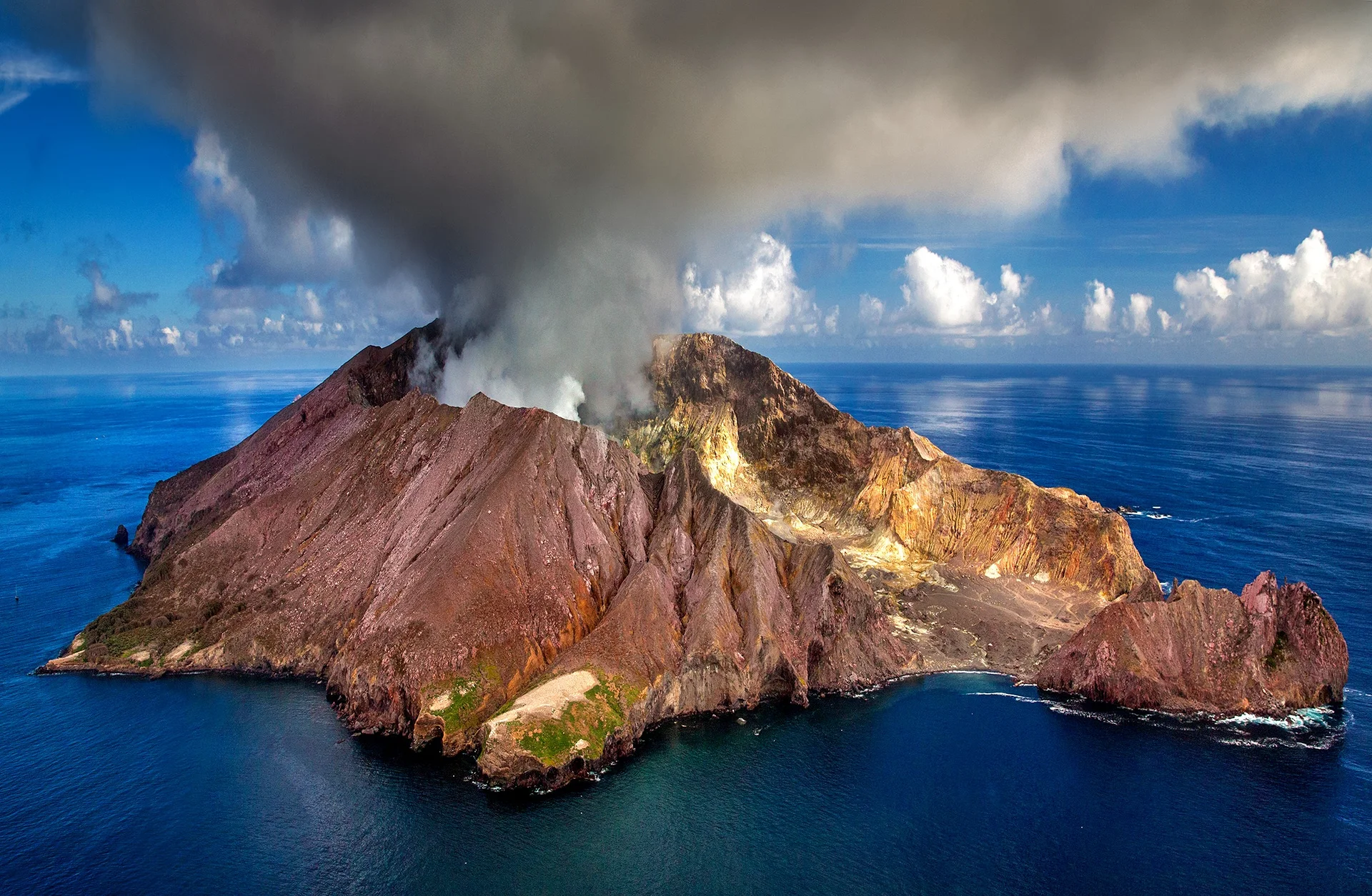
Visiting White Island: the forbidden volcanic isle best seen from above
Off the coast of the Bay of Plenty, a jagged island has been venting toxic gases into the New Zealand sky for 150,000 years. Whakaari, its Mori name, remains the most active marine volcano on the planet. It functions as an open air geological laboratory, now accessible only by air following the tragedy of December 2019.
Why is White Island unforgettable despite the ban?
This 325-hectare island embodies the raw power of the New Zealand landscape. Located 48 kilometers from the shores of Whakatane, it is part of the Pacific Ring of Fire and radiates a magnetic energy. Its English name comes from the clouds of white steam spotted by Captain James Cook in 1769, which mask a geological inferno of surreal colors.
The eruption in December 2019 served as a stark reminder of the violence inherent in this constantly active volcano. Twenty-two people lost their lives, transforming what was once a popular tourist site into an inaccessible natural sanctuary. Paradoxically, this ban on land access has only deepened its mysterious and magnetic appeal.
An alien landscape visible only from the sky
Aerial views reveal a scene straight out of science fiction: a yawning crater with multicolored walls, turquoise sulfuric acid lakes, and fumaroles erupting from bright orange and yellow soil. The sulfur deposits create a color palette unlike anywhere else on earth, contrasting sharply with the deep blue of the Pacific.
Pilots navigate cautiously around the gas plumes, providing dizzying perspectives of this natural boiler. The main crater, several hundred meters wide, churns with constant activity as toxic vapors and incandescent debris collide.
Friendly tip: Book a morning flight to avoid the afternoon clouds that often obscure the crater. Visibility is usually best between 8:00 AM and 11:00 AM.
Industrial ruins from a bygone era
From the air, you can still see the remains of the old sulfur mine, abandoned in 1914 after a fatal landslide. These rusted structures, eaten away by corrosive gases, are a reminder of human efforts pitted against overwhelming telluric forces. They add a post-apocalyptic layer to an already surreal landscape.
Exceptional marine life in a hostile environment
Paradoxically, the waters surrounding this toxic island are teeming with life. Colonies of Australasian gannets nest on the cliffs, taking advantage of the rising thermal currents. Common dolphins and orcas are frequent visitors to these nutrient-rich volcanic waters.
The seabed around Whakaari is among the most sought-after spots by New Zealand divers. Underwater hydrothermal vents create unique ecosystems where species thrive in extreme conditions. Exceptional visibility and impressive biodiversity compensate for the risks associated with the volcanic activity.
The striking contrast with Moutohora
Flights often include Moutohora (Whale Island), a wildlife sanctuary located just a few kilometers away. This extinct volcano, covered in lush vegetation, offers a spectacular contrast to its barren and steaming neighbor. This juxtaposition perfectly illustrates the dual nature of creation and destruction inherent in volcanic forces.
The aerial experience, from thrill to wonder
Fixed-wing flights from Whakatane typically last one hour and offer a more stable platform for photography. Helicopter tours are more expensive, but they allow for more dramatic maneuvers and lower-altitude passes around the active crater.
The olfactory experience accompanies the visual: even at an altitude of several hundred meters, the distinctive smell of sulfur permeates the cabin, adding a unique sensory dimension to the flight. Pilots constantly adjust their flight path based on the intensity of the gas emissions.
Friendly tip: Skip this flight if you have a sensitive nose or are prone to motion sickness. Thermal turbulence around the island can be significant, especially in the afternoon.
Constant scientific monitoring
The GeoNet network monitors the seismic and volcanic activity of Whakaari in real time using automated stations. This constant vigilance allows authorities to adjust flight permissions based on alert levels. The data collected improves global understanding of active volcanoes and contributes to risk mitigation.
Opening hours
*Information subject to change

Going to White Island costs a small fortune, but it is an exceptional experience! The boat trip is a bit long, but once you arrive, you walk on this volcanic island with a lot of excitement and apprehension at the same time since it is an active volcano.
The guides are very well trained. If you are lucky, you might have the opportunity to taste the sulfur and the water found on the island.
A unique experience in a very beautiful setting, I recommend it!